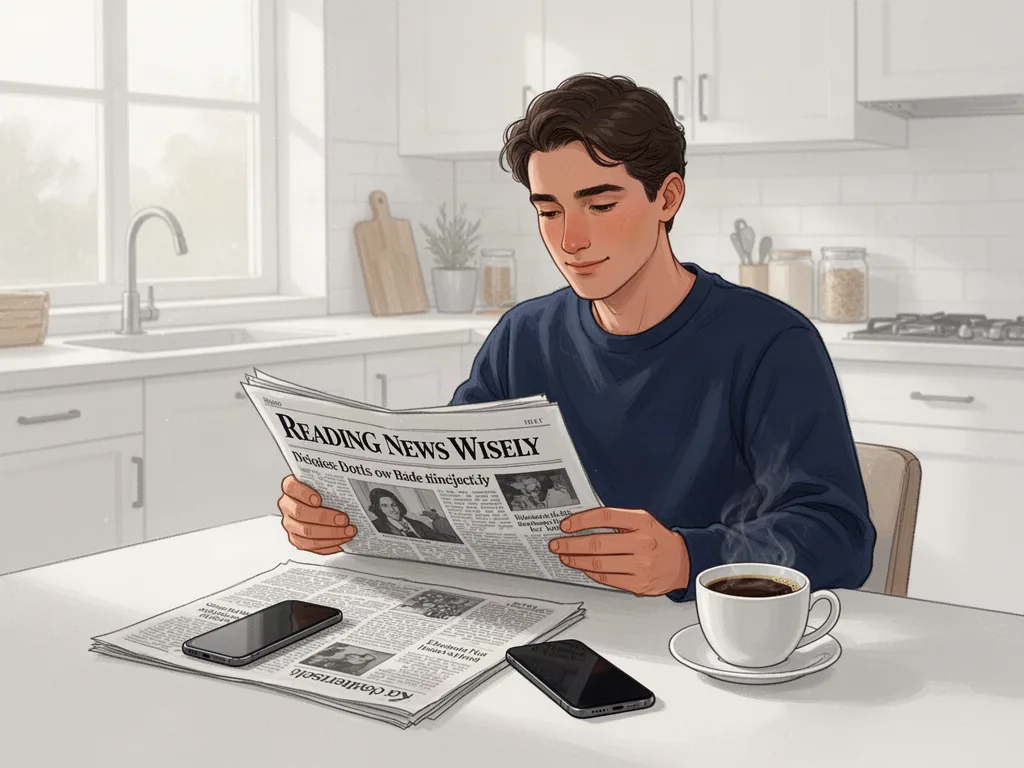
How to Read the News Without Letting It Own Your Nervous System
Staying informed should increase wisdom, not keep you perpetually activated. Use a simple news diet that protects attention, checks sources, and leaves room for real life.
Built for Readers who want to stay informed without doomscrolling.
News matters. So does your ability to think clearly after reading it. The modern information economy rewards urgency, outrage, novelty, and repetition because those forces hold attention. Your job is not to become uninformed. Your job is to become difficult to manipulate.
Separate being informed from being immersed
You can understand the day without checking the same developing story twenty times. Repeated exposure often adds emotion faster than it adds verified information. Choose a small number of trusted sources, set specific check-in windows, and stop treating every alert as a summons.
Slow the story down before it speeds you up
Before sharing a dramatic claim, ask what is known, what is inferred, what is missing, and who benefits if you react before verifying. Look for original reporting, named sources, documents, dates, and corrections. Opinion can be useful, but it should not be disguised as fact.
Put it into practice
Turn off nonessential breaking-news push notifications.
Check news at two or three chosen times instead of continuously.
Read beyond the headline before reacting or sharing.
Compare at least two credible sources on consequential claims.
End the news session with one real-world action: pray, call someone, volunteer, vote, donate, learn, or simply return to your responsibilities.
Carry this with you
The goal of news is not to make you feel everything happening everywhere at once. The goal is to help you understand enough to act wisely where your life actually touches the world.
Questions people ask
How often should I check the news?
There is no universal number, but scheduled check-ins are usually healthier than continuous monitoring. Many people can stay well informed with a few intentional windows each day.
How can I tell whether a news story is reliable?
Look for transparent sourcing, original documents or named experts, clear dates, corrections policies, and confirmation from other credible outlets.