top of page
< Back

Are You Doomscrolling Before Bed? Here's a Better Way to End Your Day

"Finally, brothers and sisters, whatever is true, whatever is noble, whatever is right, whatever is pure, whatever is lovely, whatever is admirable: if anything is excellent or praiseworthy: think about such things." : Philippians 4:8 What's Happening The average person scrolls through their phone for 38 minutes before falling asleep. Sleep researchers report that this habit: now commonly called "doomscrolling": disrupts multiple biological systems designed to help you rest. Blue light...
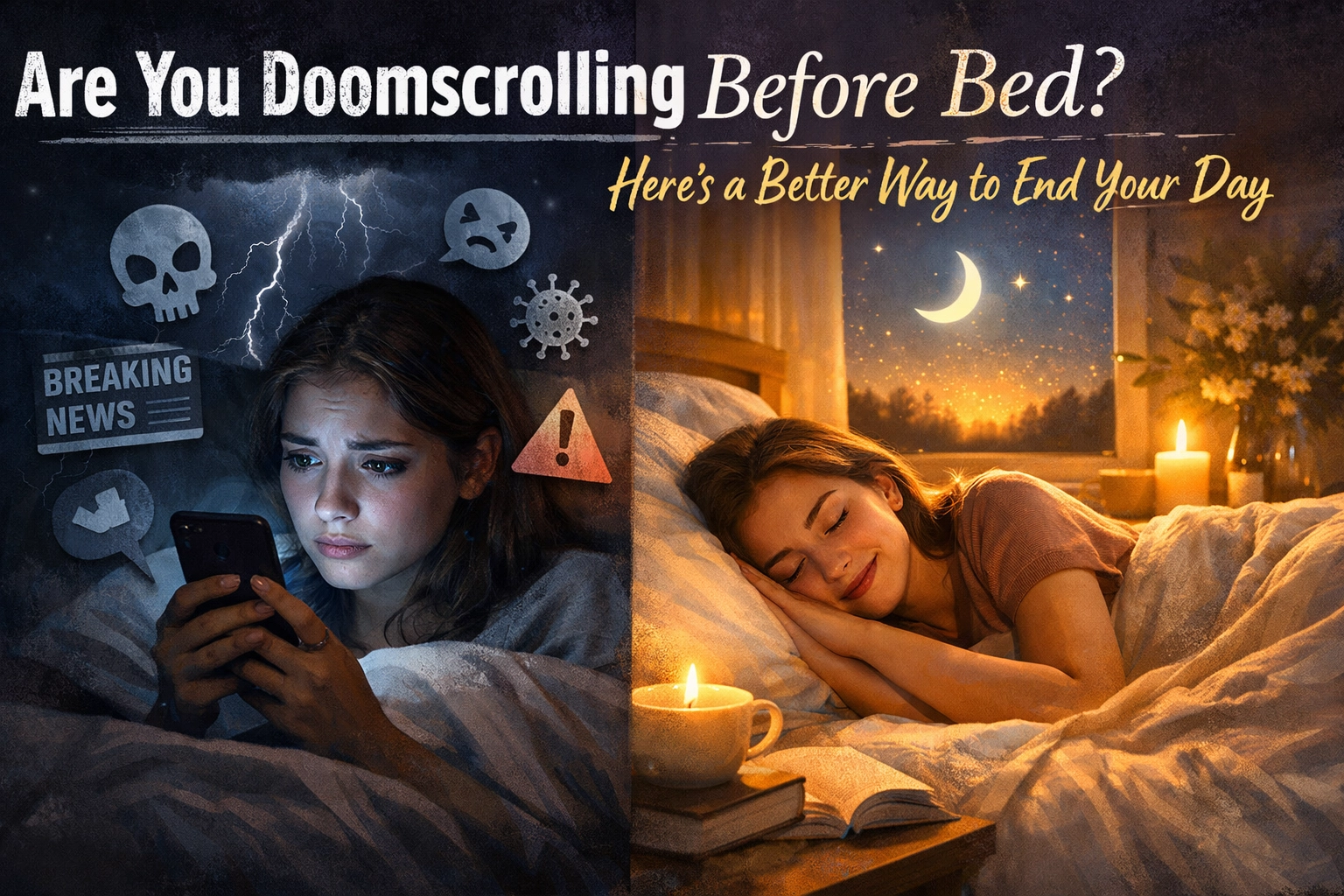
"Finally, brothers and sisters, whatever is true, whatever is noble, whatever is right, whatever is pure, whatever is lovely, whatever is admirable: if anything is excellent or praiseworthy: think about such things."  : Philippians 4:8  What's Happening  The average person scrolls through their phone for 38 minutes before falling asleep. Sleep researchers report that this habit: now commonly called "doomscrolling": disrupts multiple biological systems designed to help you rest. Blue light from screens suppresses melatonin production, the hormone that signals your body it's time to sleep. Meanwhile, the content itself activates stress pathways rather than winding them down. Recent studies show that late-night scrolling is tied to shorter sleep duration, poorer sleep quality, and more fragmented rest. Beyond sleep disruption, researchers observe increased anxiety and depression among those who engage in extended nighttime screen use. Stress hormones like cortisol and adrenaline remain elevated, creating a cycle where anxiety drives more scrolling, which fuels additional anxiety. Teens with heavier daily screen use report more symptoms of anxiety and depression. Even after a full night's sleep, those who consumed emotionally charged content before bed report higher stress levels and next-day fatigue. Sleep experts now recommend stopping screen use 30 to 60 minutes before bed. Some suggest avoiding scrolling during the entire 2-hour window before bedtime.  Why It Matters  You were designed to rest. Not just physically, but mentally and spiritually. When you fill the final moments of your day with an endless stream of conflict, tragedy, outrage, and comparison, you're crowding out the peace God intends for you. The biblical rhythm of rest isn't accidental. God modeled it in creation: six days of work, one day of rest. Jesus regularly withdrew from crowds to pray and recharge. Even the Psalms instruct us to meditate on God's goodness, not the chaos of the world, before we sleep: "In peace I will lie down and sleep, for you alone, Lord, make me dwell in safety"  (Psalm 4:8). Doomscrolling hijacks this rhythm. It keeps your mind alert when it should be winding down. It floods your thoughts with information you can't process or change. It trains your brain to expect stimulation rather than stillness. And it steals the opportunity to reflect on what God has done in your day. The content we consume shapes our hearts. If the last thing you take in before sleep is fear, anger, or comparison, those seeds grow overnight. You wake up anxious before you even know why. You start the next day already emotionally depleted.  The Biblical Lens  Scripture consistently calls us to be intentional about what we allow into our minds. Paul's instruction in Philippians 4:8 isn't just poetic: it's practical. Whatever is true, noble, right, pure, lovely, admirable : these aren't just categories for Sunday school. They're filters for every moment of your life, including the final moments before sleep. David modeled this in Psalm 63:6: "On my bed I remember you; I think of you through the watches of the night."  His mind didn't default to the threats around him: and there were many. He chose to redirect his thoughts toward God's faithfulness. Jesus taught that what comes out of a person flows from what's stored in the heart (Luke 6:45). If you're filling your heart with chaos, chaos will overflow into your words, your relationships, and your peace. God also designed your body to rest. Ignoring that design has consequences. Sleep deprivation impairs judgment, weakens your immune system, and increases emotional reactivity. You can't love your neighbor well when you're exhausted and irritable. You can't discern God's voice clearly when your mind is foggy. Rest isn't optional: it's obedience. The enemy loves exhaustion. He loves distraction. He loves anything that keeps you from stillness with God. Doomscrolling is the perfect tool: it feels productive (you're "staying informed") while actually draining your capacity to think clearly, pray deeply, or rest fully.  A Better Way to End Your Day  You don't have to stay stuck in this pattern. Here's how to reclaim your evenings: Set a digital curfew.  Pick a time: 30 to 60 minutes before bed: and put your phone in another room. Not on silent. Not face-down. In another room. If you use your phone as an alarm, buy a $10 alarm clock. Replace scrolling with Scripture.  Keep a Bible or devotional on your nightstand. Read one psalm or one chapter before bed. Let God's Word be the last voice you hear, not Twitter's outrage or Instagram's comparison trap. Journal your gratitude.  Write down three things God did today. They don't have to be big. A kind word from a friend. A safe drive home. A moment of clarity. Training your mind to notice God's goodness rewires your brain toward peace. Pray instead of scroll.  When you feel the urge to pick up your phone, pray instead. Thank God for the day. Ask Him to guard your heart while you sleep. Pray for someone who needs it. Let prayer become your new muscle memory. Stretch or move gently.  Light movement helps your body transition from alertness to rest. A few minutes of stretching, deep breathing, or a short walk can signal your nervous system that it's safe to wind down. Listen to something peaceful.  If you need sound, choose a sleep podcast, worship music, or an audio Bible. Let something life-giving fill the silence instead of doom.  The Christian Response  You don't have to be a slave to your phone. You don't have to carry the weight of every headline into your bed. God invites you to cast your anxieties on Him because He cares for you (1 Peter 5:7). That includes the anxiety you've been feeding through your screen. This isn't about legalism. It's about stewardship. Your mind is a gift. Your rest is a gift. Your peace is a gift. How you steward those gifts matters. Start tonight. Put the phone down 30 minutes earlier. Read Psalm 23 or Psalm 121. Pray for one person. Write down one thing you're grateful for. It won't feel revolutionary at first, but over time, it will change you. You'll sleep better. You'll wake up calmer. You'll have more margin to hear God's voice. And you'll stop starting each day already buried under yesterday's fear. God doesn't call you to be informed about everything. He calls you to trust Him with everything. There's a difference.  Closing Invitation  If you've been ending your days anxious and exhausted, you're not alone: and you don't have to stay there. God offers a better rhythm: rest, peace, and the assurance that He's still in control while you sleep. Need prayers? Text us day or night at 1-901-213-7341. Follow for more Christ-centered clarity on today's biggest questions at LayneMcDonald.com . Source:  Research compiled from sleep science studies and behavioral health reports (2024-2026).

are-you-doomscrolling-before-bed-here-s-a-better-way-to-end-your-day

Dr. Layne McDonald
Creative Pastor • Filmmaker • Musician • Author
Memphis, TN

  • Apple Music
  • Spotify
  • YouTube
  • TikTok
  • Instagram
  • Facebook
  • LinkedIn
  • X

Sign up for our newsletter

© 2025 Layne McDonald. All Rights Reserved.

bottom of page