top of page
< Back

Creativity: How I Finish What I Start: A Faith-First Workflow for Creators

I used to be that person: the one with a dozen half-finished projects collecting dust. A novel stuck at chapter three. A painting with only the background filled in. A song with just the chorus written. I told myself I was "waiting for inspiration" or "not feeling it right now." The truth? I was stuck in a cycle of creating by feelings instead of creating by faith. That changed when I realized something crucial: finishing creative work isn't about waiting for the perfect moment: it's about...
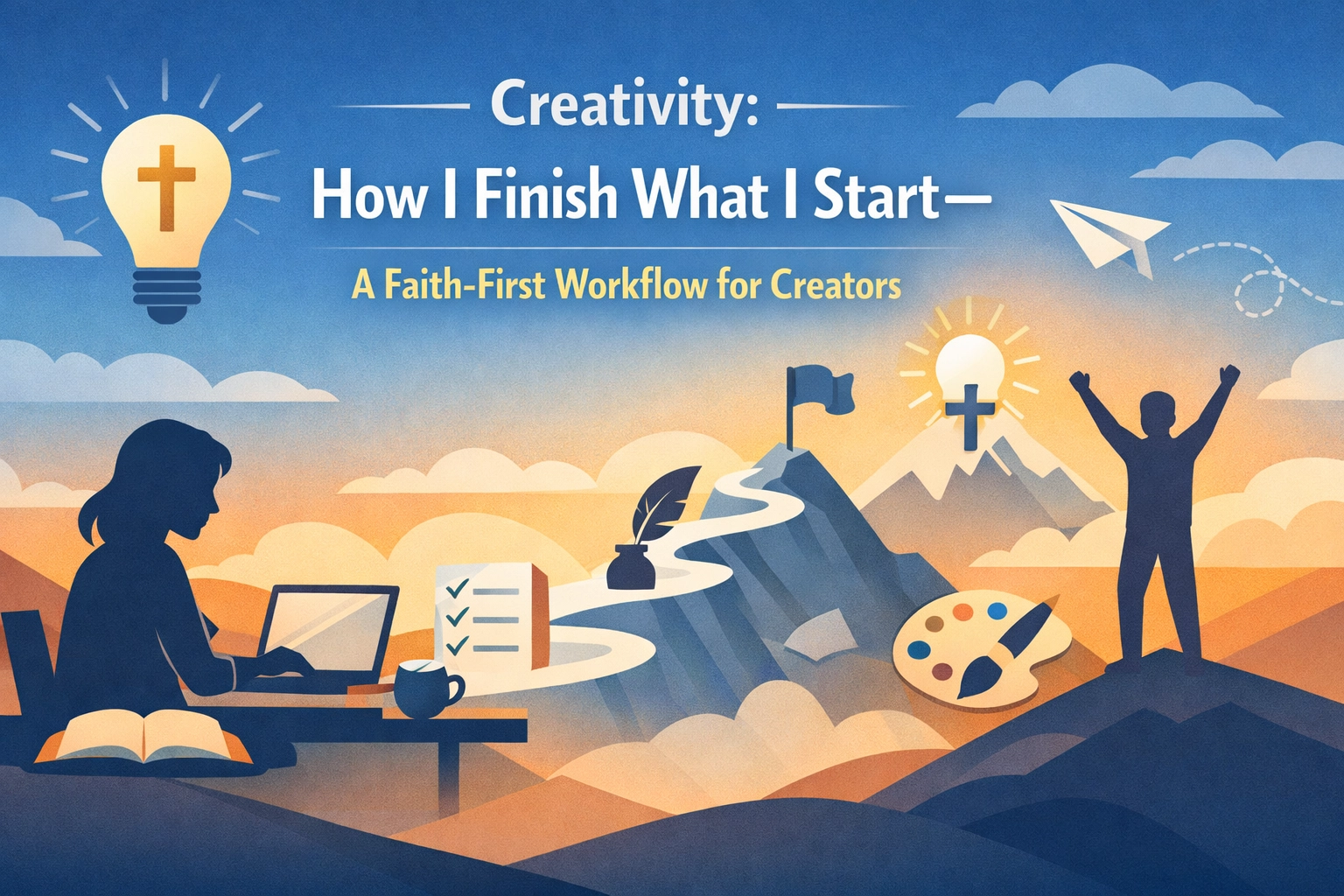
I used to be that person: the one with a dozen half-finished projects collecting dust. A novel stuck at chapter three. A painting with only the background filled in. A song with just the chorus written. I told myself I was "waiting for inspiration" or "not feeling it right now." The truth? I was stuck in a cycle of creating by feelings instead of creating by faith. That changed when I realized something crucial: finishing creative work isn't about waiting for the perfect moment: it's about showing up consistently and inviting God into the process.  Here's the workflow that finally helped me complete what I start.  The Faith-Over-Feelings Reset  For years, I believed the lie that "real" creativity only happens when inspiration strikes. I'd wait for those magical moments when ideas flowed effortlessly, and when they didn't show up, I'd abandon ship. But creativity isn't a lightning bolt: it's a discipline. And like any spiritual discipline, it grows stronger when we practice it consistently, even when we don't feel like it. Before I start any creative session now, I take a simple step: I invite the Holy Spirit into the room.  Sometimes that looks like a quick prayer. Sometimes I trace a small cross on my blank page or canvas. Other times, I just pause and say, "I can't do this alone. Show me what You want me to create today." This one practice breaks through the panic of perfectionism and reminds me that the work doesn't depend entirely on me. I'm partnering with the Creator of the universe. That takes the pressure off and puts the focus where it belongs.  The Core4 Framework That Keeps Me Moving  I structure my creative life around four anchors: what I call the Core4: 1. Connect  – This is where I start every single day. Before I touch a keyboard, pick up a brush, or open a project file, I spend time with God. That might be five minutes of scripture reading or twenty minutes of worship music. The point isn't the length: it's the posture. I'm reminding myself that my creative gifts come from Him and exist to serve His purposes. 2. Clarify  – Every Monday, I write down three goals: one for my creative work, one for my personal life, and one for my business (if applicable). These aren't vague wishes like "work on my book." They're specific and measurable: "Write 1,000 words of Chapter 4" or "Finish background vocals on Track 3." Clarity prevents projects from drifting into the land of "someday." When I know exactly what I'm aiming for, I'm far more likely to hit the target. 3. Create  – This is the non-negotiable part. I block out 30 minutes every day for uninterrupted creative time. Some days it's an hour. Some days it's only 20 minutes because life happens. But I show up. Even when I don't feel inspired. Even when the work feels clunky and rough. The habit of showing up builds momentum.  After a few weeks, my brain starts to expect creative time, and ideas come more easily because I've trained myself to work through resistance instead of giving in to it. 4. Cultivate  – I steward my inspiration. I keep a running list in a Notes app on my phone: every time the Holy Spirit highlights an idea, a lyric, a scene, a color palette, I write it down. On days when I sit down to create and feel stuck, I revisit that list. It's like a garden I've been planting seeds in all along.  How I Actually Finish Projects (Step by Step)  Here's what my process looks like in real time: Step 1: Set a Finish Line 
 I don't start a project without knowing what "done" looks like. If it's a painting, "done" might be "completed and framed." If it's a song, it's "final mix exported and uploaded." Vague goals lead to endless tinkering. Defined goals lead to completion. Step 2: Break It Into Bite-Sized Pieces 
 Big projects feel overwhelming, so I chunk them down. Writing a book? I break it into chapters, then scenes, then daily word counts. Recording an album? I list out each song, then divide tasks: lyrics, melody, arrangement, recording, mixing, mastering. When I only have to focus on one small piece at a time, finishing feels achievable instead of impossible. Step 3: Schedule the Work 
 I literally put "Creative Time" on my calendar like I would a doctor's appointment or a meeting. If it's not scheduled, it won't happen. Life will always offer distractions. Protecting my creative time is an act of faithfulness to the gifts God gave me. Step 4: Work Through the Resistance 
 The middle of every project is the hardest. The initial excitement has worn off, and the finish line still feels far away. This is where most people quit. I've learned to recognize resistance for what it is: a spiritual battle. When I feel like abandoning a project, I pause and pray. I ask God if He's releasing me from this work or if I'm just facing normal creative friction. Nine times out of ten, it's the latter. So I keep going. Step 5: Set a Public Deadline 
 Nothing motivates me like accountability. I tell a friend, post on social media, or commit to a launch date. Once I've made it public, there's healthy pressure to follow through. It's amazing how a little external commitment can push me past internal excuses.  Documenting the Journey (Not Just the Destination)  One of the best habits I've built is keeping a creative journal.  I don't just record finished pieces: I document the process. I write about what I'm learning, what's frustrating me, where I see God showing up in the work. This practice does two things: It helps me track growth.  Looking back, I can see how far I've come, which builds confidence for the next project. It becomes a resource for dry seasons.  When I'm stuck, I flip through old entries and remember what God did before. That fuels my faith to keep moving forward. I also keep a "Studio Dashboard" in a notes app: just a simple document where I track current projects, scripture verses that inspire me, and ideas I want to explore. It keeps everything in one place so I'm not scrambling to remember what I was working on or where I left off.  The Spiritual Reality Behind Creative Work  Here's what I've come to believe: every creative act is an act of faith. When I sit down to write, paint, compose, or build something, I'm declaring that God has put something inside me worth bringing into the world. I'm trusting that the time and energy I invest will produce fruit: even if I can't see it yet. And honestly? That trust doesn't come naturally. I have to choose it daily. Some days I choose it minute by minute. But that's the beauty of a faith-first workflow. It anchors me to something bigger than my own abilities. It reminds me that creative work isn't ultimately about me: it's about pointing others toward the Creator who made us all.  Takeaway / Next Step  If you're tired of starting projects you never finish, here's your action step for this week: Block out 30 minutes of creative time every day for the next seven days.  Put it on your calendar. Set a timer. Show up even if you don't feel inspired. Invite the Holy Spirit into the room before you start. Track what happens. I'm willing to bet that by the end of the week, you'll have made more progress than you did in the last month. Finishing what you start isn't about having more talent or more time. It's about building consistent habits rooted in faith, not feelings. And I believe you can do this. God doesn't waste gifts: He equips the people He calls. If this resonated with you or you want to dive deeper into faith-driven creativity, I'd love for you to reach out to me on the site : visiting helps raise funds for families who lost children at no cost. And if you're looking for a community where faith and life intersect with honest teaching, check out Boundless Online Church  for Christian teachings you can access privately or via sign-up. What creative project are you going to finish this month? I'd love to hear about it: share this post with someone who needs the push to keep creating, and let's build each other up in this journey.

creativity-how-i-finish-what-i-start-a-faith-first-workflow-for-creators

Dr. Layne McDonald
Creative Pastor • Filmmaker • Musician • Author
Memphis, TN

  • Apple Music
  • Spotify
  • YouTube
  • TikTok
  • Instagram
  • Facebook
  • LinkedIn
  • X

© 2026 Layne McDonald. All Rights Reserved.

bottom of page