top of page
< Back

Dealing with Burnout: One Small Step Toward Rest

You know that feeling when your alarm goes off and your first thought is, "I can't do this again today"? That heaviness in your chest before you even get out of bed? The way everything feels like it requires more energy than you have? That's not laziness. That's not weakness. That's burnout knocking on your door, and friend, you're not the only one hearing it. What Burnout Actually Looks Like Burnout doesn't always announce itself with a dramatic breakdown. Most of the time, it creeps in...
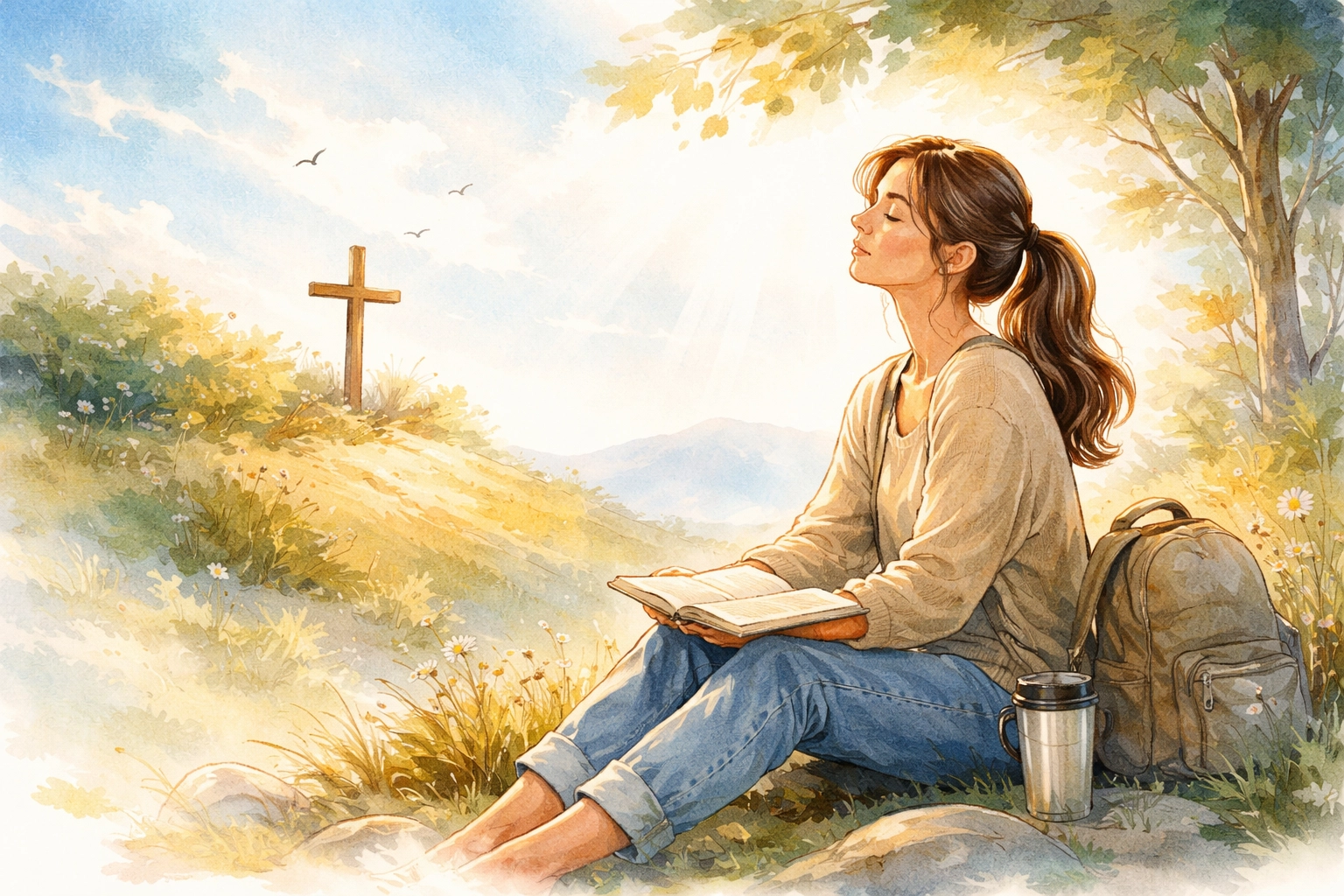
You know that feeling when your alarm goes off and your first thought is, "I can't do this again today"? That heaviness in your chest before you even get out of bed? The way everything feels like it requires more energy than you have? That's not laziness. That's not weakness. That's burnout knocking on your door, and friend, you're not the only one hearing it.  What Burnout Actually Looks Like  Burnout doesn't always announce itself with a dramatic breakdown. Most of the time, it creeps in quietly. It shows up as irritability with people you love. It disguises itself as "just being tired." It convinces you that if you push a little harder, you'll finally catch up. But here's the truth: you can't outrun exhaustion. You can only address it. Burnout happens when the demands on your life consistently exceed your capacity to recover. It's not about being weak or doing something wrong. It's about being human in a world that rarely stops moving. Maybe you're juggling work deadlines, family responsibilities, church commitments, and friendships: all while trying to maintain some version of sanity. Maybe you've been the strong one for so long that you forgot you're allowed to need rest too. Whatever brought you here, I want you to know something important: recognizing burnout is not failure. It's wisdom.  You're Not Alone in This  If you feel burned out right now, you're in good company. Studies show that burnout affects people across every profession, every age group, and every walk of life. Parents feel it. Pastors feel it. Teachers, nurses, business owners, volunteers: everyone is susceptible. And here's something that might surprise you: some of the most faithful, servant-hearted people are the most prone to burnout. Why? Because they give and give and give without building in time to receive. Sound familiar? There's no shame in admitting you're running on empty. In fact, it takes courage to stop pretending everything is fine when it's not. The people who truly overcome burnout are the ones willing to be honest about where they are. So take a breath right now. A real one. You don't have to have it all figured out today. You just need to take one small step.  Why Small Steps Actually Work  When you're exhausted, the idea of "fixing" your life feels impossible. And honestly? Trying to overhaul everything at once usually backfires. You make a bunch of ambitious changes, burn out even faster, and end up right back where you started: except now with guilt added on top. That's why I'm not going to ask you to transform your entire schedule overnight. Instead, I want you to consider this: one small, sustainable change can break the burnout cycle . Research confirms that starting with a single modification to your daily routine creates lasting benefits. You don't need a complete life overhaul. You need a starting point. Here are some practical options to consider: Create one technology boundary.  Pick a specific time each day to disconnect completely: no phone, no email, no scrolling. Even 30 minutes of screen-free time can reset your nervous system. Some people make their bedroom a phone-free zone. Others turn off notifications after 8 PM. Find what works for you. Slow down one existing activity.  You don't need to add meditation retreats or spa days (though those are nice). Just slow down something you're already doing. Eat lunch without checking your phone. Take a short walk without your earbuds. Read a book for 15 minutes before bed instead of watching videos. Move your body for 10 minutes.  You don't need a gym membership or an hour-long workout. A 10-minute walk can improve your mood for two hours. Movement reminds your body that it's alive: not just a machine getting things done. Protect your sleep.  This one is non-negotiable. Sleep is when your body and mind repair themselves. If you're consistently getting less than seven hours, everything else becomes harder. Make rest a priority, not a reward for finishing your to-do list. Practice five minutes of stillness.  Sit quietly. Breathe deeply. Don't scroll. Just be present. This isn't about perfecting meditation: it's about giving your mind permission to stop performing for a few minutes each day. The key is identifying what genuinely gives you energy. Don't copy someone else's strategy if it doesn't fit your life. Pay attention to what actually helps you feel recharged, and do more of that.  The Spiritual Blueprint for Rest  Here's where I need to remind you of something God has been saying since the beginning: rest is not optional. It's designed into creation itself. When God created the world, He didn't just work for six days and then reluctantly take a break. He modeled rest. He set apart the seventh day and called it holy. Not because He was tired: because He was teaching us something. Sabbath isn't a suggestion. It's an invitation. In Exodus 20:8-10, we read: "Remember the Sabbath day by keeping it holy. Six days you shall labor and do all your work, but the seventh day is a sabbath to the Lord your God." God knew that humans would struggle to stop. He knew we would tie our worth to our productivity. He knew we would keep pushing until we broke. So He built rest into the rhythm of life: not as a luxury, but as a command. Jesus echoed this when He said, "Come to me, all you who are weary and burdened, and I will give you rest"  (Matthew 11:28). Did you catch that? He didn't say, "Come to me once you've earned it." He didn't say, "Come to me after you've fixed everything." He said come as you are: weary, burdened, exhausted: and He will give you rest. That's grace. And it's available to you right now.  What Rest Really Means  True rest isn't just about sleeping more (though that helps). It's about releasing the belief that your value depends on your output. You are not a machine. You are a beloved child of God. Your worth was established before you accomplished a single thing, and it remains unchanged on your worst, most unproductive day. When you rest, you're not being lazy. You're trusting God. You're saying, "I believe You can handle what I'm setting down." That's an act of faith. Burnout often comes from carrying burdens we were never meant to carry alone. Part of recovery is learning to release control: to God, to trusted community, to healthier rhythms. You don't have to hold everything together. You just have to take the next faithful step.  Your One Small Step This Week  So here's my challenge for you: choose one small change and commit to it for seven days. Maybe it's putting your phone in another room during dinner. Maybe it's going to bed 30 minutes earlier. Maybe it's taking a five-minute walk each afternoon. Maybe it's simply pausing each morning to thank God for three things before you check your messages. Whatever it is, keep it simple. Keep it sustainable. And give yourself grace when you're not perfect at it. Progress over perfection. One percent better each day. That's how lasting change happens.  You Don't Have to Figure This Out Alone  If burnout has been your companion for a while, you might need more than a blog post. You might need someone to walk alongside you: to help you identify patterns, rebuild healthy rhythms, and reconnect with your purpose. That's exactly what coaching and mentorship are for. www.laynemcdonald.com

dealing-with-burnout-one-small-step-toward-rest

Dr. Layne McDonald
Creative Pastor • Filmmaker • Musician • Author
Memphis, TN

  • Apple Music
  • Spotify
  • YouTube
  • TikTok
  • Instagram
  • Facebook
  • LinkedIn
  • X

Sign up for our newsletter

© 2025 Layne McDonald. All Rights Reserved.

bottom of page