top of page
< Back

Deuteronomy Unfiltered: Part 5 – Finishing Well, Trusting Forward (Deuteronomy 31–34)

What does it look like to finish well? Moses, at 120 years old, is about to find out. After four decades of leading a stubborn, complaining, miracle-witnessing people through the wilderness, his time is up. But instead of checking out early or going through the motions, Moses uses his final moments to set up the next generation for success. These closing chapters of Deuteronomy aren't just the end of Moses' story: they're a masterclass in legacy building, graceful transitions, and trusting...
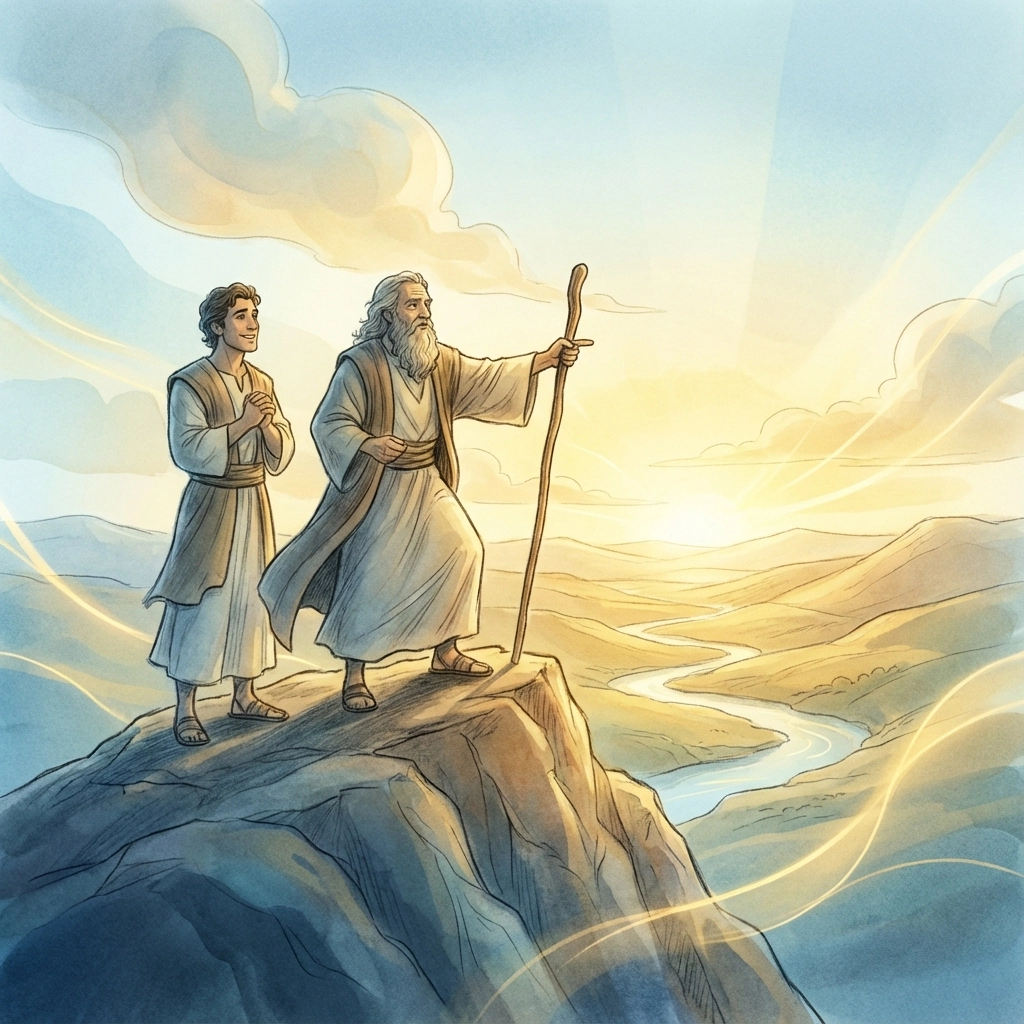
What does it look like to finish well? Moses, at 120 years old, is about to find out. After four decades of leading a stubborn, complaining, miracle-witnessing people through the wilderness, his time is up. But instead of checking out early or going through the motions, Moses uses his final moments to set up the next generation for success. These closing chapters of Deuteronomy aren't just the end of Moses' story: they're a masterclass in legacy building, graceful transitions, and trusting God with what comes next.  The Hardest Part of Leading: Letting Go  Read Deuteronomy 31:1-8 Moses opens his farewell with some of the most honest leadership we'll see in Scripture. He tells Israel straight up: "I am now a hundred and twenty years old and I am no longer able to lead you." No pride, no pretending he's got more in the tank. Just truth. But here's what's beautiful: Moses doesn't make this transition about him. He immediately points to God's faithfulness and Joshua's readiness. "The Lord your God himself will cross over ahead of you," he tells them. Then he looks at Joshua and says, "Be strong and courageous." Group Discussion: When have you seen someone transition out of leadership well? What made it effective? What fears do you think Moses might have had about stepping down? How does Moses' example challenge our own approach to passing the torch in our families, jobs, or ministries? The truth is, most of us struggle with letting go. Whether it's our kids growing up, stepping back from a role we've loved, or watching others take over something we built: transition is tough. Moses shows us that finishing well isn't about clinging to control. It's about setting others up to succeed without you.  The Song That Tells the Truth  Read Deuteronomy 31:16-22; 32:1-4 God gives Moses some hard news: "These people are going to mess this up." They'll prosper in the Promised Land, get comfortable, and start chasing other gods. So God tells Moses to write a song that will serve as a witness against Israel when they inevitably rebel. This isn't pessimism: it's realism. Moses writes a song that captures both God's faithfulness and humanity's tendency to forget. The Song of Moses in Deuteronomy 32 is one of the most beautiful and brutally honest pieces of poetry in Scripture. Group Discussion: Why do you think God chose a song rather than another speech or law to preserve this message? How does knowing someone might fail affect how you prepare them for success? What "songs" (habits, reminders, practices) help you remember God's faithfulness during good times? Moses could have sugar-coated the future or pretended everything would be perfect. Instead, he gave Israel a tool to remember truth when times got tough. That's the kind of honesty that actually helps people.  Blessing What's Coming  Read Deuteronomy 33:1-5, 26-29 Before he dies, Moses takes time to bless each tribe of Israel. These aren't generic "be good" blessings: they're specific, prophetic words tailored to each group's strengths and calling. He sees their future and speaks life over it. Moses blesses Judah for leadership, Levi for priestly service, Benjamin for being beloved, Joseph for abundance, and on down the line. He's not just saying nice things: he's calling out destiny and potential in each tribe. Group Discussion: Who in your life has spoken specific blessings over your future? What would it look like for you to bless the next generation in your family or sphere of influence? Why do you think specific blessings matter more than general encouragement? This is one of the most practical things we can learn from Moses' final days. Instead of focusing on what might go wrong, he invests time speaking life over what could go right. He paints a picture of their potential and calls them into it.  The View From the Mountain  Read Deuteronomy 34:1-8 God takes Moses up Mount Nebo and shows him the entire Promised Land: from the Mediterranean Sea to the Jordan Valley, from the northern territories all the way south. Moses gets to see what he's been working toward for forty years, even though he won't get to enter it himself. Then Moses dies, and here's what blows my mind: "his eyes were not weak nor his strength gone." This wasn't a man who faded away. He finished strong, with clarity and vigor, trusting God's timing completely. Group Discussion: How do you think Moses felt seeing the Promised Land but not entering it? What does it mean to trust God's timing when it doesn't match our preferences? How can we find peace with unfinished business in our own lives? Moses' death teaches us that finishing well isn't about completing every goal or seeing every dream fulfilled. It's about faithfulness to the end, trusting that God's plan is bigger than our individual piece of it.  What This Means for Us  Moses shows us that legacy isn't about being remembered: it's about setting others up to go further than we did. He spent his last days: Being honest about limitations  while pointing to God's unlimited power Preparing successors  instead of protecting his position  Speaking truth  about challenges ahead while providing tools to handle them Blessing the future  instead of lamenting what he'd miss Trusting God's timing  even when it meant personal disappointment Practical Applications: In parenting:  Are you preparing your kids to succeed without you, or creating dependence? In work:  How can you mentor others and share knowledge instead of hoarding it? In ministry:  What systems and leaders are you developing to continue the mission? In relationships:  How can you speak specific blessings over the people you love?  Discussion Questions for Your Group  Moses' final act wasn't dramatic or flashy: it was faithful. He passed the torch, spoke truth in love, blessed what was coming, and trusted God with the rest. That's what finishing well looks like. The question for us isn't whether we'll face transitions, limitations, or unfinished dreams. The question is whether we'll handle them like Moses: with honesty, generosity, and unwavering trust in God's bigger plan. Ready to dive deeper into what it means to leave a lasting legacy?  Dr. Layne McDonald's coaching and leadership resources can help you develop the kind of influence that outlasts your lifetime. Check out our leadership development opportunities  and start building a legacy that matters.

deuteronomy-unfiltered-part-5-finishing-well-trusting-forward-deuteronomy-31-34

Dr. Layne McDonald
Creative Pastor • Filmmaker • Musician • Author
Memphis, TN

  • Apple Music
  • Spotify
  • YouTube
  • TikTok
  • Instagram
  • Facebook
  • LinkedIn
  • X

Sign up for our newsletter

© 2025 Layne McDonald. All Rights Reserved.

bottom of page