top of page
< Back

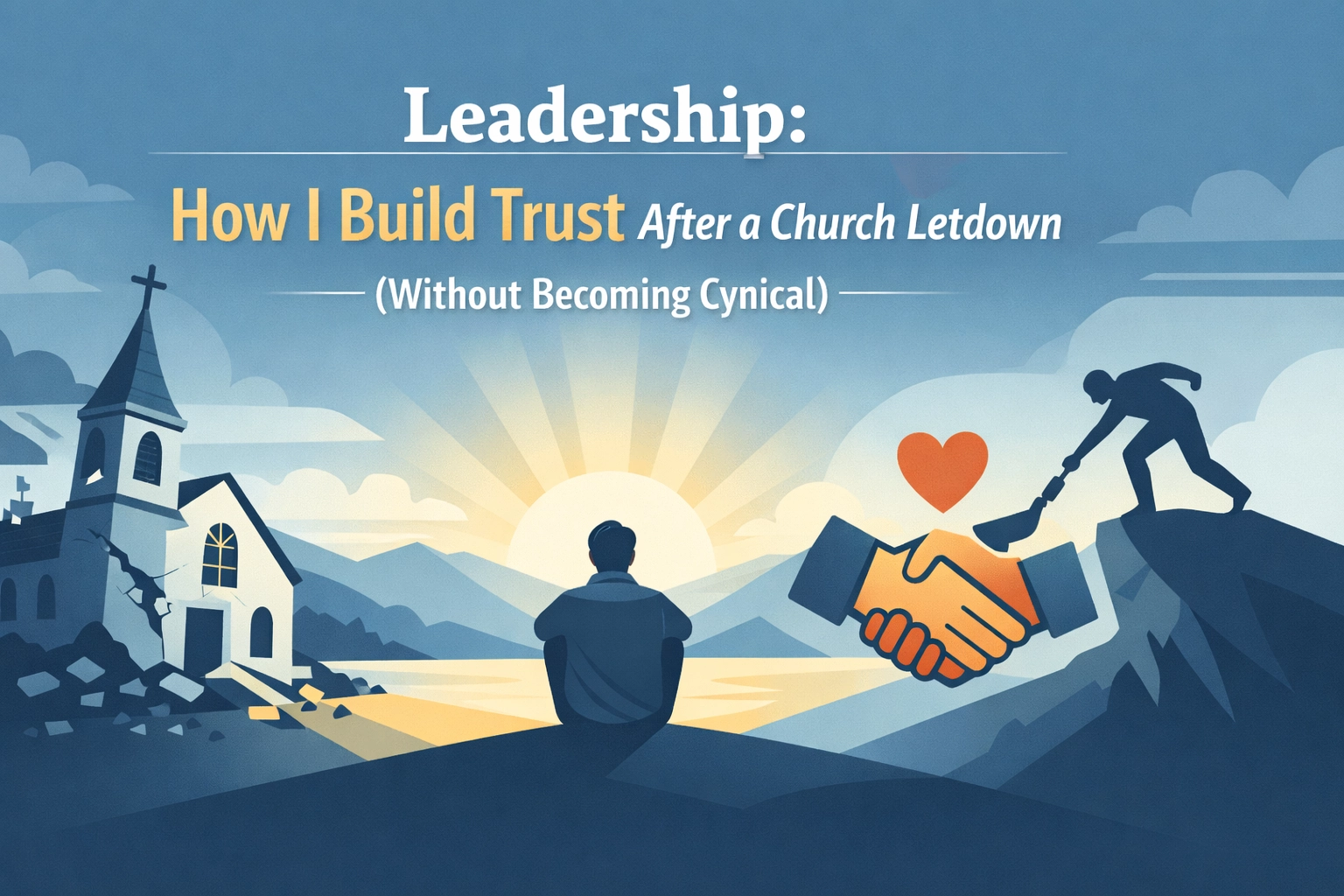
Leadership: How I Build Trust After a Church Letdown (Without Becoming Cynical)

I still remember the Sunday morning I realized I couldn't go back. Not to that building, not to those people, and certainly not with the same open-hearted trust I'd carried for years. The betrayal didn't come from strangers, it came from leaders I'd served alongside, people I'd prayed with, voices I'd trusted to reflect God's heart. And when the illusion shattered, I had a choice: become cynical and close off, or figure out how to rebuild trust without pretending the wound never happened. If...
I still remember the Sunday morning I realized I couldn't go back. Not to that building, not to those people, and certainly not with the same open-hearted trust I'd carried for years. The betrayal didn't come from strangers, it came from leaders I'd served alongside, people I'd prayed with, voices I'd trusted to reflect God's heart. And when the illusion shattered, I had a choice: become cynical and close off, or figure out how to rebuild trust without pretending the wound never happened. If you've been let down by church leadership, you know the unique ache that comes with it. It's not just disappointment, it's disorientation. You expected these people to be safe, to lead with integrity, to protect what's sacred. When they don't, the hurt cuts deeper than almost any other kind of betrayal. But here's what I've learned: you can rebuild trust after a church letdown without becoming cynical. It just requires separating your faith in God from your disillusionment with people, and learning to discern wisely instead of trusting blindly.  Separate God From the People Who Failed You  The first step forward is the hardest: recognizing that leaders' failures don't reflect God's faithfulness.  When spiritual leaders disappoint you, the wound feels uniquely painful because you expected them to reflect God's character. You trusted them to steward something holy, and when they didn't, it's easy to collapse the difference between flawed humans and the God they claimed to represent. But God is not the pastor who manipulated you. He's not the elder board that covered up abuse. He's not the worship leader who gossiped behind closed doors. People fail. God doesn't. I had to reaffirm, daily, sometimes hourly, that God is the only one who is always faithful and always trustworthy.  Not because people told me to "just have more faith," but because I needed a secure reference point. Cynicism thrives when you conflate human failure with divine abandonment. The antidote is anchoring yourself to the truth that God's character remains unchanged, even when His representatives get it wrong.  Start With Honest Grief, Not Forced Forgiveness  Don't rush to "move on." I tried that at first. I smiled through the hurt, quoted Romans 8:28, and told myself I just needed to forgive faster. But pretending the betrayal didn't happen only pushed the bitterness deeper. Instead, I gave myself permission to name the wound with clarity.  I journaled the actual events, what was said, what was done, how it impacted me. I prayed angry prayers. I let myself grieve the loss of community, the loss of trust, the loss of what I thought that place represented. The goal wasn't to stay stuck in bitterness. The goal was to process it fully so cynicism didn't calcify into my default posture. Honest grief creates space for real healing. Forced forgiveness just buries the wound where it festers.  Untangle the Lies That Keep You Stuck  Church betrayal often leaves behind internalized distortions. For me, it sounded like: "Setting boundaries makes me unchristian."  Or "Questioning leadership means I lack faith."  Or "If I'm really walking in grace, I should just let this go." These scripts kept me confused and compliant for too long. I needed help, through counseling and honest conversations with trustworthy mentors, to distinguish between spiritualized manipulation and actual biblical truth. Here's what I learned to replace those lies with: Forgiveness means releasing my desire for revenge, it doesn't mean pretending boundaries aren't necessary. Questioning leaders who act without accountability is wisdom, not rebellion. Grace doesn't mean tolerating harm. It means extending mercy while protecting what's sacred. Cognitive clarity prevents cynicism. When you can see the problem wasn't faith itself but how it was weaponized, you stop blaming God and start discerning the difference between healthy leadership and toxic control.  Rebuild Trust Through Observable Change, Not Words  The path forward isn't trusting everyone again, it's learning to discern wisely.  I don't give blind trust anymore. I watch for consistent evidence over time: Do leaders demonstrate humility? Do they welcome accountability? Do they repair harm or just defend their reputation? Trust now becomes less about "giving people the benefit of the doubt" and more about evaluating fruit. Jesus said you'll know people by their fruit, and I take that seriously now. I test trust in small doses first. I watch how leaders respond to correction, how they treat people with less power, how they handle their mistakes. And I give myself full permission to walk away from relationships that replicate old patterns. That's not cynicism, that's discernment.  Establish Boundaries as Acts of Wisdom  Boundaries saved me from bitterness. I stopped engaging in theological debates over my pain. I limited contact with people who minimized what happened. I chose new communities carefully, prioritizing places with transparent accountability structures. Some people called it bitterness. I call it self-preservation. Boundaries aren't signs of cynicism, they're acts of freedom.  Cynicism assumes everyone will disappoint you and closes off connection entirely. Healthy caution means staying open to people who prove themselves trustworthy over time, while protecting yourself from those who don't. I no longer feel guilty for saying no. I don't owe toxic systems my presence, my labor, or my silence. And neither do you.  Reconnect With Christ Before Returning to Community  If church was the source of your hurt, don't immediately push yourself back into that environment. I took a season to focus on my direct relationship with Christ: no programs, no performance, no crowds. Just me, the Scriptures, and honest prayer. I spent a lot of time in the Psalms, where people poured out raw struggle and anger before God. I brought my questions, my grief, my confusion. And slowly, I found that Christ could hold my pain without defending the people who caused it. Only after that foundation was restored did I consider gradual re-engagement with community. I started small: a discipleship group with two trustworthy people, online sermons from churches with solid teaching and transparent leadership. I let myself take it slow. There's no timeline for this. Rushing back into community before you've reconnected with Christ just sets you up for more disillusionment.  The Difference Between Healthy Caution and Cynicism  Here's the line: Cynicism assumes everyone will fail you and closes off entirely. Healthy caution stays open to people who prove themselves over time, while maintaining wise boundaries. I'm not cynical, but I'm also not naïve anymore. I don't assume good intentions just because someone holds a title. I don't confuse charisma with character. I don't mistake smooth words for actual repentance. But I also haven't given up on community. I've found safe people: leaders who welcome questions, friends who honor boundaries, spaces where accountability is expected, not resented. They exist. It just takes time and discernment to find them.  Takeaway / Next Step  If you're rebuilding trust after a church letdown, start here: Reaffirm that God's faithfulness is separate from people's failures.  Anchor yourself to Him, not institutions. Give yourself permission to grieve honestly.  Don't rush forgiveness or pretend the wound doesn't exist. Identify and replace the lies  that keep you stuck in confusion or compliance. Test trust in small doses  and watch for consistent fruit over time. Establish clear boundaries  as acts of wisdom, not bitterness. Reconnect with Christ first  before rushing back into community. You don't have to choose between cynicism and blind trust. There's a third option: discernment rooted in God's truth, protected by healthy boundaries, and open to real connection when it's safe. If this resonated with you, I'd love to hear your story: feel free to reach out to me on the site.  Browsing helps raise funds for families who have lost children through Google AdSense at no cost to you. For solid biblical teaching and a community committed to authentic faith, check out Boundless Online Church : you can access content privately or sign up to connect deeper. And if this post helped, share it with someone else who's navigating trust after betrayal. We all need to know we're not alone in this.

leadership-how-i-build-trust-after-a-church-letdown-without-becoming-cynical

Dr. Layne McDonald
Creative Pastor • Filmmaker • Musician • Author
Memphis, TN

  • Apple Music
  • Spotify
  • YouTube
  • TikTok
  • Instagram
  • Facebook
  • LinkedIn
  • X

Sign up for our newsletter

© 2025 Layne McDonald. All Rights Reserved.

bottom of page