top of page
< Back

Leadership: The 10-Minute Weekly Reset That Builds Trust in a Church Team

I've watched church teams crumble over things that could've been caught in a ten-minute conversation. A worship leader who felt unheard. A children's ministry volunteer who didn't know if anyone noticed their work. A tech team member who assumed silence meant approval, only to find out weeks later that something was wrong all along. The pattern is always the same: small disconnects pile up until trust erodes. And once trust is gone, everything else: vision, creativity, unity: becomes ten...
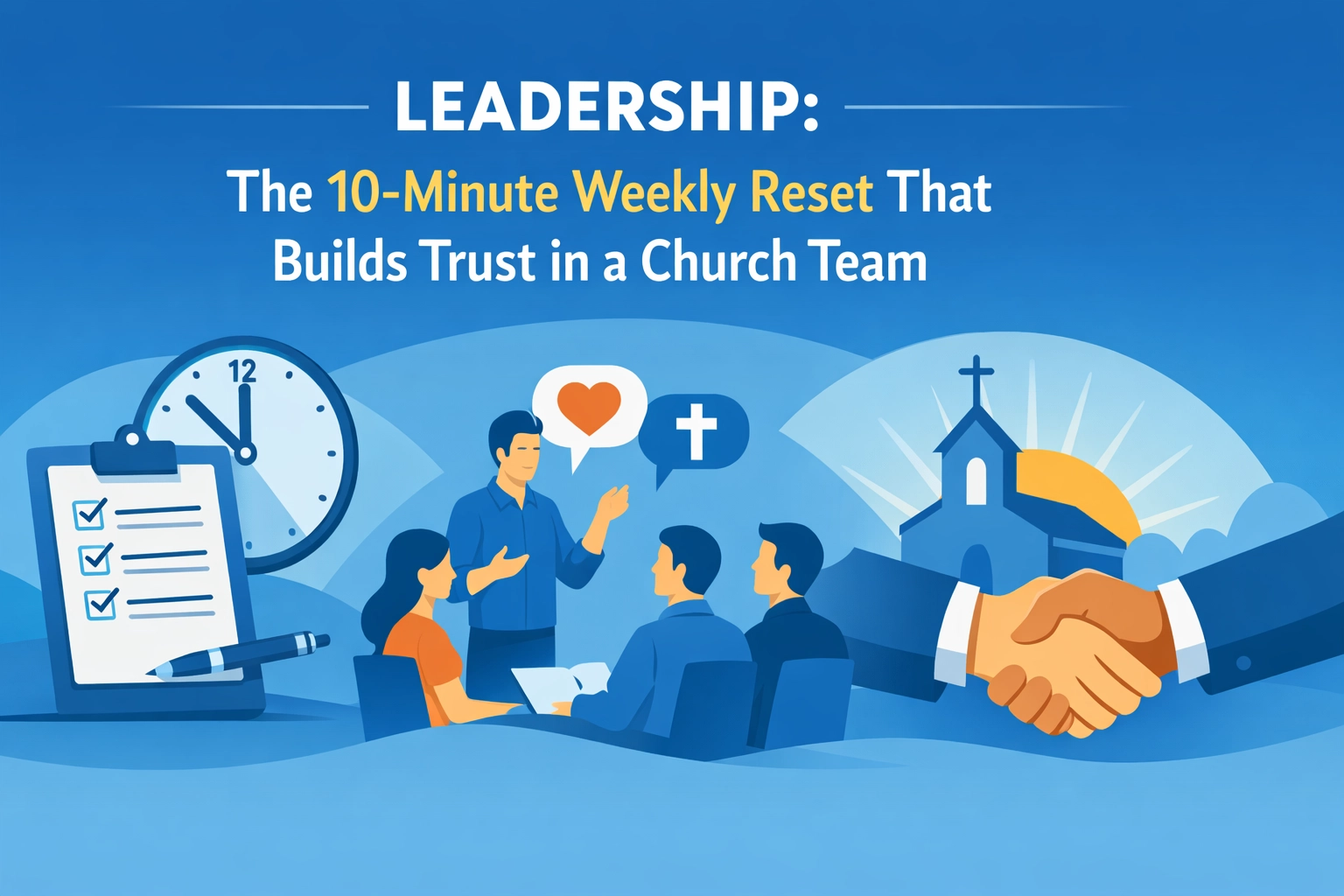
I've watched church teams crumble over things that could've been caught in a ten-minute conversation. A worship leader who felt unheard. A children's ministry volunteer who didn't know if anyone noticed their work. A tech team member who assumed silence meant approval, only to find out weeks later that something was wrong all along. The pattern is always the same: small disconnects pile up until trust erodes. And once trust is gone, everything else: vision, creativity, unity: becomes ten times harder to rebuild. That's why I started using a simple 10-minute weekly reset with every team I lead. It's not a full meeting. It's not a formal review. It's a quick, intentional touchpoint that keeps trust strong and miscommunication from turning into bigger problems. Here's how it works and why it matters.  Why Trust Is the Foundation of Every Church Team  Trust isn't built in big moments. It's built in the small, consistent interactions where people feel seen, heard, and valued. In a church setting, teams often run on volunteers who give their time, talent, and heart because they believe in the mission. But when they feel overlooked, underappreciated, or out of the loop, burnout and frustration creep in fast. I've learned that trust requires three things: Clarity  – People need to know what's expected and where they stand. Connection  – People need to feel like they matter, not just like cogs in a machine. Consistency  – People need to know they can count on you to show up, listen, and follow through. A weekly reset creates space for all three. It's not about micromanaging. It's about staying connected so small issues don't become big fractures.  The 10-Minute Weekly Reset Framework  This isn't complicated. In fact, the simpler you keep it, the better it works. Here's the structure I use every week with my team members:  1. Check In on the Person (2 minutes)  Start with the human, not the task list. Ask one simple question: "How are you doing: really?" Give them space to answer honestly. Sometimes it's a quick "I'm good, just busy." Other times, it's "Actually, I've been feeling overwhelmed." Either way, you're signaling that they matter beyond their role. This isn't therapy. It's not even deep conversation. It's just a moment to acknowledge that the person you're leading is more than their output.  2. Celebrate One Win (1 minute)  Find something they did well in the past week and name it. Be specific. "That social media post you created got more engagement than anything we've done this month." "The way you handled that upset parent on Sunday was graceful and wise." "I noticed you stayed late to clean up after the event: that didn't go unnoticed." Recognition fuels motivation. And when people know their contributions are seen, they're more likely to keep giving their best.  3. Clarify Expectations for the Week Ahead (3 minutes)  This is where you align on what matters most in the coming week. Ask: "What are your top priorities this week?" "Is there anything you need from me to make that happen?" "Are there any roadblocks I should know about?" This prevents the "I thought you wanted it this way" confusion that kills trust. It also gives you a chance to adjust expectations if something unrealistic is on their plate.  4. Ask One Open Question (2 minutes)  End with a question that invites honest feedback. Rotate between these: "Is there anything I could be doing better as a leader?" "What's one thing that would make your role easier?" "Is there anything you're unsure about right now?" The goal isn't to solve everything on the spot. It's to create a culture where people feel safe bringing up concerns before they turn into resentment.  5. Close with Affirmation (1 minute)  End on a note of gratitude and encouragement. "Thanks for all you do. This team is better because you're part of it." "I'm grateful to serve alongside you." Simple, sincere, and powerful.  6. Follow Through on What You Heard (1 minute after the conversation)  Immediately after the reset, jot down any action items or follow-ups. If someone mentioned needing a new piece of equipment, get it ordered. If they expressed confusion about a process, clarify it before the week is out. Trust isn't just built in the conversation: it's built in what you do after.  What This Does for Your Team  When you make this a consistent rhythm, here's what starts to happen: Problems get caught early.  Instead of discovering issues after they've festered, you hear about them when they're still manageable. People feel valued.  Regular connection reminds your team that they're more than task-completers: they're partners in the mission. Communication improves.  When people know they have a weekly space to share concerns, they're less likely to let frustration simmer in silence. Burnout decreases.  Checking in regularly helps you spot warning signs before someone hits a breaking point. Trust compounds.  Over time, these small moments add up to a culture where people feel safe, heard, and empowered.  Common Pitfalls to Avoid  I've messed this up enough times to know what doesn't work. Here are the traps to watch for:  Don't Turn It Into a Task-Only Meeting  If you skip the personal check-in and jump straight to the to-do list, you're missing the point. People will feel like they're being managed, not led.  Don't Skip Weeks  Consistency is everything. If you only do this when it's convenient, it loses its impact. Block ten minutes every week: same day, same time if possible: and protect that space.  Don't Just Talk: Actually Listen  If you're thinking about your next meeting while they're talking, they'll feel it. Give them your full attention. Put your phone down. Make eye contact. Listen like their words matter: because they do.  Don't Ignore the Follow-Through  If you ask what they need and then do nothing about it, trust doesn't just stay flat: it goes backward. Keep your word on the small stuff. That's how people know they can count on you for the big stuff.  Takeaway / Next Step  Building trust doesn't require grand gestures or elaborate systems. It requires showing up consistently, listening well, and following through on what you hear. If you lead a church team: whether it's two people or twenty: try this 10-minute weekly reset for the next month. Pick one person to start with. Schedule it. Protect it. And watch what happens when people feel truly seen and valued. You'll be surprised how much stronger your team becomes when trust becomes the rhythm, not the exception. Want more practical leadership strategies that help you grow as a person and a leader?  Feel free to reach out to me on the site  anytime: I'd love to hear how you're building trust in your own context. And just so you know, visiting helps raise funds for families who lost children at no cost to you. If you're looking for a space to grow in your faith and connect with others who are walking the same journey, check out Boundless Online Church . It's a community grounded in real Christian teaching, and you can access it privately or sign up to dive deeper. And if this post was helpful, I'd love for you to share it with another leader who could use the encouragement. Let's keep learning and loving like Jesus: one conversation at a time.

leadership-the-10-minute-weekly-reset-that-builds-trust-in-a-church-team

Dr. Layne McDonald
Creative Pastor • Filmmaker • Musician • Author
Memphis, TN

  • Apple Music
  • Spotify
  • YouTube
  • TikTok
  • Instagram
  • Facebook
  • LinkedIn
  • X

© 2026 Layne McDonald. All Rights Reserved.

bottom of page