top of page
< Back

The Torah Explained: Part 1 – What Is the Torah?

Ever wondered why Jewish friends talk about the "Torah" differently than we talk about the "Old Testament"? Or maybe you've heard the word thrown around in Bible studies and thought, "I should probably know what that actually means." You're not alone! Many Christians have questions about the Torah, and honestly, understanding it can deepen our appreciation for the roots of our faith in ways we never expected. Welcome to the first part of our five-part journey exploring the Torah. Think of...
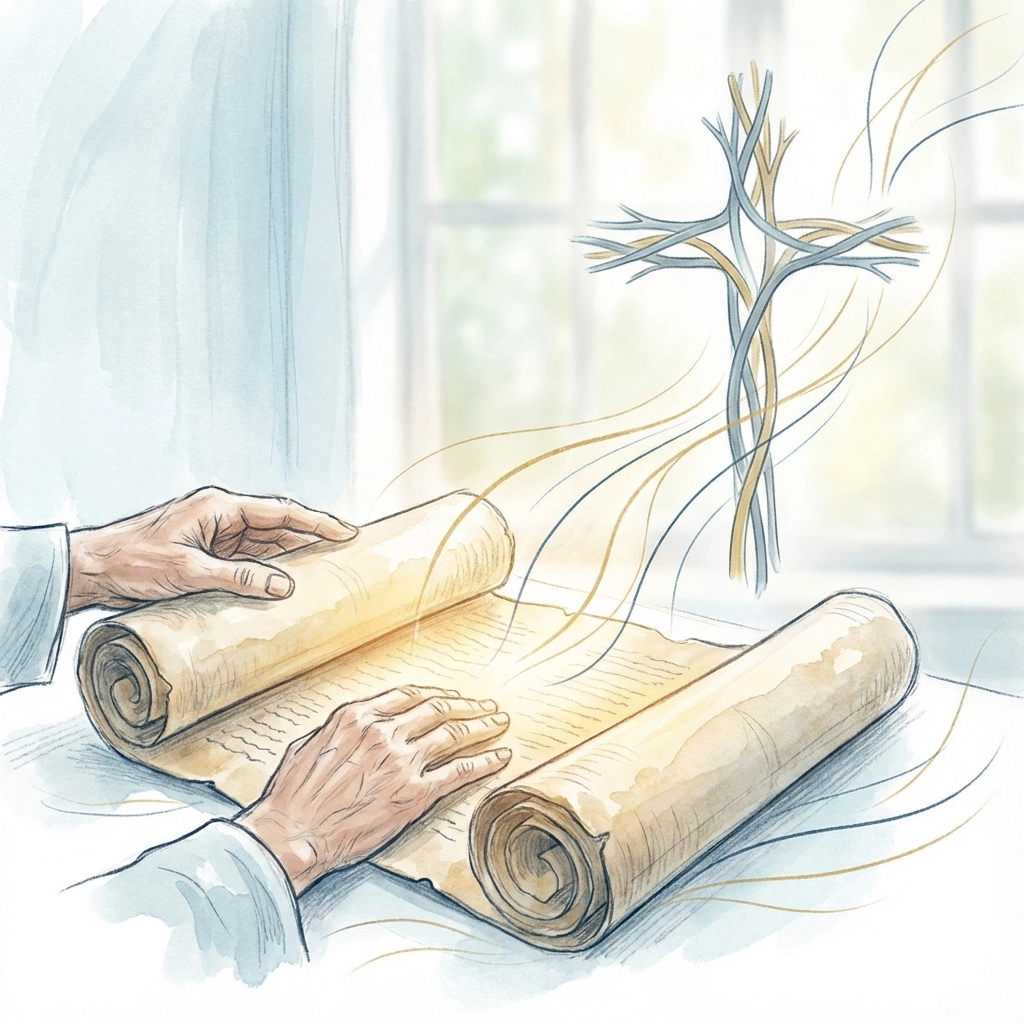
Ever wondered why Jewish friends talk about the "Torah" differently than we talk about the "Old Testament"? Or maybe you've heard the word thrown around in Bible studies and thought, "I should probably know what that actually means." You're not alone! Many Christians have questions about the Torah, and honestly, understanding it can deepen our appreciation for the roots of our faith in ways we never expected. Welcome to the first part of our five-part journey exploring the Torah. Think of this as your friendly introduction to one of the most important collections of books in human history – books that shaped not just Judaism, but Christianity itself.  What Exactly Is the Torah?  Here's where it gets interesting. The word "Torah" comes from Hebrew and literally means "instruction," "teaching," or "law." But unlike our English word "law" that might make you think of traffic tickets or courtrooms, Torah is more like a loving parent's guidance – teaching you how to live well. At its most basic level, the Torah refers to the first five books of the Bible: • Genesis  (Bereishit in Hebrew - "In the beginning")
• Exodus  (Shemot - "Names") 
• Leviticus  (Vayikra - "And He called")
• Numbers  (Bamidbar - "In the wilderness")
• Deuteronomy  (Devarim - "Words") Christians often call these the "Pentateuch" (meaning "five scrolls" in Greek) or sometimes the "Books of Moses." Jews commonly refer to them as the "Chumash" (from the Hebrew word for "five").  But Wait, There's More to the Story  This is where it gets really fascinating. When Jewish people say "Torah," they might mean different things depending on the context: The Written Torah  - This is exactly what we just talked about: those five books, traditionally written on parchment scrolls by hand. In synagogues, these scrolls are treated with incredible reverence. They're housed in a special ark, covered with beautiful cloth, and read from during services with a special pointer called a "yad" (because touching the text directly isn't allowed). The Oral Torah  - Here's something many Christians don't know about. Jewish tradition teaches that when Moses received the written law on Mount Sinai, he also received oral explanations and interpretations. These oral teachings were passed down through generations and eventually written down in collections like the Talmud and Midrash. Torah as Everything  - Sometimes "Torah" refers to all Jewish teaching and law. It's like how we might use "the Bible" to mean not just the text, but everything we understand about living a biblical life.  Why These Five Books?  Great question! Jewish tradition holds that Moses wrote these five books under divine inspiration. But there's more to consider: They tell a complete story.  From creation (Genesis) through the exodus from Egypt, the giving of the law, the wilderness wanderings, and Moses's final speeches before the Israelites entered the Promised Land – it's a cohesive narrative arc. They contain the foundational laws.  All 613 commandments that form the basis of Jewish religious life are found in these five books. The famous Ten Commandments? They're here. The instructions for worship, festivals, and daily living? All here. They establish the covenant.  These books detail God's special relationship with Abraham, Isaac, Jacob, and their descendants – the foundation of both Jewish and Christian understanding of God's chosen people.  How Is This Different From Our Old Testament?  Christians and Jews actually share these five books! The differences come in how we organize and understand the broader collection: Organization:  Christians typically organize the Old Testament as Law, History, Poetry, and Prophets. Jews organize the Hebrew Bible (Tanakh) as Torah, Nevi'im (Prophets), and Ketuvim (Writings). Emphasis:  In Judaism, the Torah holds supreme authority. Everything else in the Hebrew Bible is seen through the lens of Torah. Christians tend to see the entire Old Testament as equally inspired, with Jesus as the fulfillment of Old Testament prophecy. Interpretation:  Jews read the Torah alongside the Oral Torah and rabbinical commentary. Christians read the Old Testament through the lens of the New Testament and the life of Jesus.  Why Should Christians Care?  Understanding the Torah enriches our faith in several ways: Jesus was Torah-observant.  He grew up hearing these words, celebrating the festivals described in them, and following their teachings. When He said He came not to abolish the law but to fulfill it (Matthew 5:17), He was talking about the Torah. The roots of our faith are here.  The promises to Abraham, the covenant at Sinai, the sacrificial system that points forward to Christ – it all begins in the Torah. It builds bridges.  Understanding how Jewish people view these sacred texts helps us engage respectfully in interfaith dialogue and appreciate our shared heritage.  Questions for Your Group  As you dive into this study together, consider these questions:  Moving Forward  This is just the beginning! In our next part, we'll dive deeper into the content of the Torah – exploring themes, stories, and laws that continue to shape both Jewish and Christian faith today. We'll also look at why these particular teachings were preserved and how they've influenced both communities for thousands of years. The beautiful thing about studying the Torah as Christians is that it doesn't threaten our faith – it enriches it. We see the careful way God prepared His people for the coming Messiah. We understand better the world Jesus entered and the traditions He both honored and transformed. Whether you're leading this study or participating in it, approach this journey with curiosity and respect. We're exploring not just ancient texts, but living traditions that continue to guide millions of people in their relationship with God. Ready to go deeper? Your understanding of Scripture – and your appreciation for the Jewish roots of our Christian faith – will never be the same. Are you looking to deepen your biblical knowledge and leadership skills? Dr. Layne McDonald offers coaching and resources specifically designed to help Christians grow in their understanding of Scripture and their calling as leaders. Explore our leadership resources or discover how biblical foundations can transform your life and ministry.

the-torah-explained-part-1-what-is-the-torah

Dr. Layne McDonald
Creative Pastor • Filmmaker • Musician • Author
Memphis, TN

  • Apple Music
  • Spotify
  • YouTube
  • TikTok
  • Instagram
  • Facebook
  • LinkedIn
  • X

© 2026 Layne McDonald. All Rights Reserved.

bottom of page