Are School Cell Phone Bans Working? Here's What the Data Shows (And Why Peace Matters More)
- Dr. Layne McDonald
- Feb 23
- 5 min read

The Facts: What's Actually Happening in Schools
School cell phone bans are spreading across America at a pace that would make your head spin. 77 percent of public schools now prohibit students from using cell phones during class time, with elementary schools leading the charge at 86 percent compared to 55 percent of high schools. Teachers aren't just tolerating these policies: they're demanding them. 90 percent of National Education Association members support bans during instructional time, and 83 percent want phones locked up for the entire school day.
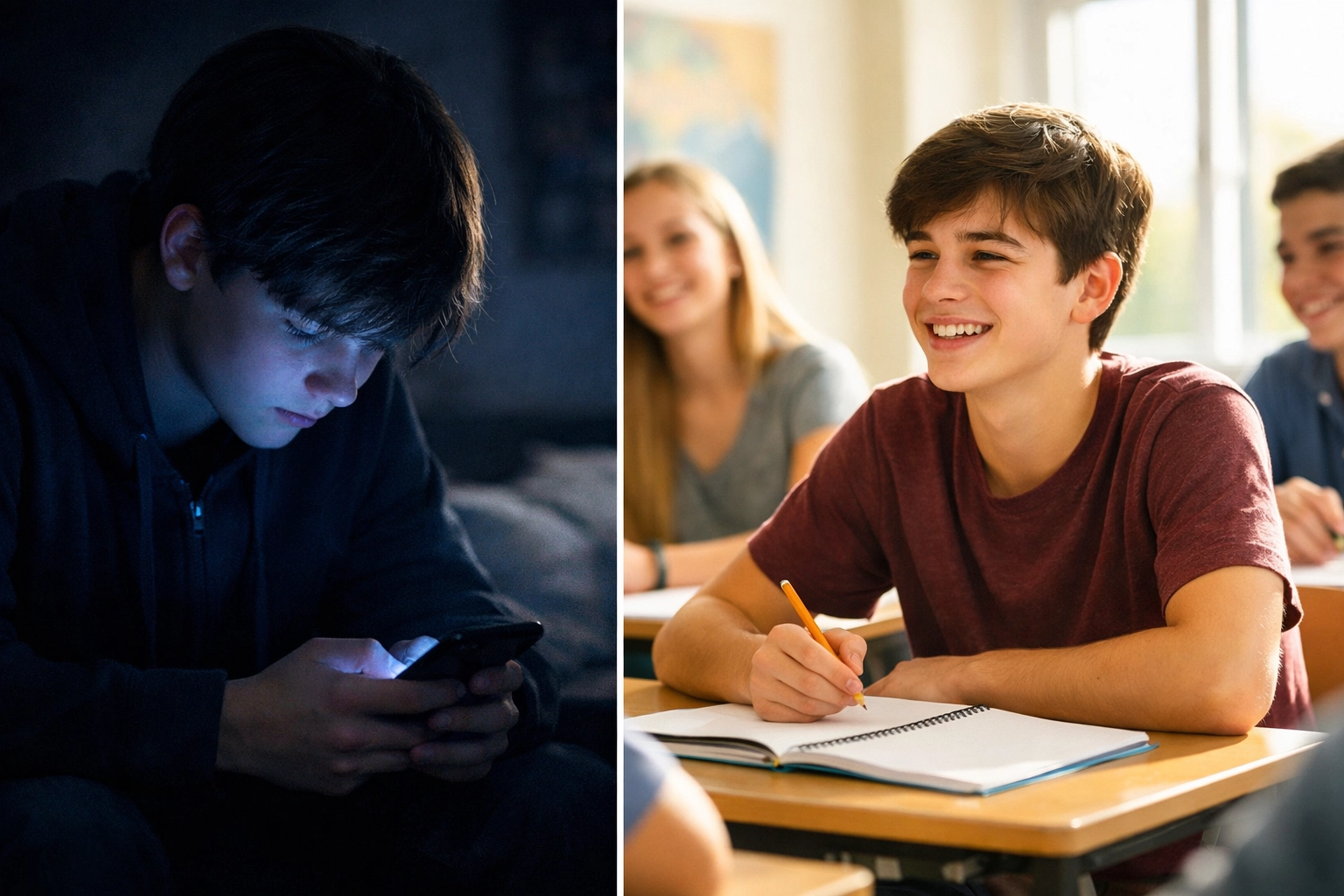
The early results from implementation are telling a story that educators have been hoping to hear. In New York State, 92 percent of schools reported smooth transitions to bell-to-bell smartphone restrictions. That's not just administrative spin: 83 percent reported more positive classrooms and better student engagement, while 75 percent said they could actually teach more effectively.

A Virginia school district saw similar patterns: 78 percent of teachers backed the policy, with 62 percent reporting improved student behavior. Teachers described what many of us might remember from pre-smartphone classrooms: kids actually talking to each other during lunch, fewer side conversations about TikTok videos, less off-task scrolling, and something that seems almost quaint now: sustained attention.
Research from the Wharton School confirms what common sense already told us: stricter policies mean fewer distractions. Their preliminary findings from over 20,000 educators show that school-wide bans keep phones out of classrooms and reduce disruptions in measurable ways.
The Academic Picture: It's Complicated
Here's where the data gets messier. Academic achievement results are mixed, and they depend heavily on how bans are implemented and who we're measuring.
A scoping review of seven studies found that some schools reported subject-specific gains, particularly for struggling students and low-income kids. One UK study showed a 6.4 percent increase in national exam scores after implementing bans, with the biggest gains among students who were already behind. The pattern suggests that phone bans may help disadvantaged students more than high-achieving, economically advantaged ones: which makes sense if you think about it. Kids with more resources and support at home might be better equipped to manage distractions regardless of policy.
But three studies in that same review found zero evidence of academic improvement. Harvard researchers studying over 1,200 adolescents across 30 schools found no difference in outcomes at all. The takeaway isn't that bans don't work: it's that bans alone, without broader support systems, aren't a magic bullet.
The Mental Health Question: We Don't Know Yet
The mental health data is even fuzzier. Some studies reported fewer behavioral problems and reduced bullying. Others found little to no improvement in anxiety, depression, sleep, physical activity, or behavior compared with schools that let kids keep their phones.
Early results from New York City charter schools in 2024 showed promising gains in student mental health, but those findings are preliminary and not yet peer-reviewed. The inconsistency stems partly from how wildly different "bans" look from school to school: all-day lockdown versus classroom-only restrictions, Yondr pouches versus cubbies, strict enforcement versus honor system.
A Biblical Lens: Peace in a Distracted Age
Scripture doesn't mention smartphones (obviously), but it has plenty to say about peace, focus, and what we allow to capture our attention.
Philippians 4:8 instructs us: "Finally, brothers and sisters, whatever is true, whatever is noble, whatever is right, whatever is pure, whatever is lovely, whatever is admirable: if anything is excellent or praiseworthy: think about such things." That's not just a nice verse to cross-stitch on a pillow. It's a command about the stewardship of our minds.

Our kids are growing up in an attention economy designed to hijack their focus and monetize their distraction. Every app, every notification, every algorithm is engineered to keep them scrolling, clicking, comparing, despairing. When schools create phone-free zones, they're not just reducing disruptions: they're creating space for something the Bible calls "peace."
The Hebrew word shalom means more than the absence of conflict. It means wholeness, completeness, the flourishing that happens when things are as they should be. You can't have shalom when your nervous system is wired to a device that's vibrating in your pocket every thirty seconds.
Jesus regularly withdrew from the crowds to pray. Even the Son of God needed space away from constant demands on His attention. How much more do our thirteen-year-olds need that space?
From an Assemblies of God perspective, we believe in divine healing: not just physical healing, but the restoration of what's been broken. Our kids' attention spans have been broken. Their ability to be fully present has been broken. Their peace has been broken. Creating phone-free environments in schools is one small step toward healing what technology has fractured.
The Response: What This Means for Families and Churches
The data shows that cell phone bans are working: at least in the ways that matter most for classroom peace and teacher sanity. The academic jury is still out, but here's what we know for sure: kids are more engaged, teachers can actually teach, and classrooms feel more like communities again.
As parents and church leaders, we need to stop pretending that smartphones are neutral tools. They're not. They're discipleship devices, and right now, Silicon Valley is doing a better job discipling our kids than we are.

If your child's school is implementing a phone ban, support it. Don't be the parent who undermines the policy because you "need to be able to reach your child at all times." That's anxiety talking, not wisdom. Kids survived for generations without being constantly reachable, and they can survive now.
If your child's school isn't implementing a ban, consider creating one at home. Phone-free dinner tables. Phone-free bedrooms. Phone-free Sundays. You don't need to wait for policy to pursue peace.
Churches can lead here too. Youth groups should be phone-free zones. Small groups should start with everyone putting their phones in a basket. Model what it looks like to be fully present with God and with each other.
The goal isn't to demonize technology. The goal is to teach our kids: and ourselves: that peace matters more than productivity, that presence matters more than being perpetually available, that shalom is worth protecting even when the world is screaming for our attention.
The Invitation: Choose Peace
The research is still catching up to what our guts already know: constant connectivity is stealing something precious from our kids. Phone bans in schools are one imperfect attempt to get it back.
But policy alone won't solve this. We need families and churches willing to make countercultural choices about attention, presence, and peace. We need adults who model what it looks like to put the phone down, look someone in the eye, and be fully where our bodies are.
Need prayers? Text us day or night at 1-901-213-7341.
The data shows that cell phone bans can work, especially when implemented with consistency and conviction. But the deeper question isn't whether the bans work: it's whether we're willing to believe that peace is worth pursuing, even when it's inconvenient.
Follow for more Christ-centered clarity on today's biggest questions at LayneMcDonald.com.
Sources: National Center for Education Statistics, University of Pennsylvania Wharton School, National Education Association, Virginia school district implementation data, UK national exam studies, Harvard adolescent research, New York State Education Department implementation reports
Comments