
Are Small Groups Dead? Do People Still Connect Deeply in 2025?
- Dr. Layne McDonald
- Dec 30, 2025
- 5 min read

I was scrolling through my phone the other day when I stumbled across a post that made me stop cold: "Small groups feel so forced now. Like, we're all just pretending to care about each other's prayer requests while secretly checking our phones."
Ouch.
But here's what really got me thinking: this wasn't some cynical outsider throwing stones at the church. This was a comment from a young adult who'd been in small groups for years. Someone who genuinely wanted connection but felt like they were getting a cheap substitute instead.
So I have to ask: Are we witnessing the death of small groups? Or are we just doing them wrong?
The Uncomfortable Truth About Modern Connection
After two decades of pastoral ministry and countless conversations with people across generations, I've noticed something troubling. We're more "connected" than ever, yet lonelier than previous generations could have imagined. We have 500 Facebook friends but struggle to name five people who truly know us.
This isn't just a "young people problem" either. I've sat across from empty nesters who feel invisible in their own small groups, and twenty-somethings who show up week after week hoping someone will ask them a question that isn't about their job or relationship status.
The irony? Small groups were designed to solve exactly this problem.

What's Really Happening in Our Living Rooms
Here's what I've observed from coaching pastors and small group leaders across the country: Most small groups have become spiritual book clubs with snacks. We gather, we read a chapter, we share surface-level insights, we pray for Aunt Martha's surgery, and we call it fellowship.
Don't get me wrong: there's nothing inherently wrong with studying God's Word together. But if that's all we're doing, we're missing the transformative power of authentic Christian community.
Real connection happens in the margins. It's the conversation after the official "study" ends. It's showing up when someone's world falls apart. It's the text thread that keeps going between meetings because people actually care about each other's daily struggles.
The Emotional Safety Crisis
One of the biggest reasons small groups feel "dead" is because we've forgotten how to create emotional safety. We've become so focused on having the right answers that we've lost the art of asking good questions.
I remember leading a small group where one member finally admitted they'd been struggling with depression for months. The room went silent. Not because people didn't care, but because no one knew how to respond. We'd spent so much time discussing theology that we'd never learned how to discuss real life.
That's when I realized something crucial: Information without transformation is just education. And education without emotional safety is just performance.

The Digital Generation Paradox
Young adults today crave authentic community more than any generation I've worked with. They can spot fake from a mile away, and they have zero patience for surface-level relationships. Yet they're also the most digitally connected and emotionally isolated generation in history.
This creates a fascinating paradox for small group ministry. The same tools that connect us globally are disconnecting us locally. Young people will share their deepest struggles on TikTok with strangers but struggle to be vulnerable in a room full of church people.
Why? Because online, they control the narrative. In small groups, they risk judgment, misunderstanding, or worse: being fixed by people who don't understand their world.
What Actually Works in 2025
After experimenting with countless small group models, here's what I've learned actually creates lasting connection:
Start with stories, not studies. Begin each gathering by letting people share what's really happening in their lives. Not prayer requests: actual stories. The messy, complicated, beautiful realities of being human.
Create space for questions, not just answers. The most transformative small groups I've witnessed are filled with people brave enough to say, "I don't understand this verse" or "I'm struggling to see God in my situation."
Make it practical. Connect biblical truth to daily life. Don't just study forgiveness: practice it together. Don't just read about community: live it out in real time.
Embrace technology instead of fighting it. Use group chats, prayer apps, and video calls to stay connected between meetings. The goal isn't to eliminate digital connection but to enhance face-to-face relationships.
The Faith Formation Factor
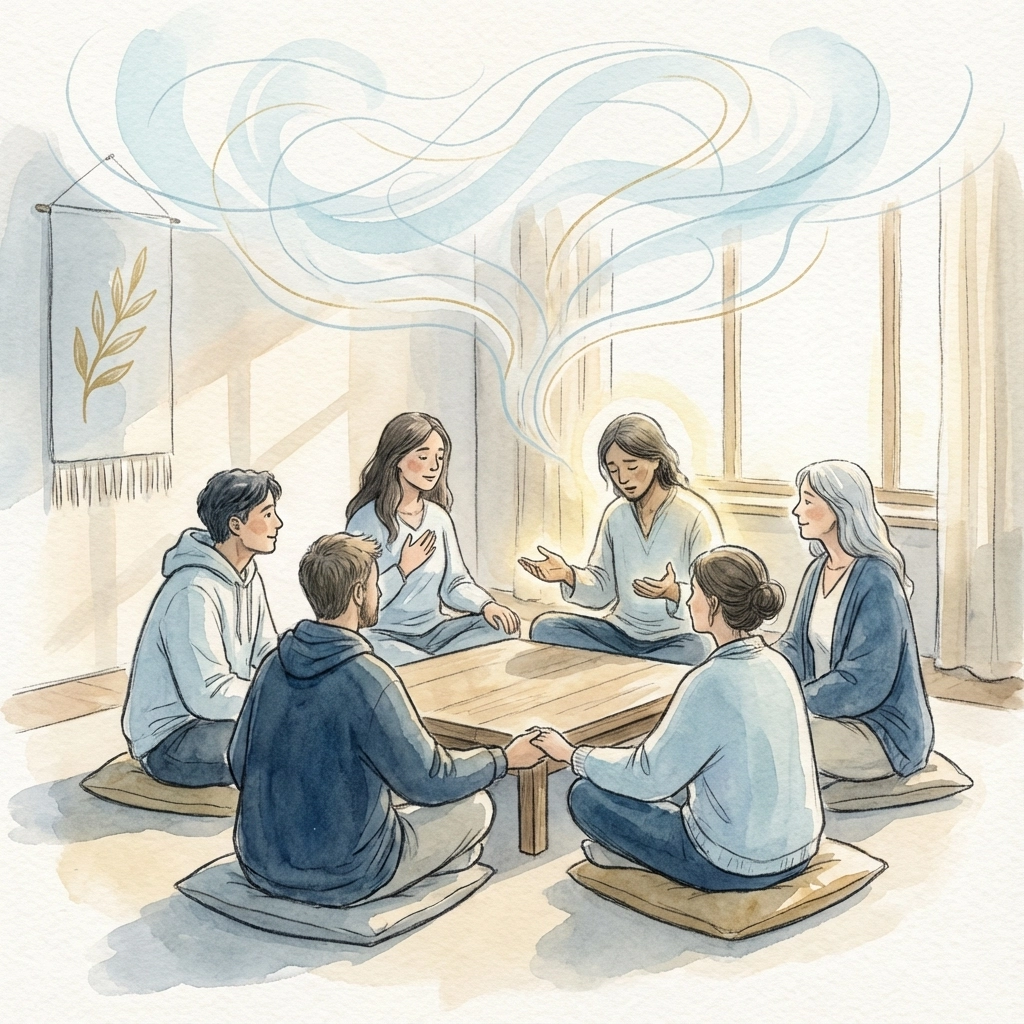
Here's something most small group leaders miss: Deep spiritual formation happens through relationships, not just through curriculum. When people feel truly known and unconditionally loved in a small group setting, they become more open to God's transforming work in their lives.
I've watched people's faith come alive not during a Bible study discussion, but during a group text thread where someone shared a prayer request at 2 AM and three people responded immediately with encouragement and practical help.
That's discipleship in action.
The Hope That Remains
Despite the challenges, I remain incredibly optimistic about the future of small groups. Why? Because the human heart hasn't changed. People still long for connection, belonging, and purpose. They still want to be known and loved for who they are, not who they pretend to be.
The key is remembering that small groups aren't programs: they're communities. They're not classes: they're families. They're not meetings: they're gatherings of people committed to walking through life together.
Redefining Success
Maybe it's time to redefine what a "successful" small group looks like. Instead of measuring attendance or completion of curriculum, what if we measured:
How many people feel genuinely known and loved?
How many real-life problems are being addressed with practical help?
How many people are growing in their ability to love God and others?
How many authentic friendships are being formed?
When I think about the most impactful small groups I've been part of, they weren't the ones with the best teachers or the most sophisticated studies. They were the ones where people showed up for each other in crisis, celebrated each other's victories, and created space for honest spiritual searching.
The Path Forward
Small groups aren't dead: they're evolving. The question isn't whether people want deep connection in 2025. They absolutely do. The question is whether we're willing to create the conditions where authentic community can flourish.
This means training leaders in emotional intelligence, not just biblical knowledge. It means creating environments where questions are welcomed, struggles are shared, and real transformation can happen. It means remembering that the goal isn't to produce Bible scholars but to develop mature disciples who love well.
Your Next Step
If you're leading a small group that feels stale, or if you're considering joining one but hesitant about the commitment, I want to challenge you: Don't settle for superficial community. God designed us for so much more.
Whether you're a pastor, small group leader, or someone hungry for authentic Christian community, I'd love to help you discover what thriving spiritual community looks like in 2025. Through my coaching programs and leadership resources, I work with individuals and churches to create environments where real connection and spiritual transformation happen naturally.
Ready to move beyond surface-level small groups and into life-changing community? Visit our leadership resources to discover practical tools for building authentic Christian relationships, or explore our coaching options to develop your skills in creating emotionally safe, spiritually transformative small group experiences.
The world is desperate for genuine community. Let's give them the real thing.
Comments