Beyond the Script: How to Read Body Language at the Front Door
- Dr. Layne McDonald
- Mar 3
- 5 min read

You've got your name tag on. You know where the restrooms are. You've memorized the service times. But here's the thing: being a great church greeter goes way beyond having the right information at the right time.
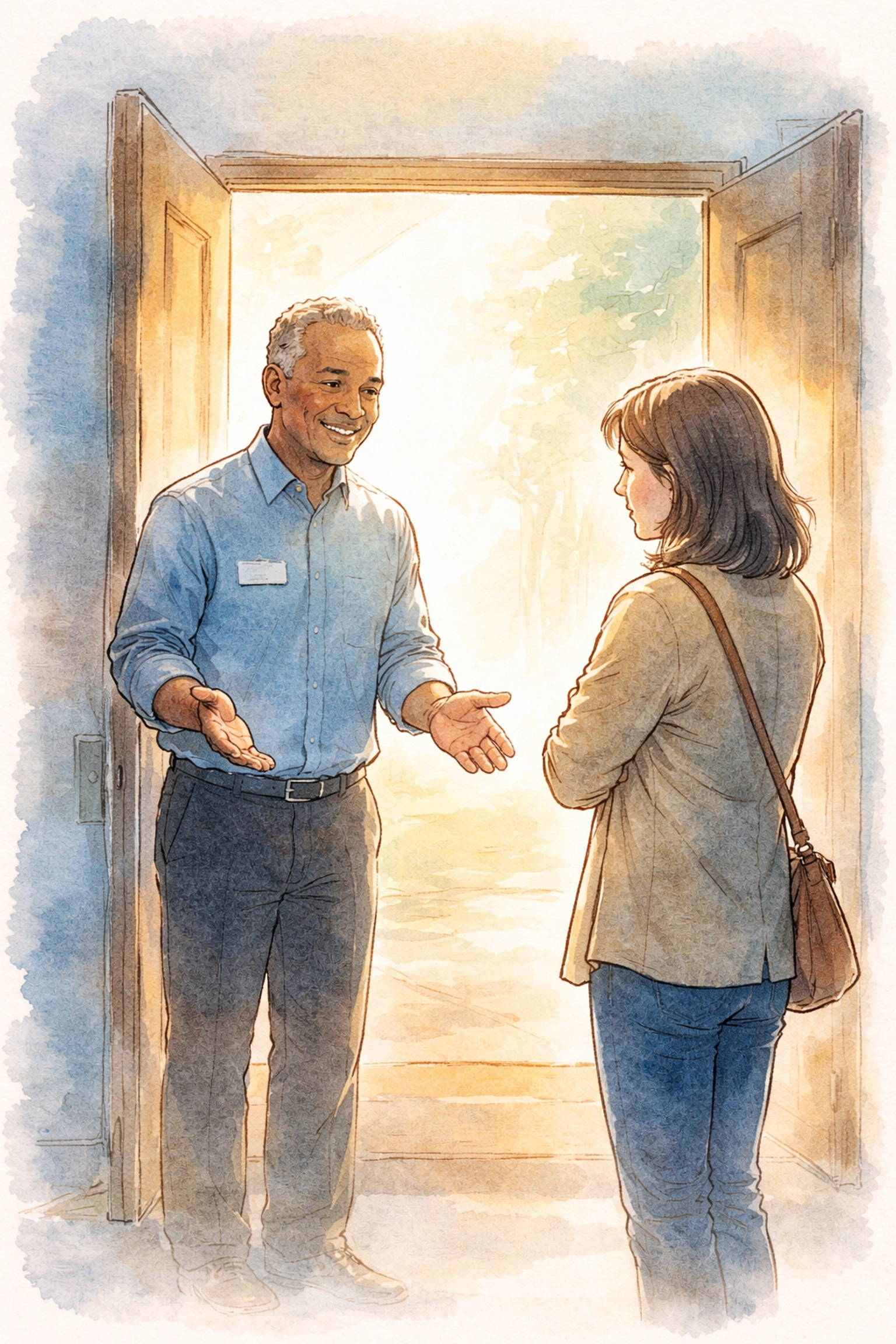
The moment someone walks through those front doors, they're telling you a story without saying a single word. Their shoulders, their eye contact, the way they're holding their hands: it's all communicating something. And if you can learn to read that language, you can meet people exactly where they are.
Dr. Layne McDonald often teaches that hospitality isn't just about what we say: it's about what we see and how we respond to it. So let's dig into the practical skills that can transform your greeting ministry from good to genuinely impactful.
Why Body Language Matters More Than Your Welcome Script
Think about the last time you walked into an unfamiliar place. Maybe it was a new gym, a doctor's office, or yes: a church you'd never visited before. You probably didn't announce how you were feeling out loud. But your body? It was doing all the talking.
The same is true for every person who steps through your church doors. First-time guests are often nervous. Returning members might be carrying the weight of a hard week. Someone walking in after years away from church? They might be battling a whole storm of emotions before they even reach the welcome table.

Your job as a greeter isn't just to hand out bulletins. It's to quickly assess: without being intrusive: what kind of welcome this person needs right now.
Open vs. Closed: The First Thing to Notice
One of the easiest body language signals to spot is whether someone is "open" or "closed."
Signs of open body language:
Feet facing toward you
Arms uncrossed and relaxed
Open palms (not stuffed in pockets)
Head tilted slightly, showing interest
Direct but comfortable eye contact
When you see these cues, you're looking at someone who's ready to engage. They're curious, hopeful, maybe even excited. A warm smile and a friendly "Good morning! We're so glad you're here!" will land beautifully.
Signs of closed body language:
Crossed arms or hands shoved deep in pockets
Shoulders hunched or turned away
Avoiding eye contact
Stepping back or creating physical distance
Fidgeting or looking around nervously
This person isn't being rude: they're protecting themselves. Maybe they're anxious.
Maybe they've had a bad church experience in the past. Maybe they're just introverted and crowds make them uncomfortable.
For someone showing closed signals, dial back the energy just a bit. A gentle nod, a soft smile, and a simple "Welcome: let us know if you need anything" gives them space while still communicating warmth.
Posture Tells You More Than You Think
How someone carries themselves when they walk through that door speaks volumes.
Confident posture looks like standing tall, shoulders back, moving at a steady pace. This person is comfortable in their own skin and probably doesn't need much hand-holding. A quick, genuine greeting works great here.
Uncertain posture might include hunched shoulders, hesitant steps, or hovering near the entrance instead of moving confidently into the space. This person could use a little extra guidance. Offer to walk them to the welcome center, point out where the service is happening, or simply stay nearby in case they have questions.
Overwhelmed posture: where someone seems frozen, overstimulated, or like they might bolt: requires the gentlest touch of all. Sometimes the best thing you can do is simply be a calm, reassuring presence without overwhelming them with information.
Watch the Eyes (But Don't Stare)
Eye contact is one of the most powerful nonverbal communicators we have. When someone makes direct, relaxed eye contact with you, they're signaling openness and trust. That's your green light to engage warmly.
But when someone's eyes are darting around the room, avoiding your gaze, or fixed on the floor? They're likely in a mild fight-or-flight mode. Their brain is assessing the environment, looking for exits, trying to figure out if this place is safe.
Don't take it personally. And definitely don't chase them down with aggressive friendliness. Instead, give them a moment to breathe. Let them observe. Trust that God is already at work in their heart: you're just there to keep the door open.
When Words and Body Don't Match
Here's a tricky one: sometimes people say "I'm fine!" while every inch of their body screams the opposite. Crossed arms. Tight jaw. Eyes welling up.
This incongruence is a red flag that something deeper is going on. It doesn't mean you need to pry: but it does mean you should pay attention.
A simple, gentle response like "I'm glad you're here today" can open a door without pushing. If appropriate, you might add, "If you ever need anything: prayer, a conversation, whatever: we're here for you."
You'd be amazed how often that small moment of recognition becomes the seed for a much bigger connection down the road.
Your Body Language Matters Too
Here's the flip side of all this: people are reading you just as much as you're reading them.
If you're standing with your arms crossed, looking at your phone, or chatting exclusively with other volunteers, you're sending a message: even if you don't mean to. That message says, "I'm not really available right now."
Instead, aim for:
An open, relaxed stance
Hands visible and uncrossed
Genuine eye contact (not the creepy kind)
A warm, natural smile
Positioning yourself to face incoming guests
Your confidence and warmth are contagious. When you project approachability, visitors feel safer. It's that simple.
Practical Tips for Your Next Sunday
Ready to put this into practice? Here are a few quick action steps:
Arrive early. Give yourself time to settle so you're not frazzled when guests arrive.
Pray before you position. Ask God to help you see people the way He sees them.
Stay off your phone. Nothing says "unavailable" like scrolling through notifications.
Practice the two-second scan. As someone approaches, quickly assess their body language and adjust your greeting accordingly.
Follow up with your team. If you notice someone who seems particularly distressed or lost, let a pastor or member care volunteer know.
It's About Connection, Not Perfection
Nobody expects you to become a body language expert overnight. And honestly? You're going to misread people sometimes. That's okay. The goal isn't perfection: it's presence.
When you show up with genuine warmth, a willingness to pay attention, and a heart for serving others, you're doing exactly what God designed the church to do: welcome the weary, embrace the anxious, and create space for everyone to encounter His love.
The front door is sacred ground. You're not just handing out programs: you're often the very first impression someone has of what it means to be part of a faith community. That's a beautiful responsibility.
So next Sunday, look a little closer. Listen with your eyes. And trust that every small act of intentional hospitality is making an eternal difference.
Want more practical tips for building a welcoming church culture? Visit laynemcdonald.com for coaching resources, training materials, and leadership insights from Dr. Layne McDonald.

$50
Product Title
Product Details goes here with the simple product description and more information can be seen by clicking the see more button. Product Details goes here with the simple product description and more information can be seen by clicking the see more button

$50
Product Title
Product Details goes here with the simple product description and more information can be seen by clicking the see more button. Product Details goes here with the simple product description and more information can be seen by clicking the see more button.
$50
Product Title
Product Details goes here with the simple product description and more information can be seen by clicking the see more button. Product Details goes here with the simple product description and more information can be seen by clicking the see more button.
Comments