
Breaking Through Legacy Church Barriers: Part 5 – Creating Communication Cultures: Classes as Safe Spaces
- Dr. Layne McDonald
- Dec 30, 2025
- 5 min read

You know that feeling when you walk into a church class and immediately sense you're supposed to sit quietly, listen, and definitely not ask questions? Yeah, that's exactly what we need to change. After four parts of breaking down legacy church barriers, we've arrived at one of the most crucial battlegrounds: transforming our classes from lecture halls into safe havens where real communication thrives.
The truth is, many of our church classes have become sterile environments where information flows one way, from the teacher to the student, with zero room for dialogue, questions, or authentic engagement. This isn't just limiting; it's damaging to the very community we're trying to build.
The Problem with the "Shush Culture"
Legacy churches often develop what I call a "shush culture" in their educational spaces. You've seen it happen. Someone raises their hand with a genuine question, and instead of welcoming that curiosity, the atmosphere becomes tense. The teacher might say, "We'll address that later," or worse, they give a look that says, "How dare you interrupt my carefully planned lesson?"
This approach doesn't just shut down one person's question, it sends a message to everyone in the room that their thoughts, struggles, and genuine curiosities aren't welcome here. And guess what happens? People stop coming. They feel talked down to rather than built up, lectured at rather than engaged with.
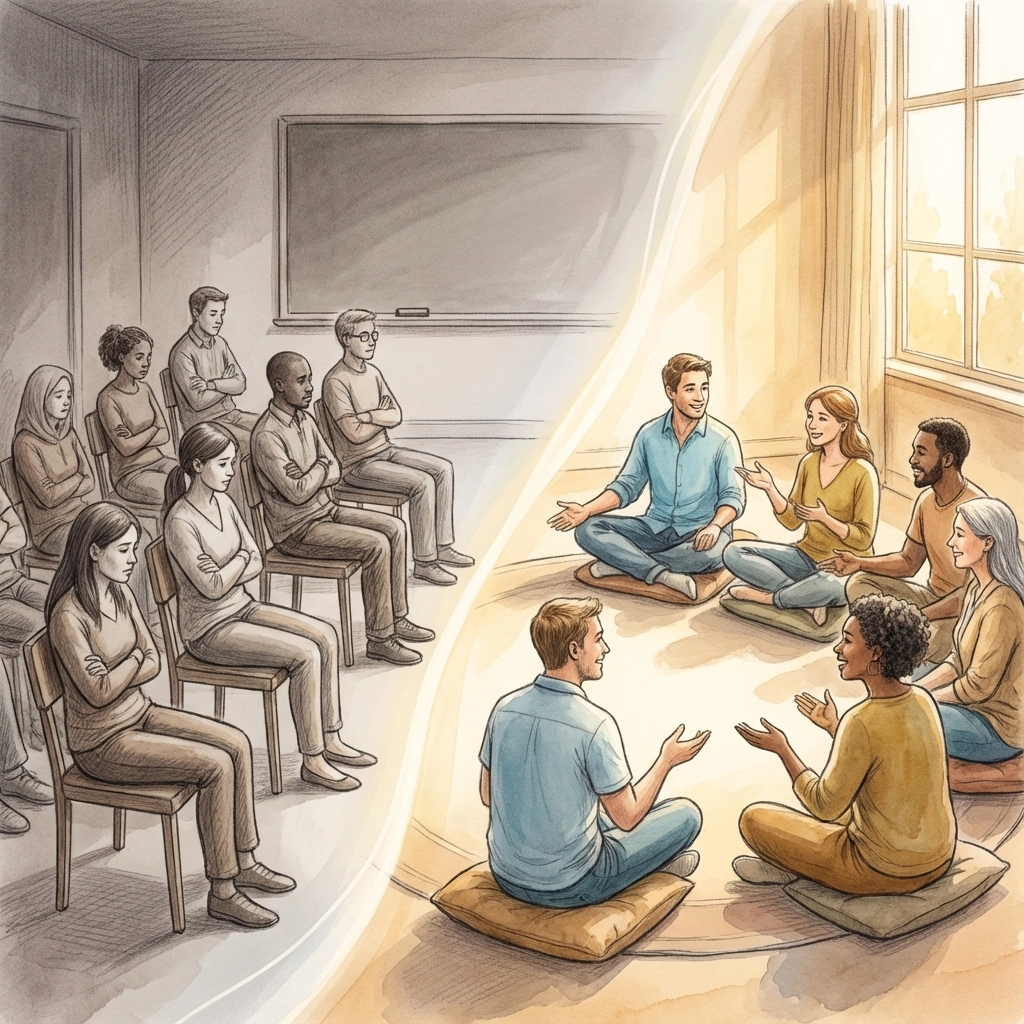
The irony is heartbreaking. Churches are supposed to be places where people can come with their messiest questions, their deepest doubts, and their most vulnerable struggles. Yet somehow, our classes have become places where we pretend to have it all figured out and expect everyone else to do the same.
What a True Safe Space Looks Like
Creating a communication culture means fundamentally shifting how we approach teaching and learning in church settings. A safe space isn't just about physical comfort, it's about emotional and spiritual safety too.
In a healthy communication culture, questions aren't interruptions; they're invitations. They're doorways into deeper understanding and genuine connection. When someone asks a question, even if it seems off-topic or challenging, it's actually a gift. It means they trust the space enough to be vulnerable.
Here's what I've learned: the best church classes feel more like living room conversations than university lectures. People lean in rather than check out. They share stories, admit confusion, and yes, they ask those beautiful, messy questions that reveal where they really are in their faith journey.
Life Hacks for Leaders: Practical Transformation Strategies
Start with Your Physical Setup
Forget the classroom rows facing forward. Circle up those chairs. Get people looking at each other instead of the back of someone's head. This simple change immediately signals that we're all in this together rather than having one person who knows everything teaching a bunch of people who know nothing.
Master the Art of the Pause
After you share a point, stop talking. Like, really stop. Count to five in your head. Give people space to process, to think, to formulate questions. Most teachers are terrified of silence, but silence is where real learning happens. Those pauses are where the Holy Spirit often does His best work.
Use Question Starters
Instead of asking, "Any questions?" (which usually gets crickets), try these:
"What part of this connects with something you're dealing with right now?"
"Where do you see this playing out in your everyday life?"
"What would you want to know more about if you could ask God directly?"

Normalize Not Knowing
Be the first person to admit when you don't know something. Say things like, "You know what? I've wrestled with that same question," or "That's something I'm still learning about too." This gives everyone permission to be human in your class.
Breaking the Ice: Practical Implementation
The Check-In Circle
Start every class with a simple check-in. Give people two minutes to share how they're really doing: not the church answer, but the real answer. This immediately establishes that authentic sharing is not just okay but expected.
The Question Parking Lot
Put up a piece of flip chart paper and encourage people to write down questions as they come up, even if they seem unrelated to the current topic. This shows that you value their curiosity and creates a culture where questions are treasured rather than dismissed.
Small Group Breakouts
Even in a class of twelve people, break into groups of three or four to discuss questions. Some people will never speak up in the larger group but become incredibly insightful in smaller circles. Then bring it back together and let groups share their best insights.
Real Examples That Work
I've seen churches transform their entire culture by making simple changes. One church started having their Sunday school teacher sit in the circle instead of standing at the front. Game changer. Another church instituted a "no perfect answers" rule: if someone shared something vulnerable or admitted confusion, the teacher couldn't immediately jump in with the "right" answer. Instead, they let the group sit with the question together.
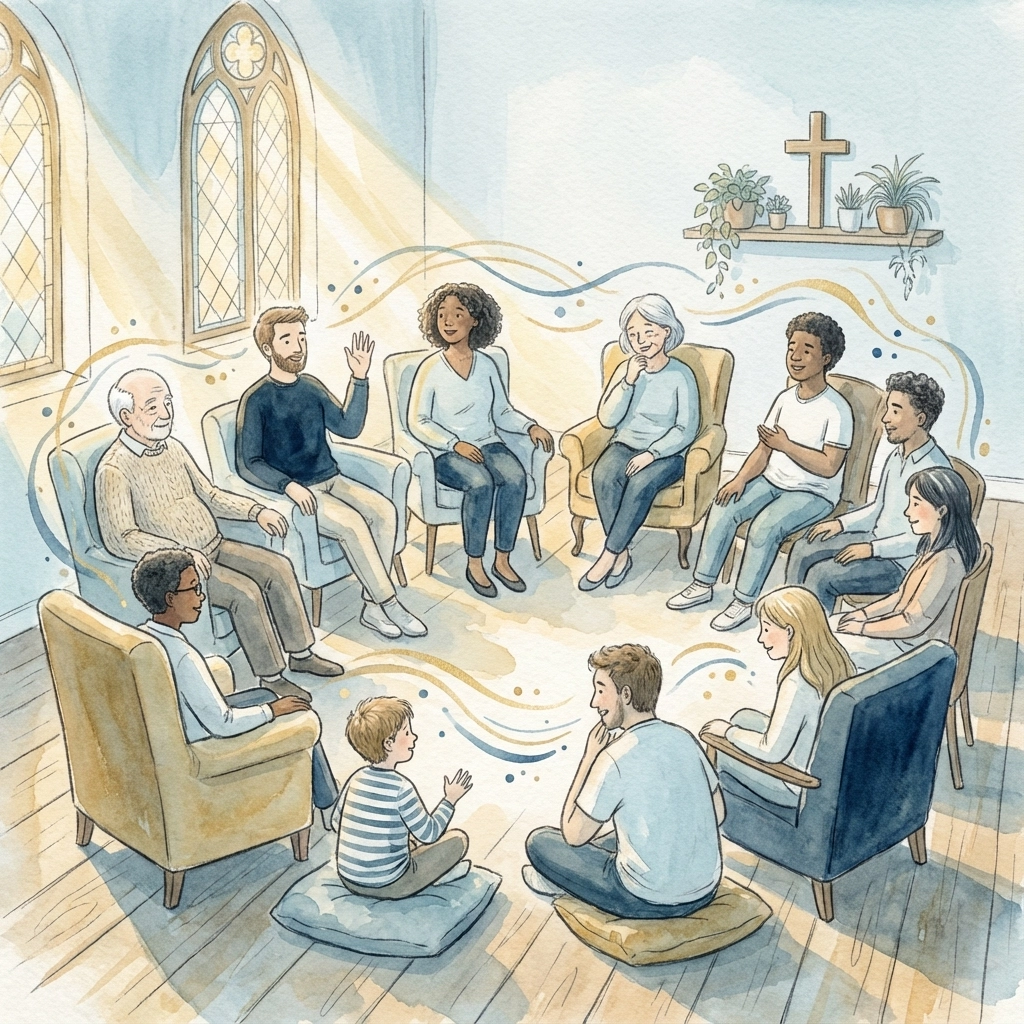
One of my favorite examples is a church that started giving out "Best Question of the Week" awards. Just a small gift card to the coffee shop, but it completely shifted the culture. People started bringing their most genuine, thoughtful questions because they knew they'd be celebrated, not shut down.
Leading with Vulnerability
Here's the key that most leaders miss: you can't create a safe space for others if you're not willing to be vulnerable yourself. That means admitting when you're struggling, sharing when you don't have all the answers, and being real about your own faith journey.
This doesn't mean turning every class into therapy or making everything about you. It means leading from a place of authentic humanity rather than spiritual superiority. People don't need you to be perfect; they need you to be real.
The Ripple Effect
When you create this kind of communication culture in your classes, something beautiful happens. It doesn't stay contained in that one room. People start applying these principles in their small groups, their family devotions, their conversations with their kids. They become safer people who create safer spaces wherever they go.
And here's the beautiful irony: when you stop trying to control the conversation and start creating space for real dialogue, people actually learn more. They retain more. They apply more. Because they're not just receiving information: they're wrestling with truth in community.
Your Next Steps
Start small. Pick one class, one small group, one teaching opportunity. Try circling up the chairs. Ask a question and then actually wait for an answer. Share something you're genuinely learning or struggling with. Notice what happens.
Remember, you're not just teaching content: you're modeling what healthy Christian community looks like. You're showing people that the church can be a place where they don't have to have it all figured out, where questions are welcome, and where genuine growth happens in relationship with others.
The goal isn't perfect classes; it's authentic community. And authentic community is messy, question-filled, and absolutely beautiful. That's where real transformation happens: not in the lecture, but in the conversation that follows.
Ready to transform your church's communication culture? Start with your next class. Your people are waiting for permission to be real. Give it to them.
Comments