
Can You Pray in Your Own Home Without Government Permission?
- Dr. Layne McDonald
- Mar 24
- 6 min read

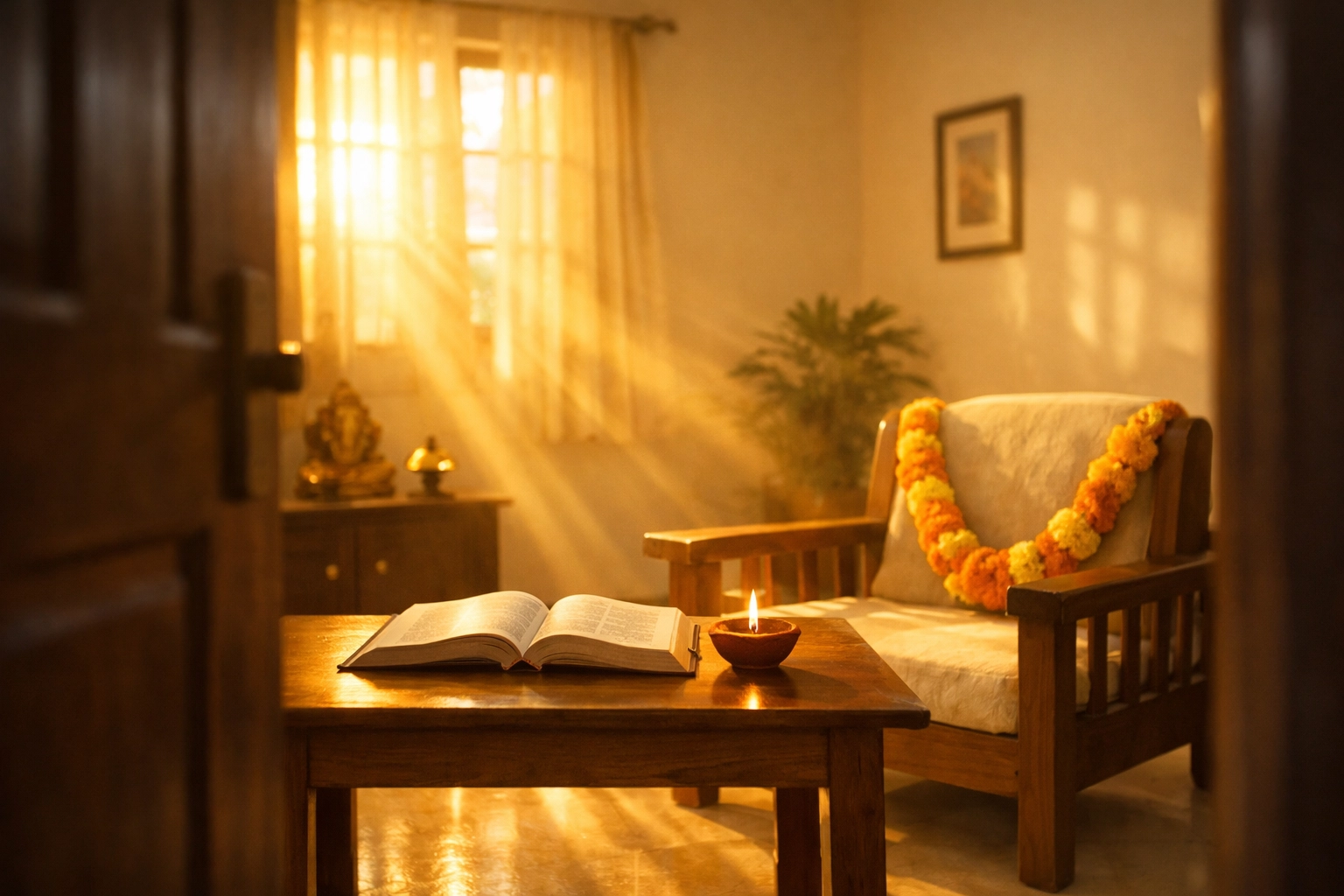
Yes. According to a landmark ruling by the Allahabad High Court in India, individuals and religious groups have the constitutional right to conduct prayer meetings inside private residences without seeking prior approval from government authorities. This decision reinforces that the right to practice one's faith is a fundamental liberty that the state cannot arbitrarily restrict within the walls of a private home.
‘It is for freedom that Christ has set us free. Stand firm, then, and do not let yourselves be burdened again by a yoke of slavery.’ : Galatians 5:1
The Ruling: A Shield for the Private Sanctuary
The Allahabad High Court, one of the most influential legal bodies in India, recently clarified a point of law that has been a source of significant tension for the Christian community in the state of Uttar Pradesh. The court ruled that no government permission is required to hold prayer meetings inside private premises, regardless of the religion being practiced.
This judgment was a direct response to petitions filed by Maranatha Full Gospel Ministries and the Emmanuel Grace Charitable Trust. These organizations found themselves in a legal limbo after state authorities failed to respond to their requests for permission to hold worship services on their own property. For many believers in the region, the lack of a "paper trail" or official permit had become a weapon used by local officials and extremist groups to disrupt peaceful gatherings.
The court’s division bench, comprised of Justices Atul Sreedharan and Siddharth Nandan, noted a crucial admission: even the Uttar Pradesh government acknowledged there was no specific legal requirement to seek permission for religious worship conducted within private property. By putting this on the record, the court has provided a legal shield for thousands of small "house churches" and family prayer circles that form the backbone of the faith for many Indian Christians.
How It Happened: Faith Under Fire
This ruling didn’t happen in a vacuum. It was the result of a mounting wave of legal challenges following a series of distressing incidents across Uttar Pradesh. In recent years, Christian gatherings: even those held in the privacy of a living room: have been increasingly interrupted by local officials or vigilante groups.
The common accusation used to justify these interruptions is "illegal conversion." Under various state laws, authorities have sought to crack down on what they term "forcible" conversions to Christianity. However, in practice, this has often translated into the harassment of any Christian gathering, regardless of whether conversion was taking place.
Pastors have been detained, bibles have been confiscated, and families have been intimidated simply for singing hymns or praying together. When these groups appealed to the local government for "permission" to avoid these raids, they were often met with silence, leaving them vulnerable to further harassment. The court’s decision effectively cuts through this red tape, stating that the right to pray at home is inherent and does not require a government stamp of approval.
Why It Matters: Protecting the Minority
This legal precedent is being viewed as a massive victory for religious minorities, not just in Uttar Pradesh, but across India. Uttar Pradesh is India’s most populous state and has been at the center of many debates regarding religious freedom and secularism. When a court in such a significant jurisdiction affirms the right to private worship, it sends a message to the entire country.
For the Pentecostal and Assemblies of God communities in India, this is especially poignant. Our tradition has always emphasized the power of the "upper room": small, fervent gatherings where the Holy Spirit moves, regardless of the grandeur of the building. In many parts of the world, including India, the faith grows not in mega-churches, but in the humble homes of believers who gather to seek the face of God.
Even here in the Mid-South, we understand the value of the home-based Bible study or the neighborhood prayer group. While we enjoy a high level of religious liberty in Memphis and the surrounding areas, we stand in solidarity with those for whom a simple prayer meeting is an act of profound courage. This ruling ensures that the home remains a sanctuary where the Spirit can move without the shadow of state interference.

Two Perspectives: Liberty vs. Oversight
As with any significant legal ruling, there are different viewpoints on the outcome.
Religious Freedom Advocates: Supporters of the ruling hail it as a victory for constitutional rights. They argue that Article 25 of the Indian Constitution: which guarantees the freedom to profess, practice, and propagate religion: is meaningless if the state can dictate what happens inside a citizen’s private residence. They believe this will reduce the "law and order" excuses often used by police to stop peaceful worship.
Local Officials and Critics: On the other hand, some local officials and community leaders have expressed concern. They worry that a total lack of oversight could lead to "social tensions." Their argument is that in densely populated or religiously mixed neighborhoods, large private gatherings might lead to noise complaints or be perceived as a cover for activities that could disturb the peace. The court did address this by clarifying that while private meetings are free, any gathering that spills out onto public roads or property still requires notification and approval.
‘For where two or three gather in my name, there am I with them.’ : Matthew 18:20
A Pentecostal Perspective: The Spirit Moves Where He Wills
From an Assemblies of God worldview, we recognize that the Church is not a building; it is the people. The Book of Acts shows us a church that met from house to house, breaking bread and praying with glad and sincere hearts. We believe in the "Priesthood of all Believers," meaning every home can be an altar and every believer can lead others into the presence of God.
The move of the Holy Spirit cannot be contained by government regulations. We celebrate this ruling because it acknowledges the sanctity of the believer’s space. In our tradition, we emphasize the Baptism in the Holy Spirit and Divine Healing: spiritual experiences that often happen in the intimacy of a home prayer meeting. When the court protects the privacy of these meetings, they are, in a sense, protecting the space where miracles happen.
Furthermore, we believe in the Great Commission. While this ruling protects private worship, it also emboldens the faithful to live out their calling without fear. When a family feels secure in their home, they are better equipped to be a light in their community.
The Current Status and the Path Forward
While the ruling is a significant step forward, the situation remains delicate. The court made it clear that the state still has a responsibility to provide security and protect life and property. If a prayer meeting is targeted by outside agitators, the police are still required to intervene and protect the worshippers.
This ruling provides a legal "floor" for religious rights, but the "ceiling" of true social harmony is still being built. In many districts, the practical application of this law will depend on the integrity of local police chiefs and magistrates.
‘Now the Lord is the Spirit, and where the Spirit of the Lord is, there is freedom.’ : 2 Corinthians 3:17
Life Takeaway: Cherishing Our Gift of Faith
The news from India serves as a powerful reminder of a gift many of us take for granted: the freedom to gather. Whether it’s a Sunday morning service or a Tuesday night prayer group in a friend’s living room, the ability to seek God together is a precious liberty.
As we look at the courage of our brothers and sisters in India, let us be inspired to revitalize our own private prayer lives. If they are willing to go to the High Court for the right to pray at home, how much more should we utilize the freedom we already have?
Calm Next Step: Take a moment today to pray for the safety of our brothers and sisters in India. Ask for wisdom for the local officials and for a spirit of peace to prevail in Uttar Pradesh. When you discuss issues of religious liberty with others, speak with the wisdom and grace of Christ, remembering that our ultimate goal is to reflect His love to a watching world.
Freedom of faith is a gift to be cherished. It is a cornerstone of a just society and a vital environment for the growth of the Gospel. As we stand firm in our own faith, we continue to look forward to the day when every knee shall bow and every tongue confess that Jesus Christ is Lord, to the glory of God the Father.
If you are feeling overwhelmed, confused, or emotionally drained by the news cycle: your reaction is not “weak.” It’s human. We invite you into a Jesus-centered community for spiritual family and care at BoundlessOnlineChurch.org. If you need private, personal guidance during a hard season, Dr. Layne McDonald offers Christian coaching and mentoring at LayneMcDonald.com. Stay grounded, stay hopeful, and keep pointing to Jesus.
Source Credits: India's Constitution (Article 25) Allahabad High Court Ruling (Maranatha Full Gospel Ministries vs. State of UP) Religious Liberty Monitoring Groups (Uttar Pradesh Reports)
Comments