[Creativity]: The Ultimate Guide to Faith-Based Media Creation: Everything You Need to Succeed (Music, Writing, Video)
- Layne McDonald
- Feb 17
- 5 min read

Creating faith-based media isn't reserved for people with seminary degrees or massive production budgets. If you've ever felt called to share your faith through music, writing, or video but didn't know where to start, this guide will walk you through everything you need to succeed: from concept to creation.
The digital landscape has opened doors for everyday believers to share hope, truth, and creativity in ways previous generations could never imagine. Whether you're composing worship songs in your bedroom, writing devotionals on your lunch break, or filming videos on your phone, you have the tools to make a real impact.
Start with Your Why (and Your Who)
Before you record a single note or write a single word, answer two critical questions: Why are you creating, and who are you creating for?
Your "why" is your north star. Are you trying to encourage burned-out ministry leaders? Help college students navigate doubt? Equip parents to disciple their kids? The clearer your mission, the easier every creative decision becomes.
And forget vague audiences like "Christians." Get specific. A worship song for youth groups sounds different than one for contemplative prayer gatherings. A blog post for single adults navigating loneliness requires a different tone than one for retired couples exploring missions work.
Specificity doesn't limit your reach: it deepens your connection with the people who need your message most.
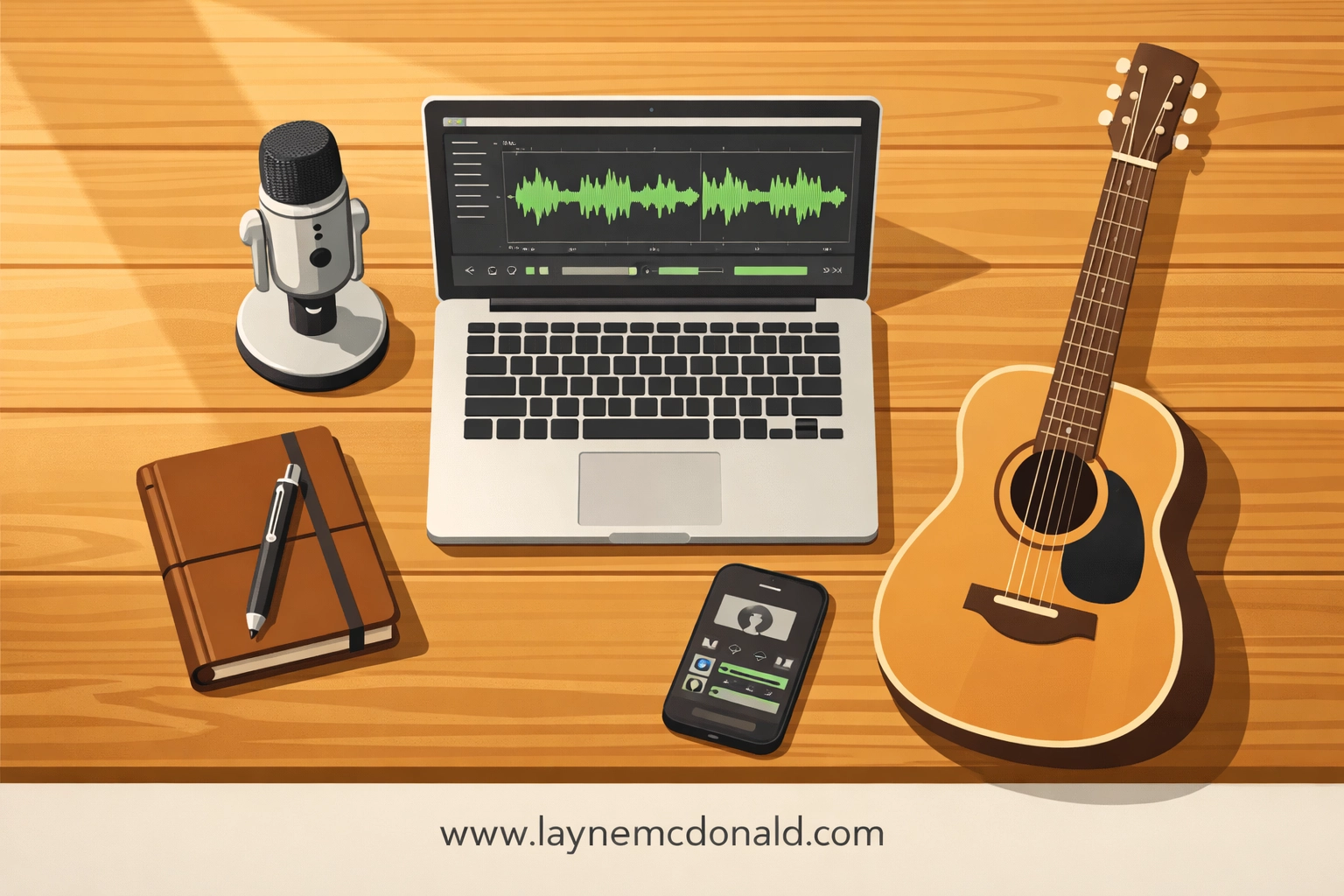
Music: From Bedroom Demo to Worship Anthem
Faith-based music creation has never been more accessible. You don't need a recording studio or a record deal to write songs that point people toward Jesus.
Start with Simple Tools Digital audio workstations like GarageBand (free on Mac) or Reaper (affordable on PC) give you professional recording capabilities at home. A USB microphone under $100 and basic acoustic treatment (even blankets hung in your recording space) can produce surprisingly clean audio.
Write from Real Experience The most powerful worship songs emerge from authentic encounter, not theological homework. Write about what you've actually walked through: the prayers that felt unanswered, the moments when God showed up unexpectedly, the scriptures that broke something open in your heart. Vulnerability creates connection.
Structure Matters Most modern worship songs follow a verse-chorus-verse-chorus-bridge-chorus structure. Study songs you admire. Notice how they build tension and release it. Pay attention to where they place key lyrical phrases. You don't have to reinvent the wheel to create something meaningful.
Collaborate and Share Join online communities of Christian songwriters. Platforms like Soundcloud, YouTube, and even TikTok allow you to share works-in-progress and get feedback. Co-writing pushes you beyond your usual patterns and often leads to stronger songs than you'd write alone.
Writing: Devotionals, Articles, and Long-Form Content
If music is your second language, writing might be your first. Faith-based writing takes many forms: devotionals, Bible study guides, personal essays, theological reflections: but all great writing shares common elements.
Use a Proven Structure Every piece of writing needs three components: a hook that connects to real life, biblical foundation that provides truth and context, and practical application that helps readers take next steps.
Start with a story, question, or struggle your audience immediately recognizes. "Have you ever felt like your prayers bounce off the ceiling?" hits harder than "Let's talk about prayer today."
Then move into Scripture: but don't just quote verses. Explain the historical context, the original audience, what the passage meant then and what it means now. Readers need to understand why this ancient text matters for their Monday morning commute.
Finally, give them something to do. A reflection question. A practical experiment. A way to apply biblical truth to their actual circumstances.

Write with Authenticity, Not Performance Share your doubts and questions alongside your victories. Faith-based content that only presents polished certainty feels hollow. Readers connect with honesty: the times you struggled to believe, the prayers that seemed unanswered, the moments when following Jesus cost you something real.
You're not performing spiritual expertise; you're inviting people into a shared journey toward Jesus.
Tackle Real Issues Don't shy away from mental health, racial justice, financial stress, or relational pain. Address these topics through biblical lenses, but acknowledge the complexity. Simplistic answers to deep struggles damage credibility. Instead, point toward genuine hope rooted in God's character while sitting with people in their pain.
Video: Short-Form and Long-Form Content Strategy
Video content reaches people who'll never click a blog post or listen to a podcast. It's visual, immediate, and shareable: perfect for our attention-fractured culture.
Short-Form Video (60 Seconds or Less) Platforms like Instagram Reels, TikTok, and YouTube Shorts reward concise, engaging content. Effective short-form videos include:
Quick devotional thoughts paired with striking visuals
Behind-the-scenes glimpses of ministry or creative work
Answering common faith questions in under a minute
Scripture animations with modern design
Film vertically on your phone. Use natural lighting. Add captions for accessibility. Don't overthink it: consistency matters more than perfection.
Long-Form Video (5+ Minutes) YouTube remains the hub for deeper video content. Use the theme-topic-format framework: Choose an overarching theme (like spiritual disciplines), identify specific topics within it (prayer, fasting, solitude), then create different format types (how-to guides, common misconceptions, Q&A sessions).
This structure creates consistency while allowing creative variety. You're not reinventing your channel every week: you're exploring different angles of the same mission.

Lighting and Audio Trump Everything Bad video is forgivable. Bad audio kills credibility. Invest in a simple lavalier microphone ($20-50) before upgrading your camera. Record in quiet spaces with soft, indirect lighting: a window with sheer curtains works better than harsh overhead lights.
Principles That Apply Across All Media
Certain truths hold regardless of whether you're recording music, writing articles, or filming videos.
Include a Clear Call to Action Every piece of content should guide your audience toward one specific next step. Subscribe to your channel. Download a free resource. Join a community. Start a Bible reading plan. Don't leave people wondering what to do with what they just experienced.
Ground Everything in Scripture Your content carries weight because it points beyond yourself to timeless truth. Use Scripture meaningfully: not as decoration, but as foundation. Explain context. Show how ancient words address modern struggles. Help people see the Bible as a living, breathing guide for real life.
Start Small and Stay Consistent You don't need to launch with a full album, a published book, and a YouTube channel. Write one devotional. Record one song. Film one video. The biggest barrier to creating faith-based content is believing you're not qualified. If you love Jesus and want to help others grow, you have what you need to begin.
Your Takeaway: Just Start Creating
The perfect time to start creating faith-based media was five years ago. The second-best time is today. You don't need professional training, expensive equipment, or a massive following. You need a clear mission, a specific audience, and the willingness to share what God is teaching you.
Pick one format: music, writing, or video: and commit to creating consistently for 90 days. You'll improve faster than you think possible. More importantly, you'll discover that your imperfect offerings become tools in God's hands to encourage, equip, and challenge people you may never meet.
The world needs more voices pointing toward Jesus with creativity, authenticity, and hope. Yours might be exactly what someone is searching for today.
Ready to take the next step in your creative journey? Visit www.laynemcdonald.com for more resources on faith-based content creation and connect with a community of creators learning together.
Looking for a church home where creativity and faith intersect? Check out Boundless Online Church for weekly worship and community.
Need prayers? Text us day or night at 1-901-213-7341.

$50
Product Title
Product Details goes here with the simple product description and more information can be seen by clicking the see more button. Product Details goes here with the simple product description and more information can be seen by clicking the see more button

$50
Product Title
Product Details goes here with the simple product description and more information can be seen by clicking the see more button. Product Details goes here with the simple product description and more information can be seen by clicking the see more button.
$50
Product Title
Product Details goes here with the simple product description and more information can be seen by clicking the see more button. Product Details goes here with the simple product description and more information can be seen by clicking the see more button.
Comments