
Faith and Healing: How to Heal from Past Church Hurt Without Losing Your Faith
- Dr. Layne McDonald
- Feb 19
- 6 min read

Let me be honest with you: church hurt is real, and it cuts deeper than most other wounds. When the people who are supposed to represent love, grace, and acceptance become the source of your pain: whether through judgment, betrayal, hypocrisy, or outright abuse: it can shake the very foundation of your faith.
I've watched too many people walk away from God entirely because they couldn't separate Him from the flawed humans who hurt them. And honestly? I get it. When your trust has been broken in a sacred space, the instinct is to run and never look back.
But here's the thing: you can heal from church hurt without losing your faith. It's not easy, and it's not quick, but it's possible. And you deserve to experience the freedom that comes with healing while holding onto the God who never hurt you in the first place.
Understanding the Dual Damage
Church hurt doesn't just sting: it damages your faith in two very distinct ways. First, it distorts how you see God. When church leaders or members act in ways that are unkind, judgmental, or manipulative, it's easy to start believing that's what God is like too. You begin to think God is distant, angry, or conditional in His love.
Second, it destroys your trust in faith communities. Even if you manage to keep believing in God, you might find yourself unable to trust other Christians or step foot in another church building. The thought of being vulnerable with believers again feels impossible.
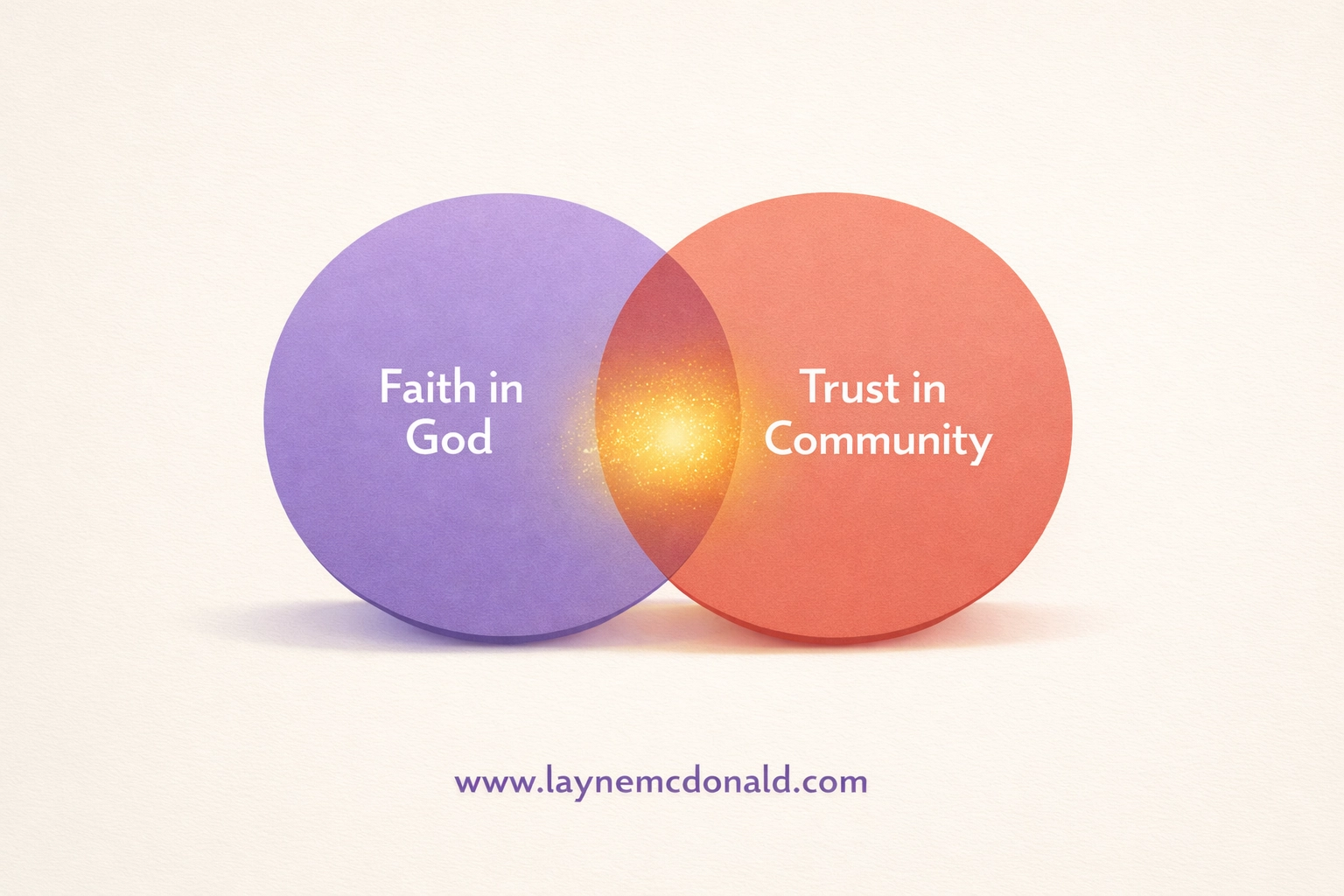
Recognizing this dual impact is the first step toward healing. The failings of imperfect people: even church people: are not reflections of God's character. They're reflections of human brokenness. And while that doesn't erase the pain, it does help you start separating the two.
Step One: Validate Your Pain First
Before you rush to "just forgive" or "get over it," you need to acknowledge what happened to you. The hurt you experienced was real. Whether it was a public humiliation, a private betrayal, spiritual manipulation, or being ostracized for asking questions: it matters.
Too often, Christians are told to forgive quickly and move on, as if processing pain is somehow unspiritual. But Jesus Himself wept, got angry at injustice, and acknowledged suffering. Your pain deserves acknowledgment, not minimization.
Give yourself permission to grieve. Journal about what happened. Talk to a trusted friend or therapist. Name the injustice. You can't heal what you won't acknowledge.
This isn't about staying stuck in bitterness: it's about honoring your experience so you can genuinely move forward rather than just pretending everything is fine.
Step Two: Forgive and Remember
Here's a concept that might sound counterintuitive: forgive, but don't forget. Not in the sense of holding grudges, but in the sense of remembering the core truths of your faith even as you release the people who hurt you.
Forgiveness doesn't mean condoning harmful behavior. It doesn't mean rushing back into relationship with people who haven't changed. It means releasing the resentment that's keeping you chained to the past.

But here's the "remember" part: while you're forgiving the hurt, actively remember what you know to be true about God. Remember His character as revealed in Scripture: compassionate, just, loving, patient. Remember Jesus's own experience of being betrayed by religious people. Remember that God promises healing and justice.
This practice of "forgive and remember" allows you to let go of bitterness without losing the theological foundation that sustains your faith. You're not pretending it didn't happen; you're choosing not to let it define your entire spiritual journey.
Step Three: Reconnect With Faith Personally
One of the most powerful ways to heal from church hurt is to rebuild your relationship with God outside the context of the people who hurt you. This means getting intentional about your personal spiritual practices.
Start reading Scripture with fresh eyes: not through the lens of what the hurtful church taught you, but directly seeking God's voice. Spend time in prayer, even if it's just honest conversations where you tell God how angry or confused you are. Explore worship music that speaks to your soul right now.

Consider finding a mentor or spiritual guide who exists outside your church hurt context. Someone who doesn't know the drama, doesn't have an agenda, and can simply walk with you as you rediscover your faith. This could be an online community, a different denominational perspective, or simply someone further along in their healing journey.
Ground yourself in who God actually is, not in how people acted in His name. The more you reconnect personally with the source of your faith, the less power those hurtful experiences will have over your spiritual life.
Practical Strategies for Moving Forward
Beyond these three core steps, there are several practical strategies that can support your healing journey:
Set clear boundaries. If you're still connected to the church or people who hurt you, it's okay to create distance. You don't owe anyone access to you while you're healing. Boundaries aren't unchristian: they're wise and protective.
Communicate when safe. If there's an opportunity for honest conversation with those who hurt you, and you feel emotionally ready and safe, it can sometimes lead to reconciliation. But don't force this. Your healing doesn't depend on their acknowledgment or apology.
Consider a different faith community. Sometimes the healthiest thing you can do is find a new church home. This doesn't mean you're giving up or being divisive: it means you're protecting your faith by removing yourself from a toxic environment. Not all churches are the same, and finding one that embodies grace, authenticity, and healthy leadership can be transformative.
Give yourself time. Healing isn't linear. Some days you'll feel strong in your faith; other days you'll wonder if you believe anything at all. That's normal. Be patient with yourself.

The Stakes Are High
Here's a sobering statistic: approximately 37% of people who leave churches each year do so because of church hurt. Even more heartbreaking, many of those people don't just leave the church: they abandon their faith entirely.
This cascading loss happens when people can't distinguish between flawed humans and the God those humans claim to serve. It's why this healing work matters so much. When you learn to process church hurt without rejecting faith, you not only preserve your own spiritual life: you model for others that it's possible to heal.
You also break a destructive cycle. Hurt people who don't heal often end up hurting others. By doing the hard work of processing your pain, forgiving (in healthy ways), and reconnecting with God, you're preventing future church hurt from spreading through you.
You Can Hold Both
Here's what I want you to know as we wrap up: you can hold both the reality of your hurt and the truth of God's love at the same time. You don't have to choose between acknowledging what happened and maintaining your faith.
The God who created you, who knows every wound you carry, is big enough to handle your anger, your questions, and your pain. He's not afraid of your doubts. He's not offended by your need to step back and heal.

Your faith doesn't have to look like it did before. It might be quieter, more personal, more cautious about institutions. That's okay. What matters is that you're still seeking, still believing, still open to encountering the God who never stopped loving you: even when His people failed you spectacularly.
Healing from church hurt while preserving faith is possible. It requires intentionality, grace for yourself, and courage to face the pain rather than run from it entirely. But on the other side of that healing journey is a faith that's more authentic, more resilient, and more deeply rooted in who God actually is rather than in what people said about Him.
You don't have to lose your faith to honor your pain. You can heal from both, one honest step at a time.
Take the Next Step in Your Faith Journey
If this post resonated with you, I'd love to stay connected. Visit laynemcdonald.com for more resources on faith, healing, and growing deeper in your relationship with God.
Looking for a faith community that understands the healing journey? Check out Boundless Online Church – a safe space for people at every stage of faith, including those healing from church hurt.
Need prayers? Text us day or night at 1-901-213-7341.
Comments