
[Faith and Healing]: The Proven “Forgiveness-to-Freedom” Framework for Emotional Healing (Start Today)
- Dr. Layne McDonald
- Feb 28
- 6 min read

Faith and Healing
Emotional healing is one of the most “churchy” topics that can still feel painfully private. I can sing about freedom on Sunday and still feel stuck on Monday, stuck replaying a conversation, stuck bracing for the next disappointment, stuck carrying resentment that I swear I “gave to God” months ago.
Forgiveness is often taught as a command (and it is), but it’s also a process, one that touches the mind, the heart, and even the body. When I treat forgiveness like a one-time decision, I usually end up frustrated. When I treat it like a guided pathway with spiritual and practical steps, I start to notice real change: lighter breathing, calmer thoughts, fewer emotional flare-ups, and a new ability to love without feeling fake.
Below is a proven “forgiveness-to-freedom” framework you can start today. It’s anchored in Scripture and supported by a simple, three-stage pathway (mind → heart → body) that many counseling and emotional health models echo.
What forgiveness is (and what it’s not)
Before the framework, I need clear definitions, because confusion here keeps people trapped.
Forgiveness is:
Releasing my right to revenge.
Refusing to keep re-opening the case in my mind as if I’m the judge and jury.
Handing the debt to God (who is perfectly just) and asking Him to heal me (who is deeply human).
Choosing love and truth together, without pretending the wound never happened.
Forgiveness is not:
Calling evil “not that bad.”
Pretending I wasn’t hurt.
Trusting someone who is still unsafe.
Reconciliation at any cost.
Forgetting (some things change you; healing doesn’t erase history).
A helpful way I frame it: forgiveness releases the debt; boundaries manage the risk. Both can be holy.
The “Forgiveness-to-Freedom” framework (3 levels)
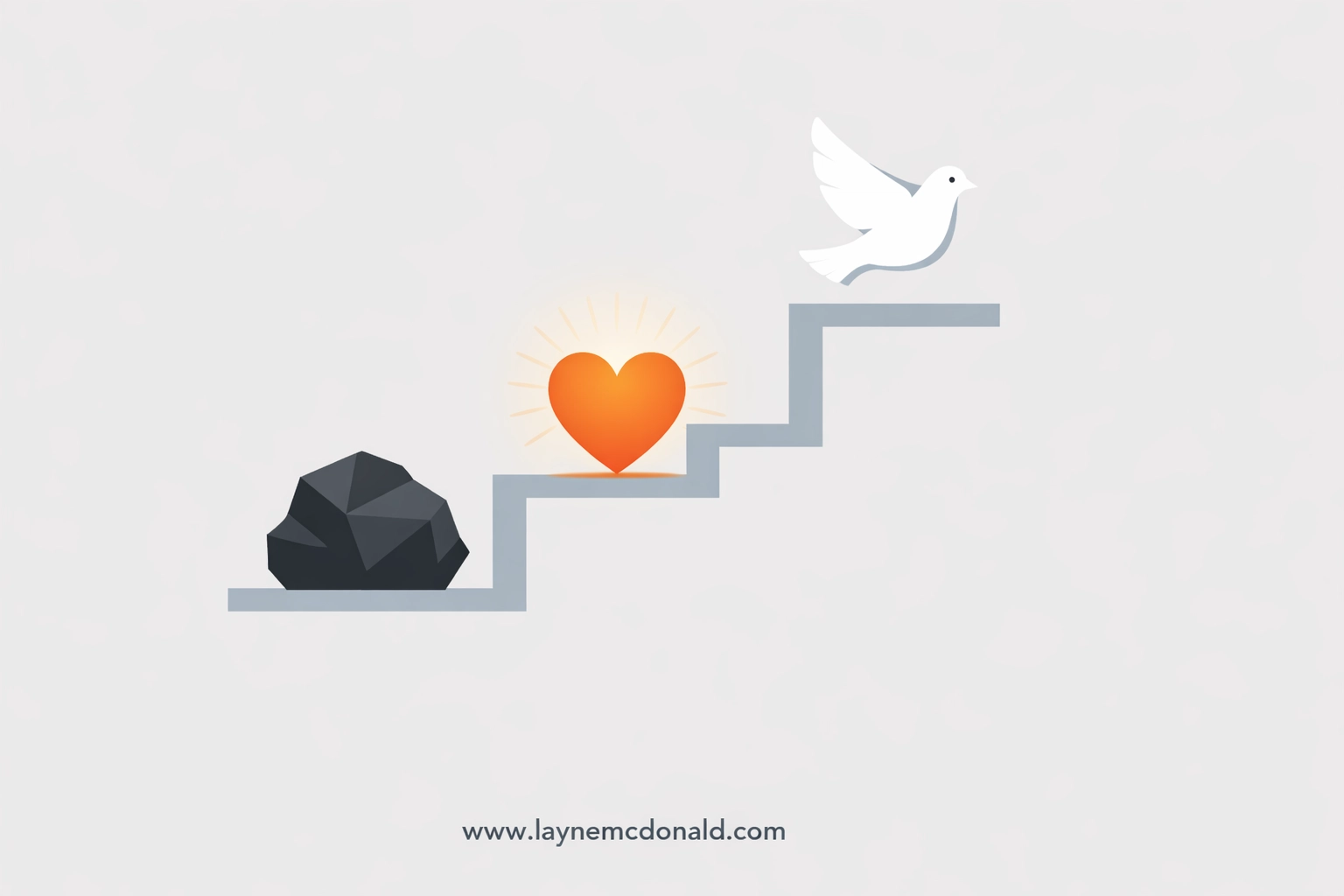
This framework moves through three levels:
Mental forgiveness (mind)
Heart forgiveness (emotions)
Embodied forgiveness (integration)
Healing often stalls when I try to skip Level 2. I can think forgiving thoughts but still feel activated, tense, or reactive. God cares about the whole person, not just the “correct answer.”
Level 1: Mental forgiveness , naming the truth without spiraling
Mental forgiveness begins with honest recognition:
What happened?
What did it cost me?
What story did I start telling myself because of it?
This level is where I separate facts from interpretations.
Try this (10 minutes):
Write the facts in plain language (no adjectives).
Then write your interpretation.
Now I can pray with accuracy:
“Lord, here’s what happened.”
“Here’s what I concluded.”
“Show me what is true.”
Scripture anchors:
“You will know the truth, and the truth will set you free.” (John 8:32)
“Above all else, guard your heart…” (Proverbs 4:23)
Mental forgiveness doesn’t force feelings to change instantly. It simply clears the fog so I can heal on purpose.
If I’m not ready: I practice a gentle first step, meta-forgiveness, by admitting, “I’m not ready yet,” without shame. That honesty becomes emotional safety, and safety is where change starts.
Level 2: Heart forgiveness , feeling what I tried to outrun
Heart forgiveness is where emotional healing actually turns. It’s the moment I stop treating pain like a bad Christian habit and start treating it like a wound that needs care.
This level includes:
grief (something was lost)
anger (something was violated)
fear (something felt unsafe)
shame (I blamed myself, even if it wasn’t mine to carry)
Heart forgiveness doesn’t mean I approve of what happened. It means I stop letting it live rent-free in my nervous system.
Practices that help “feel to heal”:
Prayer journaling: Write to God without editing yourself. Then write what you believe He’s saying back (measured against Scripture, not vibes).
Letter writing (unsent): Say what you never got to say. Name the impact. Name the cost.
Lament: Biblical lament is not faithlessness, it’s worship that tells the truth.
A simple heart-level prayer:
“Jesus, I confess I’m carrying anger and grief. I don’t want to be ruled by this. Help me release the debt to You. Heal what’s been bruised in me. Teach me how to love like You, without losing wisdom.”
Scripture anchors:
“Cast all your anxiety on him because he cares for you.” (1 Peter 5:7)
“The Lord is close to the brokenhearted…” (Psalm 34:18)
Heart forgiveness often arrives in waves. I may need to forgive the same person again, not because forgiveness “didn’t work,” but because healing happens layer by layer.
Level 3: Embodied forgiveness , when the body stops keeping score
Some hurts lodge in the body:
tight chest
clenched jaw
shallow breathing
stomach tension
jumpiness, numbness, or constant fatigue
Embodied forgiveness is when my system learns, slowly, that the danger is not happening right now. The memory is real, but it’s no longer driving my present.
This level is about integration, turning pain into wisdom, and wisdom into peaceful strength.
Try this (2–5 minutes):
Put one hand over your chest.
Inhale slowly for 4 seconds, exhale for 6.
Pray: “Prince of Peace, teach my body peace.”
Healthy embodiment can include:
walking while praying
stretching before bed with worship music
counseling with a faith-aligned clinician
sleep and nutrition support (because exhaustion makes forgiveness harder)
Scripture anchors:
“The peace of God… will guard your hearts and your minds…” (Philippians 4:7)
“A cheerful heart is good medicine…” (Proverbs 17:22)
This is the freedom point: the story is still part of my history, but it no longer owns my reactions.
Four “accelerators” that shape the journey
Even with a good framework, forgiveness is affected by real-life factors. These four show up again and again:
1) Time (growth is rarely instant)
God can heal instantly, yes. But He also heals progressively. If my healing is taking time, that doesn’t mean I’m failing, it may mean I’m becoming stable.
Practice: Set realistic expectations. I’m not trying to be “over it.” I’m trying to be free.
2) Narrative transformation (changing the story I live inside)
Unhealed pain loves extreme stories:
“I can’t trust anyone.”
“It was all my fault.”
“This always happens to me.”
Forgiveness doesn’t deny what happened; it re-centers who God is and who I am in Him.
Practice: Ask, “What story am I telling?” then ask, “What story is God telling?”
3) Interpersonal dynamics (what changes, what doesn’t)
Sometimes the other person apologizes. Sometimes they don’t. Sometimes reconciliation is possible. Sometimes it’s not wise.
Practice: I can forgive without re-entering a damaging cycle. If trust is rebuilt, it should be rebuilt with consistency, repentance, and time.
4) Culture and family patterns (what I was taught about conflict)
Some of us were taught:
“Don’t talk about it.”
“Don’t make it awkward.”
“Keep the peace no matter what.”
Jesus brings a better way: truth in love. Forgiveness that is real. Peace that isn’t pretend.
“Start today” , a simple 20-minute plan
If I want movement today, I keep it doable.
Minute 1–5: Name the wound
“God, this is what happened.”
“This is what it cost me.”
Minute 6–10: Separate facts from interpretation
Facts: what happened.
Interpretation: what I concluded.
Minute 11–15: Release the debt
“I release my right to revenge.”
“I give You the verdict.”
“I ask You to heal me and guide me.”
Minute 16–20: Choose one boundary or one step
A boundary: “I won’t keep having that conversation.”
A step: “I’ll schedule counseling,” or “I’ll talk to a pastor,” or “I’ll stop doom-scrolling at night.”
Small steps become traction. Traction becomes change.
What freedom looks like (realistic, not cheesy)
Freedom isn’t pretending it never hurt. Freedom is:
I can remember without re-living.
I can pray for someone without collapsing inside.
I can be kind without being controlled.
I can love without losing my voice.
Forgiveness doesn’t just improve relationships, it improves the inner climate of my soul. And when the inner climate changes, worship changes too. I don’t just sing about peace; I start to live from it.
Takeaway / Next Step
If I’m stuck, I don’t need to “try harder.” I need a clearer path:
Mind: name the truth
Heart: feel and process the pain with God
Body: practice peace until my system believes it
Today, I’m choosing one small step toward freedom, because Jesus didn’t save me to survive in silent pain. He saved me to heal, love well, and live light.
CTA (please read)
reach out to me on the site. visiting helps raise funds for families who lost children at no cost. https://www.laynemcdonald.com https://boundlessonlinechurch.org
Need prayers? Text us day or night at 1-901-213-7341.
EOD: Wix blog posts published today: 0
Comments