[Family and Parenting]: A Calm Plan for Phone Rules That Actually Works (Without Power Struggles)
- Dr. Layne McDonald
- Feb 8
- 6 min read

I'll be honest: the first time I handed over a smartphone, I thought I had everything figured out. I'd set some basic ground rules, give a quick lecture about responsibility, and that would be that. Within two weeks, I was in daily battles over screen time, bedtime scrolling, and phones at the dinner table. The harder I pushed, the more pushback I got.
That's when I realized something crucial: the problem wasn't the phone. It was how I approached the rules.
After researching what actually works (and testing it in real life), I discovered that calm, effective phone management doesn't come from being the strictest parent in the room. It comes from building a plan together, setting clear expectations from day one, and focusing on conversations instead of confiscation.
Here's the framework that finally brought peace to our home: and how you can implement it starting today.
Start Before You Hand Over the Phone
Your strongest negotiating position is before your child has the device in their hands. Once that phone is theirs, every rule you add later feels like you're taking something away. But beforehand? They'll agree to almost anything to get that phone.
This is your window to set the foundation. Sit down together and talk about what phone ownership means: not just the fun parts (group chats, apps, photos), but the responsibilities that come with it. Frame this as a privilege they're earning, not a right they're owed.

I made the mistake of setting rules after the fact with my first attempt, and it turned into a power struggle. The second time around, I had the conversation first. The difference was night and day.
Involve Them in Creating the Rules
Here's the game-changer: kids are far more likely to follow rules they help create.
Instead of handing down a list of commandments, ask your child what they think the rules should be. You might be surprised: they often suggest stricter guidelines than you would have. When they have genuine input, they "own" those rules. There's no one to rebel against because they helped build the system.
Negotiate until you're both satisfied. Maybe they want an extra 15 minutes of screen time before bed, and you want phones charged outside bedrooms. Find the trade-offs that work for both of you.
This doesn't mean letting them set zero boundaries. You're still the parent, and you get final say. But by involving them in the process, you turn rules into agreements instead of edicts.
Put It in Writing
Once you've talked through the rules together, create a written agreement. This doesn't have to be formal or legalistic: just a simple, clear document that lays out what you've both agreed to.
A written contract transforms phone rules from "things Mom nags about" into a shared commitment. Your child has something concrete to reference, and you have a tool for accountability that doesn't rely on memory or emotion.
Include things like:
When and where the phone can be used
Screen time limits
Apps that require permission
Consequences for breaking agreements
A review date to revisit and adjust rules

The beauty of a written agreement is that it's not set in stone. As your child demonstrates responsibility, you can ease restrictions. If problems arise, you revisit the document together and adjust. It keeps the conversation focused on the agreement, not on who's right or wrong.
Set Clear Boundaries from the Start
You will gradually lose ground over time: that's just reality. So start with boundaries that feel slightly restrictive, knowing you'll naturally relax them as trust is built.
Here are the non-negotiables I recommend from day one:
No phones in bedrooms overnight. Establish a charging station in a common area: kitchen, dining room, hallway. This one rule solves so many problems: late-night scrolling, sleep disruption, secretive behavior, and morning grogginess.
No phones while driving. Not at stoplights. Not to check directions "real quick." Not ever. This is a safety issue, and it's non-negotiable.
No phones during meals or family time. Dinner table conversations, family outings, movie nights: these are phone-free zones. If you're together, you're together.
No phone use after a set bedtime. Even if the phone is in their room for an alarm, establish a clear cutoff time for all usage.
The key is consistency. If you set these boundaries but don't follow through yourself, your child will see right through it. Which brings me to the next point.
Model the Behavior You Want to See
You cannot have a phone in your bedroom and then tell your child they can't have theirs. You cannot scroll through social media at the dinner table and then enforce a no-phones policy for your kids.
Children don't learn what we tell them. They learn what we show them.
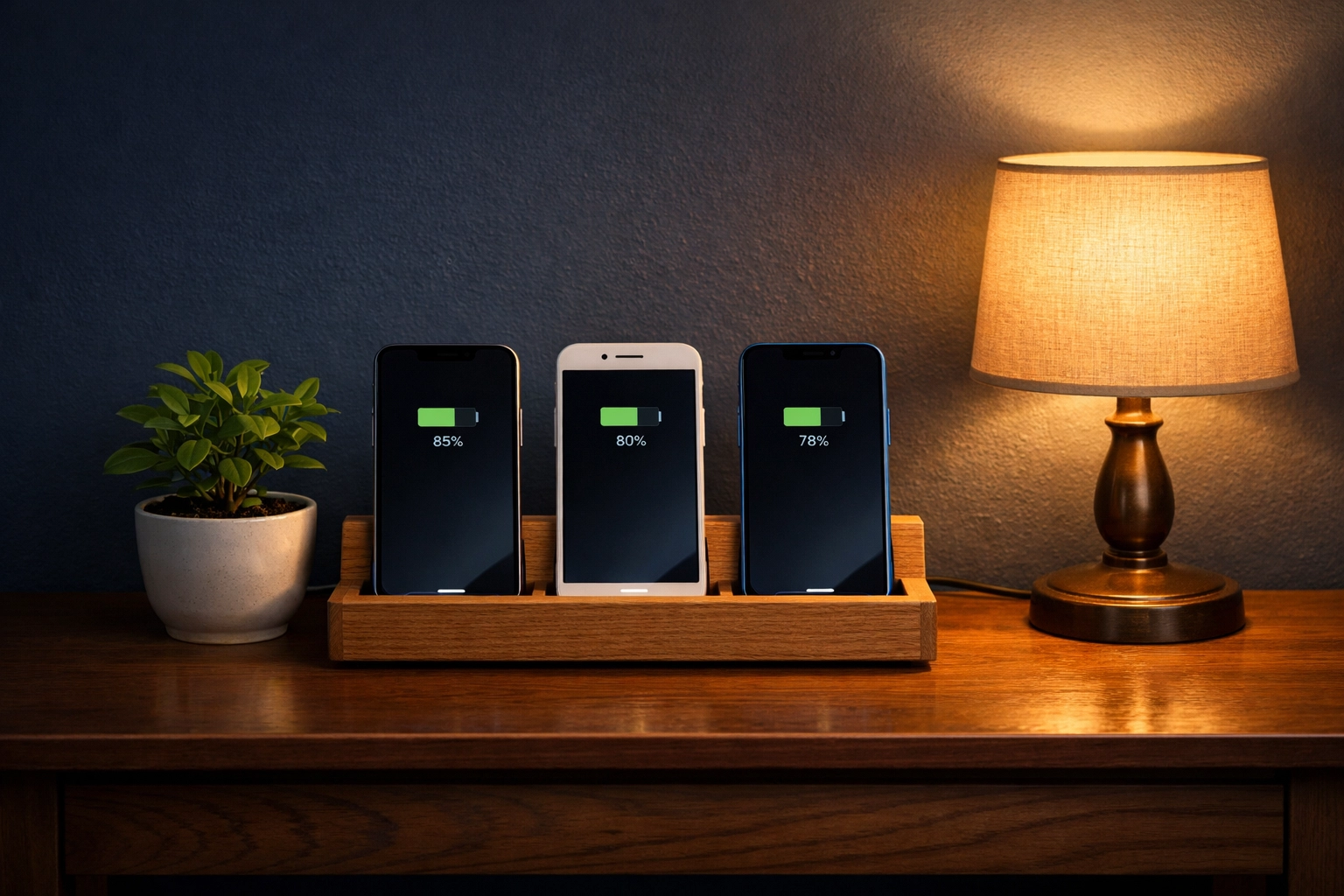
If you want your child to have a healthy relationship with technology, you need to model that healthy relationship. Charge your phone in the same common area. Put it away during meals. Don't check it every five minutes. Show them what balanced phone use actually looks like.
This was humbling for me to realize. I was asking my child to live by standards I wasn't meeting myself. Once I started treating my own phone the way I wanted them to treat theirs, the resistance dropped significantly.
Choose Conversation Over Constant Monitoring
Here's where most parents go wrong (myself included, initially): we either helicopter-parent every text and app, or we completely hands-off and hope for the best. Neither extreme works.
The middle ground is regular, open conversations about their digital life.
Especially in the early days, check in every night. Not in an interrogation way: just genuine curiosity:
How was your day online?
Did anything surprise you or make you uncomfortable?
Were there any tough decisions you had to make about responding to someone?
What's happening in your group chats?
These conversations do two things. First, they help you understand what your child is actually experiencing. Second, they plant seeds for good decision-making. You're coaching them through real situations, not lecturing them about hypothetical ones.
Over time, as trust builds and they demonstrate wisdom, these check-ins can become less frequent. But in the beginning, make them a daily habit.
Frame It as Life Balance, Not Punishment
When you talk about phone rules, don't position them as restrictions designed to make life harder. Frame them as part of maintaining overall life balance.
Everyone needs time for work, school, physical activity, rest, in-person relationships, hobbies, and yes: screen time. The phone is just one piece of a healthy life, not the centerpiece.

This shifts the conversation from "you're punishing me" to "we're making sure you have space for everything important." It's a wellness issue, not a control issue.
I started asking, "What did you do today that wasn't on a screen?" It opened up conversations about other interests, face-to-face friendships, and activities they might want to try. The phone stopped being the enemy and became just one tool among many.
Adjust as They Grow
Here's the truth: what works for a 12-year-old won't work for a 16-year-old. Your phone plan should evolve as your child matures.
Revisit your written agreement every few months (or after major milestones). Ask what's working and what isn't. Give more freedom where they've shown responsibility. Tighten boundaries if problems arise.
The goal isn't to keep them on a leash forever. The goal is to teach them how to manage technology responsibly so that when they're out on their own, they already have the skills they need.
Takeaway / Next Step
Phone rules don't have to be a battlefield. When you involve your child in creating the plan, set clear boundaries from the start, model healthy tech habits yourself, and prioritize conversations over monitoring, you create a framework that actually works: without constant power struggles.
Start tonight with one simple step: have the conversation. If your child already has a phone, sit down together and ask what's working and what isn't. If they don't have one yet, talk through what phone ownership will look like before you hand it over.
You're not just managing a device. You're teaching your child how to navigate a digital world with wisdom, balance, and self-control. That's a lesson that will serve them for life: and it starts with a calm, collaborative plan you build together.
If you found this helpful, I'd love to hear how you're implementing these ideas in your own family. Feel free to share this post with other parents navigating the same challenges, or drop a comment with what's working (or not working) for you.
For more practical parenting insights and faith-centered encouragement, reach out to me on the site anytime: I'd love to connect. And if you're looking for a community rooted in Christian teachings and real-life application, check out Boundless Online Church. You can explore privately or sign up to join a growing community walking this parenting journey together.
One more thing: every visit to this site helps raise funds through Google AdSense for families who have lost children: at no cost to you. Just by being here and engaging, you're making a difference. Thank you for that.
Let's keep building families that thrive: one calm, thoughtful conversation at a time.
Comments