Family and Parenting: The Ultimate Guide to Safe Faith Homes: Screen Time, Church Safety, and Protecting Your Kids
- Dr. Layne McDonald
- Feb 13
- 5 min read

Category: Family and Parenting
As parents raising kids in a digital world, we're navigating challenges our own parents never faced. Between unlimited screen access, questions about church environments, and the constant pressure to "get it right," building a safe faith home can feel overwhelming.
Here's the truth: a safe faith home isn't about perfection. It's about creating a refuge where your kids can grow spiritually, ask hard questions, and know they're protected: physically, emotionally, and digitally.
This guide walks you through the practical steps to safeguard your family while nurturing authentic faith.
Creating an Emotionally Safe Faith Environment

The foundation of any safe home starts with emotional security. Kids need to know they can express doubts, fears, and questions without judgment or shame.
What does this look like in practice?
First, listen with genuine empathy. When your child comes to you with a concern: whether it's about God, friends, or something they saw online: pause everything. Make eye contact. Validate their feelings before jumping to correction or advice.
Second, model the behavior you want to see. Kids learn far more from watching us than from our lectures. If we're glued to our phones during dinner, they'll assume technology matters more than connection. If we speak gracefully about people who hurt us, they'll learn forgiveness isn't just a church word: it's a lifestyle.
Third, create space for deep conversation. This might mean designating one room in your home as a technology-free zone. No phones. No tablets. Just face-to-face connection where family members can talk, play board games, pray together, and actually hear each other.
Safe faith homes aren't silent homes. They're places where children know their voices matter, their questions are welcome, and their relationship with God is theirs to explore: not ours to force.
Screen Time Boundaries That Actually Work

Let's address the elephant in every living room: screens are everywhere, and they're not going away.
The goal isn't to eliminate technology. It's to manage it intentionally so it serves your family instead of controlling it.
Start with these practical boundaries:
Set device-free times. Dinner, bedtime, and Sunday mornings are non-negotiable screen-free windows in our home. Everyone: including parents: follows the same rules. No double standards.
Create accountability, not surveillance. Instead of secretly monitoring your kids' devices (which breeds mistrust), have open conversations about what they're watching, who they're texting, and what apps they're using. Tools like Bark and Covenant Eyes can help, but technology can't replace honest dialogue.
Establish age-appropriate limits. A five-year-old doesn't need three hours of iPad time. A teenager might need their phone for homework and staying connected with friends: but even they don't need unlimited access at 2 a.m.
Use tech to reinforce faith, not replace it. Encourage Bible apps, worship playlists, and Christian podcasts. Show your kids that technology can be a tool for spiritual growth, not just entertainment.
The key is consistency. If you say screens go off at 8 p.m., they go off at 8 p.m.: for everyone. When kids see you honoring the same boundaries, they learn self-discipline by example.
Church Safety: What Every Parent Should Know
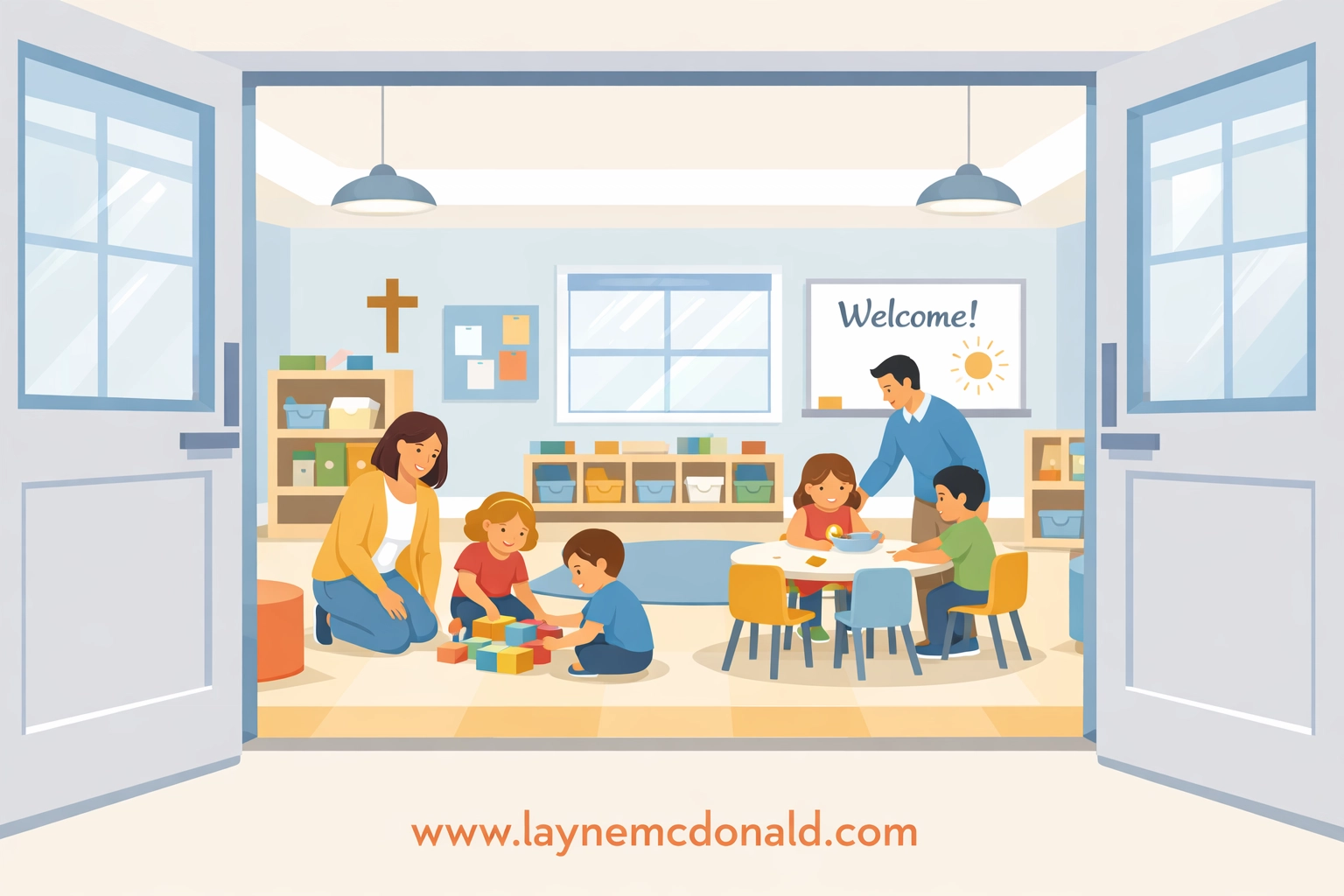
We trust our churches to be safe spaces, and most are. But wise parents ask questions and stay informed about the safety protocols protecting their children.
Here's what to look for:
Background checks for all volunteers and staff. Any adult working with children should undergo thorough vetting. If your church doesn't require this, bring it up with leadership.
Two-adult rule. No child should ever be alone with a single adult in an unsupervised area. Whether it's Sunday school, youth group, or a church van, there should always be at least two adults present.
Check-in and check-out systems. Secure children's ministries use name tags, ID codes, or wristbands to ensure kids are only released to authorized adults. This isn't paranoia: it's wisdom.
Clear reporting procedures. Ask your church: "If my child reports something concerning, what's the protocol?" Every church should have a transparent process for addressing safety concerns.
Open-door policies. Classroom doors with windows, hallways with visibility, and spaces where parents can drop in unannounced create natural accountability.
Your gut matters. If something feels off about a situation, person, or environment, speak up. Protecting your child is never an overreaction.
Setting Clear Expectations and Consequences
Safe homes aren't permissive homes. Kids thrive when they know the rules, understand the "why" behind them, and experience consistent follow-through.
Here's how to set boundaries without breaking connection:
Be clear and specific. "Respect others" is vague. "We don't interrupt when someone is talking" is actionable. Kids need to know exactly what's expected.
Explain the "why." When children understand the reason behind a rule, they're more likely to follow it: even when you're not watching. "We limit screen time because God designed your brain to need rest and real-world connection."
Enforce consequences with respect. Discipline isn't punishment; it's teaching. If your child breaks a rule, follow through calmly and consistently. Let them know privileges can be lost for wrongdoing, but your love for them never wavers.
Welcome respectful pushback. Safe homes allow kids to express disagreement respectfully. "I don't understand why I can't go to that party" is different from "You're so unfair!" One opens dialogue; the other crosses boundaries. Teach the difference.
Adjust as they grow. A ten-year-old's bedtime shouldn't be the same as a sixteen-year-old's. Revisit rules regularly and involve older kids in the conversation. When they have input, they're more invested in following through.
Boundaries without relationship lead to rebellion. Relationship without boundaries leads to chaos. Find the balance.
Raising Kids in Grace (Not Guilt)

A Christ-centered home should be marked by grace: a safe place where mistakes are learning opportunities, not sources of shame.
This doesn't mean excusing sin or ignoring behavior issues. It means creating an environment where love is the baseline, not performance.
Grace-filled parenting looks like this:
When your child confesses they lied about their homework, you address the lie: but you also thank them for being honest. You enforce a consequence, but you remind them that one mistake doesn't define their character.
When they struggle with doubt or ask hard questions about God, you don't panic or shut them down. You sit with them in the tension and trust that God is big enough to handle their questions.
When they fail: and they will: you don't heap on guilt. You point them back to Jesus, who offers forgiveness, fresh starts, and unconditional love.
Perfection isn't the goal. Progress is.
Your kids need to see that following Jesus isn't about earning approval or avoiding punishment. It's about relationship with a God who loves them exactly as they are: and loves them too much to leave them that way.
Takeaway: Building a Safe Faith Home, One Day at a Time
Creating a safe faith home doesn't happen overnight. It's a daily commitment to open communication, clear boundaries, and grace-filled discipline.
Start small. Pick one area: screen time, emotional safety, church involvement: and make one change this week. Have one honest conversation with your kids. Set one new boundary. Ask one question you've been avoiding.
Safe homes aren't perfect homes. They're places where children feel seen, heard, protected, and loved: exactly the way God sees them.
You don't have to have all the answers. You just have to show up, stay consistent, and point your kids to the One who does.
Ready to go deeper? Explore more faith-driven parenting resources and practical guides at www.laynemcdonald.com. Looking for a church community that prioritizes safety and authentic faith? Visit www.boundlessonlinechurch.org to connect with believers committed to raising the next generation well.
Need prayers? Text us day or night at 1-901-213-7341.

$50
Product Title
Product Details goes here with the simple product description and more information can be seen by clicking the see more button. Product Details goes here with the simple product description and more information can be seen by clicking the see more button

$50
Product Title
Product Details goes here with the simple product description and more information can be seen by clicking the see more button. Product Details goes here with the simple product description and more information can be seen by clicking the see more button.
$50
Product Title
Product Details goes here with the simple product description and more information can be seen by clicking the see more button. Product Details goes here with the simple product description and more information can be seen by clicking the see more button.
Comments