
Guarding Your Heart vs. Building Walls: The Truth About Christian Dating Boundaries
- Dr. Layne McDonald
- Jan 10
- 5 min read

Dating as a Christian can feel like walking a tightrope. On one side, you've got well-meaning friends telling you to "guard your heart" and on the other, you're hearing about being "open to love." So which is it? Should you protect yourself or put yourself out there?
Here's the truth: there's a massive difference between guarding your heart and building walls. And understanding this difference could transform your entire approach to Christian dating.
The Heart of the Matter
When we talk about guarding your heart in Christian dating advice, we're referencing Proverbs 4:23: "Above all else, guard your heart, for everything you do flows from it." But here's what many people miss, this isn't about becoming emotionally unavailable or creating distance. It's about being intentional with your affections and wise with your vulnerability.
Building walls, on the other hand, is what happens when past hurt or fear takes the driver's seat. Walls say "stay out" while boundaries say "come in, but here are the guidelines."
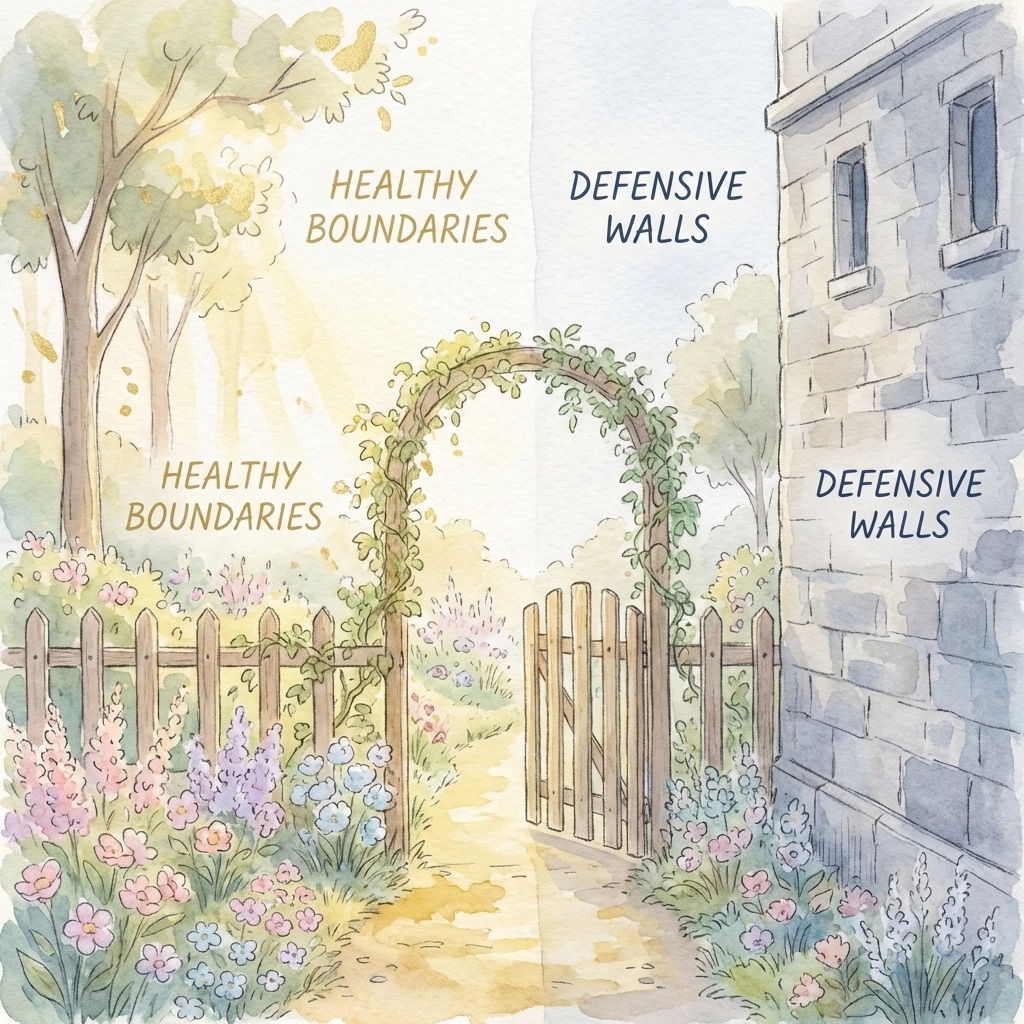
The Real Difference Between Boundaries and Walls
Think of it this way: boundaries are like a beautiful garden fence with a gate. They define the property, protect what's valuable inside, and control access, but they're designed to let the right people in. Walls are like prison barriers. They're built for defense, not connection.
Here are the key differences:
Healthy Boundaries:
Have clear purpose and intention
Protect while allowing appropriate intimacy
Are established together with your dating partner
Honor God and promote healthy growth
Are flexible and can evolve as trust builds
Emotional Walls:
Stem from fear and past hurt
Prevent genuine vulnerability and connection
Are rigid and unexamined
Focus on self-protection rather than mutual growth
Keep everyone at the same distance
What Healthy Christian Dating Boundaries Actually Look Like
So what does guarding your heart practically look like in Christian dating? Here are some real-world examples:
Communication Boundaries:
Limiting deep, late-night conversations early in the relationship
Being thoughtful about what personal struggles you share and when
Setting expectations around response times for texts and calls
Physical Boundaries:
Discussing and agreeing on physical limits before you're in the moment
Avoiding situations that make it harder to honor those limits
Being honest about what feels comfortable for both of you
Emotional Boundaries:
Not making someone your primary source of validation or self-worth
Maintaining your own friendships and interests
Taking time to process your feelings rather than diving headfirst into intensity
Spiritual Boundaries:
Praying together while being mindful of emotional intimacy that comes with it
Discussing your faith journey without using spirituality to manipulate or impress
Seeking godly counsel from mentors or pastors

When Protection Becomes Prison
Here's where things get tricky. Sometimes what we call "guarding our heart" is actually wall-building in disguise. Ask yourself these honest questions:
Am I avoiding vulnerability because I'm being wise, or because I'm scared?
Are my boundaries helping me grow in love, or keeping me stuck in fear?
Do my dating choices honor God, or are they just protecting my comfort zone?
Am I open to the possibility of being hurt again, knowing that's part of loving well?
If you find yourself consistently keeping people at arm's length, never allowing anyone to really know you, or sabotaging good relationships because they feel "too risky," you might be building walls instead of setting boundaries.
The Biblical Perspective on Love and Boundaries
Scripture gives us incredible wisdom about love and protection. Yes, we're called to guard our hearts, but we're also called to love boldly. First Corinthians 13 tells us that love "always protects, always trusts, always hopes, always perseveres." Notice it doesn't say love is naive or reckless: it protects. But it also trusts and hopes.
The goal isn't to never get hurt. The goal is to love well, which sometimes includes appropriate risk. Jesus himself was vulnerable: he wept, he felt betrayed, he experienced rejection. Yet he kept loving.
Practical Steps for Healthy Christian Self-Betterment in Dating
Ready to transform your approach to Christian dating advice? Here's your action plan:
1. Get Clear on Your Why Write down why you want to be in a relationship. Is it for companionship, fear of being alone, social pressure, or genuine desire to share life with someone? Your motivation matters.
2. Identify Your Non-Negotiables These aren't about height or job title: they're about character, faith, and values. What do you absolutely need in a partner to build a godly relationship?
3. Practice Vulnerability in Safe Relationships Start with friends, family, or a small group. Learn what healthy emotional intimacy feels like before you're in a dating relationship.
4. Create SMART Boundaries Make your boundaries Specific, Measurable, Achievable, Relevant, and Time-bound. Instead of "I won't get too close too fast," try "We'll date for three months before having conversations about our future together."
5. Seek Godly Counsel Find a mentor, pastor, or Christian counselor who can help you process your dating experiences and identify blind spots.

Red Flags vs. Boundary Violations
Learn the difference between someone who's not right for you and someone who's not respecting your boundaries. A red flag might be incompatible life goals or values. A boundary violation is someone pushing against limits you've clearly communicated.
Red flags aren't necessarily about the other person being "bad": sometimes two good people just aren't good together. Boundary violations, however, show a lack of respect that should concern you.
Moving Forward with Wisdom and Hope
The beautiful thing about healthy boundaries in Christian dating is that they actually create more freedom, not less. When you know your limits and communicate them clearly, you can relax and be yourself. You don't have to constantly guard against potential threats because you've already established the guidelines.
Remember, the point of Christian dating isn't just to avoid getting hurt: it's to grow in love, learn about yourself, and potentially find someone to share life with. That requires some risk, but it's risk within wisdom.
Your heart is incredibly valuable. It deserves protection. But it also deserves the chance to love and be loved. Don't let fear masquerade as wisdom, and don't let past hurt rob you of future hope.
As you navigate the world of Christian dating, remember that you're not just looking for someone who meets your criteria: you're also becoming someone worth choosing. Focus on your own Christian self-betterment, grow in your faith, and trust that God's timing and plan are good.
Ready to take your next step in healthy Christian relationships? Whether you're working through past hurt, learning to set better boundaries, or ready to put yourself out there again, you don't have to figure it out alone. Dr. Layne McDonald offers personalized Christian coaching that can help you navigate dating, relationships, and personal growth with biblical wisdom and practical tools. Visit Layne McDonald Ministries to learn more about coaching options that can transform your approach to love and relationships.
Comments