Hands Across the Water: Solidarity and Aid Reach the Island of Cuba
- Layne McDonald
- 17 hours ago
- 5 min read

In the quiet corners of Havana’s harbors and the bustling tarmac of its airports, a different kind of delivery arrived this week. While the headlines often focus on the friction between nations, the "Nuestra América Convoy" focused on the friction of empty stomachs and depleted medicine cabinets.
This humanitarian effort, organized by the transnational group Progressive International, represents a significant surge of aid reaching the island of Cuba during a period of intense economic and logistical hardship. As the island grapples with a severe fuel crisis and ongoing shortages, the arrival of these supplies marks a moment of tangible relief for thousands of families.
The Facts: A Convoy of Necessity
The "Nuestra América Convoy" began arriving in Cuba on Wednesday, bringing with it more than five tons of humanitarian supplies. This initial wave of aid is valued at approximately $570,000. The logistics of the operation were complex, involving more than 120 activists from at least 19 different countries who converged on the island to ensure the supplies reached their intended destinations.
The aid is not generic; it is targeted toward the most critical needs currently facing the Cuban populace. Medical supplies delivered to hospitals in and around Havana include:
Specialized cancer medications.
Antibiotics and pain management drugs.
Surgical materials and sterile equipment.
Treatments for chronic conditions that have been difficult to manage due to local shortages.
In addition to medical relief, the convoy brought essential food supplies. Contributions came from a wide variety of nations, including the United Kingdom, Ireland, Argentina, Mexico, and Turkey. This global effort was spurred by a desperate situation described by Cuban President Miguel Diaz-Canel, who noted that the island had recently gone over three months without a single fuel shipment.
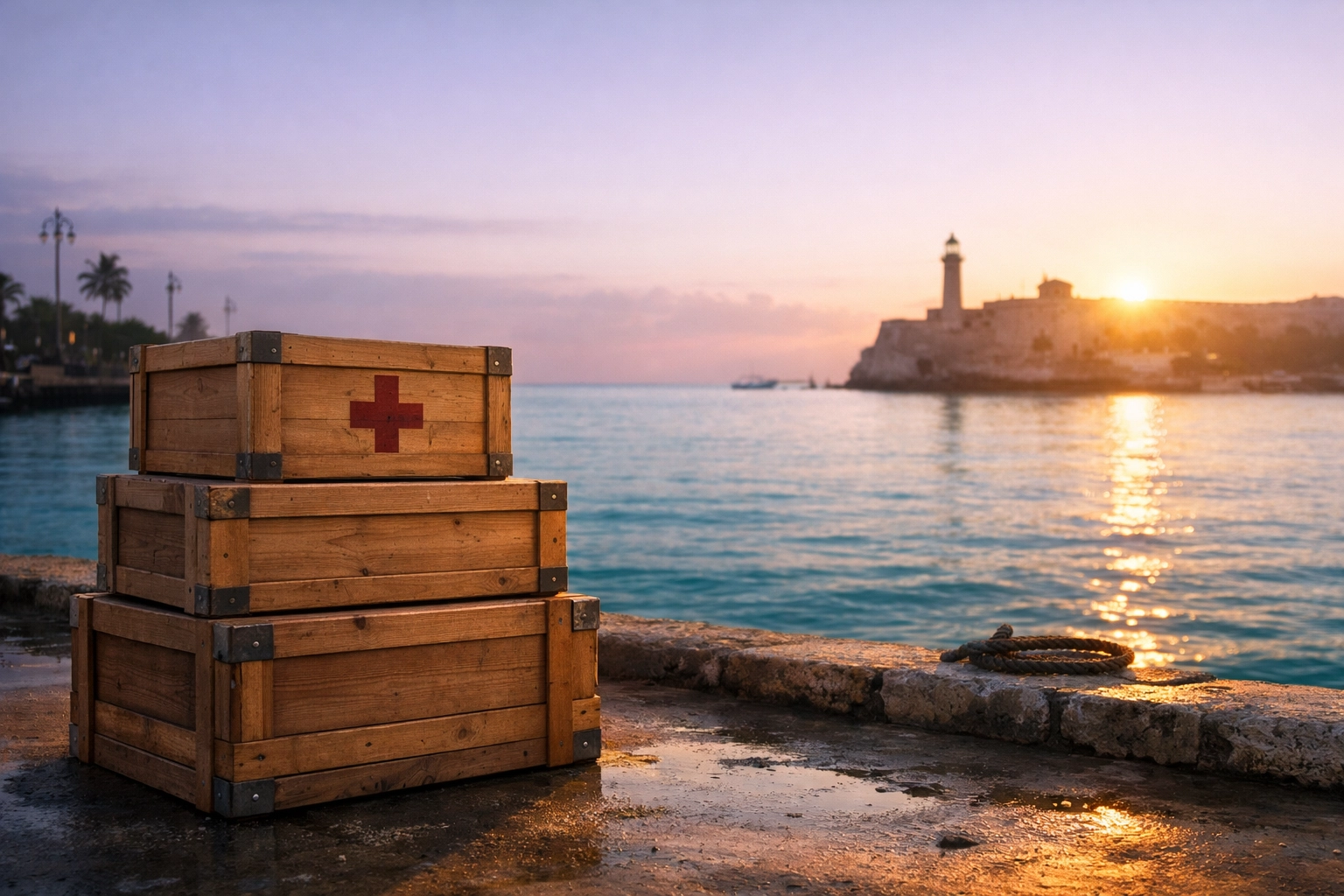
This fuel shortage has had a domino effect, impacting everything from food transportation to the operation of hospital generators. Organizers of the convoy have been vocal about the "lethal consequences" of the current blockade, particularly for newborns, the elderly, and those living with chronic illnesses.
Beyond the 120 activists on the ground, the effort is expected to grow. Total aid goals for the current push are set at 20 tons, with several vessels currently en route from Mexico carrying further shipments of food and medicine. Parallel to these activist-led efforts, reports indicate that a Russian tanker carrying 730,000 barrels of crude oil is also expected to arrive, representing a separate attempt to bypass the current energy restrictions.
The Lens: Mercy in the Midst of Conflict
When we look at these events through a biblical lens, we are reminded that our primary calling is rarely found in the halls of political debate, but in the hands of the suffering. As a community of faith, particularly within the Assemblies of God tradition, we believe in the power of Divine Healing and the mandate of compassion.
Sometimes, Divine Healing happens through a miraculous touch; other times, it happens through the providential arrival of a shipment of antibiotics. Both are evidence of God’s grace working in a broken world.
Proverbs 3:27 gives us a clear directive: "Do not withhold good from those to whom it is due, when it is in your power to act."
For the activists and donors involved in this convoy, the "power to act" was found in organizing, fundraising, and literally carrying boxes of aid across borders. When people are suffering, the moral imperative to help overrides the political convenience of staying silent.

This sentiment is echoed in Galatians 6:2, which tells us to "Bear one another's burdens, and so fulfill the law of Christ."
The "law of Christ" is the law of love. To bear the burden of a neighbor in Cuba is not a political statement for the Christian; it is a spiritual necessity. Whether that neighbor is across the street or across the water, their hunger and their pain are our concern because they are made in the image of God.
Finally, we look to 1 John 3:17-18 for the ultimate standard of solidarity: "If anyone has material possessions and sees a brother or sister in need but has no pity on them, how can the love of God be in that person? Dear children, let us not love with words or speech but with actions and in truth."
The arrival of five tons of medicine is love "in action and in truth." It is easy to debate foreign policy from the comfort of a well-stocked home. It is much harder, and much more necessary, to ensure that a child in a Havana hospital has the medicine they need to survive another day.
Balanced Viewpoints: The Complexity of the Island
The situation in Cuba is never without its complexities. There are two primary ways to view this humanitarian effort, and both carry weight in the global conversation.
On one hand, there is the political and strategic perspective. Many argue that blockades and sanctions are necessary tools of diplomacy, intended to pressure governments and encourage systemic change. From this viewpoint, aid convoys can be seen as complicating international policy or supporting a regime that some believe should be held accountable. The arrival of Russian oil tankers alongside humanitarian aid further complicates this, as it links the island’s survival to broader geopolitical tensions involving world powers.
On the other hand, there is the simple, moral imperative. This view argues that regardless of the government in power, the people living under it should not be deprived of basic human rights like food and medicine. To this group, a blockade that prevents life-saving cancer drugs from reaching a hospital is not a "tool of diplomacy": it is a humanitarian crisis. The activists in the "Nuestra América Convoy" operate from this conviction, believing that human life must always come before political strategy.
At The McReport, we believe in truth without cruelty. The truth is that the politics are messy, but the human need is clear. We can hold different views on international relations while remaining united in the belief that a hungry person should be fed and a sick person should be treated. Mercy does not require a political litmus test.
A Calm Next Step: Shared Abundance
It is easy to feel small when reading about international convoys and global blockades. However, the spirit of "Hands Across the Water" starts in our own communities. Solidarity isn’t just for activists on ships; it’s for neighbors in the same zip code.
This week, we invite you to take one simple, calm step. Find one way to share what you have with someone in need. It doesn’t have to be five tons of aid. It could be:
Dropping off a bag of groceries at a local food pantry.
Checking in on an elderly neighbor who might be struggling with their own "fuel crisis": perhaps needing a ride to the doctor or help with a utility bill.
Donating to a reputable organization that provides medical relief to underserved areas.
When we practice generosity in the small things, we prepare our hearts for the big things. We move closer to the heart of God, who gave everything so that we might have life.

Closing Invitation
The world can feel divided, but there is always a path toward peace through service and prayer. We are so glad you are part of this community, looking for the light in the midst of the news.
If you want to stay updated on how faith and politics intersect with a spirit of grace, we invite you to explore more of our coverage. We believe that being informed is the first step toward being impactful.
Check out more stories like this on our News and Politics hub at LayneMcDonald.com.
Need prayers? Text us day or night at 1-901-213-7341. We would love to stand with you in whatever you are facing this week.
Stay hopeful, stay kind, and remember that grace has no borders.
Source:AP, Progressive International, Reuters

$50
Product Title
Product Details goes here with the simple product description and more information can be seen by clicking the see more button. Product Details goes here with the simple product description and more information can be seen by clicking the see more button

$50
Product Title
Product Details goes here with the simple product description and more information can be seen by clicking the see more button. Product Details goes here with the simple product description and more information can be seen by clicking the see more button.
$50
Product Title
Product Details goes here with the simple product description and more information can be seen by clicking the see more button. Product Details goes here with the simple product description and more information can be seen by clicking the see more button.
Comments