
How to Teach Generosity Without Making Kids Feel Guilty
- Dr. Layne McDonald
- Jan 10
- 5 min read

Your seven-year-old clutches their allowance money tight in their little fist when you mention donating to the church food drive. Your teenager rolls their eyes when you suggest volunteering at the homeless shelter. Sound familiar?
Teaching generosity can feel like walking a tightrope. Push too hard, and you create resentment. Don't push enough, and you raise self-centered kids. But here's the beautiful truth: God designed our hearts to overflow with love and giving when we understand His heart first.
Start With God's Heart, Not Human Guilt
The foundation of Christian generosity isn't obligation: it's gratitude. When we truly understand how lavishly God has loved us, giving becomes as natural as breathing. But kids don't automatically connect these dots. They need us to paint the picture.
Instead of saying "You should share because there are kids who have less," try "God has given us so many good things. Let's think of ways we can show His love to others." This subtle shift moves the focus from comparison and guilt to celebration and love.

Scripture reminds us that "God loves a cheerful giver" (2 Corinthians 9:7). Notice it doesn't say "reluctant giver" or "guilty giver." God wants our children's generosity to bubble up from joy, not drain down from duty.
Empathy: The Secret Ingredient
Children as young as four can pick thoughtful gifts for others when they understand someone else's perspective. This isn't about making them feel bad for having more: it's about expanding their world to include others' experiences.
Try these empathy-building activities:
• Story time with purpose: Read books about characters who help others or face challenges your child hasn't experienced • Perspective questions: "What do you think it would feel like if you didn't have a warm bed tonight?" • Community observation: Point out people in your neighborhood who might need encouragement: the elderly neighbor, the family with the sick parent, the new kid at school
When empathy grows naturally, generosity follows. Kids start noticing needs around them without prompting because their hearts have been trained to see beyond themselves.
Model the Joy, Not Just the Action
Your children are watching everything you do, especially how you respond to opportunities to give. But they're not just watching what you give: they're watching how you feel about it.
When you drop coins in the charity bucket, say something like, "I love getting to help families have food tonight." When you visit a sick friend, explain, "It makes my heart happy to show Mrs. Johnson that we care about her."
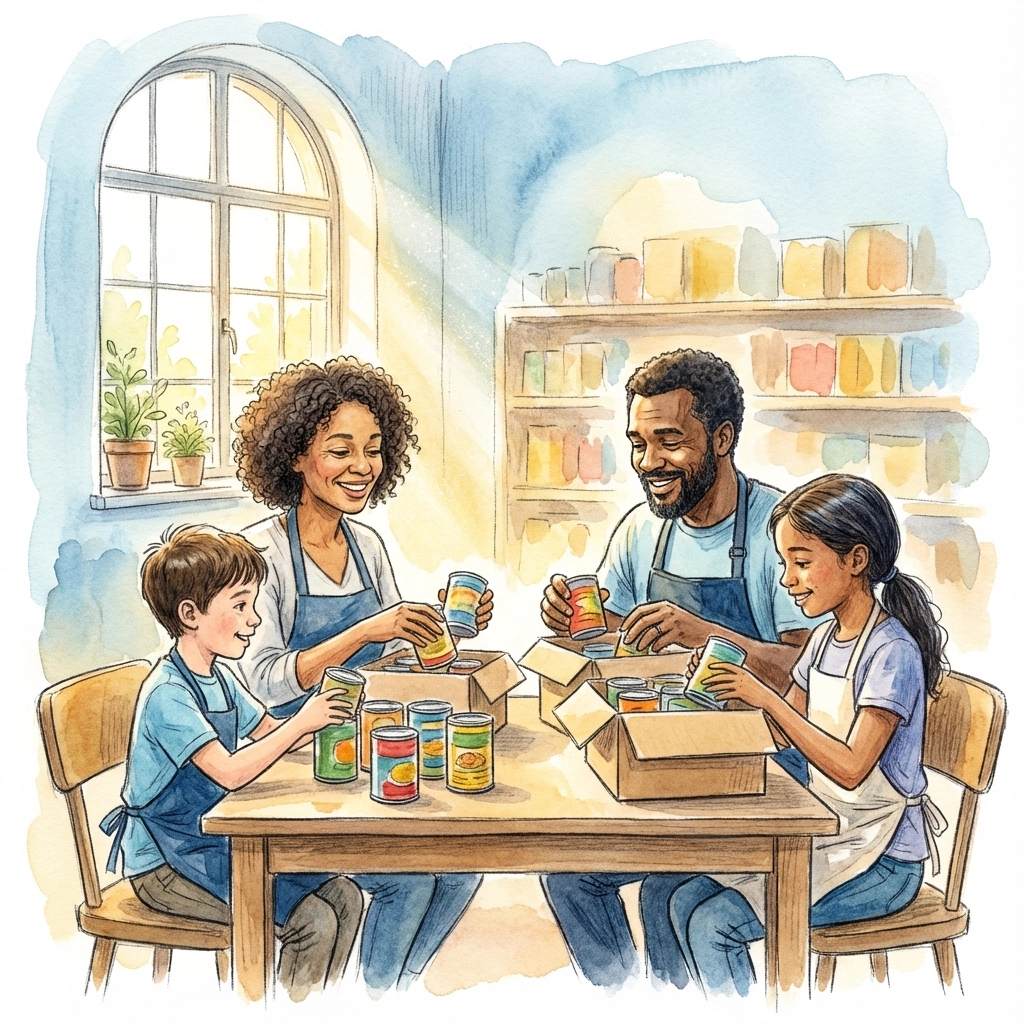
Your enthusiasm becomes contagious. Kids learn that generosity isn't a burden we carry but a privilege we enjoy. They see giving as something that brings joy, not something that takes it away.
Celebrate Their Natural Generosity
Every child has moments of spontaneous kindness. The key is catching these moments and celebrating them without making a big production that feels forced.
When your child shares their snack with a friend, simply say, "That was really kind of you. I bet that made your friend feel loved." When they help without being asked, acknowledge it: "You have such a generous heart."
These small affirmations reinforce that generosity is part of their identity, not just something they do when reminded. You're helping them see themselves as people who naturally care for others.
Give Them Ownership
Nothing kills generosity faster than feeling forced. But nothing cultivates it better than feeling empowered. Give your children real ownership over their giving decisions.
Set aside part of their allowance or earnings for giving, but let them choose where it goes. Take them to the store to pick out items for the food drive instead of just sending your leftovers. Let them choose which charity gets their outgrown clothes.

When children have control over their generosity, they develop personal investment in helping others. They start looking for opportunities to give rather than avoiding them.
Start Small and Age-Appropriate
A three-year-old can hold the door for someone behind them. A six-year-old can draw pictures for nursing home residents. A ten-year-old can donate birthday money to their favorite cause. A teenager can volunteer regularly at a local ministry.
The goal isn't to create mini-philanthropists overnight. It's to establish a pattern of thinking beyond themselves that will grow as they do.
Consider these age-appropriate starting points:
• Preschool: Sharing toys, helping with simple tasks, saying thank you genuinely • Elementary: Donating allowance money, participating in family service projects, writing thank-you notes • Middle school: Regular volunteering, choosing personal giving goals, organizing small fundraisers • High school: Leading service projects, mentoring younger kids, connecting their talents to community needs
Create Calm, Positive Experiences
Avoid turning generosity into a rushed, stressful obligation. When you volunteer as a family, choose activities that allow for conversation and connection. When you donate items, take time to talk about how these things might help someone else.
Make the experience memorable for the right reasons. Stop for ice cream after volunteering. Tell stories about the people you helped. Let your kids ask questions about what they observed.

These positive associations help children connect generosity with family bonding and joyful experiences rather than with chores or obligations.
Address the "What About Me?" Question
Children naturally worry about having enough for themselves, especially when money is involved. This isn't selfishness: it's normal developmental thinking. Address these concerns directly and honestly.
Explain the difference between needs and wants. Help them understand that God promises to provide for our needs while we learn to hold our wants lightly. Share age-appropriate stories about how God has provided for your family.
When kids feel secure in God's provision, they can give more freely. Insecurity creates hoarding; security creates sharing.
Connect Generosity to Gratitude
The most generous children are the most grateful children. Create regular rhythms of noticing and celebrating what God has given your family. This might be as simple as sharing three things you're thankful for at dinner each night.
As gratitude grows, children naturally start thinking about others who might not have what they have. This leads to generous thoughts and actions that come from overflow, not obligation.

The Long View
Remember, you're not just teaching your children to give: you're helping them develop hearts that reflect God's heart. This transformation happens slowly, over years of consistent modeling and gentle guidance.
There will be setbacks. Your child might refuse to share one day or complain about volunteering the next. These aren't failures; they're opportunities to revisit the why behind generosity and to demonstrate grace in the process.
Your Next Step
Teaching generosity without guilt requires intentionality, but it doesn't require perfection. Start where you are with what you have. Choose one small way to help your children experience the joy of giving this week.
Whether you're just beginning this journey or you've been walking it for years, you don't have to figure it out alone. At Layne McDonald Ministries, we're passionate about helping families discover practical ways to live out their faith together.
God has given you everything you need to raise children with generous hearts. Trust His process, celebrate small wins, and watch as your children's capacity for love and giving grows into something beautiful.
Comments