
Leviticus Unfiltered: Part 3 – The Day God Drew Near (Leviticus 16–17)
- Dr. Layne McDonald
- Dec 30, 2025
- 6 min read

Picture this: You're about to enter the most important room in the building, but there's a catch: one wrong move and you could literally die. No pressure, right? That's exactly what the high priest faced every year on the Day of Atonement. Welcome back to our Leviticus journey, where we're diving into one of the most dramatic and meaningful chapters in the entire Bible.
When God Says "Come Close" (But Carefully)
Leviticus 16 opens with God essentially saying, "Aaron, we need to talk." After two of Aaron's sons died for offering unauthorized fire (remember that from our last study?), God wasn't being harsh: He was being protective. Think of it like a parent teaching a child how to safely handle something powerful. The instructions that follow aren't about keeping people away from God; they're about creating a safe way to draw near to Him.
The Day of Atonement wasn't just another religious ritual: it was the one day each year when someone could enter the Most Holy Place and survive. But here's what makes this incredible: God wasn't content to stay distant. He was literally making a way for relationship.
Personal Reflection Question: When have you experienced something so overwhelming that you needed specific instructions just to approach it safely? How does that help you understand God's holiness?
Group Discussion: Why do you think God chose to create one specific day for this kind of access rather than leaving the Most Holy Place permanently open?
The Priest Who Went in Alone
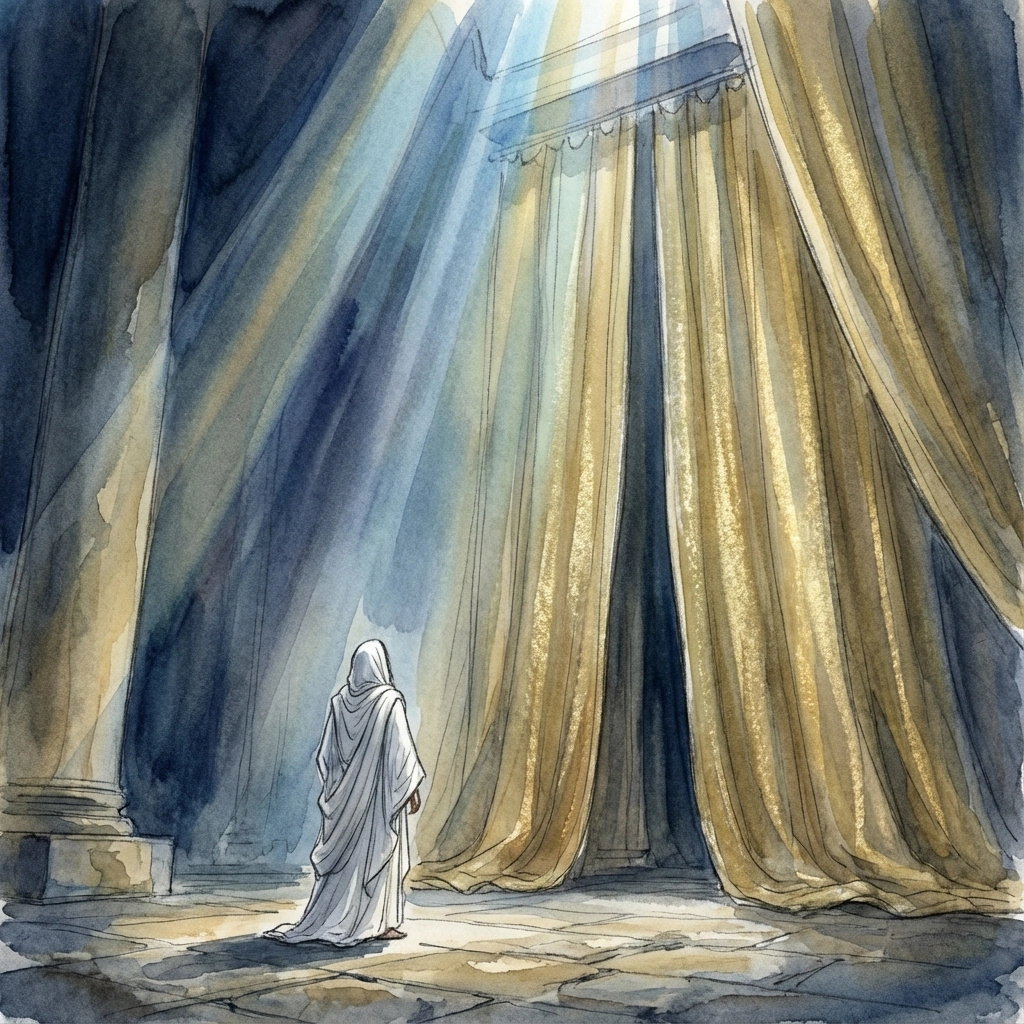
Here's where things get really interesting. Leviticus 16:17 tells us something remarkable: "No one else may be in the Tent of Meeting when Aaron enters to make atonement in the Most Holy Place until he comes out." Picture the scene: the entire camp of Israel, hundreds of thousands of people, waiting in complete silence while one man disappears behind the veil.
Aaron had to go through an extensive preparation process. He bathed, put on special linen garments (not his fancy high priest outfit), and offered sacrifices for his own sins first. You can't give what you don't have, and you can't represent others before God while you're still carrying your own baggage.
But here's the beautiful part: while Aaron went in alone, he didn't go in empty-handed. He carried the names of all twelve tribes on his breastplate. Every person in Israel was represented before God that day, even though only one person could enter.
Hook Alert: Ever wonder what Aaron was thinking during those moments alone with God? The pressure, the privilege, the weight of an entire nation's sin on his shoulders: and yet, the incredible honor of standing in God's presence.
Two Goats, One Amazing Picture
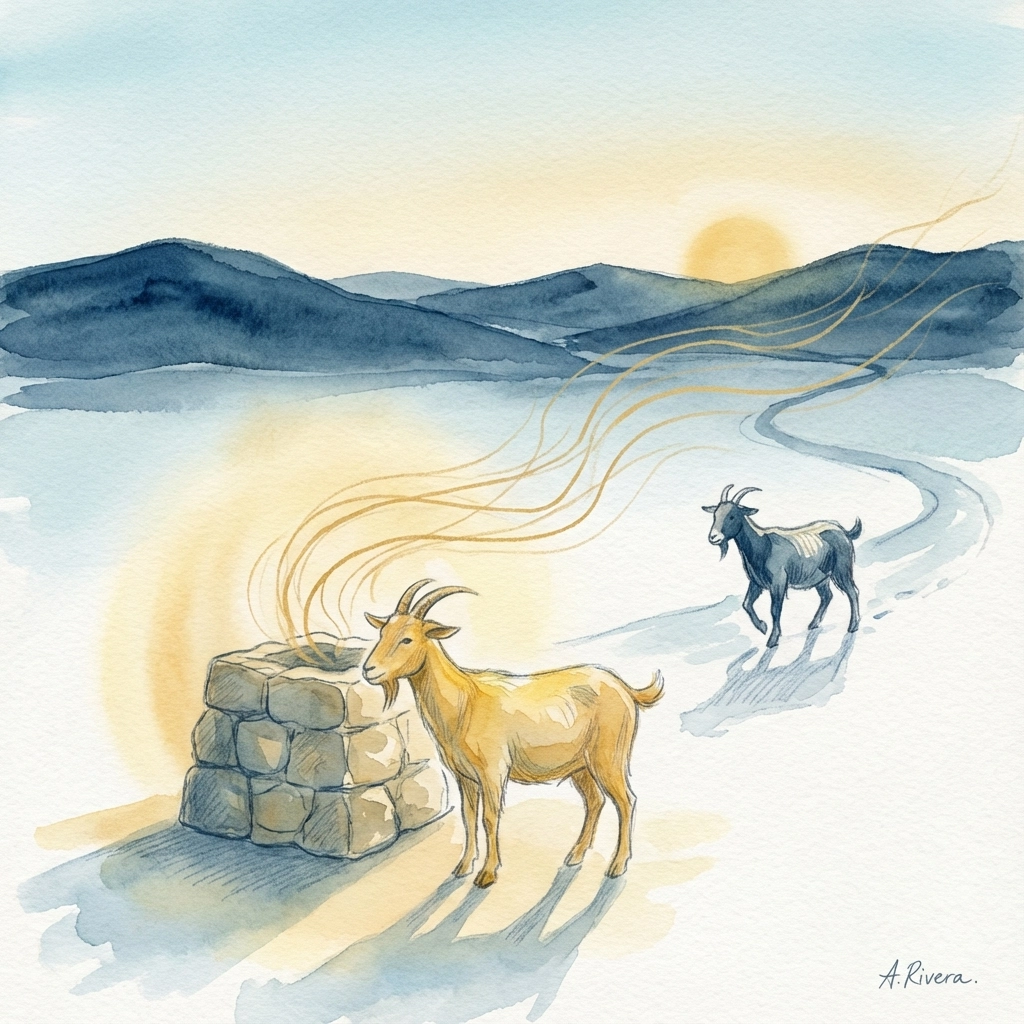
The ceremony included something that might seem strange to us: two goats with very different destinies. One was sacrificed, its blood sprinkled in the Most Holy Place. The other became the "scapegoat," literally carrying the sins of the people into the wilderness, never to return.
This wasn't random. God was painting a picture of complete forgiveness. The first goat showed that sin requires a sacrifice: there's a cost to wrongdoing. The second goat showed that forgiveness means complete removal: when God forgives, He doesn't just cover sin, He carries it away.
Think about that for a moment. In a world where we screenshot everything, save receipts, and bring up past mistakes, God demonstrates forgiveness that literally sends our failures into the wilderness where they can never come back to haunt us.
Personal Reflection Question: What past mistake do you wish could be sent into the wilderness, never to return? What does it mean to you that God offers this kind of complete forgiveness?
The Rules That Reveal the Heart (Leviticus 17)
Chapter 17 might seem like a random collection of rules about where to sacrifice and what not to eat, but it's actually revealing something profound about God's heart. Every regulation points to the same truth: life is precious to God.
The command to bring all sacrifices to the entrance of the Tent of Meeting wasn't about control: it was about protection. God knew that if people started making sacrifices wherever they wanted, they'd eventually start sacrificing to other gods. It's like a parent saying, "If you're going to drive, you need to follow the traffic rules." The rules exist to protect what matters.
And the prohibition against eating blood? God says, "The life of a creature is in the blood, and I have given it to you to make atonement for yourselves." Blood represents life, and life belongs to God. When we understand this, the entire sacrificial system makes sense: and it points us forward to an even greater sacrifice.
Group Discussion: How do these regulations show God's care for both spiritual and physical life? What modern boundaries might serve similar protective purposes?
What This Means for Us Today
Here's where this ancient ceremony becomes incredibly personal. The Day of Atonement was pointing forward to something: or someone: who would make permanent what was temporarily accomplished once a year.
Jesus didn't enter an earthly Most Holy Place; He entered heaven itself. He didn't need to offer sacrifices for His own sin because He had none. He didn't carry our sins symbolically on a goat; He carried them literally on a cross. And He didn't need to repeat the ceremony annually because His sacrifice was perfect and complete.
But here's the most amazing part: because of what Jesus did, we don't have to wait for one day a year to approach God. We don't need a human high priest to represent us. The veil that separated us from God's presence has been torn open.
Mid-Article Hook: What if I told you that what took elaborate preparation and perfect execution for Aaron to accomplish once a year, you can experience right now, right where you're sitting?
This doesn't make God less holy or the relationship less significant. It makes the access more personal and the forgiveness more complete. We can "approach God's throne of grace with confidence" (Hebrews 4:16) not because we're worthy, but because Jesus made us worthy.
Making It Practical for Your Small Group
Group Activity Idea: Have each person write down something they wish could be "sent into the wilderness" on a piece of paper. Without sharing what they wrote, have everyone place their papers in a container and dispose of them together, talking about what complete forgiveness means.
Personal Study Questions:
How does understanding the Day of Atonement change your perspective on approaching God in prayer?
What does it mean to you that Jesus serves as both the sacrifice and the high priest?
How can you live differently knowing that your sins have been completely removed, not just covered?
Group Discussion Starters:
Why do you think God required such elaborate preparation for the Day of Atonement?
How does the scapegoat ceremony help us understand forgiveness differently?
What barriers do we sometimes create that keep us from approaching God with confidence?
How can we help others understand that they have access to God's presence?
Living in the Reality of Access
The most practical application of Leviticus 16-17 isn't about following ancient rituals: it's about living in the reality of what those rituals accomplished. You have access to God. Not on special days, not through special people, not with special preparations. Right now.
This should change how we pray, how we handle guilt, how we approach forgiveness: both receiving it and giving it. When you truly understand that God has sent your sins into the wilderness, you stop dragging them back into camp. When you grasp that Jesus has made you clean, you stop living like you're still dirty.
Final Hook: So here's the question that will determine how you live this week: Will you approach God like someone who's been given incredible access, or will you keep standing outside the tent, afraid to enter?
The Day of Atonement was never meant to be just a historical event: it was meant to transform how we relate to God every single day. In our next study, we'll explore how this access to God transforms not just our relationship with Him, but our relationships with each other.
Ready to go deeper? Join us for the next part of Leviticus Unfiltered, where we'll discover how God's holiness becomes the foundation for healthy community. And if you're looking for more resources to strengthen your faith journey, check out our leadership resources and spiritual growth materials designed to help you grow closer to God and serve others more effectively.
Comments