
Music: Choosing Worship Songs Without Burnout: My 3-Layer Set-Building Method
- Dr. Layne McDonald
- Feb 8
- 5 min read

I used to dread Sunday mornings.
Not because I didn't love worship: I did. But the weekly scramble to choose songs, plan transitions, and make sure the set felt cohesive left me exhausted every single week. I'd scroll through hundreds of options, second-guess every choice, and burn out before the service even started.
Then I realized something: I didn't have a system. I was treating every week like a blank slate, reinventing the wheel over and over. That's when I built my 3-Layer Set-Building Method: a repeatable framework that removes decision fatigue and keeps worship planning sustainable.
If you're tired of the constant pressure to pull together the "perfect" set every week, this approach might change everything for you.

Layer 1: Foundation (Theme & Flow)
The first layer is about establishing what you're building toward. Instead of picking random songs you like, start with two anchors:
Anchor 1: The Theme What's the sermon topic? What's the season (Advent, Easter, ordinary time)? What does your congregation need to hear right now? I pick one clear theme per service: something like "God's faithfulness," "surrender," or "hope in hard times."
This immediately cuts my song options in half. If the theme is faithfulness, I'm not browsing every worship song ever written. I'm looking for lyrics that reinforce that one idea.
Anchor 2: The Flow I learned this the hard way: a worship set isn't a playlist. It's a journey. People need to be led somewhere, not whiplashed between emotions.
Here's the flow template I use almost every week:
Opener (upbeat, celebratory): Start with energy. Get people engaged and moving.
Middle (midtempo, reflective): Slow it down slightly. This is where the theme deepens.
Closer (intimate, prayerful): End in a place of surrender or communion with God.
This structure gives me a roadmap. I know I need one fast song, one or two mid-tempo songs, and one slow song. That's it. No more staring at a blank setlist wondering where to start.
Layer 2: Songpool & Rotation
Here's where most worship leaders burn out: trying to learn and introduce new songs every single week. It's not sustainable, and honestly, it's not helpful for the congregation either. People need repetition to connect deeply with a song.
Instead, I built a master songpool: a curated list of about 30–40 songs my team knows well. These songs span different themes, tempos, and seasons, so I can pull from them week after week without feeling stale.
How I organize my songpool:
10 fast songs (celebratory, high-energy)
15 midtempo songs (reflective, declarative)
10 slow songs (intimate, prayerful)
5 seasonal songs (Christmas, Easter, etc.)
Every song in my pool has been practiced, approved, and road-tested. I'm not introducing brand-new material every Sunday. I'm rotating songs I already trust.
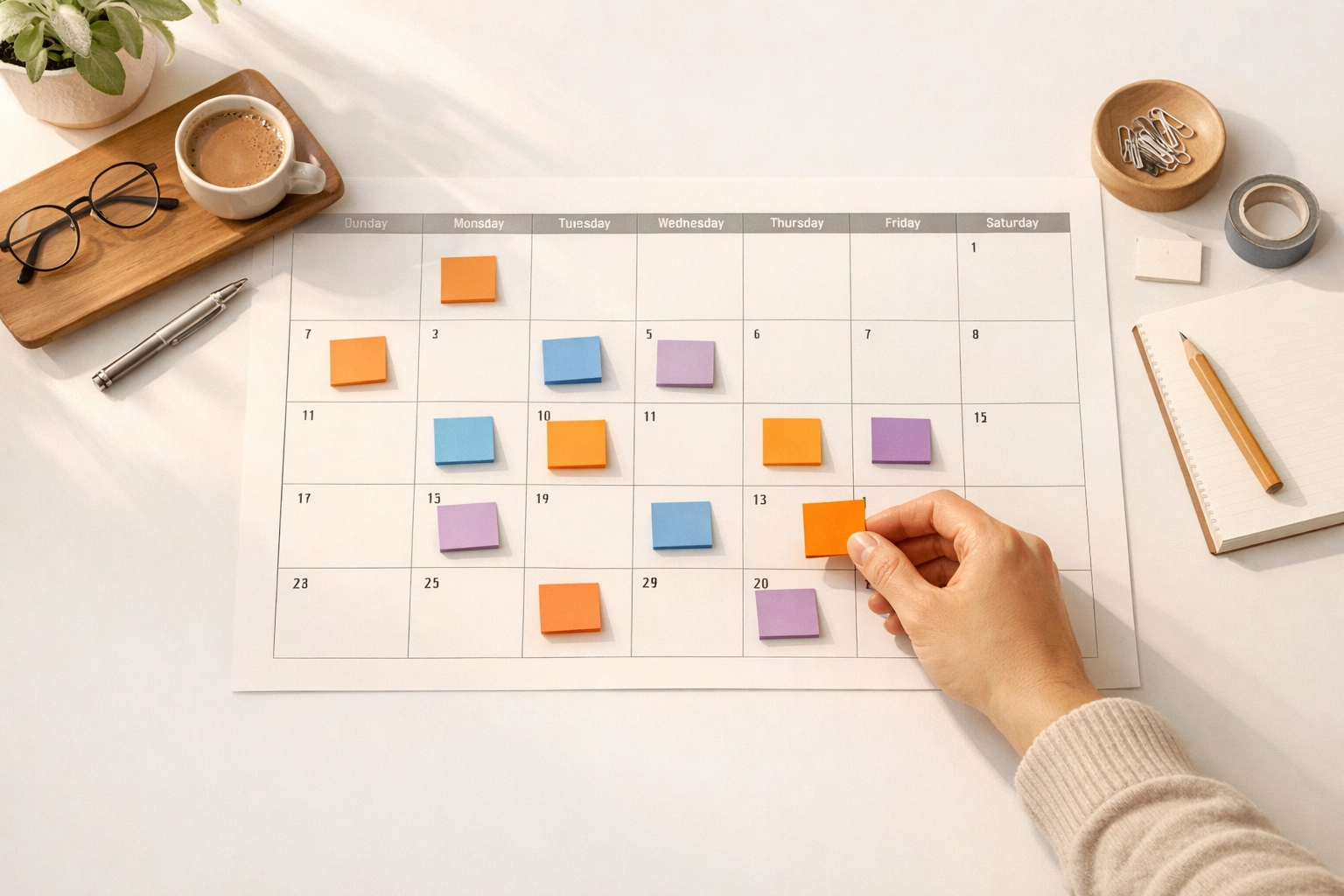
The rotation strategy: I plan worship sets in monthly blocks, not weekly. At the start of the month, I map out all four (or five) Sundays at once. This lets me see patterns and avoid repeating the same song two weeks in a row.
For example:
Week 1: Fast Song A, Mid Song B, Slow Song C
Week 2: Fast Song D, Mid Song E, Slow Song C (repeat)
Week 3: Fast Song A (repeat), Mid Song F, Slow Song G
Week 4: Fast Song H, Mid Song B (repeat), Slow Song G (repeat)
Notice how I'm intentionally repeating songs across weeks? That's the secret. Repetition builds familiarity. Familiarity builds engagement. And I'm not scrambling to prep five brand-new songs every month: I'm reusing and reinforcing what already works.
When to add new songs: I only introduce one new song per month. That's it. One. And I repeat it for at least three weeks in a row so the congregation actually learns it. If a song doesn't stick after a month, I retire it from the pool and try something else later.
This approach has completely eliminated my decision fatigue. I'm not browsing CCLI charts every week. I'm working from a trusted pool and rotating strategically.
Layer 3: Energy Mapping
The third layer is the fine-tuning. Once I have my theme, flow, and songpool in place, I map the energy of the set to make sure it feels natural: not forced.
Here's what I mean by energy mapping:
Tempo: I use a simple BPM (beats per minute) guideline to keep transitions smooth:
Fast songs: 120–140 BPM
Midtempo songs: 80–110 BPM
Slow songs: 60–80 BPM
If I'm transitioning from a 130 BPM opener to a 70 BPM slow song with no buffer, the shift will feel jarring. Instead, I add a midtempo bridge song in between to ease the transition.
Keys: I try to keep songs within one or two keys of each other when possible. If my opener is in G and my closer is in D, I'll pick a middle song in C or G to keep modulation smooth. This isn't a hard rule: sometimes a key change is powerful: but it's a helpful guideline when I'm stuck between two song options.
Lyrics: I read through the full lyrics of every song in the set to make sure they're building on each other, not contradicting. If my opener declares "God is victorious," but my closer is all about "waiting in the dark," the set will feel disjointed. I want the lyrics to create a cohesive narrative from start to finish.
Energy mapping takes about 10 minutes once the songs are chosen. I just make a quick chart:
Song | Tempo | Key | Energy Feel |
Opener | 130 | G | Celebration |
Middle 1 | 95 | C | Reflection |
Middle 2 | 85 | D | Declaration |
Closer | 70 | D | Intimacy |
If the energy flow looks smooth on paper, it'll feel smooth in the room.

Practical Takeaway: Start With One Layer
You don't have to overhaul your entire process this week. Pick one of these layers and implement it first:
If you struggle with direction: Start with Layer 1. Pick a theme and a flow template for your next service. Build everything around that.
If you're constantly scrambling for new songs: Start with Layer 2. Create a simple songpool of 20 songs you already know. Plan your next month of worship using only those 20 songs and see how much easier it gets.
If your sets feel disconnected or clunky: Start with Layer 3. Map the energy of your next set on paper before rehearsal. Adjust tempo and key transitions where needed.
The goal isn't perfection. The goal is sustainability. Worship planning shouldn't leave you burned out and dreading Sundays. When you have a repeatable system in place, you free up mental space to actually lead worship instead of just surviving it.
I've used this method for over two years now, and I can plan a full month of worship sets in under an hour. It's not because I'm faster or more talented: it's because I'm not reinventing the process every single time. I have a system, and it works.
Next Step
If this method resonates with you, try it for one month. Build a small songpool, pick themes in advance, and map your energy flow. See what changes. You might find that worship planning becomes something you actually look forward to instead of something that drains you.
And if you want to go deeper into practical faith-driven content like this, I'd love for you to reach out to me on the site. Visiting helps raise funds for families who lost children at no cost to you: every click supports that mission. I also recommend checking out Boundless Online Church for more Christian teachings and a supportive community you can access privately or with a free sign-up.
If this post helped you rethink your worship planning, share it with another worship leader who might be struggling. Let's build each other up, one practical tool at a time.
Comments