Reading the Room: How to Spot an Anxious Visitor Before They Speak
- Dr. Layne McDonald
- Feb 24
- 4 min read

She walked through the front doors last Sunday morning, and you could feel it before she said a single word. Something was off. Her shoulders were tight, her eyes darted around the lobby, and she clutched her purse like it was the only thing keeping her grounded.
You smiled and said, "Welcome!" But she barely made eye contact before shuffling past.
Here's the thing: that moment wasn't a failure. It was an opportunity. And the more you understand what anxiety looks like before someone speaks, the better equipped you'll be to meet them right where they are.
As a greeter, you're not just opening doors: you're opening hearts. And that starts with learning to read the room.
Why Body Language Matters More Than Words
Most communication happens without a single syllable. Researchers estimate that over 70% of what we "say" comes through our posture, facial expressions, and movement. For visitors walking into an unfamiliar church environment, their body is often screaming what their mouth won't admit: I'm nervous. I'm unsure. I don't know if I belong here.
Your job isn't to fix that feeling instantly. Your job is to see it: and respond with grace.
Many experienced greeter teams know that empathy begins with observation. "You can't meet someone's need if you don't notice their struggle." The ministry of presence starts before the handshake.
The 5 Body Language Signals of an Anxious Visitor
Let's get practical. When someone walks through your doors carrying invisible weight, their body will tell the story. Here's what to look for:
1. Fidgeting and Restless Movement
Anxious visitors rarely stand still. You might notice:
Pacing back and forth near the entrance
Swaying slightly while standing in one spot
Playing with keys, a phone, or the edge of their clothing
Shifting weight from foot to foot
These movements signal an unsettled mind. The person is physically trying to discharge nervous energy. They're not being rude or distracted: they're coping.
2. Self-Soothing Behaviors
When we feel unsafe or uncertain, our bodies instinctively try to comfort us. Watch for:
Rubbing hands together or wringing fingers
Touching the face, neck, or arms repeatedly
Crossing arms tightly across the chest
Holding onto something (a bag, a jacket, a child) like an anchor
These small gestures are the body's way of saying, I need comfort right now.
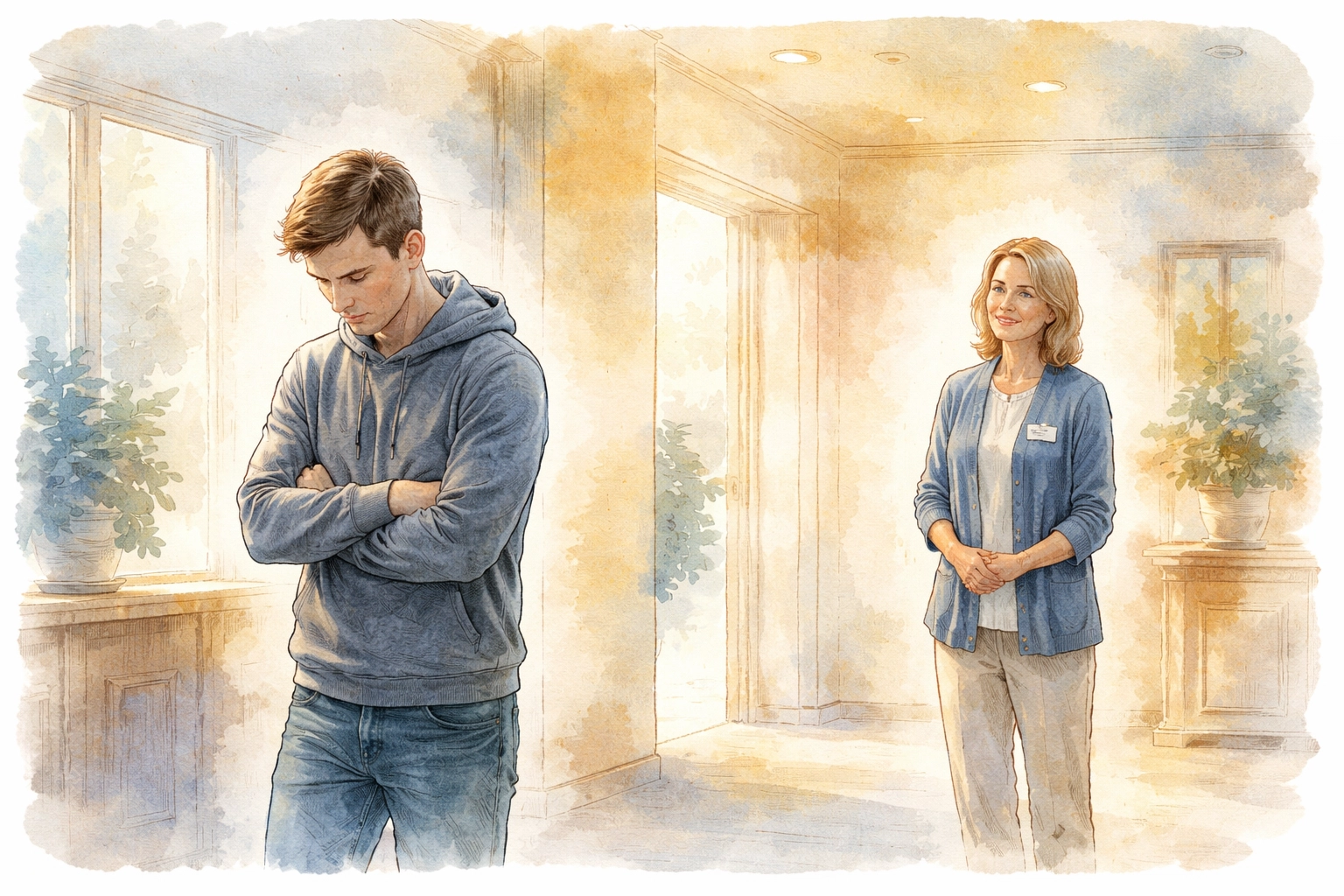
3. Tense Posture and Closed Body Language
An anxious visitor often looks physically "smaller" than they actually are. Signs include:
Shoulders raised or hunched toward the ears
A stiff, rigid stance (not relaxed or open)
Arms crossed or hands shoved deep in pockets
Leaning away from people rather than toward them
This posture is protective. They're not being cold: they're guarding themselves from potential rejection or discomfort.
4. Facial Tension and Limited Expression
The face reveals what words hide. Look for:
A clenched jaw or tight lips
A furrowed brow or creased forehead
Raised eyebrows (signaling worry or surprise)
A "masklike" expression: flat, distant, emotionally absent
When someone's face seems frozen or overly controlled, they're often working hard to keep their anxiety hidden. Honor that effort by being gentle.
5. Avoiding Eye Contact
Eye contact requires vulnerability. For an anxious visitor, looking someone in the eye can feel overwhelming. You might notice:
Eyes scanning the room constantly
Looking down or away when approached
Brief, darting glances rather than steady connection
Staring at a phone to avoid interaction
This isn't rudeness. It's self-protection. Meet them where they are: not where you wish they were.
Reading the Whole Person, Not Just One Signal
Here's an important principle: don't rely on isolated cues.
A furrowed brow by itself might mean someone is concentrating. Crossed arms might just mean the lobby is cold. But when you see multiple signals together: fidgeting, tense shoulders, minimal eye contact, and self-soothing behaviors: you're likely looking at genuine anxiety.
The convergence of signals tells the real story. Train your eyes to see the whole person, not just one detail.
How to Respond With Empathy (Not Pressure)
Once you've spotted an anxious visitor, the question becomes: Now what?
Here are a few intentional responses that communicate safety without overwhelming:
Lower your energy slightly. Match their pace. A too-enthusiastic greeting can feel jarring to someone already on edge.
Give them space. Don't crowd. A warm smile from a few feet away is often more welcoming than an immediate handshake.
Use soft, open body language yourself. Uncross your arms. Relax your shoulders. Model the calm you want them to feel.
Offer information without demands. "The restrooms are just down that hall if you need them" gives them an option without requiring a response.
Don't force eye contact. Stand beside them rather than directly in front. This reduces the pressure to "perform" socially.
Remember: your goal isn't to fix their anxiety. Your goal is to be the first safe human they encounter. That's ministry.
The Spiritual Heart Behind the Skill
Reading body language isn't manipulation: it's love in action.
Jesus was the ultimate reader of rooms. He noticed the woman who touched His robe in a crowd. He saw Zacchaeus hiding in a tree. He recognized Peter's fear before the rooster crowed. Christ paid attention to people, and that attention changed everything.
When you learn to see what others miss, you become an extension of that same love. You become the hands and eyes of Jesus in the lobby, the parking lot, and the hallway.
A simple way to say it is this: "Every anxious visitor is someone's answered prayer. They showed up. Now it's our turn to show up for them."
Your Challenge This Week
Before next Sunday, practice observing. At the grocery store, in a coffee shop, at work: notice how people carry their stress in their bodies. Start building your awareness muscle.
Then, when you're back at your post, you'll be ready. You'll see the woman with the tight shoulders. You'll notice the teenager who won't look up from his phone. You'll recognize the dad who's clearly overwhelmed.
And you'll know exactly how to respond: with presence, patience, and the quiet confidence of someone who sees people the way God sees them.

$50
Product Title
Product Details goes here with the simple product description and more information can be seen by clicking the see more button. Product Details goes here with the simple product description and more information can be seen by clicking the see more button

$50
Product Title
Product Details goes here with the simple product description and more information can be seen by clicking the see more button. Product Details goes here with the simple product description and more information can be seen by clicking the see more button.
$50
Product Title
Product Details goes here with the simple product description and more information can be seen by clicking the see more button. Product Details goes here with the simple product description and more information can be seen by clicking the see more button.
Comments