Shift from Attendance to Belonging: A Vision for Leaders
- Dr. Layne McDonald
- Feb 11
- 5 min read

You've seen it before. Sunday morning rolls around, the sanctuary fills up, the worship team leads an incredible set, your message lands... and yet something feels hollow. The numbers are there, but the connection isn't. People show up, but they don't stick around. They attend, but they don't belong.
Here's what I've learned after years of pastoral leadership: attendance is a lagging indicator, not a leading one. When we chase attendance numbers as our primary metric for church growth, we're playing a game we can't win long-term. But when we shift our focus to creating genuine belonging, attendance becomes the natural byproduct of a healthy community.
The Attendance Trap
Most church leaders have been conditioned to measure success by seats filled. It makes sense on the surface, more people means more impact, right? But this thinking creates a dangerous cycle. We optimize for attendance, people show up but don't connect, they eventually drift away, and we scramble to replace them with new faces who will likely follow the same pattern.
The truth is simpler and more profound: people don't stay where they attend; they stay where they belong.
Think about your own life for a moment. You might belong to a gym, but does anyone there know your name? You might attend meetings at work, but do your ideas actually shape decisions? There's a massive difference between being present and being known, between occupying space and being valued.

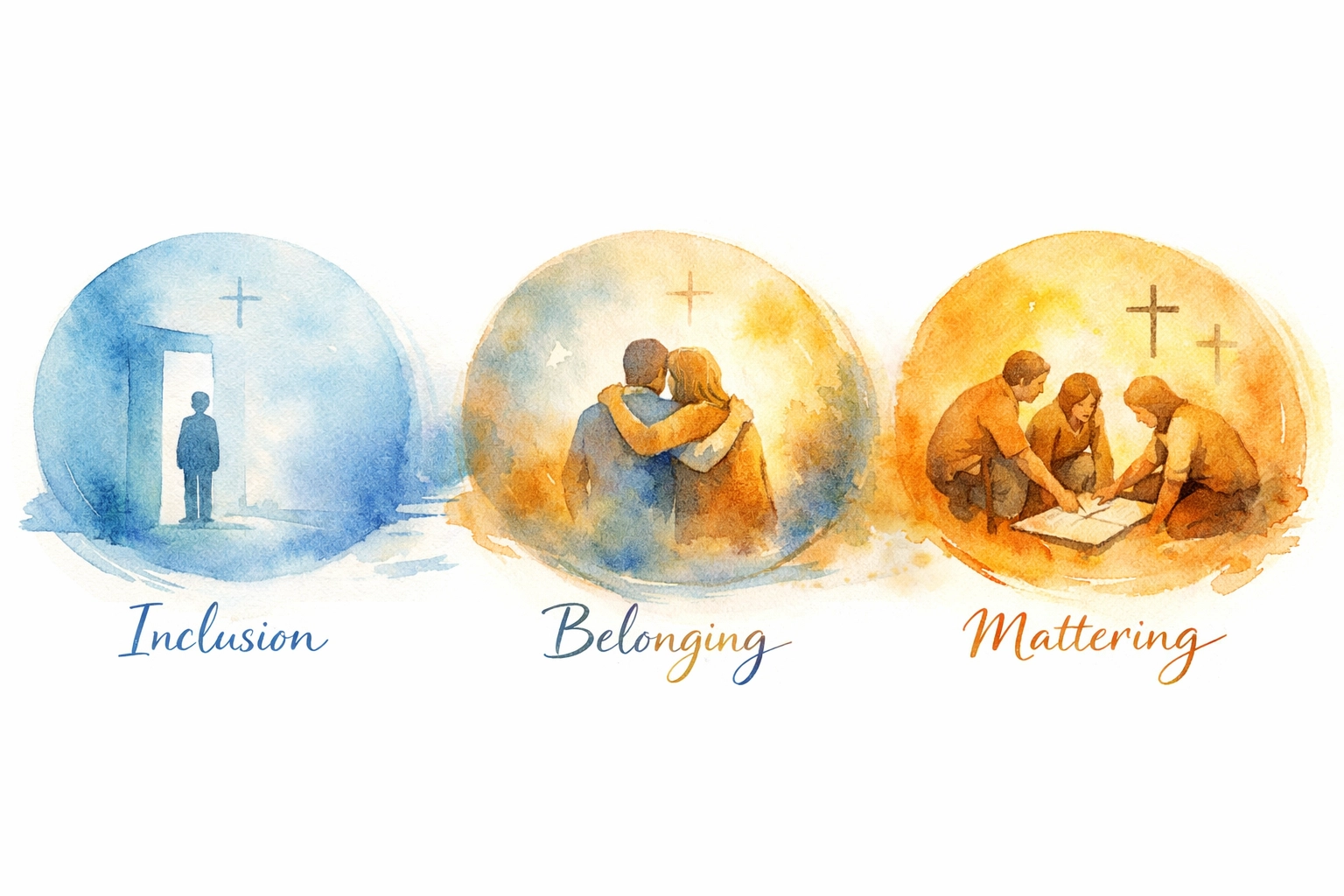
From Inclusion to Belonging to Mattering
Let's get clear on what we're actually talking about here. Inclusion means people are invited to the table. That's good, but it's not enough. Belonging means they feel integral to the community, they're not just guests; they're family. But there's an even deeper level: mattering.
When someone matters in your church community, three things are true:
They have a voice. Their input genuinely influences decisions. It's not token feedback that disappears into a suggestion box; it's real influence that shapes the direction of ministry.
They have relationships. People know their name, their story, their struggles. There's trust built over time, not just surface-level pleasantries in the lobby.
They see their impact. When they're absent, there's a noticeable void. Their contribution, whether it's serving, giving, or simply being present, makes a difference that others recognize.
This is the vision we're called to as leaders: creating environments where people don't just show up, but where they know they matter to God and to the community.
Why This Shift Changes Everything
When you lead with belonging instead of attendance, the entire culture shifts. People stop viewing church as an event to attend and start experiencing it as a family to belong to. This isn't just feel-good language; it has measurable impact on church growth.
Research shows that when individuals genuinely feel they belong, they're more likely to take risks in their faith, invite others into the community, stay committed through difficult seasons, serve sacrificially without burning out, and speak honestly about their struggles and questions.
Conversely, when we only measure attendance without fostering belonging, we create consumers instead of contributors. People show up to get their spiritual needs met, but they never transition into active participants in God's mission.
[ Breath Section ]
Before we dive into practical strategies, let's pause together.
Take a slow breath in. Hold it for three counts. Release it slowly.
As you breathe, consider this: Jesus didn't measure success by crowd size. He invested deeply in twelve people. He knew their names, their doubts, their dreams. He created belonging before He built a movement.
You don't have to manufacture belonging through programs or perfectly executed strategies. You're simply partnering with the Holy Spirit, who has been in the belonging business since before the foundation of the world.
One more breath. You're doing important work. It matters.
Practical Steps to Build Belonging
Let's get practical. Here are tangible ways you can shift your leadership from attendance-focused to belonging-centered:
Create psychological safety. Model vulnerability from the stage and in small settings. When leaders normalize struggle, it gives everyone else permission to be real. Safe-to-fail experiments, where people can try new things without fear of harsh judgment, are essential for church growth rooted in authentic community.
Build relationship rituals. Implement regular practices that prioritize connection: story circles where people share their journeys, buddy systems that pair newcomers with established members, monthly gatherings focused solely on relationship (not program or content), consistent check-ins that go beyond "How are you?" to "How is your soul?"
Involve people in co-creation. Don't just design programs for your congregation; design them with your congregation. When people have input into what's being built, they automatically feel more invested. This prevents top-down fatigue and builds genuine buy-in.
Reframe your routines. Look at every operational routine through the lens of belonging. Sunday morning arrivals, transitions between services, even business meetings, do they prioritize efficiency or connection? Both matter, but connection must come first.
Notice the absent. Train your team to notice who's missing. A simple text that says "We missed you Sunday" can be the difference between someone quietly slipping away and feeling like they truly matter.

The Ripple Effect
When you prioritize belonging from day one, the effects extend far beyond what you can measure. Students and employees, yes, this applies to church staff too: who feel seen and valued will naturally invite others into the community, take ownership of problems and solutions, weather conflict without leaving, stay engaged through transitions and changes, and see themselves as ministers, not just members.
This is the kind of church growth that lasts. Not because you've perfected a strategy, but because you've created a culture where Christ's love is tangible through genuine belonging.
A Vision Worth Pursuing
Here's what I want you to hear: You don't have to be a megachurch to create deep belonging. In fact, smaller communities often have a natural advantage. You can know names, remember stories, and notice absence more easily.
The question isn't "How do we get more people to attend?" The question is "How do we help the people God has already given us experience true belonging?"
When you answer that question well, church growth follows naturally. People who feel they belong become your best evangelists: not because you've trained them in outreach techniques, but because they can't help but share what they've found.
Reflection Question: Think about your own church experience. Where do you see the gap between attendance and belonging most clearly? What's one specific area where people are present but not connected?
Small Action Step: This week, identify three people in your church who attend regularly but might not feel like they truly belong. Reach out personally: not with a program invite, but with genuine curiosity about their story. Ask them how they're really doing and what would help them feel more connected.
Ready to go deeper in your leadership? Visit www.laynemcdonald.com for coaching, mentoring, and practical resources that will equip you to lead with wisdom and grace. Every visit to the site raises funds for families who have lost children through Google AdSense at no cost to you: your time there makes a difference.
For ongoing spiritual grounding and community, join us at www.boundlessonlinechurch.org: your private online church home where you can watch teachings, join family groups, and stay rooted in faith whether you sign up or just visit.
Written by Dr. Layne McDonald
Comments