Stop Doomscrolling at Dinner: Your 5-Minute Evening News Brief
- Dr. Layne McDonald
- Feb 21
- 6 min read

Facts: The Dinner Table Screen Problem
You're sitting at the dinner table, fork in one hand, phone in the other. Between bites, you're scrolling through headlines: another crisis, another controversy, another reason to feel anxious about the state of the world. What started as a quick check turns into twenty minutes of consuming story after story, your food getting cold, your family getting quiet.
This behavior has a name: doomscrolling. It's the compulsive consumption of negative news, and it's become the uninvited guest at millions of dinner tables across America.
The pattern is predictable. You sit down for your evening meal, and within minutes, your phone is out. Maybe you're checking "just one thing" or catching up on "what happened today." But the algorithm knows how to keep you hooked. One headline leads to another, each story more alarming than the last. Before you know it, dinner is over, and you've spent more time with your screen than with the people around you: or even with your own thoughts.
Research shows that excessive news consumption, particularly of negative content, correlates with increased anxiety, disrupted sleep, and decreased overall well-being. Evening news consumption specifically can interfere with the body's natural wind-down process, making it harder to transition into restful evening routines.
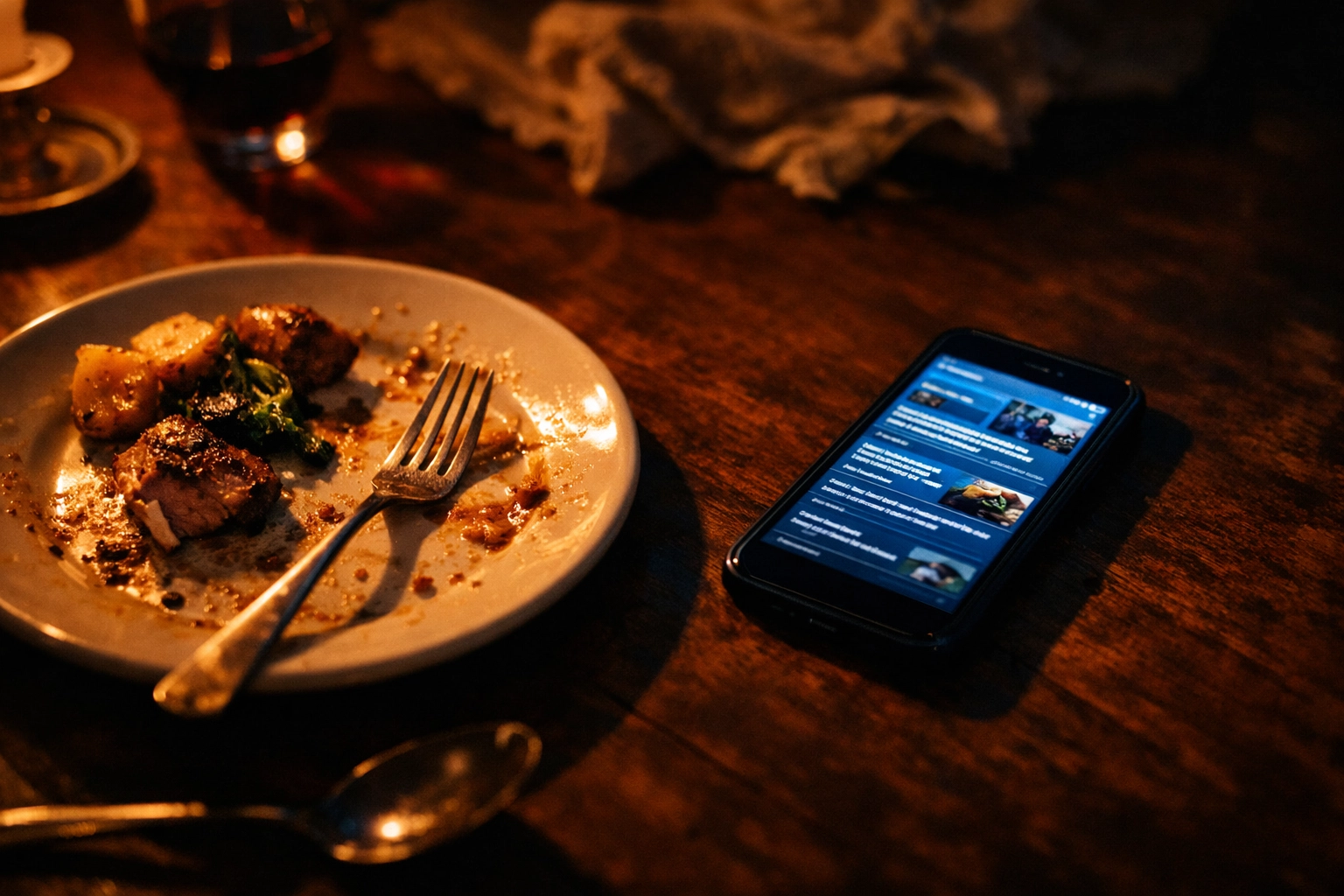
The dinner hour: traditionally a time for nourishment, connection, and transition from day to night: has become another opportunity for information overload. And unlike scrolling during a commute or waiting in line, doomscrolling at dinner directly replaces activities that matter: conversation, presence, intentional rest, and gratitude.
The average person checks their phone 96 times per day, with evening hours representing some of the highest usage periods. For many families, dinner represents the only time everyone is in the same room, yet phones are present at 88% of meals in homes where teenagers live, and 75% of all family meals overall.
Lens: What Scripture Says About Rest and Presence
God designed rhythm into creation from the very beginning. Work and rest. Activity and stillness. Gathering and reflection. When we replace these rhythms with constant consumption of information: especially distressing information: we step outside the pattern God established for human flourishing.
Scripture repeatedly calls us to guard our hearts and minds. Philippians 4:8 instructs believers to focus on "whatever is true, whatever is noble, whatever is right, whatever is pure, whatever is lovely, whatever is admirable." This isn't a call to ignore reality or avoid difficult truths. It's wisdom about stewardship: stewarding our attention, our emotional capacity, and our mental space.
When we doomscroll through dinner, we're making a choice about what deserves our focus. We're saying that the anxiety of distant events matters more than the presence of people at our table or the gift of the meal before us. We're choosing fragmentation over wholeness.
The Assemblies of God tradition emphasizes Spirit-filled living: being led by the Holy Spirit in all areas of life, including how we engage with information and technology. The fruit of the Spirit includes peace, patience, and self-control (Galatians 5:22-23). Compulsive scrolling produces the opposite: anxiety, impatience, and loss of control over our own attention.
Jesus frequently withdrew from crowds to pray, to rest, and to reconnect with the Father. Even in the midst of overwhelming need and constant demands, He maintained boundaries. If the Son of God needed rhythms of rest and presence, how much more do we?

The dinner table represents a sacred ordinary moment: a chance to practice gratitude, to notice provision, to be present with others or with our own souls. When we fill that space with doomscrolling, we trade peace for anxiety, presence for distraction, and gratitude for fear.
This isn't about being uninformed. It's about being wisely informed. There's a difference between staying aware of the world and allowing the world's chaos to consume the moments God designed for rest.
Response: Your 5-Minute Evening News Strategy
Here's the good news: you can stay informed without sacrificing your peace or your dinner. The solution isn't ignorance; it's structure. Instead of letting news consumption bleed into every moment, create a contained window for it: and protect your dinner table as sacred space.
Step 1: Create a Post-Dinner News Window
Schedule a specific 5-15 minute window after your meal for news consumption. Not during dinner, but after. This gives you a clear boundary: dinner is for eating, presence, and transition. News comes second.
Set a timer on your phone for your designated window: five minutes if you want just the headlines, fifteen if you want to go deeper. When the timer goes off, you're done. No "just one more article." The timer is your boundary.
This approach works because it acknowledges the legitimate desire to stay informed while preventing the endless spiral. You're not denying yourself news; you're putting it in its proper place.
Step 2: Remove Your Phone From the Dining Space
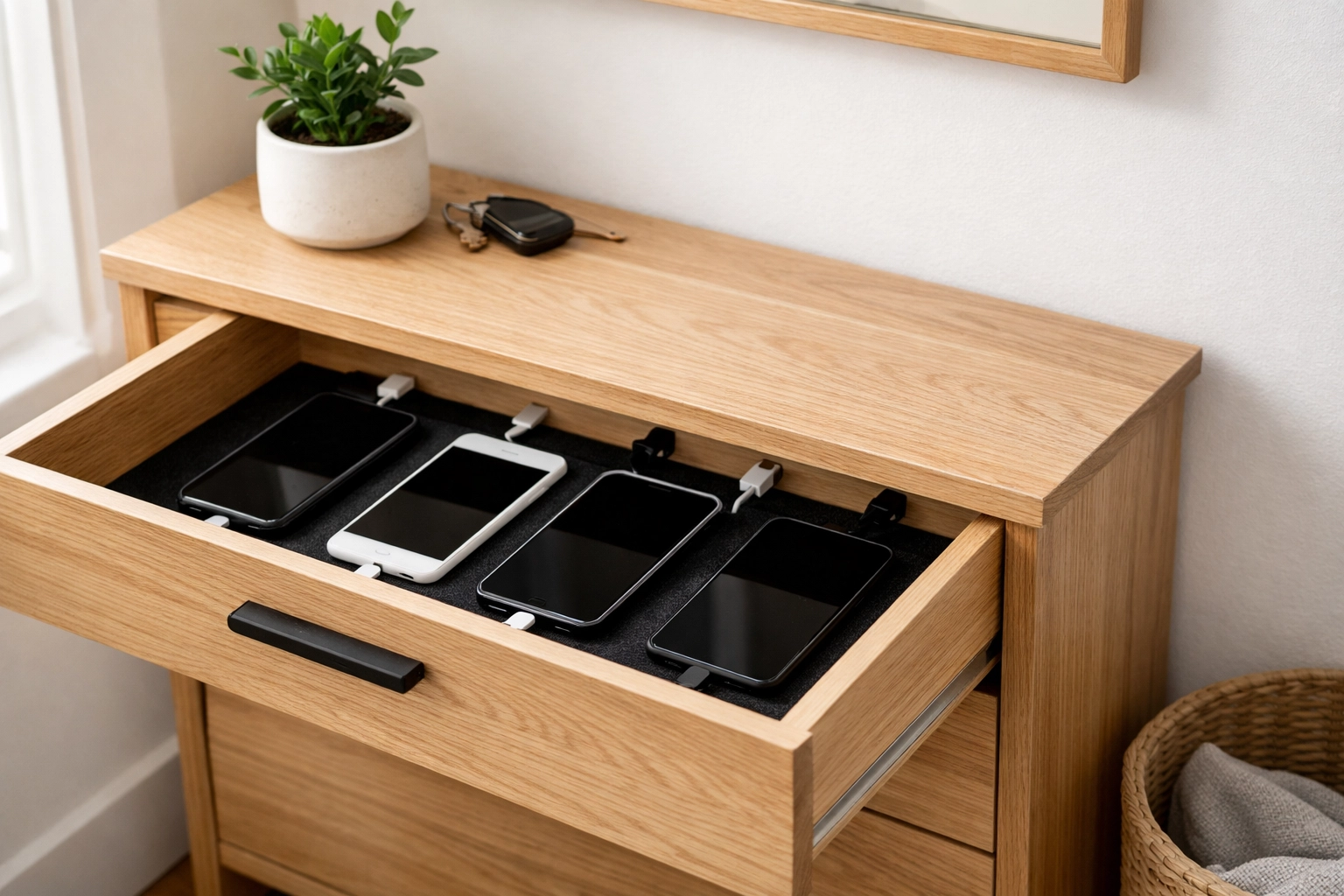
Physical distance matters. Before you sit down to eat, put your phone in another room, in a drawer, or on a charging station away from the table. If you can't see it, you won't automatically reach for it.
This feels uncomfortable at first. You might experience phantom buzzing or the urge to "just check real quick." That discomfort is actually valuable information: it reveals how much power the device has over you. Sitting with that discomfort is part of reclaiming your attention.
If you live with others, make this a household rule. Everyone's phones go in the same place during dinner. If you eat alone, the principle still applies: you're practicing presence with yourself and with God, not with your newsfeed.
Step 3: Replace Scrolling With Intentional Activities
Nature abhors a vacuum. If you remove doomscrolling without replacing it with something else, you'll likely return to the old habit. So decide in advance what dinner looks like without screens.
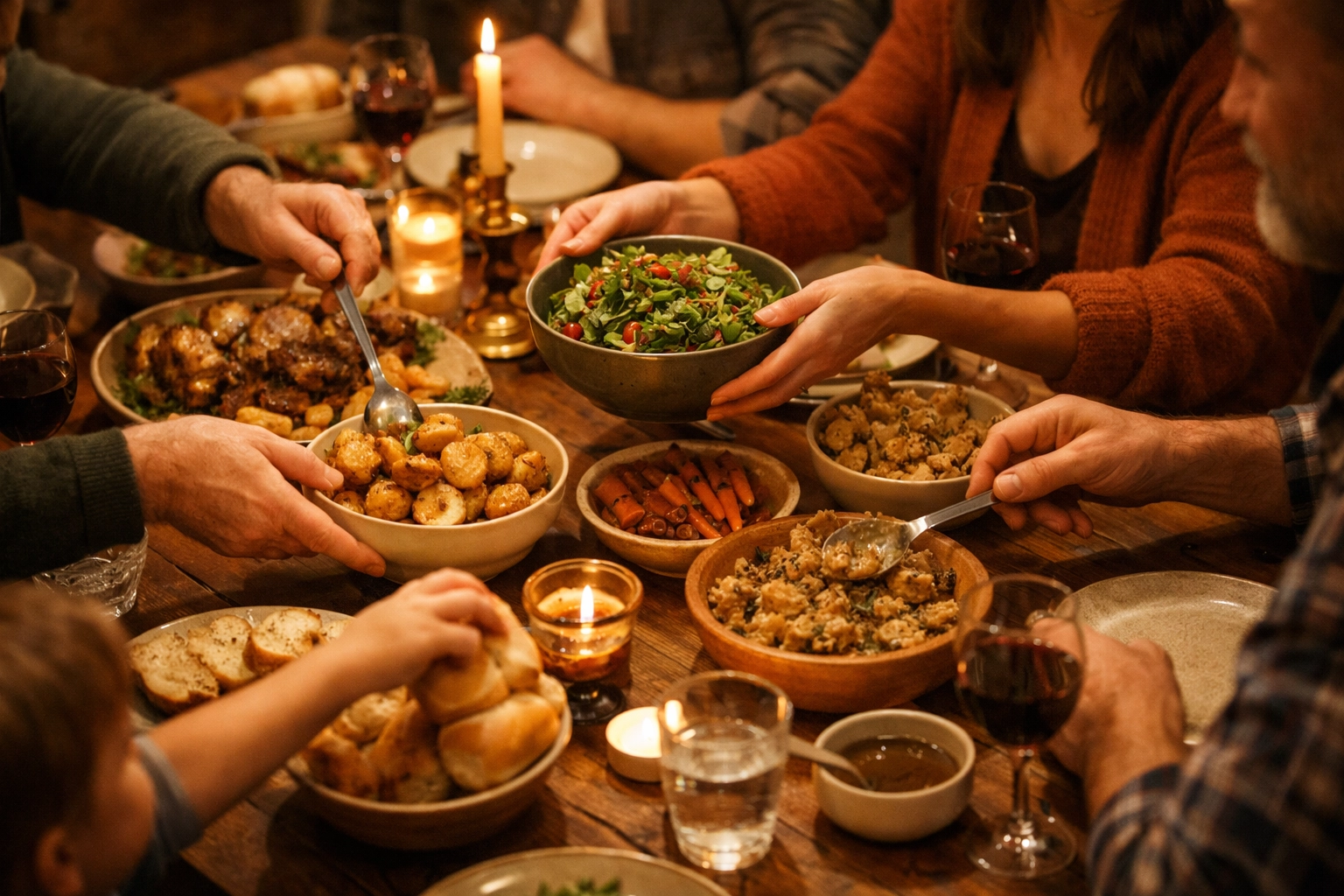
If you eat with others, engage in conversation. Ask real questions. Share something from your day. If you eat alone, practice gratitude: notice your food, give thanks, let your mind wander without direction. Some people keep a journal at the table and write a few lines while they eat. Others play music that helps them transition from work mode to evening mode.
After your designated news window ends, create a decompression ritual. Step outside for two minutes. Do ten deep breaths. Say a prayer thanking God for His sovereignty over the chaos you just read about. This helps your nervous system shift from the activation of news consumption back to a state of rest.
Step 4: Use the 5-Minute Interrupt Technique
If the urge to scroll hits hard during dinner: maybe breaking news drops or you feel anxious about something: use this trick: set a timer for five minutes and just sit with the urge. Don't give in, but don't fight it either. Just notice it's there.
Most compulsive urges peak and then naturally decrease within five minutes. By the time your timer goes off, the intensity of the urge has usually passed. You've proven to yourself that you can wait, and that the world won't fall apart if you don't check immediately.
This technique builds self-control muscle. Each time you successfully wait, you weaken the automatic response and strengthen your ability to choose when and how you engage with news.
Step 5: Choose Quality Over Quantity
During your designated news window, skip the algorithm-driven feeds designed to keep you scrolling. Instead, go directly to one or two trusted sources, read their top stories, and stop. The goal is to be informed, not to consume every possible angle on every possible story.
Consider subscribing to a curated evening news brief: something that gives you the day's essential information in a digestible format. This satisfies the legitimate need to know what's happening without opening the door to endless scrolling.
The McReport exists for exactly this reason: to give you the news you need with the biblical lens that brings clarity, in a format that respects your time and your peace. Five minutes. Clear information. Christ-centered perspective. That's it.
Invite: Reclaim Your Evening
Doomscrolling at dinner isn't really about the news. It's about anxiety, about the illusion of control, about filling silence with noise because silence feels uncomfortable. But God offers something better than staying constantly plugged in to the chaos: He offers peace that surpasses understanding, even when the headlines don't change.
You don't have to choose between being informed and being at peace. You can have both. But it requires boundaries: loving limits that protect the moments that matter most.
Tonight, try it. Put the phone in another room. Eat your dinner with your full attention. After you're done, take five minutes for news if you want it. Then move on. Notice how it feels. Notice what you gain back.
Need prayers? Text us day or night at 1-901-213-7341.
Follow us at layemcdonald.com for more Christ-centered clarity on living wisely in a noisy world.
Source: Research on digital wellness habits and news consumption patterns from behavioral science studies on screen time management

$50
Product Title
Product Details goes here with the simple product description and more information can be seen by clicking the see more button. Product Details goes here with the simple product description and more information can be seen by clicking the see more button

$50
Product Title
Product Details goes here with the simple product description and more information can be seen by clicking the see more button. Product Details goes here with the simple product description and more information can be seen by clicking the see more button.
$50
Product Title
Product Details goes here with the simple product description and more information can be seen by clicking the see more button. Product Details goes here with the simple product description and more information can be seen by clicking the see more button.
Comments