
The Pentagon and Harvard: A Shift in Academic Ties
- Dr. Layne McDonald
- Feb 8
- 6 min read

The Facts
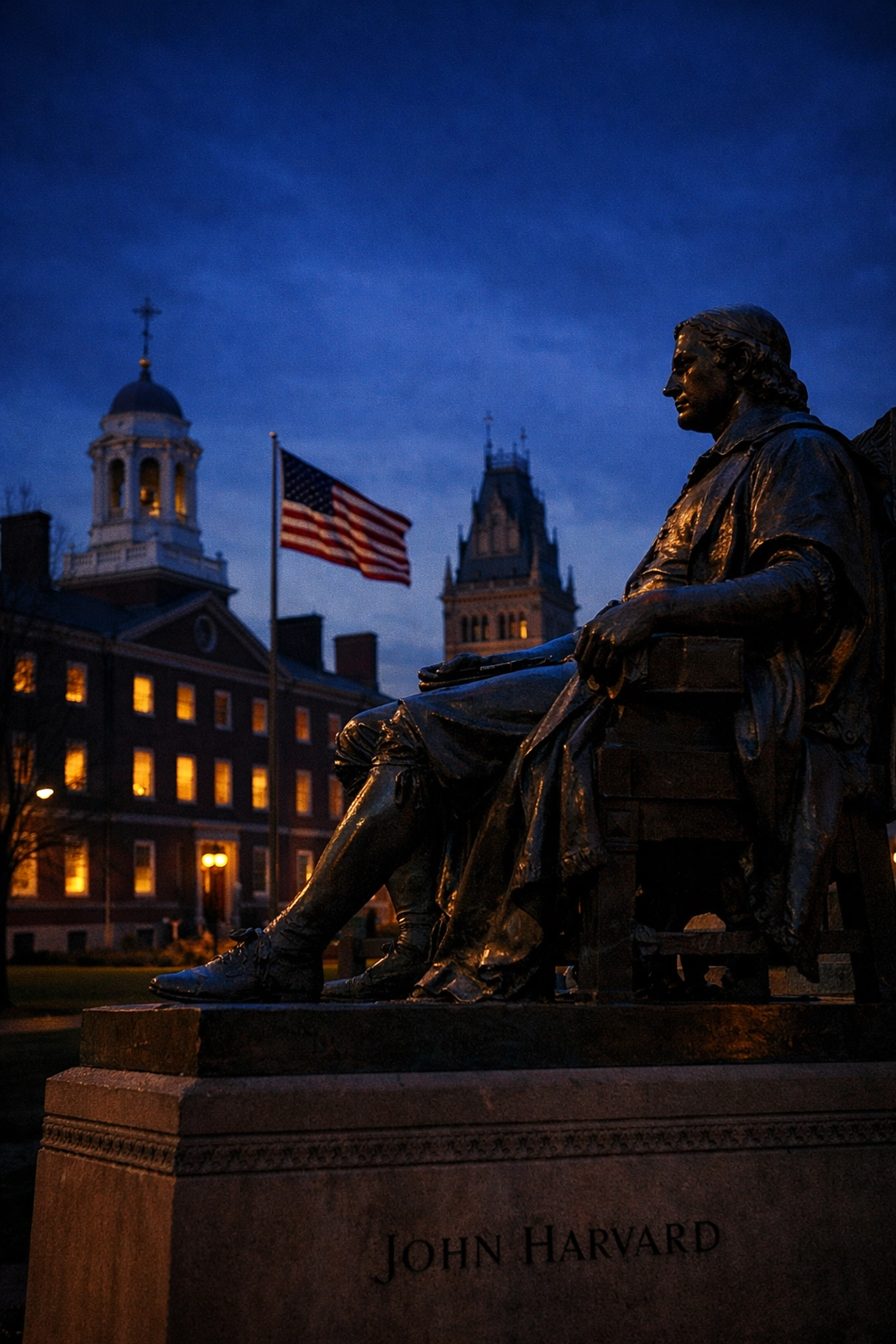
The Pentagon announced Friday that it will sever all academic ties with Harvard University, effective with the 2026-27 academic year. The decision ends decades of military training programs, fellowships, and certificate programs that have connected the Department of Defense with the Ivy League institution.
Defense Secretary Pete Hegseth stated that Harvard "no longer meets the needs of the War Department or the military services." The announcement specifically terminates programs that have historically sent military officers to Harvard for advanced education and specialized training.
Military personnel currently enrolled at Harvard will be permitted to complete their ongoing courses. The Pentagon has indicated it plans to redirect the training funds previously allocated to Harvard toward other institutions. Secretary Hegseth also announced that similar programs at other Ivy League universities will be evaluated in the coming weeks.
This decision is part of a broader pattern of federal action against Harvard. The White House has previously cut billions of dollars in the university's federal research funding and attempted to block foreign student enrollment. The administration has demanded $1 billion from Harvard as part of any deal to restore federal funding: double the amount previously requested.
How it Happened
The rupture between the Pentagon and Harvard did not occur overnight. It represents the culmination of mounting federal concerns over what the administration describes as "ideological shifts" within elite academic institutions and questions about foreign influence on American campuses.
Secretary Hegseth cited specific concerns that military officers who attended Harvard returned with perspectives he characterized as incompatible with military values. In his statement, Hegseth said officers came back "looking too much like Harvard : heads full of globalist and radical ideologies that do not improve our fighting ranks."
The Pentagon also raised national security concerns, alleging that Harvard has partnered with U.S. adversaries including entities connected to the Chinese Communist Party. Additional allegations included claims that the university created a campus environment celebrating Hamas, though specifics of these allegations have not been publicly detailed.
The decision follows increased federal scrutiny over transparency regarding foreign influence at universities. Questions about research partnerships, funding sources, and the flow of sensitive information have become central to debates about academic institutions and national security.
Harvard's relationship with the federal government has been strained for months. The university has faced repeated funding cuts and policy actions from the administration. Harvard leadership has characterized these measures as illegal retaliation for the university's refusal to adopt specific ideological positions.
Where We Are Now
Harvard University has filed lawsuits challenging the administration's actions. A federal judge has issued orders siding with Harvard in both cases brought so far, though the legal battles continue.
Harvard leaders maintain their commitment to academic freedom and have publicly stated they will not compromise the university's mission in response to political pressure. The institution argues that the federal actions represent an unprecedented attack on academic independence.
The Department of Defense is currently identifying alternative institutions to receive the military training funds and programs previously directed to Harvard. Details about which universities will be selected have not yet been announced, though officials have indicated the evaluation process is underway.
Current Harvard students who are military officers or enrolled in Pentagon-funded programs will not be disrupted mid-course. They will be allowed to finish their current academic work. However, no new enrollments will be processed for the 2026-27 academic year and beyond under the current policy.
The broader review of Ivy League partnerships means other elite universities are watching closely. Yale, Princeton, Columbia, and other institutions with similar military education programs may face comparable evaluations in coming weeks.
The Conversation
Supporters of the Pentagon's decision argue that elite universities have drifted too far from political neutrality to serve as appropriate training grounds for military officers. They contend that institutions tasked with educating future military leaders should not expose them to what they view as one-sided political perspectives that could compromise their ability to serve all Americans.
Proponents also point to legitimate national security concerns about foreign influence on campus. They argue that universities receiving federal dollars while simultaneously partnering with adversarial nations create unacceptable risks. In this view, the Pentagon has both the right and the responsibility to ensure military training environments align with American interests.
Critics of the move see it differently. They characterize the decision as a targeted attack on academic independence and a dangerous "weaponization" of federal funding. From this perspective, the administration is attempting to punish an institution for refusing to conform to a specific political agenda.
Opponents argue that academic freedom requires protecting spaces where diverse ideas: even uncomfortable or challenging ones: can be explored and debated. They worry that using federal funding as leverage to enforce ideological conformity sets a dangerous precedent that could extend beyond Harvard to other institutions.
Some observers in the middle express concern about both sides. They acknowledge that questions about foreign influence and research partnerships deserve serious attention while simultaneously worrying about the politicization of educational relationships that have historically transcended partisan battles.
The Biblical Center
I'm Dr. Layne McDonald. When institutions of power and institutions of learning collide like this, I think of Proverbs 2:6: "For the Lord gives wisdom; from his mouth come knowledge and understanding."
As Christians, we don't put our ultimate trust in the Pentagon or the Ivy League. Both are human institutions, capable of both good and error. We follow the Truth that transcends politics, administrations, and academic trends.
Here's what concerns me most: we're watching two powerful entities battle over who gets to shape minds, and in that battle, there's often little room for the question both should be asking first: what is true? Not what is politically useful. Not what secures funding or prestige. What is true?
James 3:17 tells us that wisdom from above is "first pure, then peace-loving, considerate, submissive, full of mercy and good fruit, impartial and sincere." That's the standard. When I measure any institution: military, academic, political, or even religious: against that verse, I have to ask: are they pursuing wisdom that produces peace, mercy, and good fruit? Or are they pursuing victory in a culture war?
My prayer is that our leaders, in uniform and in academia, seek the kind of wisdom that is "pure" first. That means honest. Transparent. Not using education as a weapon or funding as a threat. It means having the humility to admit when foreign influence has compromised integrity, and also the humility to admit when political pressure has compromised mission.
I don't have all the answers about what happened at Harvard or whether the Pentagon's decision is wise. But I know this: neither institution is our ultimate authority. God is. And when we forget that, when we treat Harvard or the White House or the Defense Department as if they hold the keys to truth, we've already lost something more important than this fight.

Finding Peace
So what do we do with this as everyday people who want to follow Jesus in a divided moment?
First, don't get caught in the tribalism of "us vs. them." This isn't about picking Team Pentagon or Team Harvard. It's about seeking truth and praying for wisdom for everyone involved. The moment you treat complex situations as simple good-versus-evil battles, you've stopped thinking like someone who follows the Prince of Peace.
Second, pray for the students and the soldiers involved in this transition. Real people are affected by policy announcements. Military officers who planned to attend Harvard now face uncertainty. Students who valued those programs have lost something. Pray that they find clarity, that doors open where they need to open, and that their education: wherever it happens: shapes them into servants, not culture warriors.
Third, seek to be a person who values truth over talking points in your own community. This Harvard-Pentagon split is a symptom of something bigger: we've lost the ability to have honest conversations about hard things. You can't fix national policy, but you can model something different in your own life. When your friends or family start ranting about this story, ask good questions. Push gently toward nuance. Refuse to let your dinner table or small group become another battlefield.
Finally, remember that our hope isn't in institutions. Governments change. Universities shift. Leaders come and go. But Christ doesn't. If your peace depends on Harvard getting it right or the Pentagon making wise choices, you're building on sand. Build on the Rock. Let that be the foundation from which you engage these stories: not with panic or rage, but with the steady confidence that God is still sovereign and still good.
If you're wrestling with how to stay grounded when the news cycle feels overwhelming, that's exactly the kind of conversation I love having. At www.laynemcdonald.com, I work with people who want to lead with biblical wisdom in confusing cultural moments. Not because I have all the answers, but because I believe we figure it out better together, anchored in Scripture, committed to truth, and refusing to lose our souls to the outrage machine.
Source: Associated Press (AP), Military.com
Sonny-Ready Caption Block:
The Pentagon is cutting ties with Harvard. 🎓 A major shift in military education is happening, but what does it mean for our culture? Dr. Layne McDonald brings a calm, Christ-centered perspective to the headlines. Read the breakdown: www.laynemcdonald.com #TheMcReport #Harvard #Pentagon #BiblicalWisdom
Comments