

The Power of Mercy: Redemption Lessons from the Suweida Prisoner Swap
- Layne McDonald
- 2 hours ago
- 5 min read

On February 26, 2026, the world witnessed a rare moment of breakthrough in a region often defined by its stalemates. In Suweida, Syria, a significant prisoner exchange took place, marking a pivotal shift in a localized conflict that has simmered for months. This event was not merely a political maneuver; it was a humanitarian rescue that reunited families and offered a glimpse of mercy in a landscape scarred by sectarian divide.
The exchange involved the release of 86 individuals. Among them were 61 government detainees: including children: who were transferred back to Suweida. In return, the Druze-led National Guard released 25 security personnel who had been held captive. Facilitated by the International Committee of the Red Cross (ICRC), this swap serves as a profound reminder that even in the deepest of divisions, a path toward dialogue and redemption remains possible.
At The McReport, we look at the news through a specific lens. We don’t just see numbers or geopolitical shifts; we see the hand of God moving through human agency to bring about restoration. This event in Suweida is a shadow of a much larger reality: the ultimate freedom offered through Christ.
The Facts: A Breakthrough in Suweida
The swap on February 26 was the culmination of two months of intense negotiations. The region had been under heavy strain since July 2025, when violent clashes between Syrian government forces and Druze fighters left dozens dead. The economic impact was devastating, with satellite data showing a 32% drop in night-time light activity in Suweida: a stark indicator of economic contraction and social paralysis.

The International Committee of the Red Cross (ICRC) supervised the physical transfer, ensuring the safety and dignity of those involved. US officials, including envoy Tom Barrack and Congressman Abe Hamadeh, played key roles in brokering the agreement, while Maher Al Shara, the chief of staff for the Syrian authorities, acted as a central figure in building the necessary confidence between the two sides.
While 86 people have returned home, the work is far from finished. Estimates suggest that approximately 120 people remain missing from both sides following the 2025 hostilities. However, the ICRC delegation head noted that this exchange is a crucial "step towards more releases and closer dialogue." It is a localized mercy that provides a template for broader de-escalation across the region.
The Lens: Mercy as a Template for Peace
When we look at this through a biblical perspective, we see the principle of redemption in action. Redemption is the act of "buying back" or "setting free." In Suweida, individuals who were effectively lost to their families were brought back into the light. This is the essence of humanitarian work, but it is also a deeply spiritual concept.
In the Assemblies of God tradition, we believe in the inherent dignity of every human being, created in the image of God. Conflict often seeks to strip that dignity away, turning people into "assets" or "captives" to be used as leverage. A prisoner swap, at its heart, is an admission that a person's life and their presence with their family is more valuable than the tactical advantage of holding them.
This localized mercy demonstrates that peace is rarely achieved through one giant leap. It is achieved through small, painful steps of trust. Both sides had to believe that the other would honor the agreement. Both sides had to prioritize the "setting free of captives" over the continuation of the grudge.
The Eternal Center: Freedom for the Prisoners
The ultimate framework for understanding mercy is found in the person of Jesus Christ. In Luke 4:18, Jesus stands in the synagogue and declares His mission, quoting the prophet Isaiah:
"The Spirit of the Lord is on me, because he has anointed me to proclaim good news to the poor. He has sent me to proclaim freedom for the prisoners and recovery of sight for the blind, to set the oppressed free."
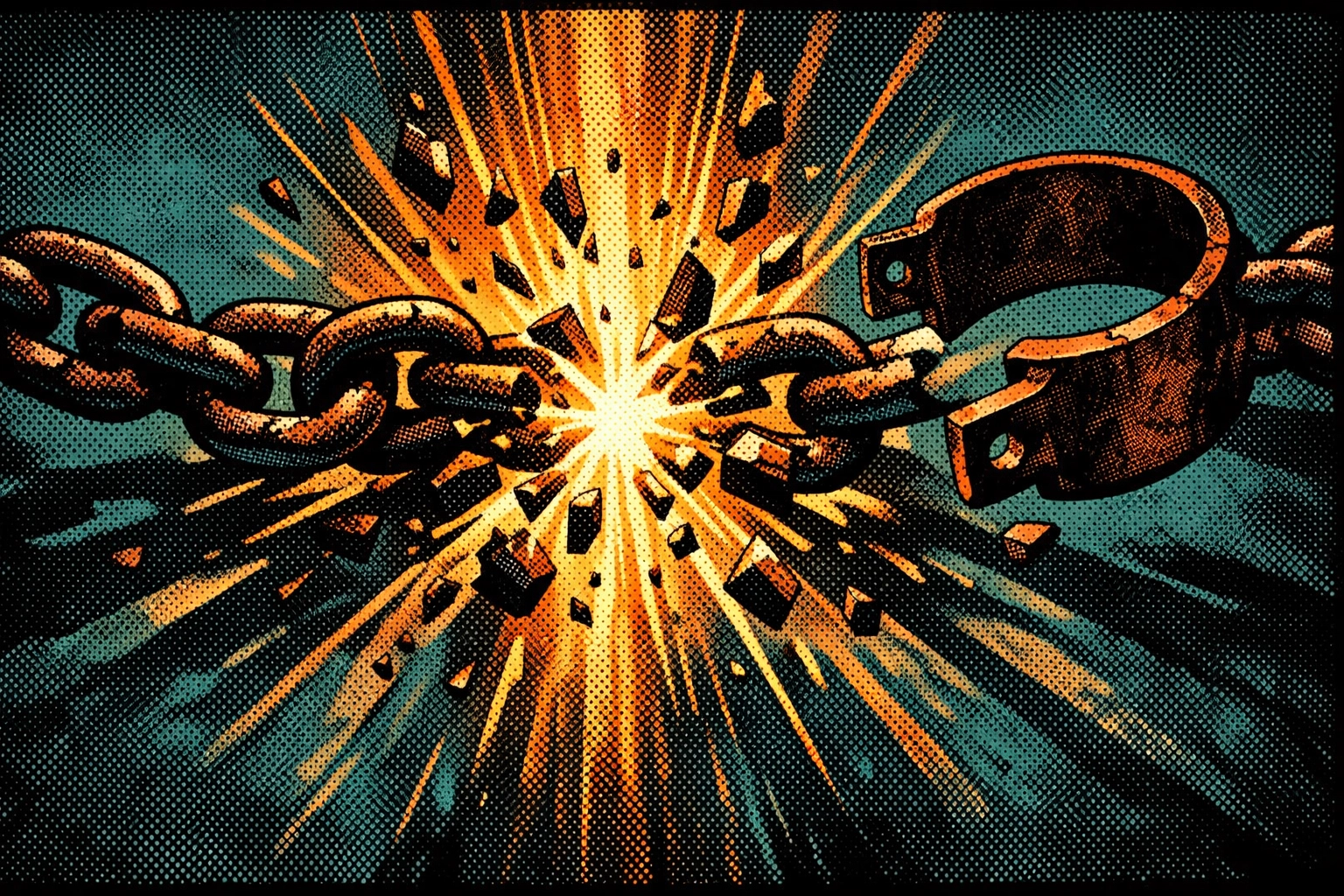
This is the "Eternal Center" of the Suweida story. While the ICRC and government officials facilitated a physical release, Jesus came to facilitate a spiritual one. In the AG faith, we emphasize Salvation as the primary work of God: plucking us out of the captivity of sin and restoring us to the Father.
The prisoner swap in Syria is a "shadow" of this ultimate freedom. Every time a captive is released, every time a family is reunited, we see a reflection of the Year of Jubilee: the biblical concept where debts were forgiven and slaves were set free. It is a reminder that God’s heart is always for the restoration of the broken.
We also look forward with the "Blessed Hope" of the Second Coming. We live in a world where 120 people are still missing in Suweida, and thousands more are lost in conflicts globally. True, lasting peace will only be realized when Christ returns to make all things new. Until then, these moments of mercy are signposts, pointing us toward the Day when all captives will be truly free.
The Response: Steps Toward Redemption
How do we respond to news like this? It is easy to see a conflict in the Middle East as distant and irrelevant. But the principles of the Suweida swap apply to our own communities, families, and churches.
1. Practice Localized Mercy. De-escalation doesn’t start at a peace treaty table; it starts in our conversations. Where have you held someone "captive" in your heart through a refusal to forgive? Redemption begins when we decide that the relationship is more valuable than the "debt" owed to us.
2. Pray for the Missing. While we celebrate the 86 who returned, we must remember the 120 who are still gone. In our prayer lives, we are called to intercede for the oppressed. We ask for the Holy Spirit to move upon the hearts of leaders in Damascus and Suweida to continue this path of dialogue.

3. Seek Divine Healing. The trauma of detention and the scars of conflict require more than just physical freedom; they require "Divine Healing." We pray for the families in Syria, asking that the Holy Spirit would bring comfort to those who have been reunited and hope to those still waiting.
4. Be a Broker of Peace. Just as the ICRC and international envoys mediated this swap, Christians are called to be "ministry of reconciliation" workers (2 Corinthians 5:18). We should be the ones looking for ways to bridge divides rather than widening them.
The Suweida prisoner swap is a small but bright light in a dark room. It reminds us that no divide is too deep for the reach of mercy. As we reflect on these 86 lives restored to their homes, let us also reflect on the freedom we have been given and our duty to share that hope with a world that is still waiting for its own release.
Need prayers? Text us day or night at 1-901-213-7341.
Follow at LayneMcDonald.com for mentoring and more Christ-centered clarity on today’s biggest questions.
Source: ICRC, Reuters, Al Jazeera

$50
Product Title
Product Details goes here with the simple product description and more information can be seen by clicking the see more button. Product Details goes here with the simple product description and more information can be seen by clicking the see more button

$50
Product Title
Product Details goes here with the simple product description and more information can be seen by clicking the see more button. Product Details goes here with the simple product description and more information can be seen by clicking the see more button.
$50
Product Title
Product Details goes here with the simple product description and more information can be seen by clicking the see more button. Product Details goes here with the simple product description and more information can be seen by clicking the see more button.
Comments