

The Theology of Play: Why Joy is a Spiritual Discipline
- Layne McDonald
- Feb 4
- 5 min read

We've got it all wrong about joy.
Somewhere along the way, we started treating joy like dessert, something you earn after you finish your spiritual vegetables. Work hard, pray harder, serve until you're exhausted, and maybe then you can enjoy yourself. But what if joy isn't the reward for spiritual discipline? What if joy is the spiritual discipline?
Play Isn't a Four-Letter Word (Well, Technically It Is)
When you hear "spiritual discipline," you probably think of fasting, prayer, Bible study, or solitude. Noble practices, absolutely. But play? That sounds suspiciously like... fun. And fun feels frivolous when there's kingdom work to do.
Here's the plot twist: Creation itself is divine play. God didn't create the world because He needed something. He created out of sheer, gratuitous love: the kind of love that overflows into laughter, beauty, and dancing dust particles in sunbeams. If creation is God's playground, then play is written into the fabric of reality itself.

Think about it. God could have made a purely functional universe. Gray skies. Efficient animals. Tasteless but nutritious food. Instead, we got peacocks, pizza, and the northern lights. That's not necessity: that's play.
Prayer Is Playing With God
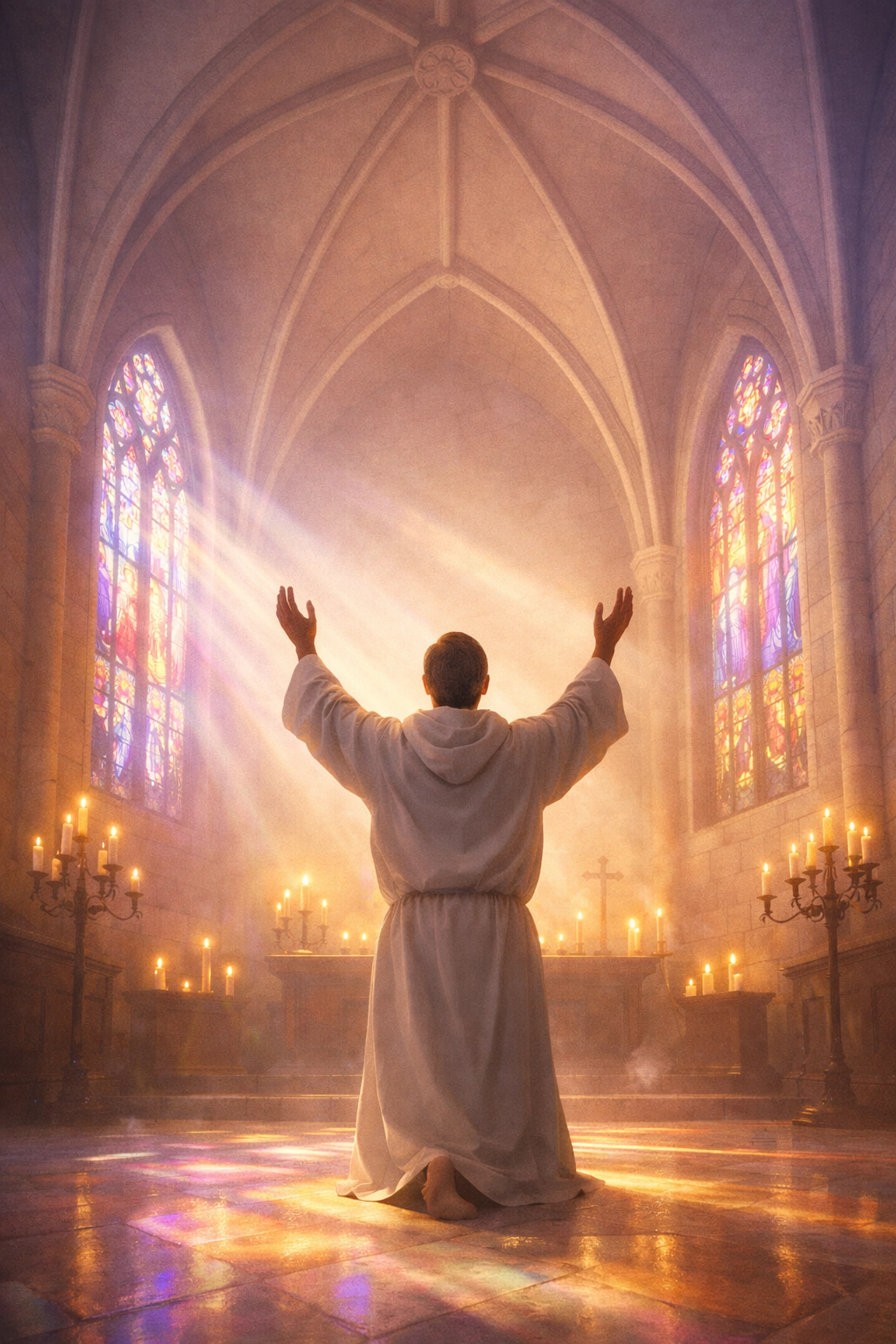
Here's something that might blow your mind: liturgical worship: all that ritual, music, poetry, and movement: is actually play. Theology itself grows from the soil of playful worship. When we sing hymns, light candles, or raise our hands in praise, we're not being productive. We're playing.
Prayer is the ultimate form of play because it's an activity whose ends are fulfilled in the doing itself. You don't pray to check something off a list (though we've all tried). You pray because the connection with God is the point. Just like throwing a ball with your kid isn't about perfecting their catching technique: it's about being together.
This reframes everything. Suddenly, those "unproductive" moments of worship aren't time wasted. They're the main event.
The Counterculture of Uselessness
We live in a world obsessed with productivity. Every minute must be optimized. Every activity must have an ROI. Even our rest needs to make us more efficient workers.
Play flips this script entirely.
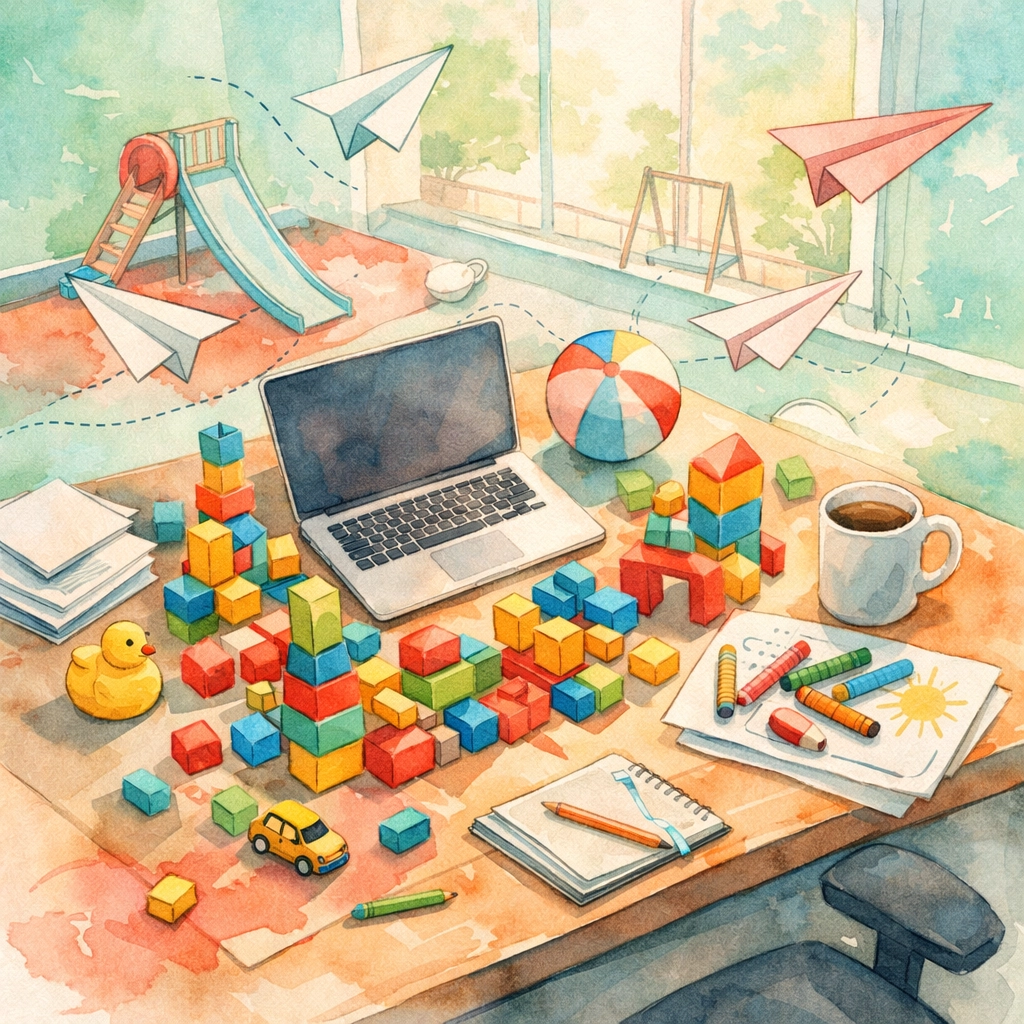
When you build a sandcastle with your nephew, what's the measurable outcome? When you dance in your kitchen to your favorite song, what did you accomplish? When you doodle in the margins of your journal, what value did you create?
Nothing. And that's precisely the point.
Play refuses to be instrumentalized. It exists for its own sake. And in a culture that constantly asks "what's the use?": that refusal is downright prophetic. Play declares that some things matter not because they're useful, but because they're beautiful, joyful, and good.
Your loved ones aren't tools to accomplish tasks. Your life isn't a productivity machine. The best things: love, laughter, beauty: resist being reduced to means toward an end. They're the end itself.
Joy as Gratitude in Motion
Here's another way to think about it: Play is embodied thanksgiving.
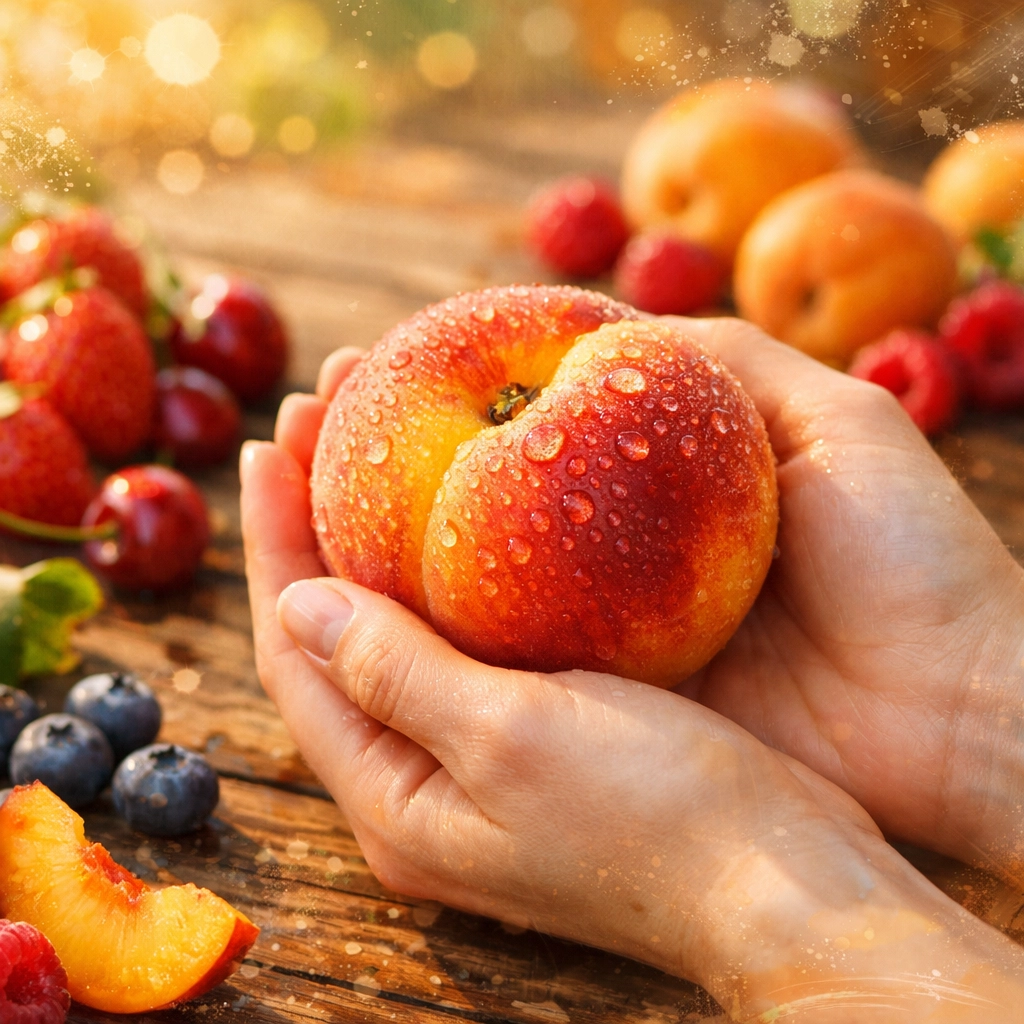
When a child spins in circles until they're dizzy, they're celebrating the gift of motion. When you savor a perfectly ripe peach, you're thanking God for taste buds. When you laugh until your stomach hurts with friends, you're honoring the gift of community.
Play says, "I see what You've given me, God, and I'm not going to let it go unnoticed."
This makes joy a discipline of attention. It trains us to notice the abundance all around us: life, breath, color, sound, relationship, freedom. We're swimming in gifts, but we're often too busy to notice. Play forces us to slow down and actually receive what's been given.
Thanksgiving isn't just words. It's living like you believe the gifts are real and good.
Faith Training Disguised as Fun
Here's where it gets really interesting: Play trains us for faith.
When kids play make-believe, they practice something profound. They agree to a set of imaginary rules and then act as if those rules are real. The floor is lava. This stick is a sword. We're astronauts exploring Mars.
This isn't escapism: it's practice for living by faith.
Faith requires us to creatively imagine the reality God has promised and then live as if it's true, even when we can't see it yet. The kingdom is here. Death doesn't have the final word. Love wins in the end. We act on these promised realities before they're fully manifested.
Play develops that imaginative muscle. It teaches us to embrace spontaneity, navigate uncertainty, and trust that the game has a good ending even when we can't see the final score.
Children instinctively understand something adults forget: Playing doesn't mean the stakes aren't real. It means you're free to engage fully without being controlled by fear.
Reclaiming Your Birthright
So how do we actually practice this discipline of joy?
Start small. Dance while you do the dishes. Take the scenic route. Spend ten minutes doing something utterly "unproductive" that you love: sketching, playing an instrument, kicking a soccer ball around.
Notice when you feel guilty for enjoying yourself. Ask where that guilt comes from. Is it from God, who called His creation "very good"? Or is it from a productivity culture that can't stand inefficiency?
Build margin into your schedule specifically for play. Not "self-care" that makes you more productive. Not "hobbies" that might generate side income. Just play. Activities you do simply because they're delightful.
Invite others in. Play is inherently relational. Board games, pickup basketball, making music together, cooking an elaborate meal for no special reason: these aren't distractions from spiritual life. They're expressions of it.
The Serious Business of Not Being Serious
Here's the beautiful paradox: Taking joy seriously requires not taking ourselves too seriously.
God isn't a taskmaster demanding constant output. He's a Father inviting us to delight in His gifts. He's an artist who painted sunsets no one would see. He's a comedian who made penguins waddle.

The kingdom of God belongs to those who receive it like little children: and children know how to play. They know that imagination isn't escapism; it's practice for seeing what's really there. They know that gifts are meant to be enjoyed, not just acknowledged. They know that relationship is the point, not the means to some other end.
Maybe it's time we remembered.
So go ahead. Play. Dance. Create something beautiful that serves no practical purpose. Laugh until it hurts. Take delight in the good gifts all around you.
It's not frivolous. It's not a waste. It's not something you'll get to someday when all the "real" work is done.
It's spiritual discipline. It's kingdom work. It's living like you actually believe God is good and His gifts are worth celebrating.
And that might be the most countercultural thing you do all week.

$50
Product Title
Product Details goes here with the simple product description and more information can be seen by clicking the see more button. Product Details goes here with the simple product description and more information can be seen by clicking the see more button

$50
Product Title
Product Details goes here with the simple product description and more information can be seen by clicking the see more button. Product Details goes here with the simple product description and more information can be seen by clicking the see more button.
$50
Product Title
Product Details goes here with the simple product description and more information can be seen by clicking the see more button. Product Details goes here with the simple product description and more information can be seen by clicking the see more button.
Comments