
The Torah Explained: Part 3 – Torah vs Christian Old Testament: What's the Difference?
- Dr. Layne McDonald
- Dec 30, 2025
- 5 min read

Welcome back to our Torah exploration! By now, your group has dug into what the Torah actually is and why it matters so much in Jewish tradition. Today we're tackling a question that comes up constantly in Christian circles: "Wait, isn't the Torah just the Old Testament?"
The short answer? Not exactly. And understanding the difference will deepen your appreciation for both Jewish heritage and Christian faith in ways you might not expect.
What We're Actually Comparing
Here's where things get interesting. When we say "Torah," we're talking specifically about the first five books: Genesis, Exodus, Leviticus, Numbers, and Deuteronomy. That's it. Those five books are considered the most sacred and authoritative part of Jewish Scripture.
The Christian "Old Testament," however, is a much bigger collection. Depending on your tradition, it includes anywhere from 39 to 46 books. Protestant churches stick with 39 books (the same content as the Hebrew Bible, just arranged differently), while Catholic, Anglican, and Orthodox traditions include additional books like Judith, Wisdom of Solomon, and 1 and 2 Maccabees.
Group Discussion Starter:How does knowing the Torah is just five books change your perspective on its importance in Jewish faith? What does it mean that these five books are considered the foundation for everything else?
The Great Reorganization Project
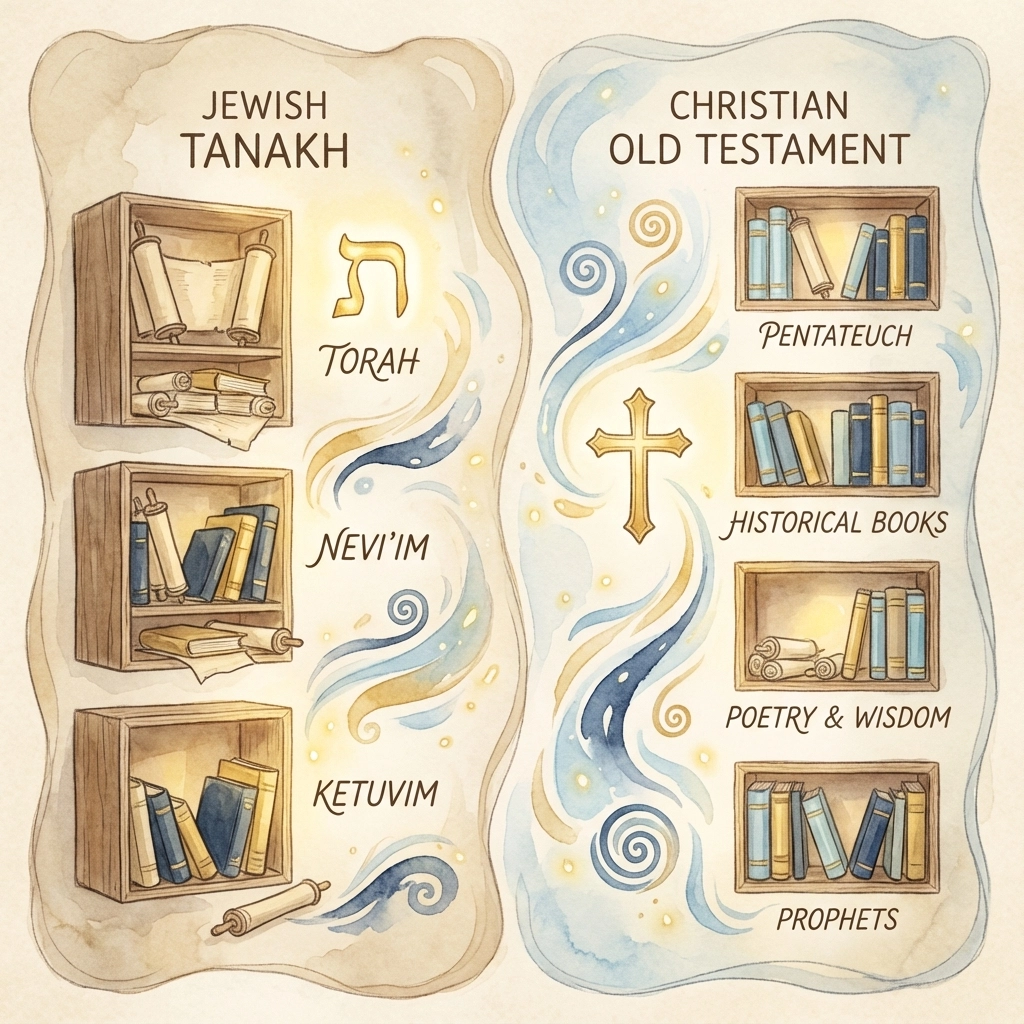
One of the biggest differences isn't what's included, but how it's all arranged. Think of it like organizing your bookshelf: the books might be the same, but the order completely changes how you read them.
Jewish Scripture follows a three-part organization called the Tanakh:
Torah (The Five Books of Moses)
Nevi'im (The Prophets)
Ketuvim (The Writings)
Christian Old Testament organization is totally different:
Torah/Pentateuch (Still the first five books)
Historical Books (Joshua through Esther)
Wisdom Literature (Job, Psalms, Proverbs, etc.)
Prophetic Books (Isaiah through Malachi)
This isn't just academic shuffling: it actually affects how each tradition reads and interprets these texts. Jews encounter the Torah first and foremost, then see the Prophets and Writings as commentary and expansion. Christians move through a more historical timeline, seeing progression from law to history to wisdom to prophecy.
Small Group Activity:Take five minutes to discuss: How might reading the same books in a different order change your understanding? Think about reading a novel versus reading chapters out of order: what changes?
Lost in Translation (Literally)
Here's where things get really fascinating. Most Christian Old Testament translations rely heavily on the Greek Septuagint rather than the original Hebrew texts. This creates some interesting interpretive differences that affect how we understand key passages.
The classic example? Isaiah 7:14. The Hebrew word "almah" means "young woman." When Greek translators rendered this as "parthenos," it took on the specific meaning of "virgin." This translation choice became crucial for Christian theology about Jesus' birth, but it represents a shift from the original Hebrew meaning.
These aren't "mistakes": they're interpretive choices made by different communities for different purposes. But understanding them helps us read with greater awareness and respect for both traditions.
Discussion Question:How do you think translation choices might affect other passages you're familiar with? What does this teach us about approaching Scripture with humility?
Different Emphases, Different Hearts
Jews and Christians don't just organize these books differently: they use them differently too.
In Jewish tradition, Torah is read in its entirety every year in synagogues. It's chanted in Hebrew, studied intensively, and seen as the foundation that gives meaning to everything else. The Torah is literally the center of Jewish worship life.
Christian churches tend to emphasize the Prophetic books more heavily, especially passages that point toward Jesus. Old Testament readings are often paired with New Testament passages, and they're typically read in translation rather than the original Hebrew.
This isn't about one approach being "right" and another being "wrong." It's about different communities finding different treasures in the same texts based on their faith journey and understanding.
Group Reflection:What parts of the Old Testament does your church emphasize most? How might exploring the Torah's central role in Jewish faith enrich your own Bible study?
Same Words, Different Stories
Even when Jews and Christians read the same passages, they often understand key figures and events differently. Take Isaiah's "suffering servant" passages. Jewish interpretation typically sees this as referring to the nation of Israel itself, while Christian interpretation sees it pointing to Jesus. Both are reading the same Hebrew text, but bringing different theological frameworks to their understanding.
This reminds us that Scripture is incredibly rich: rich enough to speak meaningfully to different communities while maintaining its essential truth and power.
Why This Matters for Your Faith
Understanding these differences isn't about creating division: it's about building bridges of respect and understanding. When you grasp how deeply Jews revere the Torah, you appreciate the foundation of your own faith differently. When you understand how Christians organize and read these same texts, you see the continuity and development of God's relationship with His people.
Plus, knowing these differences makes you a better Bible student. You'll read with greater awareness of translation choices, organizational decisions, and interpretive traditions that shape how we encounter God's Word.
Group Challenge:This week, try reading one of the Torah portions (your pastor can help you find the weekly reading schedule) and discuss how it feels different from your usual Bible study approach.
Respectful Curiosity in Action
As Christians, we can approach these differences with respectful curiosity rather than defensive comparison. The Torah's central role in Jewish faith doesn't diminish the Old Testament's role in Christian faith: it enriches our understanding of the foundation we share.
When we recognize that Jews and Christians are reading the same fundamental texts but through different lenses shaped by centuries of tradition and interpretation, we can engage in conversations that deepen rather than threaten our own faith understanding.
Building Bridges Through Understanding
The differences between Torah and Old Testament aren't obstacles to overcome: they're opportunities to grow in wisdom, humility, and appreciation for the incredible richness of Scripture. Both traditions honor these ancient texts as God's Word while approaching them through their own theological and historical perspectives.
Final Group Discussion:How can understanding these differences help you in conversations with Jewish friends or neighbors? What questions do you still have about Torah and Old Testament relationships?
Next week, we'll explore how the Torah continues to shape Jewish life today and what Christians can learn from Jewish approaches to Scripture study. Bring your curiosity and any questions that came up from this week's discussion!
Ready to deepen your biblical understanding and leadership skills? Dr. Layne McDonald's coaching and workshops help Christians engage Scripture with wisdom, respect, and growing faith. Contact us to learn more about building bridges through biblical literacy.
Comments