
The Torah Explained: Part 4 – Why These Books? God's Reasons and History's Clues
- Dr. Layne McDonald
- Dec 30, 2025
- 4 min read

Picture this: you're organizing your family photos and you decide to create five different albums. You don't just randomly stuff pictures into each book – you think about themes, chronology, and what story each album tells. That's essentially what happened with the Torah, but on a much more profound and intentional level.
Welcome back to Part 4 of our Torah journey! If you've been with us through the first three parts, you've learned what the Torah is, how it fits into our Christian Bible, and the key differences between Jewish and Christian perspectives. Now comes one of the most fascinating questions: Why these five specific books? Why not four? Why not six?
More Than Random Organization
Here's something that might surprise you: the five-book division of the Torah wasn't some arbitrary decision made by ancient librarians trying to organize scrolls. Historical evidence shows this structure was intentionally designed from the beginning and was already firmly established during Second Temple times (roughly 500 BCE to 70 CE).

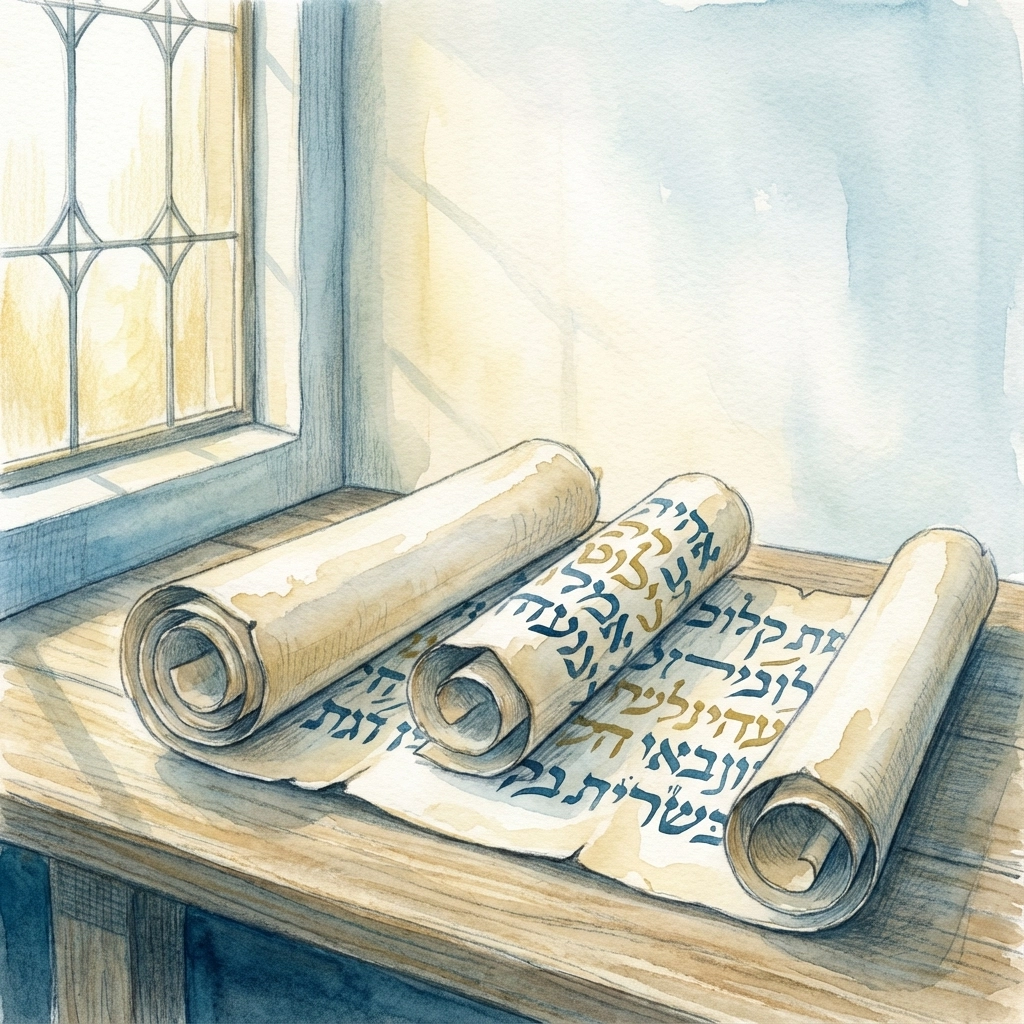
In ancient Torah scrolls – the hand-copied manuscripts that Jewish communities have preserved for thousands of years – you'll find something remarkable. Between each of the five books, scribes left exactly four blank lines. This wasn't accidental. It was a deliberate marking system that said, "This is where one book ends and another begins."
Discussion Question:Think about how you organize important documents in your life. What does intentional organization usually reveal about the importance or purpose of those documents?
The Unique Bookends: Genesis and Deuteronomy
When scholars examine the Torah's structure, two books immediately stand out as completely unique: Genesis and Deuteronomy. They serve as powerful bookends to the entire collection.
Genesis covers what theologians call "primeval history" (creation through Noah) and "ancestral history" (Abraham through Joseph's death in Egypt). It establishes the foundational relationship between God and humanity before Israel even exists as a nation. Genesis answers the big questions: Who is God? Who are we? How did we get here? What went wrong? What's God's plan to fix it?
Deuteronomy functions entirely differently. It's essentially Moses's farewell sermon series – his final words to Israel before they enter the Promised Land. Moses recounts their wilderness journey, reminds them of God's laws, and prepares them for life without his leadership. It's both a historical recap and a spiritual charge for the future.
Discussion Question:Why do you think it's significant that the Torah begins with creation and ends with preparation for a new chapter? What does this suggest about God's approach to our spiritual journeys?
The Connected Middle: A Unified Story
The three books in between – Exodus, Leviticus, and Numbers – share remarkable thematic unity despite being separate books. All three contain detailed religious laws and instructions, and all three take place at least partially in the Sinai wilderness.
Here's where it gets really interesting: scholars have identified a unified narrative section that runs from Exodus 25 through Numbers 10, which they call "When the Tabernacle Stood at Sinai." This isn't coincidental – it's evidence of careful, intentional literary planning.
• Exodus shows Israel's transformation from slaves to a nation and culminates with building the Tabernacle • Leviticus provides detailed instructions for how to use the Tabernacle and live as God's holy people • Numbers recounts the journey that follows once these foundational laws are established
Think of it like a three-part instruction manual: build it, use it, take it with you on the journey.
Discussion Question:How does knowing about this unified structure change the way you might read these books? Does it help you see connections you missed before?
God's Design Reflected in Human Creativity
Here's something that shows just how foundational this five-fold structure became: other biblical books copied it. The book of Psalms is also divided into five sections, each ending with a special liturgical conclusion called a doxology. Ancient rabbis saw this as intentional, famously saying: "Moses gave Israel five books of the Torah, and David gave Israel five books of the Psalms."
This pattern suggests the five-fold division wasn't just practically useful – it became a template that other biblical writers recognized as reflecting something important about how God communicates with His people.
Practical Significance for Us Today
So what does this mean for us as Christians studying these ancient texts? Several important things:
First, it reveals God's intentionality. The Torah wasn't hastily thrown together. Every book serves a specific purpose in the larger story God is telling about His relationship with humanity.
Second, it shows the importance of context. Understanding why these books are grouped this way helps us read each one with better comprehension of its role in the bigger picture.
Third, it demonstrates the Jewish foundation of our Christian faith. These aren't foreign texts we're trying to understand – they're part of the foundation Jesus Himself was raised on and taught from.

Questions for Group Discussion
As you discuss these ideas with your small group, consider these questions:
Humility and Wonder
As we explore these historical and theological insights, it's important to approach them with humility. We're looking at texts that have been preserved, studied, and cherished by Jewish communities for over two millennia before Christianity even began. These aren't just academic exercises – they're windows into how God has chosen to reveal Himself to His people across thousands of years.
The more we understand about the Torah's careful construction, the more we should marvel at the God who orchestrated it. Every book, every structure, every preserved tradition points to a Creator who cares deeply about communication, relationship, and revealing His character to those He loves.
Looking Ahead
In our final installment next week, we'll explore how Christians can respectfully and meaningfully engage with Torah study while honoring both our Jewish roots and our distinctly Christian beliefs. We'll discuss practical ways to incorporate Torah wisdom into our spiritual growth and community life.
Ready to dive deeper into understanding the biblical foundations that shape our faith? Dr. Layne McDonald's coaching and leadership resources can help you develop the skills to study Scripture with both scholarly insight and spiritual sensitivity. Whether you're leading a small group, growing in your personal faith, or developing as a Christian leader, there are resources available to support your journey of discovery and growth.
The Torah's intentional design reminds us that God is a God of purpose, structure, and relationship – and He invites us into that same intentional approach to our faith journey.
Comments