Why Your Story Matters to the Family
- Dr. Layne McDonald
- Mar 9
- 5 min read

Your family's story isn't just a collection of memories. It's a living, breathing legacy that shapes who your children become and how they face the world.
When was the last time you sat down and really shared your story with your family? Not just the highlight reel, but the real stuff: the struggles, the victories, the moments when God showed up in unexpected ways?
Research from Emory University discovered something powerful: children who know their family history show higher self-esteem, lower anxiety, and greater emotional resilience. But here's what makes this even more meaningful from a faith perspective: when we share our stories, we're doing exactly what Scripture calls us to do.
The Biblical Foundation of Storytelling
Throughout Scripture, God commanded His people to remember and retell their stories. Deuteronomy 6:6-7 instructs parents to talk about God's commands "when you sit at home and when you walk along the road, when you lie down and when you get up."
This wasn't just about teaching rules. It was about passing down a living faith through real stories.
When Joshua led Israel across the Jordan River, God told them to stack stones as a memorial. Why? So future generations would ask questions, creating opportunities for parents to share how God worked in their lives.
Your story operates the same way. Every challenge you've overcome, every moment of provision, every answered prayer: these become monuments of faith for your children to build upon.
Why Your Struggles Matter Most
Many parents hesitate to share difficult experiences with their kids. We want to protect them, shield them from our pain. But research shows that families who share stories about overcoming challenges raise children with exceptional emotional resilience.
Think about it: When your teenager faces their first major disappointment, what will serve them better? Knowing you've always had it together, or knowing you once lost everything and watched God rebuild it?
Your scars aren't weaknesses. They're proof of God's faithfulness.
I've coached countless parents who underestimate the power of their testimony. They think their story isn't dramatic enough, spiritual enough, or impressive enough to matter. But your children don't need a perfect hero. They need an authentic guide who's walked through fire and come out stronger on the other side.

The Science Meets Scripture
Here's where faith and research intersect beautifully: storytelling literally changes your family's brain chemistry.
Studies show that sharing family stories lowers cortisol: the stress hormone: while increasing oxytocin, which promotes bonding and empathy. In other words, when you share your story, you're creating a biochemical environment where your family feels safer, more connected, and more loved.
But as believers, we understand there's something even deeper happening. The Holy Spirit uses our testimonies to build faith in others. Romans 10:17 reminds us that "faith comes from hearing the message."
When you share how God provided during financial hardship, your children learn to trust Him with money. When you describe how prayer sustained you through loss, they develop their own prayer lives. When you admit your failures and celebrate God's grace, they learn that perfection isn't the goal: faithfulness is.
Practical Ways to Share Your Story
You don't need a formal family meeting to start sharing your story. Here are some natural ways to weave your testimony into everyday life:
During dinner conversations: Instead of just asking about everyone's day, share a memory from your past that relates to something happening now. "You know, when I was in middle school, I faced something similar..."
While driving: Car rides create natural opportunities for storytelling. Your kids are a captive audience, and the side-by-side positioning often makes vulnerable conversations easier.
Through photos: Pull out old albums or scroll through digital photos together. Let images trigger memories and create space for deeper discussions.
At bedtime: Some of the most meaningful conversations happen in those quiet moments before sleep. Share a story about how God answered your prayers or taught you something important.
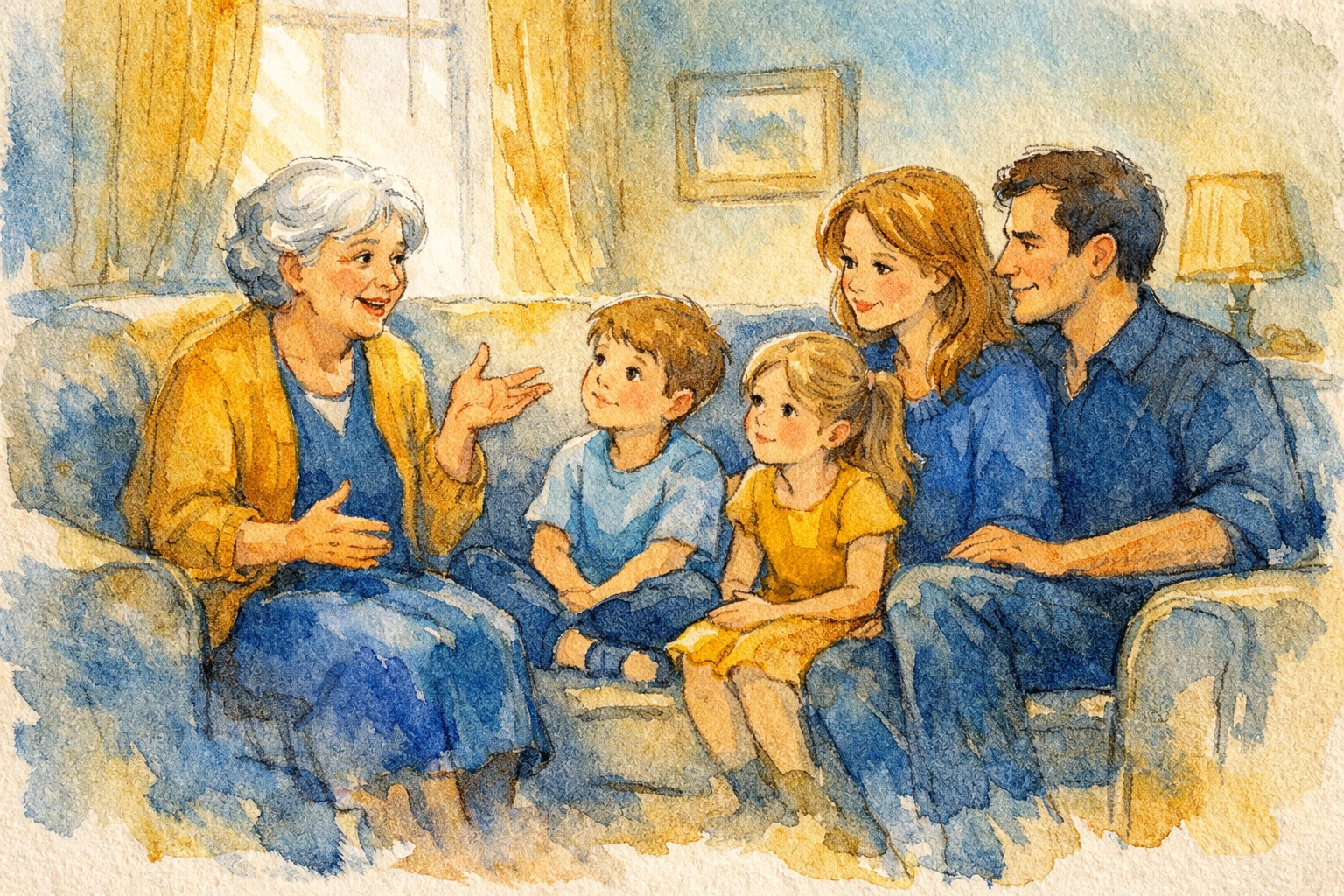
During holidays: Family gatherings are perfect for intergenerational storytelling. Encourage grandparents to share their experiences. Record these conversations if possible.

The "Do You Know?" Questions
Emory University researchers developed 20 questions that predict emotional health in children. Here are a few to get you started:
Do you know where your grandparents grew up?
Do you know where your parents met?
Do you know of an illness or hardship your family faced?
Do you know some of the lessons your parents learned from good or bad experiences?
Do you know about a family member who had a hard time but persevered?
These questions open doors to stories that matter. They create what researchers call an "intergenerational self": a sense that your child belongs to something bigger than themselves.
As Christians, we call this legacy. We call it heritage. We call it the "great cloud of witnesses" described in Hebrews 12:1.
Creating a Culture of Openness
For storytelling to thrive in your family, you need to create a culture where vulnerability is valued, not punished.
This means resisting the urge to lecture when your children share struggles. It means admitting your own mistakes instead of projecting perfection. It means modeling the kind of transparency you want to receive.

I've seen families transformed when parents move from performance mode to authenticity. Children who once hid their struggles start opening up. Teenagers who seemed distant begin engaging. The whole family dynamic shifts from judgment to grace.
This mirrors the heart of the Gospel. God didn't wait for us to clean up our act before revealing Himself. He met us in our mess, and His story intersected with ours at our lowest point.
Your Story Isn't Finished Yet
Here's the beautiful truth: you're still writing your story, and your family gets to watch God author new chapters in real time.
When your kids see you trust God with current challenges, they're learning to do the same. When they watch you pray through difficulty, they're developing their own prayer lives. When they hear you give God glory for victories, they're learning to recognize His hand in their own lives.
Your story doesn't need to be complete to be powerful. In fact, the unfinished nature of your journey might be the most important lesson of all: that following Christ is a lifelong adventure, not a one-time decision.
Take the Next Step
Your family needs your story. They need to know where they come from, how God has been faithful, and what kingdom legacy they're part of.
Don't wait for the perfect moment. Start today. Choose one story from your past: a challenge you faced, a prayer God answered, a lesson you learned: and share it with your family this week.
If you're looking for more guidance on building a Christ-centered family culture, developing your leadership as a parent, or discovering practical tools for spiritual legacy, I'd love to walk alongside you. Visit www.laynemcdonald.com to explore coaching, resources, and workshops designed to help you become the leader your family needs.
Your story matters. It's time to share it.
Comments