

Your 10 PM Peace Check: What Happened Today (And Why You Can Still Rest)
- Layne McDonald
- 7 days ago
- 6 min read

Saturday, February 21, 2026 | Your end-of-day briefing from The McReport newsroom
Before you close your eyes tonight, let's take a breath together. The world kept spinning today, but not everything that happened was chaos. Some of it was actually cooperation. Some of it was even healing.
You don't need to scroll through seventeen apps to figure out what mattered today. That's what we're here for. Let's walk through what happened, what it means, and why, yes, even tonight: you can still rest in the One who holds tomorrow.
What Happened: The Facts
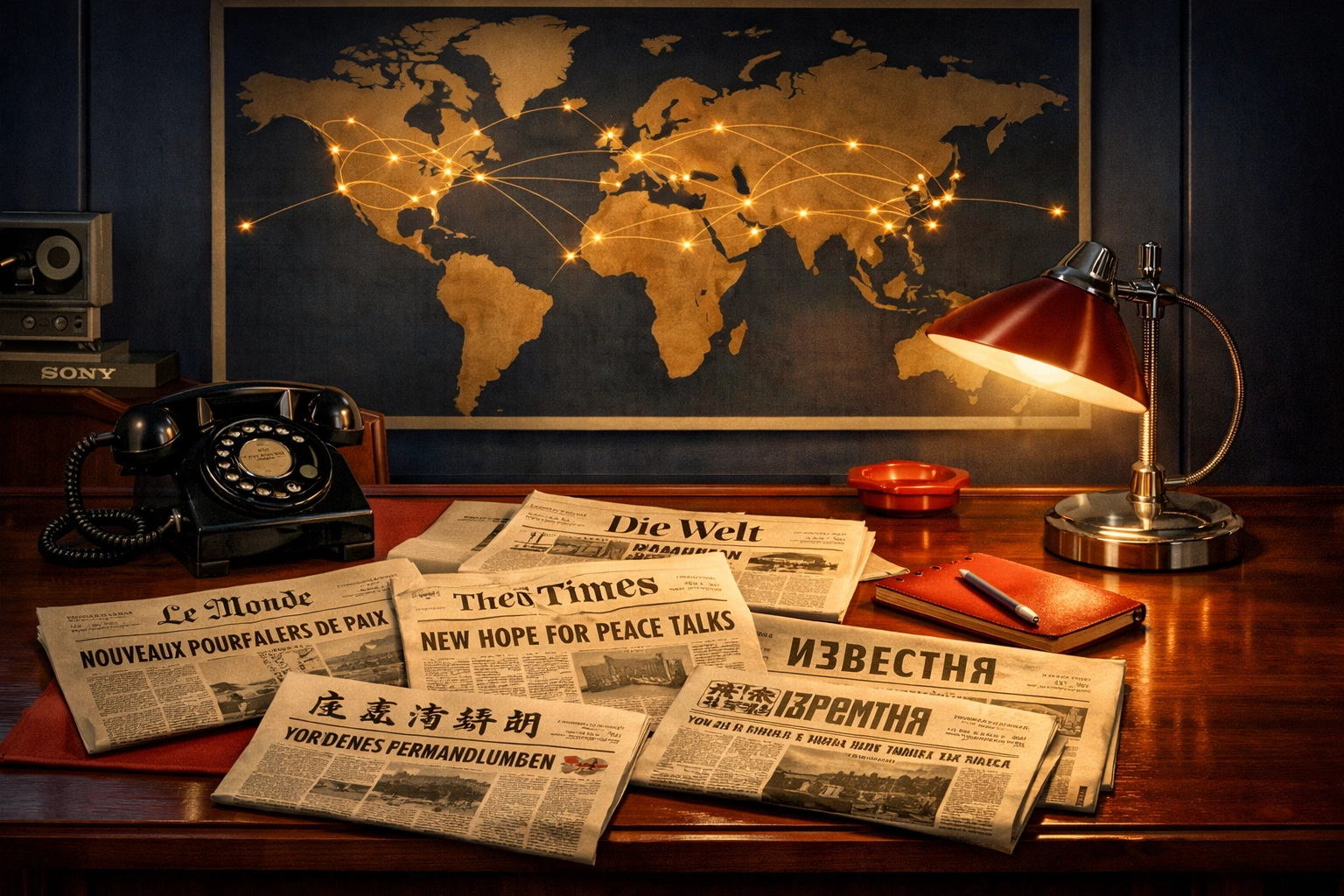
Middle East Diplomatic Movement
Saudi Arabia and Syria signed bilateral agreements today covering investment in infrastructure projects. The agreements include plans for a joint airline venture and telecommunications infrastructure valued at approximately $1 billion. The signing represents part of broader regional normalization efforts between the two nations, which have had strained relations in recent years.
Armenia-United States Nuclear Agreement
Armenia and the United States formalized a nuclear cooperation agreement with a potential value of up to $9 billion. The agreement is positioned within broader diplomatic efforts to stabilize the South Caucasus region following years of conflict over Nagorno-Karabakh. The deal includes provisions for civilian nuclear energy development and related infrastructure.
Sports: Super Bowl LX Conclusion
The Seattle Seahawks defeated the New England Patriots 29–13 in Super Bowl LX, concluding the 2025 NFL season. The game took place earlier this month but remains a cultural touchpoint in sports conversation.
Why It Matters
Let's be honest: infrastructure deals and nuclear cooperation agreements don't typically make you sit up in bed at night. But here's what's quietly significant about today's news.
The Saudi-Syria agreement represents nations that have been openly hostile choosing economic partnership instead. That's not small. In a region where generational feuds are common, billion-dollar handshakes matter. They create financial incentive for stability. They put jobs and livelihoods ahead of old grudges.
The Armenia-US nuclear deal is about more than energy. It's about a small nation in a tough neighborhood gaining a powerful ally. It's about choosing a path toward development rather than perpetual conflict. Armenia has been caught between larger powers for decades. Tonight, they're building something instead of just surviving something.
And the Super Bowl? Look, we all need moments when the biggest drama is whether a coach should have gone for it on fourth down. Sports give us a shared language that doesn't require choosing sides in culture wars. Sometimes a game is just a game: and that's a mercy.
Through a Biblical Lens
Scripture doesn't shy away from the messiness of nations. The prophets spent entire books chronicling the rise and fall of kingdoms, the making and breaking of treaties, the consequences of alliances.
But here's what stands out: God consistently calls His people to be peacemakers in the middle of it all.
"Blessed are the peacemakers, for they will be called children of God." (Matthew 5:9)
Being a peacemaker doesn't mean pretending conflict doesn't exist. It means choosing, wherever possible, to build bridges instead of walls. To create rather than destroy. To invest in futures rather than rehearse the past.
The Apostle Paul, writing to a church in a region full of ethnic and political tension, said this: "If it is possible, as far as it depends on you, live at peace with everyone." (Romans 12:18)
Notice the qualifier: as far as it depends on you. You can't control what nations do. You can't force diplomacy. You can't make people choose cooperation. But you can choose it in your own sphere. You can be the person who extends the hand. Who makes the call. Who offers the olive branch.
The Christian Response: What We Do With This
So what does a follower of Jesus do with news about foreign infrastructure deals and nuclear agreements? Three things:
1. We Pray for Leaders Making Hard Choices
First Timothy 2:1-2 isn't a suggestion: "I urge, then, first of all, that petitions, prayers, intercession and thanksgiving be made for all people: for kings and all those in authority, that we may live peaceful and quiet lives in all godliness and holiness."
Political leaders in Damascus, Riyadh, Yerevan, and Washington are making decisions tonight that affect millions of lives. They carry weight we don't. Pray for them. Pray for wisdom. Pray that they choose the harder right over the easier wrong.
2. We Celebrate Small Steps Toward Shalom
Shalom is the Hebrew word for peace, but it means so much more than "not fighting." It means wholeness. Flourishing. Things being as they should be. Every agreement that chooses cooperation over conflict is a tiny step toward shalom. We celebrate that. We don't cynically assume it's all politics. We recognize the image of God even in imperfect diplomacy.
3. We Examine Our Own Relationships
Here's the uncomfortable part: if you're celebrating nations choosing peace while refusing to speak to your brother-in-law, you've missed the point. The same Spirit that empowers global reconciliation wants to heal your local divisions. Where have you been the obstacle to peace? Where have you chosen pride over partnership?
The Assemblies of God has always believed in the power of the Holy Spirit to transform not just individual hearts, but entire communities. That begins with us. The same divine power that brings salvation and healing can break down the walls we've built in our own families, churches, and neighborhoods.

A Prayer for Tonight
Father, we come to You at the end of this day: not with all the answers, but with all the questions.
Thank You that while we slept last night, You were already working in rooms and conversations we'll never see. Thank You for leaders who chose partnership over posturing today. Give them strength to continue.
For Armenia, for Syria, for every nation navigating impossible choices: we ask for Your wisdom. Guide them toward futures of flourishing, not just survival.
And for us, Lord: search our own hearts. Where have we chosen division over peace? Where have we let old hurts dictate current actions? Fill us with Your Spirit tonight. Make us agents of reconciliation in our own homes before we try to fix the world.
We trust You with what we cannot control. We rest in You tonight, knowing that You neither slumber nor sleep. The nations are in Your hands. So are we.
In Jesus' name, Amen.
Why You Can Still Rest Tonight
Here's the truth that matters most as you turn off the light: God is not surprised by any of today's headlines. He's not scrambling. He's not anxious. And He invites you into that same rest.
The same God who called light out of darkness, who parted seas and toppled walls, who raised Jesus from the dead: He's still on the throne tonight. Your job is not to carry the weight of every international agreement or failed negotiation. Your job is to be faithful in your corner of the world. To love well. To pray without ceasing. To extend grace when it's hard.
The rest? That's His department.
So turn off the news. Put down the phone. The world will still be here tomorrow, and so will the God who holds it all together. You can rest tonight: not because everything is fixed, but because He's got this.
Need prayers? Text us day or night at 1-901-213-7341.
Quick Reference: What You Need to Know
Key Developments:
Saudi-Syria infrastructure agreements ($1B+)
Armenia-US nuclear cooperation deal (up to $9B)
Regional diplomatic movements in Middle East and South Caucasus
Scripture Focus: Matthew 5:9, Romans 12:18, 1 Timothy 2:1-2
Prayer Points:
Wisdom for international leaders
Continued cooperation over conflict
Personal reconciliation in our own circles
Action Step: Where in your own life can you choose partnership over pride this week?
Common Questions About International Peace Agreements
Do these agreements actually prevent conflict?
Not always, but they create financial and relational incentives for stability. When nations invest billions in shared projects, war becomes more costly in every sense.
Why should Christians care about foreign policy?
Because people are not foreign to God. Every nation is filled with image-bearers He loves. Our prayers matter. Our engagement matters. Isolation is not a biblical value.
How do I pray for nations I know nothing about?
Start simple: "God, bless the people of [nation]. Guide their leaders. Bring peace." The Holy Spirit translates our groans and simple words into powerful intercession (Romans 8:26-27).
Source: Wikipedia Portal - February 2026 Events
Share this with someone who needs a calm end to their day.

$50
Product Title
Product Details goes here with the simple product description and more information can be seen by clicking the see more button. Product Details goes here with the simple product description and more information can be seen by clicking the see more button

$50
Product Title
Product Details goes here with the simple product description and more information can be seen by clicking the see more button. Product Details goes here with the simple product description and more information can be seen by clicking the see more button.
$50
Product Title
Product Details goes here with the simple product description and more information can be seen by clicking the see more button. Product Details goes here with the simple product description and more information can be seen by clicking the see more button.
Comments