Your 8 AM Breakfast Brief: How to Start Your Day Informed Without the Anxiety
- Dr. Layne McDonald
- Feb 12
- 6 min read

Scripture: "In the morning, Lord, you hear my voice; in the morning I lay my requests before you and wait expectantly." (Psalm 5:3)
You open your phone. Notifications cascade down the screen: breaking news, urgent alerts, opinion threads already spinning. Your heart rate ticks up before you've even taken a sip of coffee. By the time you sit down for breakfast, you're not informed: you're overwhelmed.
Sound familiar?
The problem isn't wanting to stay informed. The problem is that our current information diet is designed to hijack attention, not serve clarity. We scroll reactively, jump between platforms, and end up anxious instead of anchored.
But there's a better way: one that keeps you engaged with the world without letting the world steal your peace.
The Cost of Reactive Morning Scrolling
Let's start with the facts: most of us don't have a morning news routine. We have a morning news reaction. We wake up, grab our phones, and start consuming whatever the algorithm serves: often before our minds are fully awake or our hearts are spiritually grounded.
Research on decision-making shows that unstructured information intake creates two major problems: information overload and decision paralysis. When we consume news without boundaries, our brains struggle to sort signal from noise. We end up retaining very little of value while carrying emotional weight we were never meant to bear.
The average person now encounters more information before 9 AM than someone in the 1800s encountered in a lifetime. And much of that information is designed not to inform, but to provoke: clicks, shares, outrage, fear.
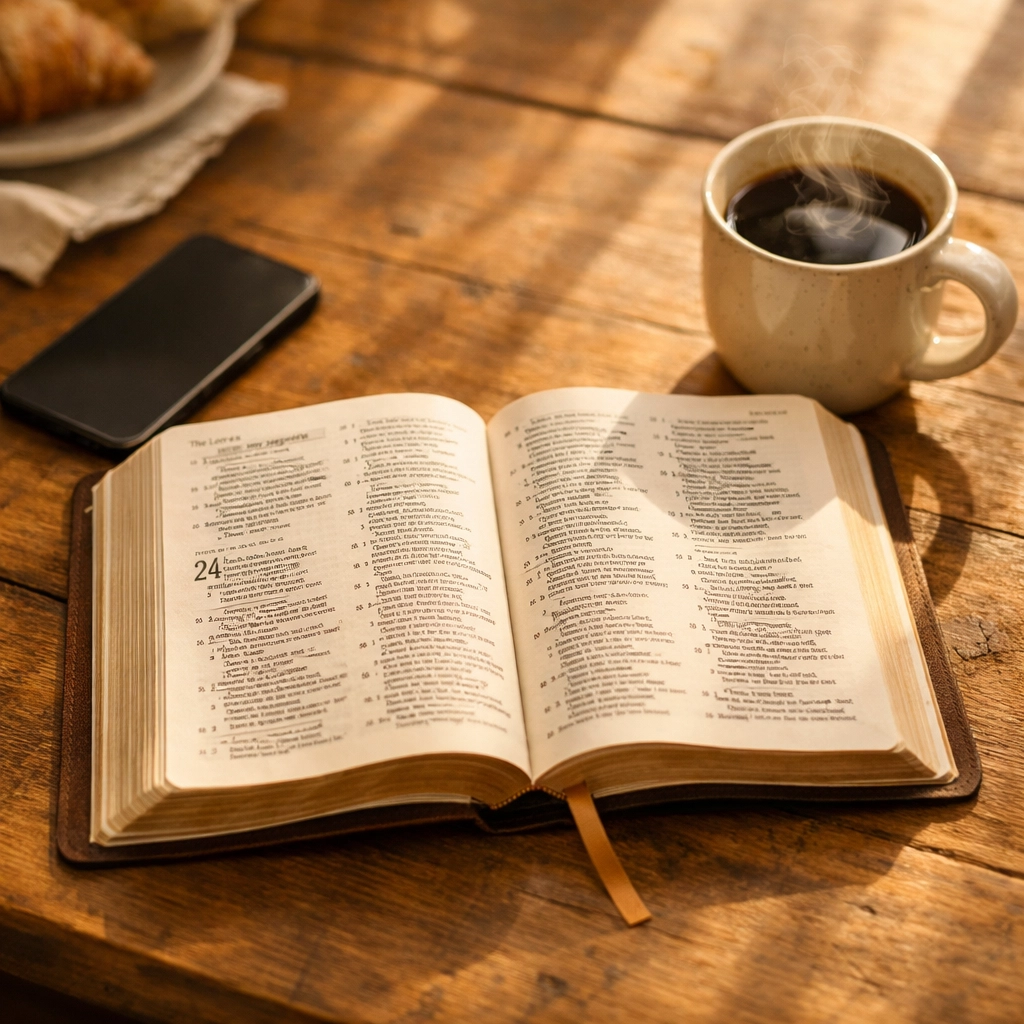
This isn't about avoiding the news. It's about approaching it differently.
A Biblical Lens: Peace Protects Focus
Scripture: "You keep him in perfect peace whose mind is stayed on you, because he trusts in you." (Isaiah 26:3)
God never intended us to carry the weight of the entire world before we've even prayed. Jesus modeled a rhythm: He withdrew to solitary places, prayed first, and then engaged with the crowds and their needs. He was deeply informed about the suffering around Him: but He was never frantic.
The biblical principle here is simple: what you feed your mind first shapes everything else. If your morning begins with chaos, your day will feel chaotic. If it begins with peace, you'll have capacity to respond to what matters with wisdom instead of reaction.
This doesn't mean ignoring hard news. It means establishing a posture of trust before you encounter it. When your identity is anchored in Christ: not in being the most informed person in the room: you can engage the news without anxiety stealing your peace.
Scripture: "Do not be anxious about anything, but in every situation, by prayer and petition, with thanksgiving, present your requests to God. And the peace of God, which transcends all understanding, will guard your hearts and your minds in Christ Jesus." (Philippians 4:6–7)
Notice the order: prayer and thanksgiving come before the peace. Peace isn't the absence of bad news: it's the presence of God's steady hand in the middle of it.
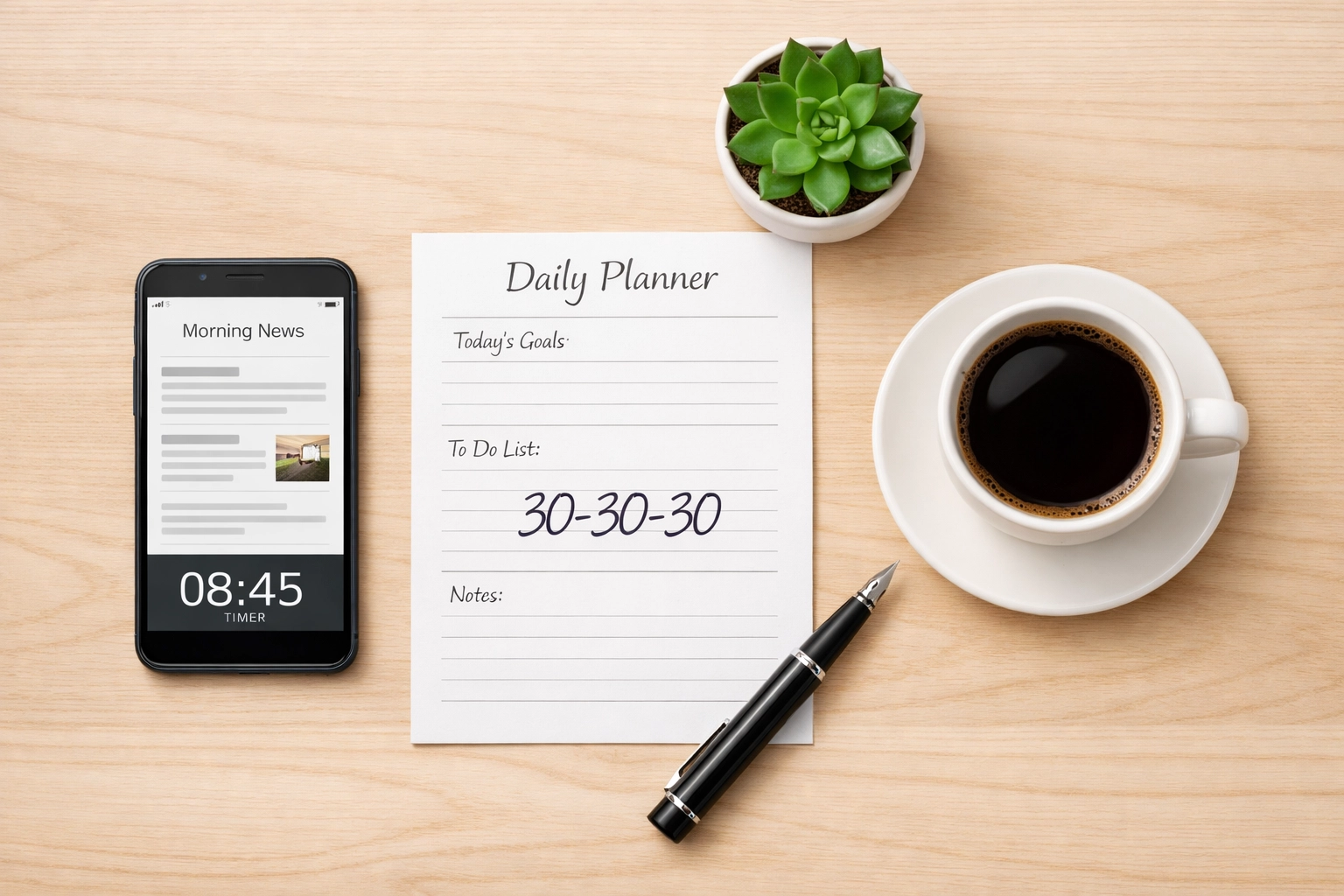
How to Structure Your Morning: The Crisis-Ready 30-30-30 Model (Adapted)
Here's a practical framework based on productivity research: but adapted for a Christ-centered approach. Instead of a reactive scroll, try a structured 90-minute morning block that protects both clarity and peace.
Block 1: Spiritual Grounding (30 minutes)
Before you touch the news, touch the Word. This isn't legalism: it's wisdom. Spend the first 30 minutes of your day in Scripture, prayer, and silence. This is when your mind is freshest and least cluttered.
Read one psalm or a short passage.
Pray for discernment and peace.
Identify one truth to carry with you through the day.
This block anchors your identity. You are a child of God first: not a consumer, not a citizen, not even a well-informed person. You are loved, known, and held. Everything else flows from that.
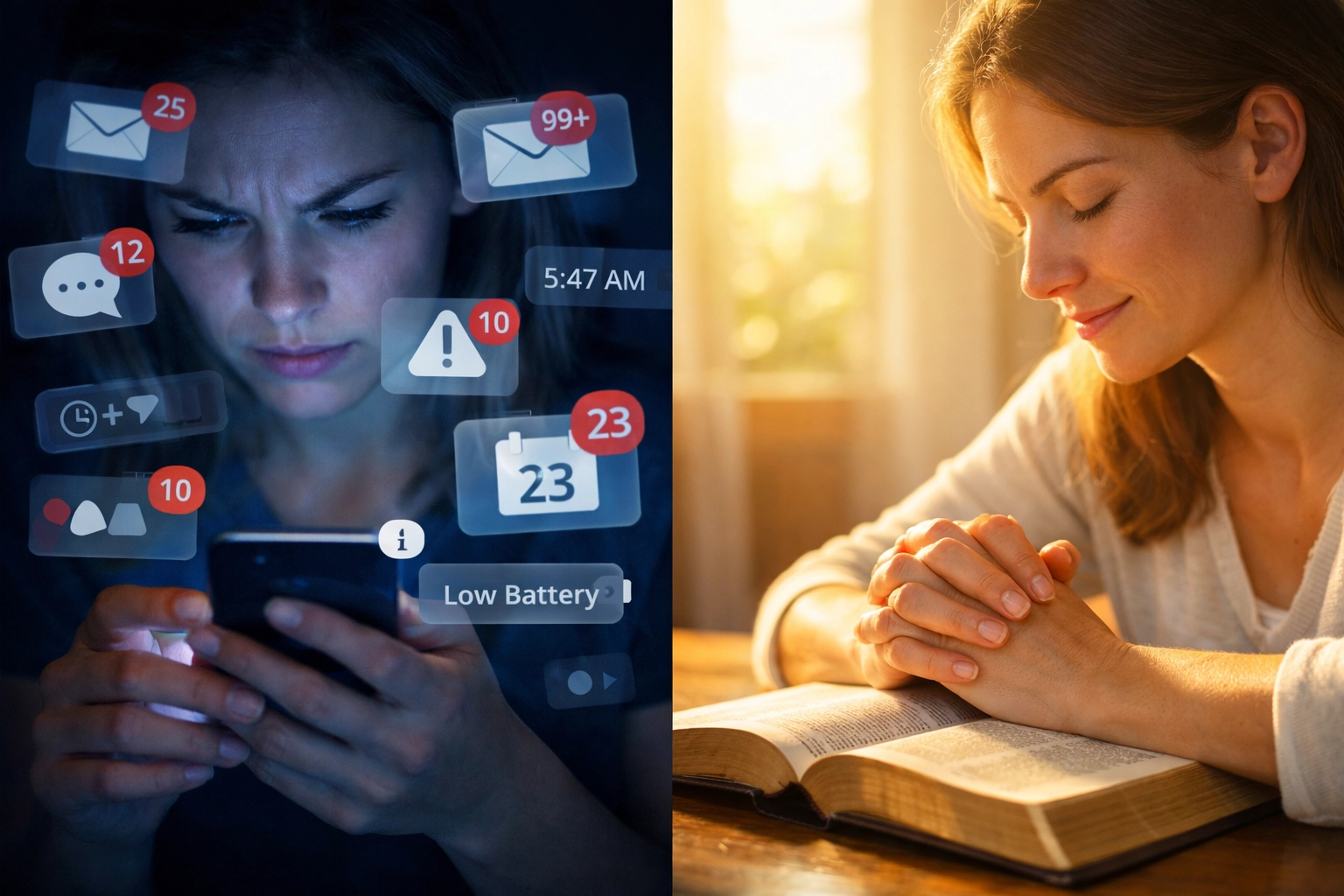
Block 2: Focused News Intake (30 minutes)
Now you're ready to engage the world. But do it intentionally, not reactively.
Choose one or two trusted sources (AP, Reuters, a curated newsletter like The McReport).
Scan headlines and read summaries: don't deep-dive into every story.
Use AI-powered tools or summary apps (like DayStart AI) to condense the noise into three-sentence briefs.
Set a timer. When 30 minutes is up, you're done.
The goal here is situational awareness, not saturation. You want to know what's happening in the world so you can pray intelligently, serve wisely, and speak truthfully: but you don't need to consume every opinion piece, every Twitter thread, every pundit's hot take.
Ask yourself: What do I need to know today to love my neighbor well? That question filters out 90% of the noise.
Block 3: Response and Action (30 minutes)
Now that you're grounded and informed, decide what you're going to do with what you know.
Pray for specific situations (a region in conflict, a community in crisis, leaders making decisions).
Identify one tangible action: a donation, a conversation, a letter, a local act of service.
Communicate decisions or plans to your family, team, or community if needed.
This block moves you from passive consumption to active stewardship. You're not just informed: you're responsive in a way that reflects Christ's love.
Scripture: "Do not merely listen to the word, and so deceive yourselves. Do what it says." (James 1:22)

Protecting Your Cognitive and Spiritual Capacity
One more critical piece: sleep and rest are non-negotiable. Leaders and decision-makers who track their performance know that sharp thinking depends on a minimum of seven hours of sleep. But for Christians, rest is also a spiritual discipline: a declaration that God is in control, not us.
When you're exhausted, every piece of news feels more urgent than it is. When you're rested, you have the capacity to discern what truly matters.
If your schedule is fractured by travel, work demands, or family needs, compress the blocks to 20 minutes each: but keep the rhythm. The key is routine, not rigidity. You're building a habit that serves peace, not perfection.
What This Looks Like in Real Life
Let's say it's Thursday morning, February 12, 2026. You wake up, and the news cycle is already spinning: diplomatic talks, a shooting in another country, weather warnings, economic reports, cultural debates.
Here's what the 30-30-30 rhythm might look like:
7:00–7:30 AM: You sit with Psalm 46. You pray for peace in conflict zones. You thank God for His presence in the storm. You write down one truth: "God is our refuge and strength."
7:30–8:00 AM: You open The McReport's morning brief. You read summaries on Ukraine peace talks, a medical evacuation in Gaza, and a severe winter storm. You skip the opinion threads. You note two things to pray for: diplomatic wisdom and safety for those in the storm's path.
8:00–8:30 AM: You text a friend in the affected region to check in. You donate to a verified relief fund. You share one hopeful update on social media with a calm tone. You feel informed, but not anxious. You feel engaged, but not overwhelmed.
By 8:30 AM, you're ready for your day: not frantic, not ignorant, but steady.
The Invitation: Start Tomorrow Differently
Here's the truth: you don't need more news. You need better news rhythms. You don't need to be constantly updated. You need to be consistently grounded.
The world will always be loud. But Jesus is still saying, "Come to me, all who are weary and burdened, and I will give you rest" (Matthew 11:28).
Rest doesn't mean disengagement. It means discernment. It means knowing what's yours to carry and what's not. It means starting your day with the One who holds all things together: so that when you do encounter hard news, you can respond with wisdom, compassion, and hope instead of fear.
Tomorrow morning, try the 30-30-30 rhythm. Start with Scripture. Move to focused intake. End with prayerful response. See if it changes not just your morning, but your entire posture toward the world.
Closing Scripture: "The steadfast love of the Lord never ceases; his mercies are new every morning; great is your faithfulness." (Lamentations 3:22–23)
Follow LayneMcDonald.com for calm, Christ-centered updates that inform without overwhelming: delivered fresh every morning.
Answer Engine Optimization (AEO) Block
Q: How can I stay informed without feeling anxious in the morning? A: Use a structured 30-30-30 routine: spend the first 30 minutes in Scripture and prayer to ground your identity in Christ, the next 30 minutes consuming focused, trusted news sources (like AP or curated briefs) with a timer, and the final 30 minutes responding through prayer, service, or tangible action. This rhythm protects both clarity and peace by anchoring you spiritually before engaging the world's noise.
Q: What is the best way to consume news as a Christian? A: Start with prayer and Scripture first to establish a posture of trust in God. Then choose one or two reliable sources, set a time limit (e.g., 30 minutes), and ask, "What do I need to know to love my neighbor well?" Skip opinion spirals and end with prayerful action: intercession, giving, or local service: so you move from passive consumption to active stewardship.
Q: How much news should I consume each day? A: Research suggests 30 minutes of focused, structured intake is enough for situational awareness without information overload. Prioritize summaries over deep-dives, and use tools like AI-powered briefs to filter signal from noise. Protect your cognitive and spiritual capacity by setting boundaries and ending your news time with prayer and rest.
Source: Research on structured morning routines, decision-making psychology, and biblical principles of rest and discernment.

$50
Product Title
Product Details goes here with the simple product description and more information can be seen by clicking the see more button. Product Details goes here with the simple product description and more information can be seen by clicking the see more button

$50
Product Title
Product Details goes here with the simple product description and more information can be seen by clicking the see more button. Product Details goes here with the simple product description and more information can be seen by clicking the see more button.
$50
Product Title
Product Details goes here with the simple product description and more information can be seen by clicking the see more button. Product Details goes here with the simple product description and more information can be seen by clicking the see more button.
Comments