top of page
< Back

Creativity: What I Do When Inspiration Dies, A Simple Way Back to Creating

There's this myth floating around that you need to feel inspired before you can create anything worth keeping. I believed it for years. I'd sit at my desk, waiting for that magical feeling to strike, staring at a blank page like it owed me something. Spoiler alert: it never did. The truth I've learned the hard way is that inspiration is overrated. It's nice when it shows up, sure. But treating it like a prerequisite for creativity? That's what keeps most people stuck. The Professional...
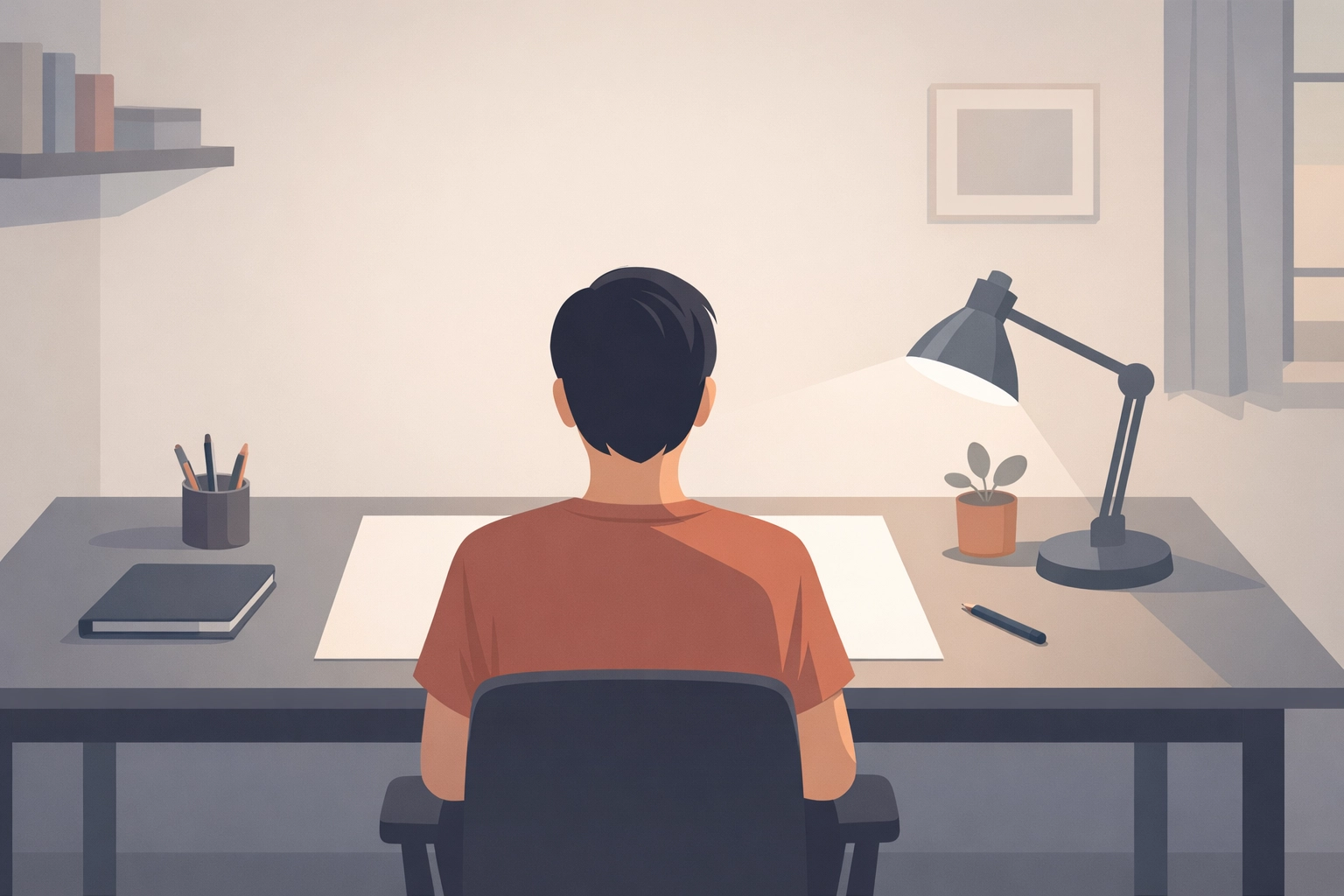
There's this myth floating around that you need to feel inspired before you can create anything worth keeping. I believed it for years. I'd sit at my desk, waiting for that magical feeling to strike, staring at a blank page like it owed me something. Spoiler alert: it never did. The truth I've learned the hard way is that inspiration is overrated. It's nice when it shows up, sure. But treating it like a prerequisite for creativity? That's what keeps most people stuck.  The Professional Mindset Shift  Here's what changed everything for me: I stopped waiting. Professionals don't wait for inspiration. They show up regardless of how they feel. Boredom? Show up. Frustration? Show up. That nagging feeling that everything you're making is garbage? Show up anyway. The difference between someone who creates consistently and someone who doesn't isn't talent or divine inspiration. It's the willingness to work through the resistance. Amateurs wait for the mood to strike. Professionals understand that creativity is like a muscle, it gets stronger the more you use it, not the more you think about using it. This doesn't mean you force yourself into misery every day. It means you accept that some days will feel flat, and you create anyway. Because here's the secret: once you start, inspiration often follows. Not the other way around.  The 30-Minute Reset Method  When I hit a creative wall, and I mean a real one, where nothing's flowing, I use a simple timer method. Set a timer for 30 minutes. Work with full focus during that block. No phone. No social media. No "quick email checks." Just you and the work. When the timer goes off, step away for 10 minutes. Do something completely different. Stretch. Make coffee. Look out a window. Anything but the creative work. Then come back for another 30-minute session. Most of the time, this breaks through whatever mental blockage I'm dealing with. But if it doesn't? I give myself permission to walk away until the next day. The key is that I come back  the next day. I don't wait for inspiration to knock on my door three weeks later. I return to the work, consistently, even when it feels pointless. This approach respects both your creative process and your mental bandwidth. You're not grinding yourself into burnout, but you're also not letting resistance win.  Keep an Idea Journal (Even When It Feels Silly)  I used to dismiss this advice because it sounded too basic. Turns out, the basics work. Keep something nearby to capture ideas whenever they hit. It doesn't matter if it's a physical notebook, a voice memo on your phone, or a notes app. The medium doesn't matter. What matters is that you're ready when an idea shows up unannounced. Don't overthink what you write down. A single sentence is fine. A random image description. A phrase that resonates. The point isn't to structure anything, it's to prime your mind. When you consistently capture thoughts, you're telling your brain, "Hey, this creative stuff matters. Keep sending me material." Then, when inspiration feels dead, you've got a backlog of raw material to work from. Those random notes become seeds for bigger projects. You'd be surprised how often a throwaway thought from three months ago becomes the breakthrough you need today.  Try a Different Medium (Just for Fun)  One of the fastest ways I've found to restart creativity is to work in a completely different format or genre. If you normally write, try sketching. If you make music, try writing poetry. If you're a visual artist, experiment with words. You're not trying to master a new skill: you're lighting up different parts of your brain. There's something freeing about being a beginner again. When you're not worried about being "good," creativity flows more naturally. Plus, techniques from one medium often translate in surprising ways to your primary work. I've had writing breakthroughs from experimenting with music composition. I've found storytelling angles by trying my hand at visual art. The cross-pollination is real, and it keeps things fresh when your main creative work feels stale.  Your Creative Community Matters  Isolation kills creativity faster than almost anything else. When inspiration dies, reaching out to other creators can reignite the spark. Join a workshop. Hop into an online community. Collaborate on something small with a fellow artist. Exchange ideas. Get feedback. Offer encouragement. There's this lie we tell ourselves that creativity is a solo journey. That if we're "real" artists, we should be able to figure it all out alone. But every creator I know who's doing meaningful work has some form of community backing them up. Other people see things you can't. They ask questions that crack open new directions. They remind you why you started when you've forgotten. Don't underestimate the power of creative community: it's oxygen for the work.  Reconnect With Your Why  Here's something that hit me recently: the moment you remember your time is limited, creativity begins to flow. I'm not talking about morbid obsession with death. I'm talking about the awareness that your days are finite, and what you create matters. This shifts you out of perfectionism and into action. You stop waiting for the "perfect" inspiration because you realize there's no time to waste. Your creative work deserves to be out in the world, even if it's imperfect. Especially if it's imperfect. The people who need what you're making won't care that it's not polished to magazine-cover standards. They'll care that you showed up and made something real. When inspiration dies, I ask myself: Why does this project matter? Who benefits if I finish it? What problem does it solve, or what joy does it create? Reconnecting with purpose: with the actual reason you're creating: cuts through the fog. It reminds you that inspiration is nice, but impact is better.  Takeaway / Next Step  The next time inspiration dies on you, don't panic. Don't wait. Just start. Pick one of these approaches and try it for a week. Set a timer and work in focused intervals. Capture random ideas in a journal. Try a new creative medium just for fun. Reach out to another creator for a conversation. Reconnect with why your work matters. Creativity isn't some mystical force that chooses to visit a lucky few. It's a practice. It's a discipline. And most importantly, it's available to you right now, whether you feel inspired or not. If you want more practical content on creativity, faith, and building a life that matters, check out my work at laynemcdonald.com . Browsing the site also helps raise funds for families who have lost children: at no cost to you. And if you're looking for Christian teachings and community, visit Boundless Online Church  for resources you can access privately or with sign-up. Got questions or want to talk more about beating creative resistance? Reach out to me on the site . I'd love to hear what you're working on and how I can help. Now go create something. Even if it feels like pulling teeth. Especially if it feels like pulling teeth.

creativity-what-i-do-when-inspiration-dies-a-simple-way-back-to-creating-1

Dr. Layne McDonald
Creative Pastor • Filmmaker • Musician • Author
Memphis, TN

  • Apple Music
  • Spotify
  • YouTube
  • TikTok
  • Instagram
  • Facebook
  • LinkedIn
  • X

© 2026 Layne McDonald. All Rights Reserved.

bottom of page