5 Stories That Matter (Without the Outrage): Midday News Brief
- Layne McDonald
- Feb 21
- 5 min read

Take a breath. Not everything in the news has to spike your cortisol.
Today's midday brief focuses on five stories that actually matter: stories about people solving problems, showing up for their neighbors, and making tangible progress on issues that have plagued humanity for generations. No rage-bait. No manufactured controversy. Just real news about real people doing real good.
The Facts
1. Sierra Leone Opens First Maternal Health Hospital
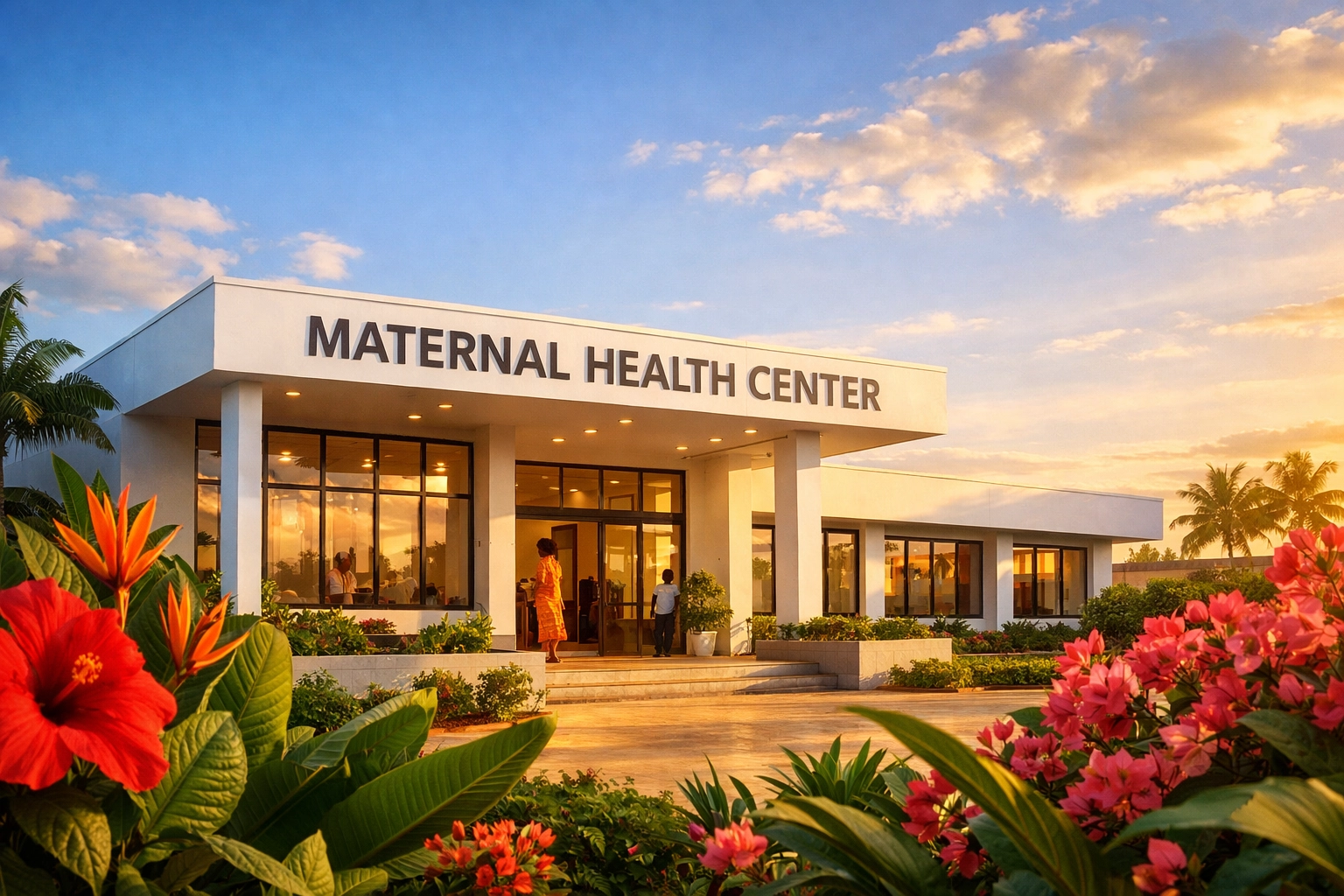
On Valentine's Day 2026, the Paul E. Farmer Maternal Center of Excellence opened its doors in Sierra Leone and delivered its first baby: a girl. The facility was made possible by a $50 million donation from John and Hank Green and represents a critical intervention in a country with one of the world's highest maternal mortality rates. Sierra Leone has long struggled with maternal health infrastructure, and this specialized facility marks the first of its kind in the nation, offering comprehensive care for expectant mothers and newborns.
2. Trachoma Cases Plummet 94% Worldwide
The number of people at risk from trachoma: the world's leading infectious cause of blindness: has fallen by 94% over the past two decades. This dramatic decline resulted from coordinated international efforts combining surgical intervention, antibiotic distribution, and improved sanitation and hygiene practices. What was once a leading cause of preventable blindness affecting millions has become a manageable public health challenge through sustained, methodical work by health organizations, governments, and local communities.
3. Immigration Contributes $14.5 Trillion to U.S. Economy
Analysis of U.S. taxpayer data by the Cato Institute reveals that immigrant contributions: from both naturalized citizens and non-citizens: total $14.5 trillion to the American economy. The research indicates that without these contributions, American public debt would reach at least 205% of GDP, effectively preventing a potential financial crisis. The data demonstrates measurable economic impact across multiple sectors and tax brackets.
4. Poverty Expected to Decline in 80% of Countries
New World Bank projections show that 2025 will see the largest share of countries making progress against poverty in over a decade. The data forecasts poverty reduction in 80% of countries globally, including 75% of low-income countries and 70% of fragile and conflict-affected states. These projections represent significant movement on one of the world's most persistent challenges, with improvements reaching regions previously considered extremely difficult to assist.
5. Indian Educator Wins $1 Million Global Teaching Prize
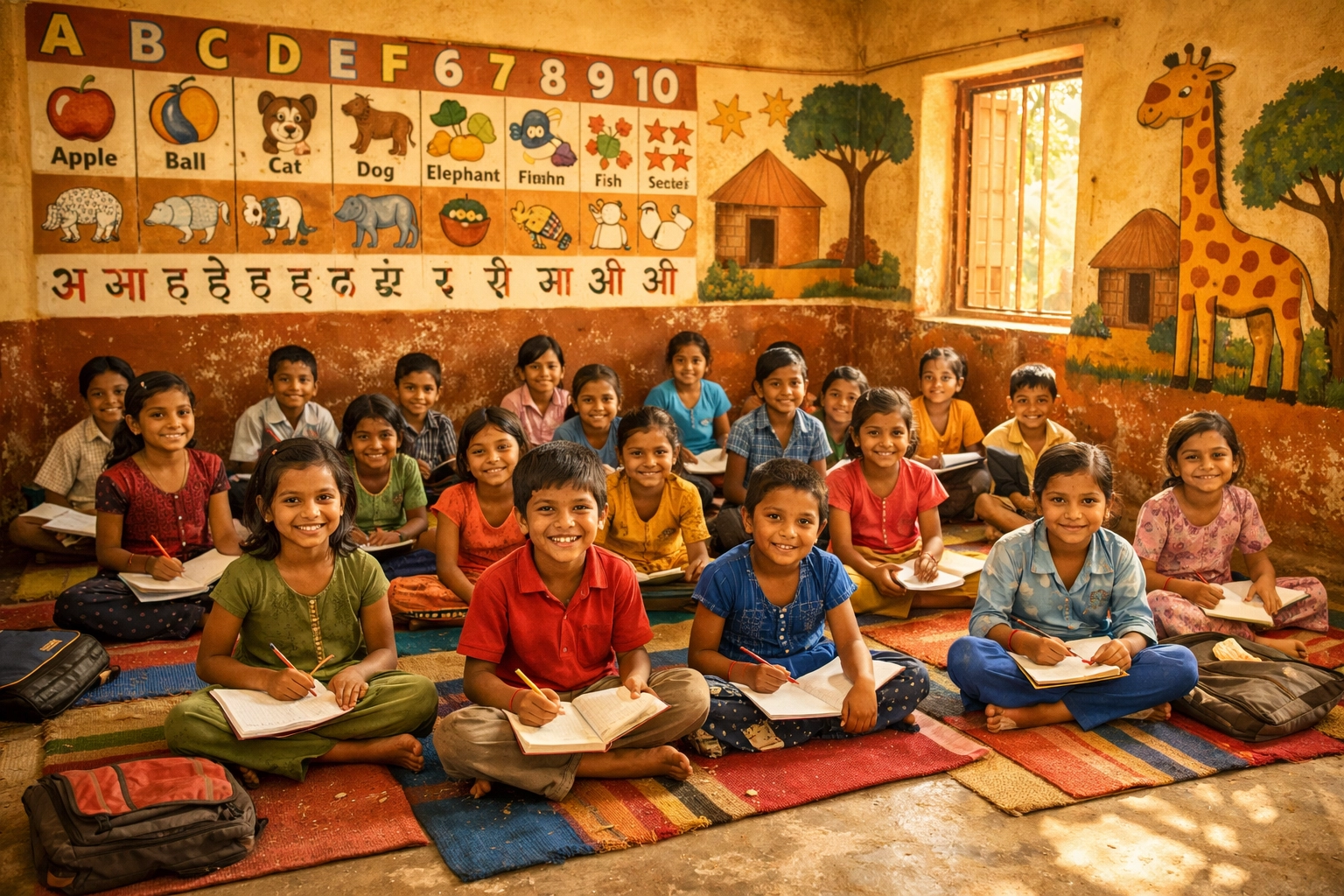
Rouble Nagi received the Global Teacher Prize and its $1 million award for her work creating hundreds of learning centers and connecting thousands of previously unschooled children to educational opportunities. Nagi's approach includes establishing structured education programs in underserved communities and painting educational murals that turn public spaces into learning environments. Her model has demonstrated scalability and effectiveness in reaching children who had no prior access to formal education.

The Lens: Seeing God's Fingerprints
Here's what these stories share: people showing up.
The Assemblies of God has always understood something fundamental about the Kingdom of God: it doesn't just arrive in our hearts; it breaks into the world through our hands, our resources, our creativity, and our refusal to look away from suffering.
When Jesus healed the sick, gave sight to the blind, and fed the hungry, He wasn't just performing miracles. He was demonstrating what the Kingdom looks like when heaven touches earth. He was showing us that God cares about bodies, not just souls. About mothers surviving childbirth. About children learning to read. About communities escaping poverty.
Scripture tells us that "faith by itself, if it is not accompanied by action, is dead" (James 2:17). These five stories are exhibitions of living faith: not necessarily Christian in every case, but reflecting the image of God that every human bears. They show people refusing to accept suffering as inevitable, bringing resources to bear on problems that seemed insurmountable, and trusting that persistence can actually change outcomes.
The maternal hospital in Sierra Leone? That's the hands and feet of Jesus meeting women in their most vulnerable moment. The eradication of trachoma? That's stewarding creation and pushing back darkness, literally giving sight to the blind, just as Jesus did. The economic contributions of immigrants? That's a reminder that God doesn't recognize the borders we draw, and blessing flows when we recognize the dignity and gifts in every person.
These stories also remind us that God works through time. The trachoma victory took twenty years. Twenty years of surgeries, antibiotic distributions, sanitation improvements, and patient education. No viral moment. No overnight miracle. Just faithful, consistent work by people who believed that blindness wasn't God's final word.
That's the Kingdom. Not always flashy. Often slow. But unstoppable when God's people partner with His heart for the vulnerable.
The Response: What This Means for Us
So what do we do with good news?
First, we thank God for it. Seriously. When was the last time you stopped scrolling bad headlines long enough to genuinely thank God for progress? Gratitude isn't just polite: it's spiritually formative. It trains us to see God's activity in the world and reminds us that He's still sovereign, still working, still writing a story bigger than our news cycle.
Second, we let it challenge our cynicism. If you've been in the faith for a while, you know how easy it is to become jaded: to assume nothing ever really changes, that evil always wins, that the world's just circling the drain. These stories are evidence against that narrative. Progress is possible. Systems can improve. Suffering can be reduced. Not because humanity is inherently good, but because God's common grace flows through even flawed human efforts, and the Holy Spirit still moves people toward mercy.
Third, we ask: Where can I show up? You're probably not dropping $50 million on a hospital (though if you are, let's talk). But Rouble Nagi didn't start with millions either. She started with unschooled kids in her community and murals on walls. She started with what she had.
Maybe for you, "showing up" looks like tutoring kids at your local school. Maybe it's supporting immigrant families in your church who are navigating systems and building new lives. Maybe it's giving faithfully to organizations doing health work overseas: or serving on a medical missions trip yourself. Maybe it's praying consistently for nations struggling with poverty, and backing up those prayers with tangible support through vetted ministries.
The AG has always believed in the power of the Spirit to move us beyond ourselves: to baptize us not just for personal blessing, but for Kingdom service. If these stories stir something in you, don't ignore it. That might be the Holy Spirit tapping you on the shoulder.
Fourth, we share the good news. Literally. Forward this to someone who needs hope today. Our news ecosystem is designed to amplify fear, division, and outrage because those emotions drive engagement. Choosing to share stories of progress, healing, and human dignity is a countercultural act. It's a small way of pushing back against the darkness and reminding people that light still breaks through.
A Final Word
These five stories won't trend on social media. They won't drive outrage clicks. They won't fuel the perpetual anger machine that keeps so many of us scrolling and stewing.
But they matter. They matter because behind every statistic is a face, a family, a community that's experiencing something closer to the Kingdom Jesus preached. They matter because they remind us that God hasn't abandoned this world: He's still moving, still healing, still using ordinary people to accomplish extraordinary things.
And they matter because they invite us into a different posture toward the news. Not naïve optimism. Not blind positivity. But grounded hope: the kind that sees reality clearly, acknowledges the brokenness, and still believes that God is bigger than all of it.
As we continue through this Saturday, let these stories recalibrate your vision. The world isn't just what's breaking: it's also what's being rebuilt, one hospital, one cure, one classroom, one person at a time.
Need prayers? Text us day or night at 1-901-213-7341.
Share this to bring a little hope to someone's day.
Sources: VisionOfHumanity.org, World Bank Data, Cato Institute Research

$50
Product Title
Product Details goes here with the simple product description and more information can be seen by clicking the see more button. Product Details goes here with the simple product description and more information can be seen by clicking the see more button

$50
Product Title
Product Details goes here with the simple product description and more information can be seen by clicking the see more button. Product Details goes here with the simple product description and more information can be seen by clicking the see more button.
$50
Product Title
Product Details goes here with the simple product description and more information can be seen by clicking the see more button. Product Details goes here with the simple product description and more information can be seen by clicking the see more button.
Comments