A Rare Sight: The Braun Wrasse Rediscovered
- Dr. Layne McDonald
- Feb 8
- 6 min read

The Facts
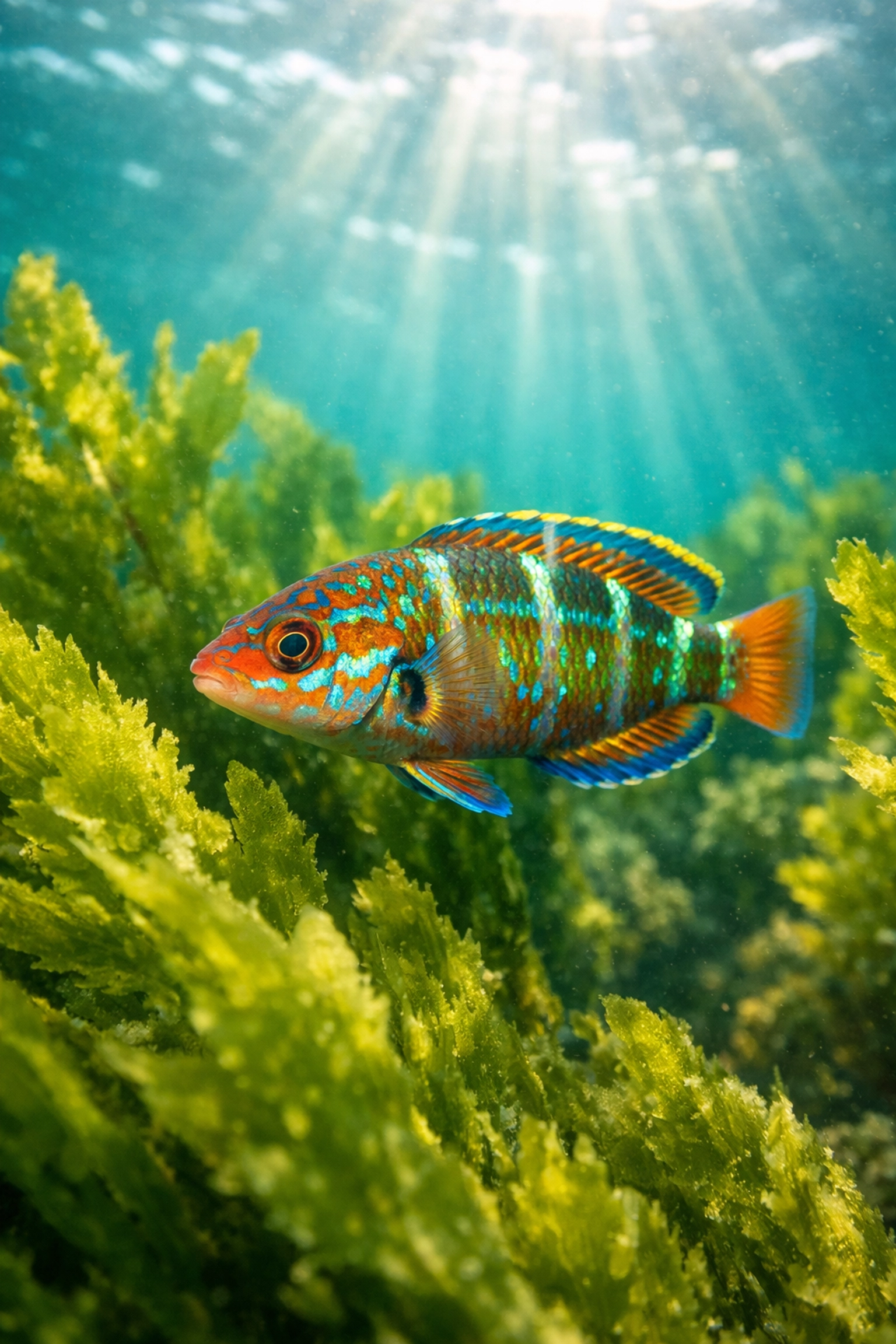
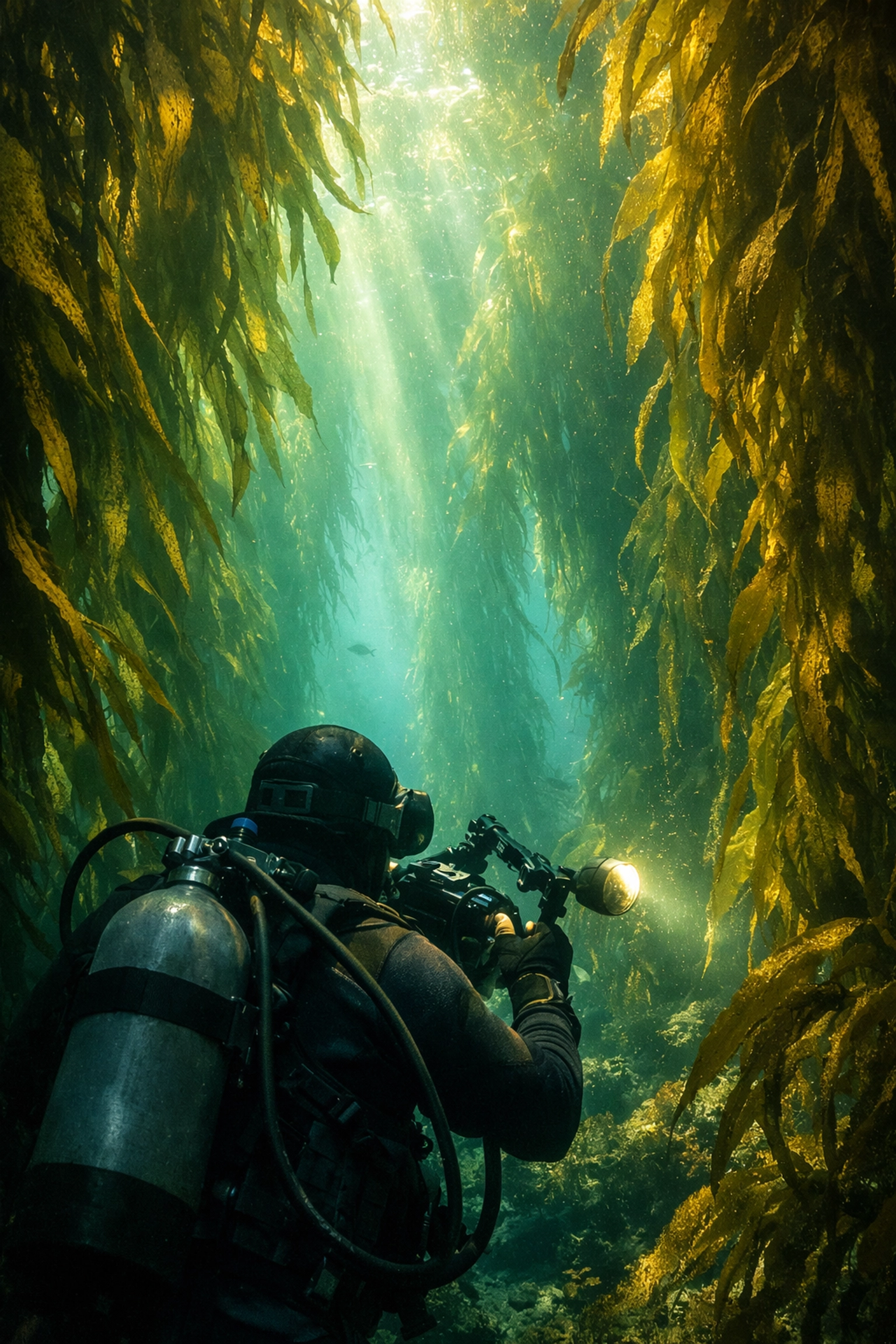
A rare Braun's wrasse (Pictilabrus brauni) has been spotted in Western Australia's kelp forests after an approximately 15-year absence from scientific records. Marine biologist Océane Attlan, a PhD candidate with the University of Western Australia's Oceans Institute, identified the fish during a diving expedition off Albany in late January 2026. The sighting occurred during the final dive of a four-day survey assessing kelp forest health following recent marine heatwaves. Fellow researcher Dr. Albert Pessarrodona captured two photographs before the fish retreated into the kelp.
The Braun's wrasse is endemic to Australia's south-west coast and represents one of the smallest geographic ranges of any temperate fish in the country. The species was scientifically discovered in 1996 and has been recorded only sporadically since. The fish grows to less than 7.5 centimeters in length and possesses exceptional camouflage abilities. Marine heatwaves in recent years had raised concerns among researchers that the species had potentially gone extinct.
How it Happened
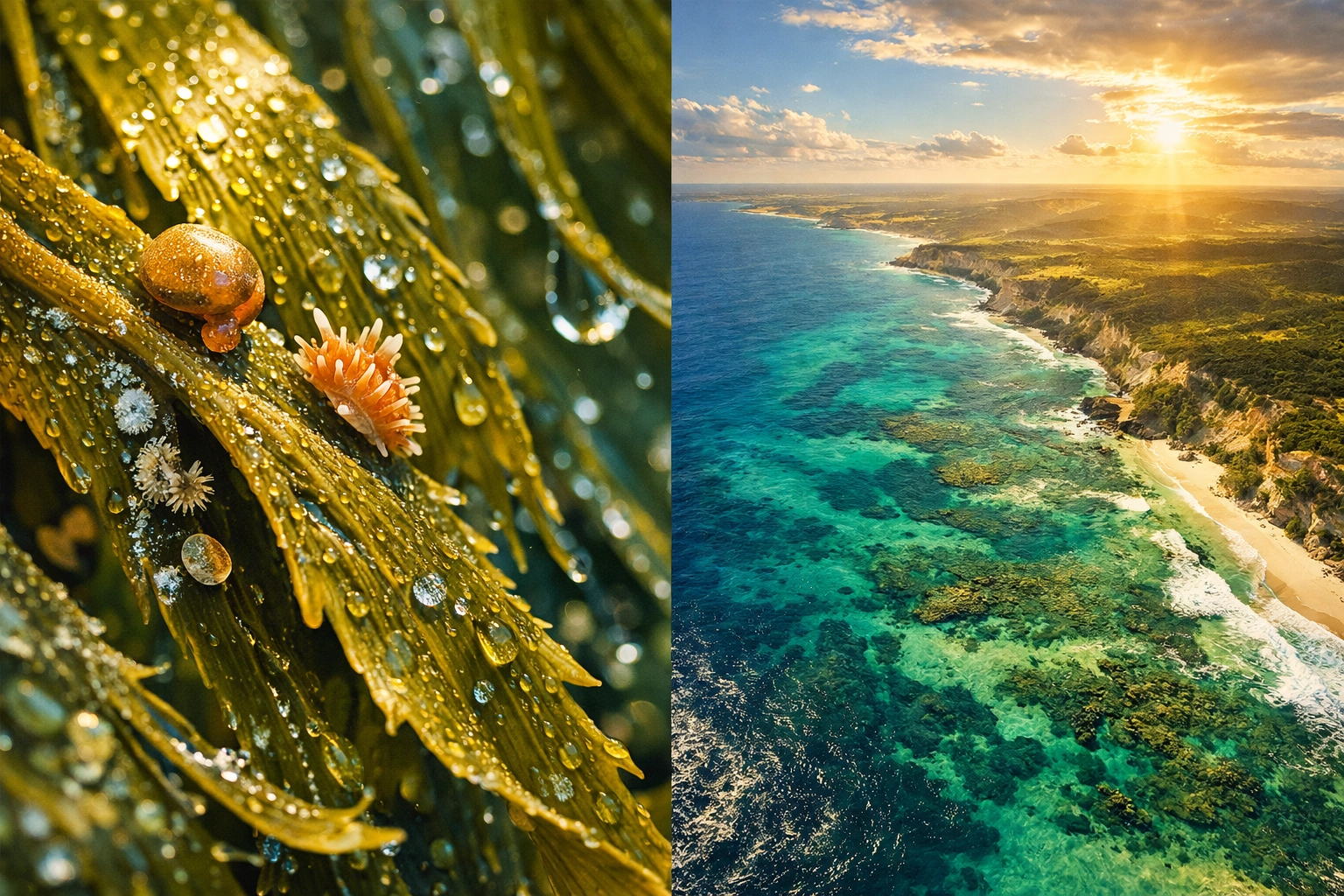
The rediscovery wasn't the result of a targeted search for the Braun's wrasse. The University of Western Australia's Wernberg Lab was conducting routine biodiversity monitoring in the region's kelp forests, documenting how marine ecosystems were responding to climate-related stress events. These kelp forests are part of the Great Southern Reef, an 8,000-kilometer rocky reef system stretching along Australia's southern coastline.
Attlan recognized the fish during her dive but lacked a camera at that moment. She described the experience as "surreal, like recognizing a familiar face, but you can't put a name on it." The timing proved fortunate: Dr. Pessarrodona was able to photograph the shy creature before it disappeared into the vegetation. Without those images, the sighting would have been difficult to verify, given how rarely the species has been documented over the past three decades.
The expedition also documented other significant findings, including a sea snail located 500 kilometers further south than its previously known range and another rarely observed fish species. These discoveries underscore the biological richness of the region and the gaps that still exist in our understanding of these underwater ecosystems.
Where We Are Now
The Braun's wrasse sighting provides critical new data for conservationists who have classified the species as "near threatened" due to its extremely limited known range. The fish is found nowhere else in the world, making every documented observation valuable for understanding its habitat requirements and population status.
The Great Southern Reef itself hosts one of the highest levels of endemic marine flora and fauna globally, positioning it as a critical biodiversity hotspot that is particularly vulnerable to climate change. The reef system supports over 1,500 marine species, many of which exist nowhere else on Earth. The recent marine heatwaves that swept through the region have created uncertainty about which species have successfully adapted and which remain at risk.
Researchers are now analyzing the photographs and dive data to better understand the current health of the kelp forest ecosystem where the wrasse was spotted. The finding suggests that at least some pockets of suitable habitat have survived recent environmental pressures, offering a measure of hope for this rare species and others that share its environment.
The Conversation
Marine biologists have expressed excitement about the rediscovery. For scientists who study marine biodiversity, the reappearance of a species feared lost represents both validation of conservation efforts and a reminder of how much remains unknown about ocean ecosystems. Some researchers point to the finding as evidence that protected marine areas and ecosystem monitoring programs are essential tools for understanding and preserving rare species.
Others note that the 15-year gap in sightings: despite targeted surveys: highlights the challenges of studying shy, well-camouflaged species in vast ocean environments. The Braun's wrasse may have been present all along, simply avoiding detection. This possibility raises important questions about how scientists assess extinction risk for elusive marine species and whether "absence of evidence" should be weighted differently in conservation planning.
The broader context matters here too. Climate change continues to reshape marine ecosystems through warming waters, altered currents, and increased frequency of extreme events like marine heatwaves. Some species adapt; others decline or shift their ranges. The Braun's wrasse represents just one thread in a complex tapestry of ecological change happening beneath the ocean's surface.
What strikes me most about this discovery is the reminder that even in our age of satellites, underwater drones, and advanced monitoring technology, God's creation still holds mysteries. There are fish swimming in kelp forests, creatures moving through coral reefs, and entire ecosystems functioning in ways we're only beginning to understand. The ocean keeps its secrets well.
The Biblical Center
I'm Dr. Layne McDonald, and when I read about this tiny fish reappearing after years of absence, my mind went straight to Job 12:7-8: "Ask the animals, and they will teach you, or the birds in the sky, and they will tell you; or speak to the earth, and it will teach you, or let the fish in the sea inform you."
Here's what a seven-centimeter fish is teaching me today: God's creation operates on a scale and with an intricacy that constantly exceeds our ability to fully comprehend it. The Braun's wrasse doesn't need our observation to exist. It doesn't require our documentation to have value. It simply is: a masterpiece of design, perfectly suited to its kelp forest home, carrying out its role in the ecosystem whether we're watching or not.
And here's the deeper truth that hits my heart: if God cares enough to design a fish that small, that rare, that hidden: a creature most people will never see: how much more does He care about you?
You might feel overlooked today. You might feel like you've disappeared from view, like nobody notices whether you're thriving or struggling. You might feel small in a vast world, camouflaged by circumstances, unseen by people who matter to you.
But God sees you. He designed you with the same attention to detail He gave that wrasse. He knows exactly where you are, even when others have stopped looking. Your value isn't determined by who documents your presence or how often you appear in someone else's survey of what matters.
The psalmist understood this. "Where can I go from your Spirit? Where can I flee from your presence? If I go up to the heavens, you are there; if I make my bed in the depths, you are there" (Psalm 139:7-8). God's attention doesn't waver. His care doesn't depend on whether you're visible to everyone else.
Finding Peace
If you're feeling overlooked or unseen today, I want to give you something practical to anchor your heart:
Spend time with the small wonders. Go outside this weekend: to a park, a trail, your backyard: and intentionally notice the details. Look at a leaf's veins. Watch an insect navigate a blade of grass. Observe how light filters through tree branches. Let these small, often-overlooked pieces of creation remind you that God is a God of details, and you are one of His most cherished details.
Create your own rediscovery moment. Think about someone in your life who might feel invisible: a neighbor you haven't checked on, a coworker who seems withdrawn, a friend who's been quiet lately. Reach out this week. Let them know they're seen. In doing so, you reflect the God who sees all of us, even when we feel most hidden.
Rest in your permanent value. Write down Job 12:7-8 and put it somewhere you'll see it daily. When you read it, remember: if God instructs us to learn from the fish in the sea, He clearly values every creature He's made. That includes you. Your worth isn't negotiable, isn't performance-based, and doesn't fluctuate with circumstances.
The Braun's wrasse is still swimming in those kelp forests off Albany, whether cameras capture it or not. You're still valuable to God, whether the world acknowledges it or not. That's not motivation-poster sentiment: that's the rock-solid truth Scripture offers us. Let it anchor you today.
If you want to explore how to live from that place of secure identity, especially when life feels overwhelming, I'd love to help you discover the peace that comes from knowing you're seen by the One who matters most. Visit www.laynemcdonald.com to learn more about coaching and mentoring options.
Source: The Guardian (Western Australia kelp forest research coverage), University of Western Australia Oceans Institute
Sonny-Ready Caption Block:
Spotted in the deep! 🐟 The rare Braun Wrasse has been found in Western Australia. Dr. Layne McDonald reflects on the wonders of God's hidden creation and why you are never overlooked by Him. Dive in: www.laynemcdonald.com #MarineBiology #HiddenWonders #GodsCreation #PeacefulUpdates
Comments