Amazon warehouse tour offers glimpse of robotics future
- Dr. Layne McDonald
- Feb 6
- 7 min read

![[HERO] Amazon warehouse tour offers glimpme of robotics future](https://cdn.marblism.com/nIZQs3Povgp.webp)
Scripture (anchor): "Whatever you do, work heartily, as for the Lord and not for men." (Colossians 3:23)
What happened
The Guardian reported from a public tour of an Amazon fulfillment facility in Stone Mountain, Georgia, describing multiple types of warehouse robots and automation systems currently in operation. The piece framed Amazon's tours as serving dual purposes: recruiting potential employees and managing public relations amid ongoing criticism of working conditions and safety protocols.
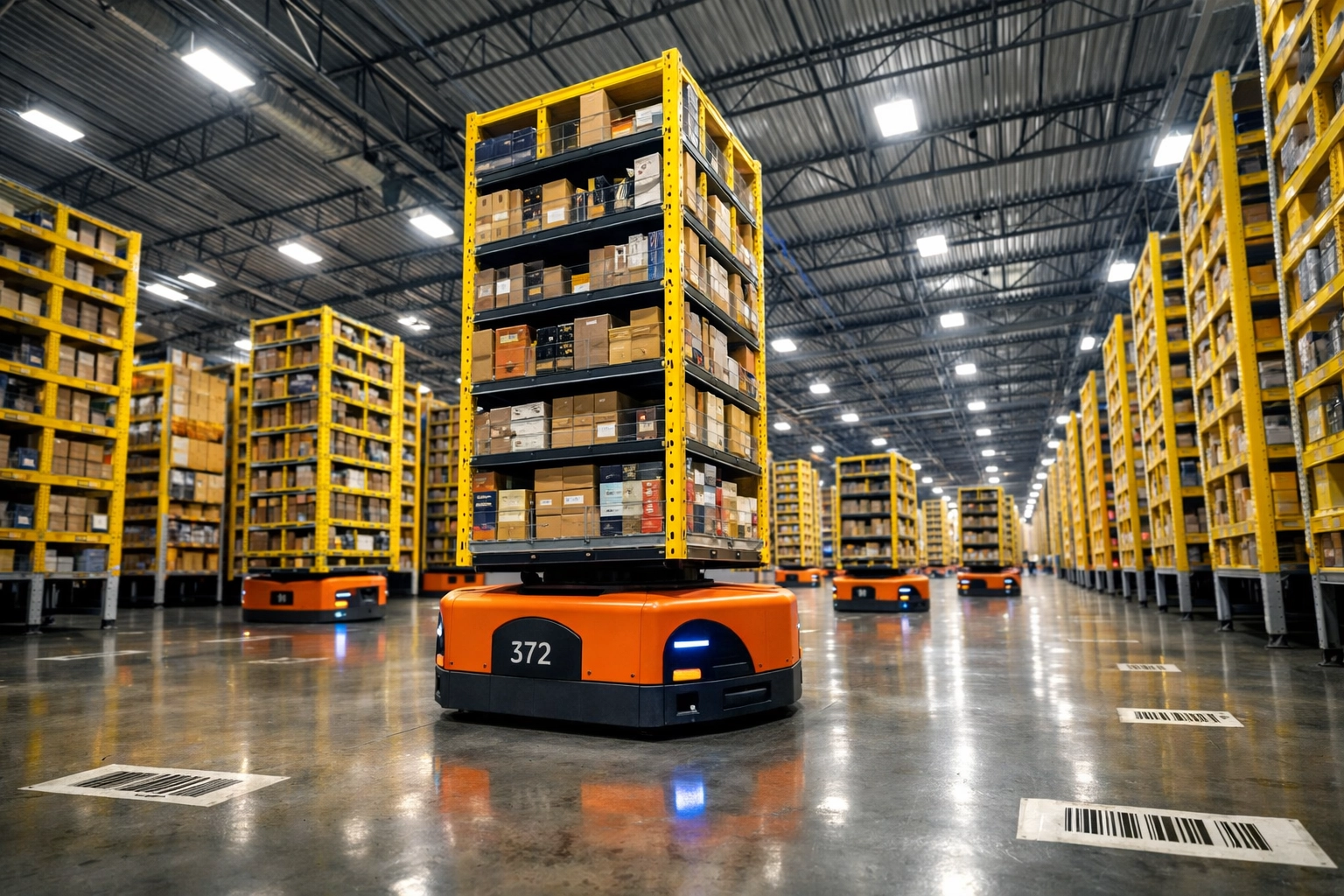
The facility tour showcased orange robots weighing approximately 1,200 pounds, each capable of carrying up to 2,500 pounds of inventory pods. These autonomous machines read barcoded stickers on the floor to navigate the warehouse space, which can span areas equivalent to 28 football fields. The robots use machine learning algorithms to determine product popularity and optimize placement for faster packing operations.
The report noted Amazon has continued significant investments in robotics and artificial intelligence technology. The company referenced corporate statements and reporting about automation impacts on workforce composition and operational efficiency. Tours designed for students in grades six and above explore how hardware, software, and human workers coordinate across pick, pack, quality control, and shipping stations.
The article included Amazon's response disputing certain comparisons made by critics and describing scheduled breaks for workers. The story also referenced broader concerns from workers and labor observers about job displacement, injury rates, and the accelerating pace of automation across the logistics industry.
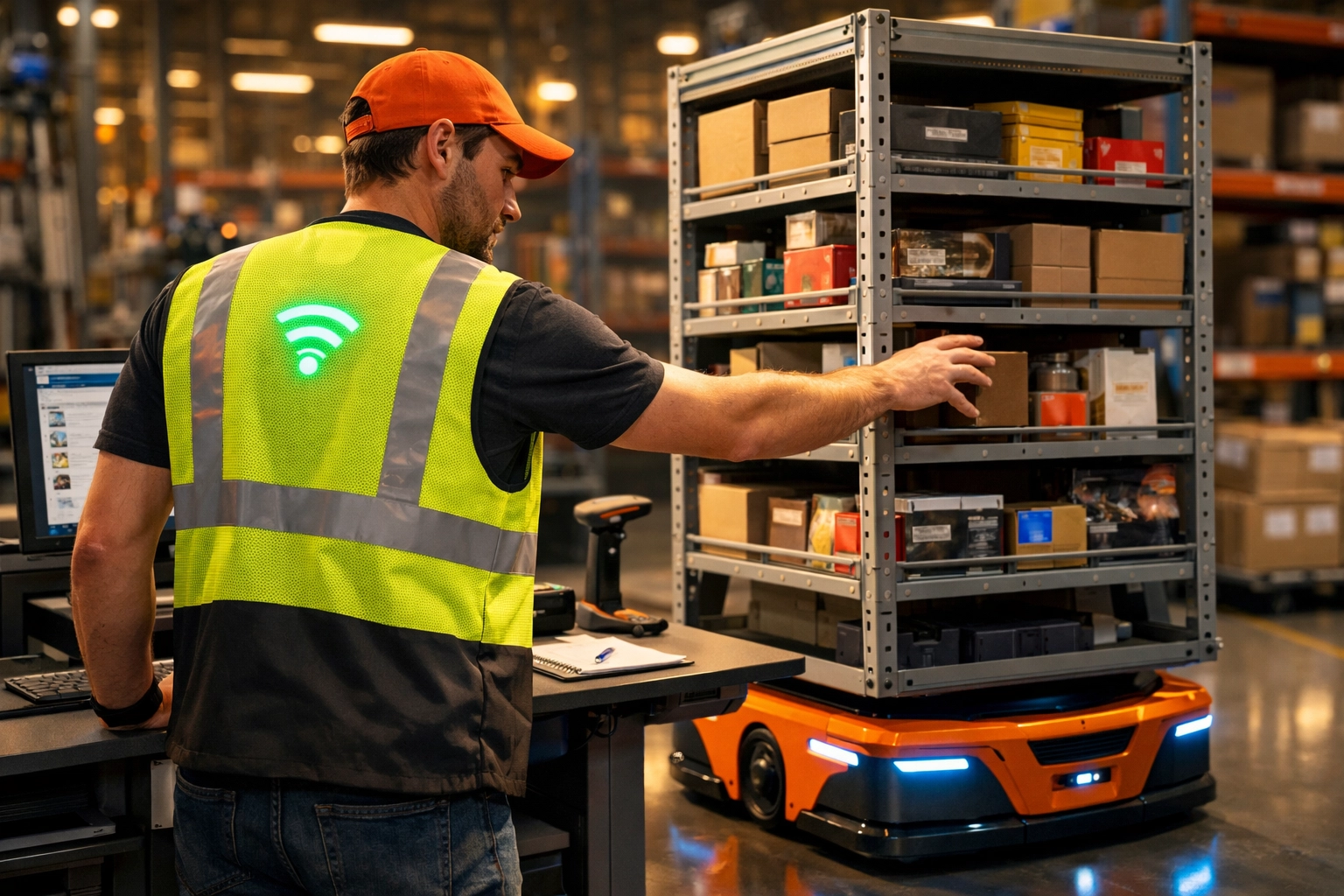
Workers wear special Wi-Fi-enabled vests to alert robots to their presence in shared workspace areas. Robots deliver inventory pods to ergonomic packing stations where employees complete final order assembly. The facilities reportedly process approximately one million packages daily through this coordinated system of human and machine collaboration.
Why it matters
Amazon's fulfillment operations represent a significant testing ground for workplace automation at scale. The company has deployed tens of thousands of robots since 2012 while simultaneously adding hundreds of thousands of full-time jobs globally, according to company data. This parallel growth challenges simple narratives about automation inevitably reducing total employment.
The warehouse automation model Amazon has pioneered influences decisions across manufacturing, logistics, and retail sectors worldwide. Competitors and adjacent industries closely study these operations to inform their own technology adoption strategies. The speed and scope of implementation provide real-world data on how automation reshapes job roles, skill requirements, and workplace safety dynamics.
For communities hosting these facilities, the expansion of automation raises practical questions about long-term employment stability, wage trajectories, and the types of skills that will remain in demand. Local leaders balance the immediate economic benefits of large employers against concerns about whether current job growth will persist as technology continues advancing.
The public tour program itself represents an unusual transparency effort in an industry often criticized for opacity. While critics argue tours present a sanitized view, they do offer direct observation of operations that would otherwise remain largely invisible to most consumers and community members.
What different sides are saying
Company efficiency perspective: Amazon and similar operators emphasize that automation improves speed, consistency, and safety for repetitive or physically demanding tasks. Robots reduce the distances workers must walk during shifts, potentially decreasing fatigue-related injuries. Automation enables facilities to handle higher inventory volumes and faster delivery timelines that consumers increasingly expect. Technology investments create new technical roles in maintenance, programming, and systems engineering that offer different career paths than traditional warehouse positions.
Worker and community concerns: Labor advocates and some workers point to injury rates, productivity pressure that some describe as surveillance-like monitoring, and questions about whether automation reduces total jobs or workers' bargaining power over time. Concerns focus not just on current employment levels but on the trajectory as technology capabilities continue improving. Some observers note that while total job numbers may grow initially, the composition shifts toward fewer positions per unit of output. Questions persist about whether training pathways for displaced workers match the pace of technological change or provide genuinely equivalent opportunities.
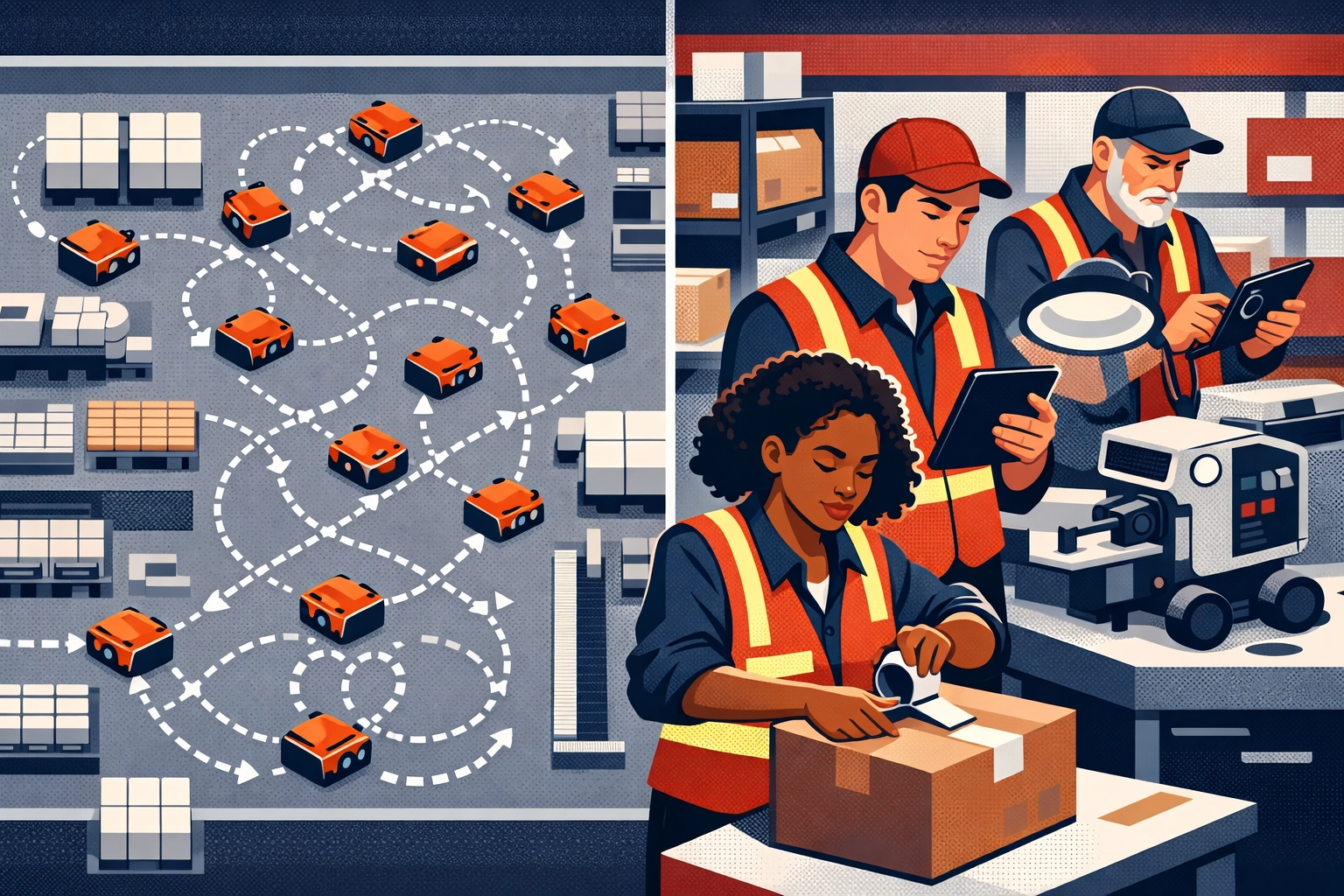
Technology and research view: Engineers and researchers studying automation emphasize that outcomes depend heavily on implementation choices rather than being predetermined by the technology itself. Human-robot collaboration systems can be designed with varying levels of worker autonomy, safety margins, and skill development opportunities. The same core technologies can support either worker empowerment or deskilling depending on management priorities and regulatory frameworks.
Economic analysis: Economists note that warehouse automation follows historical patterns where technology adoption creates transition challenges even when it generates net benefits over longer time horizons. The distribution of those benefits: between workers, companies, consumers, and communities: depends on factors including labor market conditions, policy choices, and competitive dynamics that extend beyond any single company's control.
Biblical lens
Scripture speaks to dignity in work and justice in the workplace: "Open your mouth, judge righteously, defend the rights of the poor and needy." (Proverbs 31:9)
The biblical perspective on work begins with the image of God as Creator and humans as image-bearers called to cultivate and care for creation. Work itself carries inherent dignity: not derived from productivity metrics or economic output, but from reflecting God's creative nature and serving others.
Scripture consistently demands justice for workers, particularly those in vulnerable positions. Old Testament law required prompt payment of wages, rest from labor, and specific protections for servants and hired workers. Prophets denounced those who gained wealth through oppression or withheld just wages. James warned wealthy landowners who defrauded workers that their cries had reached "the ears of the Lord of hosts."
Scripture (middle lens): "Better is a little with righteousness than great revenues with injustice." (Proverbs 16:8)
Technology and efficiency are not inherently opposed to biblical values: the Proverbs commend wisdom, skill, and diligent work. But Scripture subordinates economic productivity to higher priorities: human flourishing, just treatment, and community welfare. The question is not whether automation is good or bad in itself, but whether its implementation honors the dignity of workers and serves the common good alongside legitimate business needs.
The biblical call to stewardship applies both to those making technology decisions and to workers adapting to change. Leaders bear responsibility for how their choices affect employees and communities, not just shareholders. Workers are called to excellence and faithfulness regardless of circumstances, while also advocating appropriately for just treatment.
Christian response
For followers of Christ navigating workplace automation: whether as leaders, workers, or concerned community members: several practical steps align with biblical principles:
If you're in leadership or management: Push for clear, funded training pathways that give workers genuine opportunities to develop skills for evolving roles: not vague promises or token programs. Build in safety margins that prioritize human dignity over marginal efficiency gains. Make transparency a habit rather than a crisis response. Create feedback mechanisms where workers can raise concerns without fear of retaliation. Remember that efficiency serves people, not the other way around.
If you're a worker facing automation changes: Keep your peace, but stay practical. Build skills that travel across industries: equipment safety, technical troubleshooting, basic IT literacy, logistics coordination, problem-solving under pressure. Document your capabilities and contributions. Connect with coworkers; collective voice often matters more than individual complaints. Don't let fear drive you toward either paralysis or bitterness. Adapt where wisdom calls for it, but don't accept injustice as inevitable.
For all of us as consumers and citizens: Recognize that our purchasing habits: especially expectations for instant delivery and rock-bottom prices: create pressures that companies pass along to workers. Convenience and cost matter, but so does how goods reach us. Support businesses and policies that balance efficiency with worker welfare. Ask informed questions rather than assuming simple answers.
Scripture (closing hope): "For I know the plans I have for you, declares the Lord, plans for welfare and not for evil, to give you a future and a hope." (Jeremiah 29:11)
Technological change throughout history has created both disruption and opportunity. Christians need not fear the future or romanticize the past. The same God who sustained workers through the industrial revolution, the mechanization of agriculture, and the computer revolution remains sovereign over whatever automation brings. Our call is faithfulness in present circumstances: pursuing justice, exercising stewardship, maintaining hope, and trusting that God's purposes ultimately prevail.
Prayer
Father, we bring before You workers in every industry facing uncertainty about how technology will reshape their livelihoods. Grant them wisdom to adapt, courage to advocate for just treatment, and peace that transcends circumstances. For leaders making decisions about automation: give them conviction to prioritize human dignity alongside efficiency, and creativity to find paths that serve both workers and customers well. Help us all see beyond tribal battle lines to recognize our shared dependence on Your provision and our shared responsibility to pursue justice and mercy. May Your kingdom values shape how we work, how we lead, and how we treat one another in seasons of change. In Jesus' name, Amen.
Invitation
The future of work raises questions that statistics and projections alone cannot answer. How do we maintain purpose and dignity when roles shift beneath our feet? How do we lead with wisdom when competing pressures pull in different directions? How do we navigate change without losing ourselves to fear or bitterness?
These are ultimately questions of the heart: and they require more than policy debates or career advice. They require wrestling honestly with what grounds us, what we're building toward, and where we find our center when everything else feels uncertain.
If you're feeling stuck: angry, exhausted, or struggling to forgive: you're not alone. If you want help finding your center and peace, you can reach me at www.laynemcdonald.com.
SEO/AEO Summary
Amazon warehouse tours reveal extensive robotics and automation systems transforming fulfillment operations, with 1,200-pound robots carrying inventory pods and machine learning optimizing product placement. Tours showcase human-robot collaboration through Wi-Fi vests and ergonomic workstations, demonstrating how facilities process approximately one million packages daily. While Amazon cites job growth alongside robot deployment, concerns persist about injury rates, productivity pressure, and long-term employment trajectories as automation accelerates. Biblical principles call for balancing efficiency with worker dignity, just treatment, and community welfare. Practical responses include clear training pathways for workers, transparent safety practices for leaders, and consumer awareness of how purchasing habits affect workplace conditions.
Source: The Guardian
Comments