
Beyond the Field: Patriots Chaplain Coaches the Man
- Dr. Layne McDonald
- Feb 8
- 6 min read

Updated: May 5
The Facts
James Mitchell, the New England Patriots' team chaplain and director of player development, is gaining attention for his work coaching players on life beyond football: specifically helping them become better husbands and fathers. Mitchell runs multiple Bible studies throughout the week, including a Friday morning coaches' study at 6:30 a.m., a players' study at 7:20 a.m. before team meetings, and couples' studies roughly twice monthly. He also facilitates separate studies for coaches' wives and players' wives and girlfriends. Mitchell came to the Patriots from the Tennessee Titans alongside head coach Mike Vrabel. His team motto, "Be a blessing," became visible when players wore sweatshirts bearing the message during Super Bowl LX week.
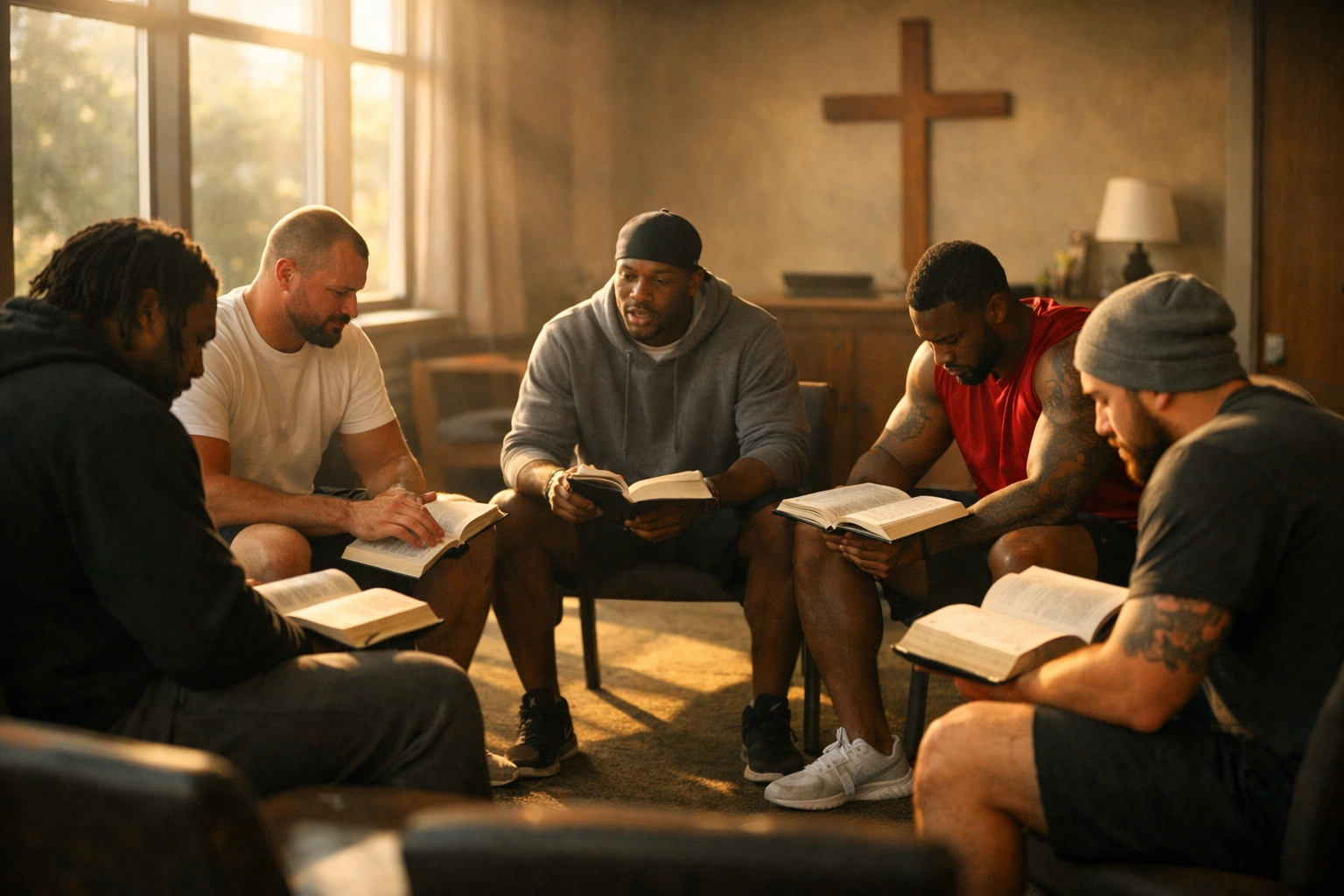
Mitchell's approach centers on what he calls "coaching life." A mentor once told him to treat his chaplain role "like you're coaching football, but you're coaching life," and Mitchell has adopted that framework. He emphasizes building relationships across the entire organization: from players and coaches to scouting staff, equipment personnel, and weight training staff. Rather than attempting to fix or change players, Mitchell states his responsibility "is to walk with them and see … what God wants to do with that particular person." He uses prayer and discernment to understand which players are "ready for the Gospel" and works to develop leaders who can minister to their teammates.
How it Happened
The integration of chaplaincy into professional sports isn't new, but Mitchell's holistic approach represents an evolution in how teams view player wellness. Professional football creates intense pressure: careers are short, injuries are common, and the spotlight is unrelenting. Players often struggle to maintain healthy identities outside their athletic performance, which can devastate family relationships when their sense of worth becomes tied exclusively to their stats and standing.

Mitchell recognized this gap and chose to prioritize spiritual formation and family health alongside the physical performance that dominates most professional sports programs. His philosophy emerged from mentorship he received about treating chaplaincy as life coaching: addressing the whole person rather than just the spiritual compartment. When Mike Vrabel moved from Tennessee to New England, he brought Mitchell along, signaling that this approach to player development had proven valuable enough to make it a priority in building the Patriots' culture.
The chaplaincy program creates multiple entry points for engagement. Not everyone is ready for one-on-one spiritual counseling, but the variety of Bible studies and relationship-building opportunities gives players and staff options to connect at whatever level feels comfortable. Mitchell deliberately extends his ministry beyond the obvious targets: the players who already attend chapel: to build genuine relationships with everyone in the building.
Where We Are Now
Players are reporting tangible improvements in their home lives and a more stable sense of identity beyond their football careers. The program's success lies in its refusal to treat players as merely athletic assets to be optimized for performance. Instead, it acknowledges that a player's effectiveness on the field often correlates with his wellness at home.

The impact extends beyond individual players to their families. When wives and girlfriends have their own support structures and Bible studies, the entire household benefits. Mitchell's "Be a blessing" motto has become more than a slogan: it's shaping how players view their role both in the locker room and at home. The visibility of this message during Super Bowl week demonstrated that the team values these principles enough to showcase them on one of sports' biggest stages.
Mitchell continues to expand his relational network throughout the organization, intentionally connecting with people who might never attend a formal Bible study. This approach recognizes that spiritual wellness can't be programmed or forced: it develops through authentic relationships built over time.
The Conversation
Supporters of this approach argue it addresses the missing piece in professional sports: caring for the person, not just the product. Athletes are human beings with families, fears, and struggles that don't disappear when they put on a uniform. When organizations invest in the whole person, everyone benefits: the player develops a healthier identity, his family experiences greater stability, and ironically, his performance often improves when he's not carrying the crushing weight of deriving all his worth from his sport.
Critics might argue that teams should "just stick to football" and leave personal development to individuals. This perspective sees explicit spiritual or family coaching as overreach: players are adults who should manage their own lives outside of work. Some might worry about religious overtones creating pressure or exclusion for players who don't share the same beliefs.
However, the results speak to the program's voluntary nature and genuine benefit. Players aren't required to participate, and Mitchell emphasizes meeting people where they are rather than forcing a particular outcome. The program's success suggests that many athletes are hungry for exactly this kind of support: they're simply not sure where to find it or whether it's acceptable to ask for help with "off-field" issues when the culture typically demands they project invincibility.
The Biblical Center
I'm Dr. Layne McDonald, and I love this story because it honors the biblical design for family. Ephesians 5 and 6 give us a clear blueprint for being husbands and fathers, and it has absolutely nothing to do with our "stats" and everything to do with our hearts.
Paul writes, "Husbands, love your wives, just as Christ loved the church and gave himself up for her" (Ephesians 5:25). That's the standard: sacrificial, consistent, Christ-like love. Not love dependent on whether we had a good day at work or whether our team won. Not love we ration out after we've given our best energy to everyone else.
Then he continues: "Fathers, do not exasperate your children; instead, bring them up in the training and instruction of the Lord" (Ephesians 6:4). Notice what's missing? Any mention of your job title, your salary, your achievements, or your public reputation. God cares about how you're shepherding the hearts entrusted to you.
When a man finds his identity in Christ rather than his career, his family wins. That's true victory. James Mitchell understands this. He's helping professional athletes: men who receive constant affirmation for their physical performance: discover that their most important work happens at home, when the cameras are off and the crowd is gone.
The Kingdom of God operates on different metrics than the world. We measure success by love, faithfulness, and character. We measure legacy by how we equipped the next generation to follow Jesus. A man can win every game, earn every accolade, and still lose at the things that matter eternally if he neglects his family.
Finding Peace
Men, take a page from this playbook. Your most important "team" is at home.
Here's your practical assignment today: Spend time intentionally investing in your spouse or your children. Not leftover time after you've given your best energy to work. Not distracted time while you scroll your phone. Focused, present, generous time.
If you're married, ask your wife one simple question: "How can I love you better this week?" Then listen without defensiveness. Write down what she says. Do it.
If you have children, create space today for unhurried conversation. Put down your devices. Get on their level: physically, if they're young. Ask questions that invite them to share their hearts, not just their schedules. Pray with them before bed. Tell them you love them and that nothing they do or fail to do will change that.
Your legacy isn't what you do for a living; it's how you love those closest to you. Years from now, your family won't remember your job title or your busiest season at work. They'll remember whether you were present. They'll remember whether you made them feel valuable. They'll remember whether your faith was real enough to shape how you treated them daily.
If you're struggling in your marriage or feeling disconnected from your kids, you're not alone. Reach out for help: find a mentor, join a men's group, or contact us at www.laynemcdonald.com to explore coaching that can help you lead your family well. The strongest thing you can do is admit you need support.
The Patriots chaplain is coaching life. You can coach life too: starting with the most important people in yours.
Source: Christian Post video coverage of James Mitchell, New England Patriots team chaplain
Sonny-Ready Caption Block:
Winning at home. 🏈 The Patriots' chaplain is helping players become better husbands and fathers. Dr. Layne McDonald explores why our identity in Christ matters more than any career success. Get inspired: www.laynemcdonald.com #Patriots #FaithAndFootball #Fatherhood #ChristianMentoring

Comments