
Creativity: Building Better Worlds: How Faith Shapes My Stories
- Dr. Layne McDonald
- Feb 7
- 5 min read

Every story needs a world to live in. Whether you're writing fantasy, science fiction, contemporary drama, or something in between, the world you create becomes the stage where your characters breathe, struggle, and grow. But here's what I've learned over years of crafting stories: the worlds we build as Christian creators are fundamentally different: not because we slap a church on every corner, but because faith changes how we see reality itself.
World-building isn't just about drawing maps or inventing languages. It's about asking deeper questions: What's true? What matters? Where does hope come from when everything falls apart? These are spiritual questions at their core, and faith gives us a framework to answer them in ways that resonate with the human soul.
What World-Building Actually Means
Let's start with the basics. World-building is the process of constructing an imaginary setting with its own rules, cultures, histories, and moral structures. In fantasy, you might create magic systems and governments. In contemporary fiction, you're building the social dynamics, family structures, and community values that surround your characters.

But world-building goes deeper than logistics. Every world reflects a worldview. The rules you establish, the consequences characters face, the way redemption works (or doesn't): all of this communicates what you believe about how reality operates.
I used to think I needed to be subtle about my faith in my stories, like sneaking vegetables into a kid's smoothie. But that's not how this works. Faith isn't an ingredient you hide: it's the foundation that determines what kind of house you can build. When you understand that, everything changes.
How Faith Shapes the Worlds We Create
Here's where it gets interesting. Faith doesn't just give us themes to explore. It actually transforms how we approach the creative process itself.
Prayer becomes part of the work. I've learned to start each writing session by asking God if this is still what He wants me doing. That might sound overly spiritual, but it keeps me grounded. It reminds me that I'm not just entertaining people: I'm creating something that could touch hearts, challenge assumptions, or plant seeds of truth.
Everyday experiences become spiritual material. That conversation at the coffee shop, the sermon that hit differently, the moment of personal failure: these all become raw material for the worlds I build. Faith trains you to see God's fingerprints everywhere, and that perspective bleeds into your storytelling.
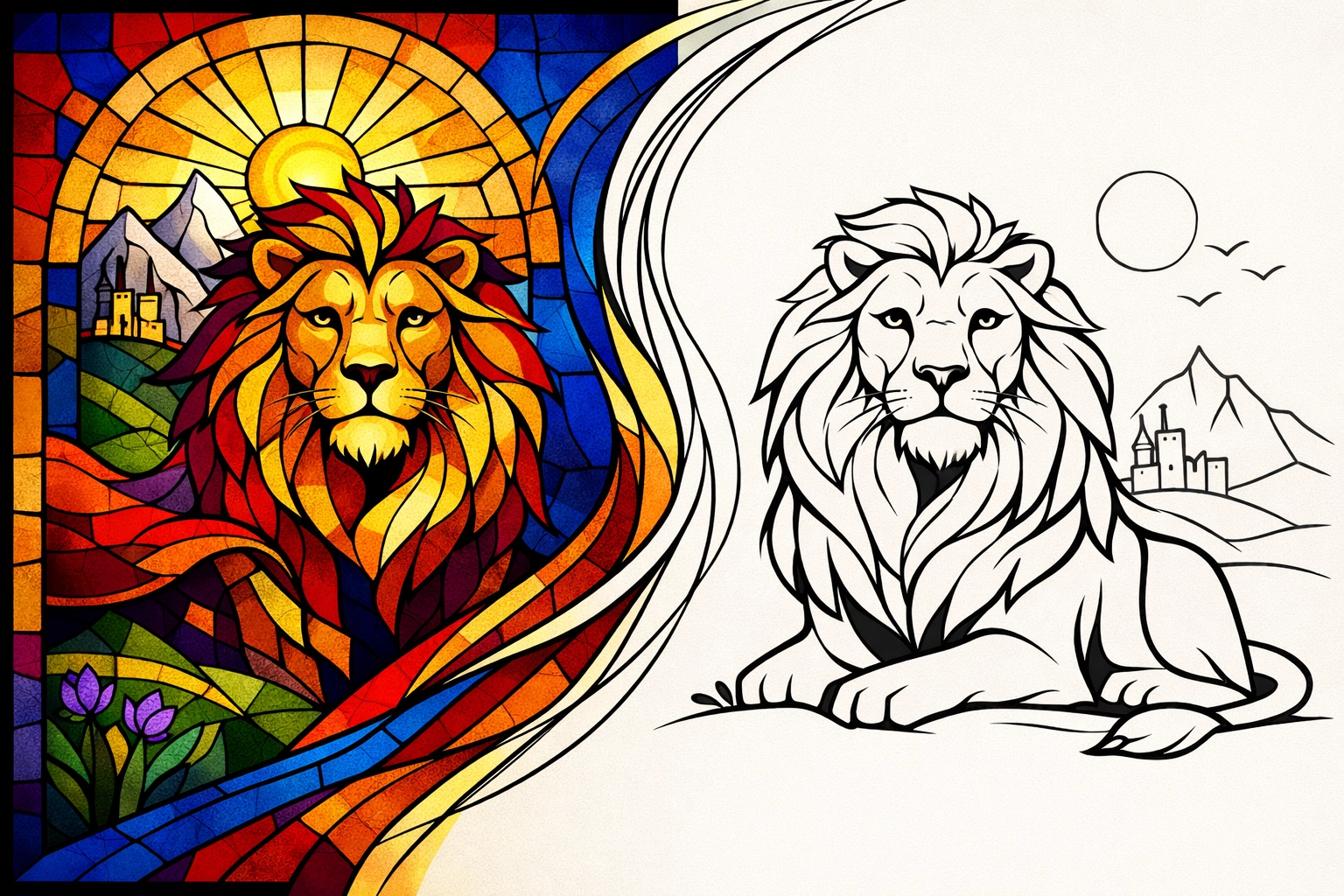
C.S. Lewis understood this brilliantly. He took theological concepts and "stripped them of their stained-glass and Sunday school associations" by transplanting them into Narnia. Suddenly, atonement wasn't a doctrine: it was Aslan on the Stone Table.
Resurrection wasn't a creed: it was the crack in the stone and the empty table at dawn.

The Two Approaches: Explicit and Implicit
There are essentially two ways to integrate faith into your world-building, and both are valid.
Explicit faith-based fiction directly incorporates religious elements: churches, prayers, miracles, theological discussions. These stories don't hide their Christian identity. They put it front and center, and there's real value in that. Readers seeking overtly Christian content know exactly what they're getting.
Implicit faith integration works differently. The Christian worldview permeates everything: the moral structure, the nature of good and evil, the possibility of redemption: but you might never see a Bible or hear Jesus mentioned. Tolkien did this masterfully in The Lord of the Rings. There's no Christianity in Middle-earth, but the entire story is soaked in Christian truth about sacrifice, grace, and the corrupting nature of power.
I tend to work in both spaces, depending on the story. The key isn't which approach you choose: it's authenticity. Readers can smell fake from a mile away. If your faith is genuine, it'll show up in your work whether you're writing about hobbits or pastors.
Building Worlds With Spiritual Architecture
So what does faith-driven world-building actually look like in practice? Here are the elements I focus on:
Moral structure that reflects reality. In a Christian worldview, actions have consequences. Sin damages. Forgiveness heals. These aren't arbitrary rules: they're reflections of how God designed the universe. So in the worlds I build, I try to honor that. Betrayal costs something. Mercy matters. Love is powerful but costly.
The existence of genuine evil (and genuine good). Modern fiction often tries to make everything grey, as if moral clarity is somehow unsophisticated. But Christianity teaches us that evil is real, and so is goodness. My worlds reflect that. Villains can have sympathetic motivations, sure: but that doesn't erase the evil of their choices.
The possibility of redemption. This is maybe the most important one. In a Christian world, no one is beyond saving. That doesn't mean everyone gets saved: free will matters: but the door is always open. Characters can change. Forgiveness is always possible. Hope persists even in darkness.
The presence of mystery. Faith teaches us that we don't have all the answers, and that's okay. God is bigger than our understanding. So in my stories, I'm comfortable leaving some questions unanswered. Not everything gets wrapped up in a tidy bow. Some mysteries remain mysterious, and that reflects the reality of living by faith.
The Impact on Readers
Here's what gets me excited: faith-shaped stories can reach people that sermons never would.
I once heard about an atheist teenager who initially dismissed Christian fiction as propaganda. Years later, during a personal crisis, she picked up those same books again. Something about the story resonated with her pain. The characters' struggles mirrored her own. And through that fictional world, she encountered truth that opened her heart to faith.
That's the power of world-building done well. You're not hitting people over the head with doctrine. You're creating a space where they can encounter spiritual truth in a way that feels natural, compelling, and real.
The formula isn't complicated: Authenticity + Conviction + Entertainment = Relevance. Your readers want genuine stories that acknowledge the mess of real life while pointing toward something true. They don't want sermons disguised as novels. They want stories that respect their intelligence and their journey.
Takeaway / Next Step
If you're a Christian creator working on any kind of fictional world, here's my challenge to you: Stop compartmentalizing your faith and your creativity. They're not separate. Your faith isn't something you add to your stories: it's the lens through which you see everything.
Start with prayer. Ask God what stories He wants you to tell. Pay attention to the spiritual truths showing up in your everyday life. Study how Scripture uses narrative to communicate truth. Read widely: both explicitly Christian fiction and stories by believers who work in the mainstream.
And remember: you're not just building worlds. You're creating spaces where readers can encounter truth, beauty, and goodness in fresh ways. That's sacred work.
If you want to dive deeper into how faith shapes creativity, or if you're working on your own projects and want to connect, reach out to me on the site at
https://www.laynemcdonald.com. Browsing the site helps raise funds for families who have lost children through Google AdSense at no cost to you. You can also check out https://boundlessonlinechurch.org for more Christian teachings and community: accessible privately or via sign-up.
Keep building. Keep creating. Keep letting your faith shape the worlds you make. The stories we need most are the ones only you can tell.
Comments