
Music: Learning to Listen: Why the Quiet Moments in Worship Matter Most
- Dr. Layne McDonald
- Feb 7
- 5 min read

We live in a culture that's terrified of silence.
Seriously, think about it. We wake up to alarms, immediately scroll through our phones, turn on podcasts during breakfast, listen to music in the car, and fill every quiet moment with something. Even in our worship services, we've become experts at creating non-stop soundscapes: powerful worship sets that flow seamlessly from one song to the next, instrumental music during prayer, and background tracks during communion.
But here's what I've been learning: the quiet moments might actually be the most important part.
Why We're Afraid of Silence in Worship
I get it. Silence feels awkward. As someone who's been involved in leading worship, I know the panic that sets in when there's dead air. We worry people will get bored, distracted, or check out mentally. So we fill every gap with music, believing we're creating an atmosphere for God to move.

And look, music is powerful. It absolutely has a place in worship. It can soften hearts, unite voices, and express what words alone can't capture. I'm not anti-music: not even close.
But somewhere along the way, we confused enhancing worship with replacing the core purpose of it. We've turned the volume up so high that we can't hear the still, small voice anymore.
The Distraction Problem
Here's the uncomfortable truth I've had to wrestle with: music can become a distraction from the very thing it's meant to facilitate.
During prayer, that instrumental track playing softly in the background? It might actually be preventing you from hearing God. Your brain is processing melodies, anticipating chord changes, and tracking the music: even if you don't realize it. That's mental bandwidth that could be spent listening.
Prayer isn't a one-way conversation. It's not just us talking at God while inspirational music swells in the background. Real prayer requires listening: focused, attentive, undistracted listening. And that's really hard to do when there's sound filling every space.
I've caught myself doing this countless times. I'll bow my head during a prayer moment at church, and instead of actually praying, I'm critiquing the chord progression or anticipating when the music will build. I'm not worshiping. I'm just... listening to music.
What Scripture and Silence Teach Us
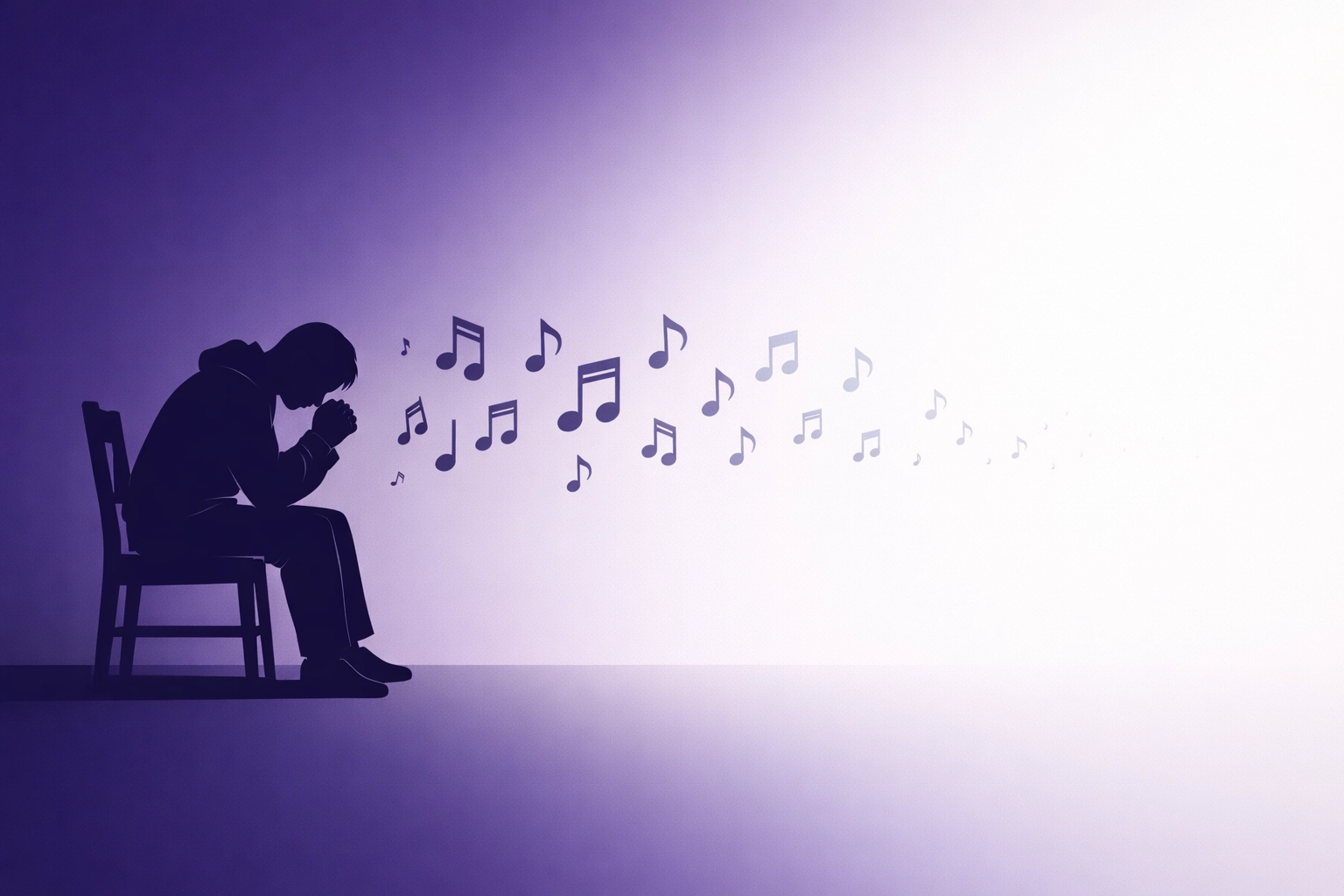
Throughout Scripture, God shows up in the quiet moments more often than the loud ones.
Elijah didn't encounter God in the earthquake, wind, or fire: he heard Him in "a still small voice" (1 Kings 19:12). The Psalmist writes, "Be still, and know that I am God" (Psalm 46:10). Jesus regularly withdrew to quiet places to pray.
There's a pattern here. God's voice comes quietly, and it requires space to hear it.
When every moment of our worship is filled with sound: even beautiful, well-intentioned sound: we're essentially holding up a "Do Not Disturb" sign to the Holy Spirit. We've scheduled out all the time He might want to speak.
Think about it this way: if you called a friend and talked non-stop for 30 minutes without letting them get a word in, would that really be a conversation? That's what we're doing when we eliminate silence from our worship.
The Practical Benefits I've Discovered
Since I started intentionally building quiet moments into my personal worship time, I've noticed some significant changes:
1. I actually hear things. Not audible voices, but impressions, convictions, comfort, guidance. Those nudges from the Spirit that I was missing when I kept the music playing constantly.
2. I process better. Silence gives my heart and mind time to absorb what I've just sung, read, or heard. The truth sinks deeper when I'm not immediately moving on to the next thing.

3. I'm more present. Instead of performing worship or going through motions, I'm actually there: connecting with God in real time, not just following a playlist.
4. I recognize my own heart. In the quiet, I can't hide behind the emotional high of a powerful song. I have to sit with whatever's really going on inside me, which is uncomfortable but necessary for genuine growth.
How to Embrace Silence Without Feeling Awkward
If you're used to non-stop sound, silence will feel weird at first. Here's what's helped me:
Start small. You don't have to sit in complete silence for an hour. Try 30 seconds after a song. One minute after reading Scripture. Build up gradually.
Expect discomfort. Your brain will try to fill the silence with to-do lists, random thoughts, or anxiety. That's normal. Gently redirect your attention back to God. It gets easier with practice.
Use silence intentionally. Don't just awkwardly let music stop: create purposeful quiet moments. After singing a song about God's faithfulness, pause to let Him remind you of specific ways He's been faithful to you.
Don't fear "dead air." If you're leading worship, trust that people can handle a few moments of silence. You might be surprised how many people desperately need it.

Pair silence with simple focus. Sometimes it helps to have a simple phrase or breath prayer to return to when your mind wanders. "Here I am" or "Speak, Lord" can anchor you without filling the space with noise.
It's Not About Perfection
Look, I still love worship music. I still use it regularly in my personal time with God. But I've learned that the goal isn't to create the perfect worship playlist: it's to create space to actually encounter God.
Sometimes that means turning everything off and sitting in complete silence. Sometimes it means singing one song and then stopping to reflect. Sometimes it means praying with no background track at all.
The point isn't to make worship more ascetic or to prove how spiritual you are by avoiding music. The point is simply this: if we never stop making noise, we'll never hear what God is trying to say.
Takeaway / Next Step
This week, try this experiment: Set aside 10 minutes for worship with zero music. No instrumental tracks, no worship songs, nothing. Just you, God, and silence.
Pray. Listen. Sit. Notice what comes up. Don't try to force anything or manufacture some profound experience. Just be present and see what happens when you remove the soundtrack.
You might be surprised at what you hear when you finally give God some quiet sp
ace to speak.

If you want to explore more about developing a deeper worship life or need guidance on your spiritual journey, reach out to me on the site. I share practical content on faith, music, creativity, and living like Jesus at laynemcdonald.com: and every visit helps raise funds for families who've lost children through AdSense at no cost to you. You can also connect with a community focused on authentic Christian teaching at Boundless Online Church, where you can access content privately or through sign-up.
Remember: God isn't afraid of silence. Maybe it's time we stop being afraid of it too.
Comments