
Does Your Church Feel Like Family? The Ultimate Guide to Creating True Christian Community
- Dr. Layne McDonald
- Jan 27
- 6 min read

Sunday morning rolls around, and you show up to church with the same routine: find your seat, smile politely at familiar faces, sing along, listen to the sermon, and head home. Sound familiar? If church feels more like a weekly event than a family gathering, you're not alone. Many believers find themselves longing for deeper connection but aren't quite sure how to move from Sunday acquaintance to genuine Christian community.
The good news? True Christian community isn't just a nice-to-have: it's exactly what God designed for His people. And creating that family feeling doesn't require a complete church overhaul or waiting for leadership to make the first move. It starts with understanding what real community looks like and taking simple, intentional steps to build it.
What Makes Church Feel Like Family?
Real Christian community goes way beyond showing up in the same building once a week. It's built on four foundational practices that the early church mastered: devoted teaching, authentic fellowship, sharing meals together, and committed prayer. These aren't just church activities: they're the building blocks of intimate, meaningful relationships that transform a group of individuals into a spiritual family.
At its heart, family-like community is marked by unity of mind and heart. This doesn't mean everyone thinks exactly alike (thank goodness for that!), but rather that members share a common purpose in Christ that's bigger than personal preferences or differences. It's a place where grace flows freely, where mistakes are met with forgiveness, and where people feel genuinely known and loved for who they are.

The secret ingredient? Vulnerability. You can't build authentic community if everyone's wearing masks and playing the "I've got it all together" game. True family happens when people feel safe enough to share their real struggles, celebrate genuine victories, and ask for help when they need it. It's messy, it's beautiful, and it's exactly what the body of Christ is supposed to look like.
The Power of Proximity and Consistency
One of the biggest challenges to building church community in today's world is our scattered, busy lifestyles. We live in different neighborhoods, work different schedules, and often struggle to find time for meaningful connection beyond Sunday morning. But here's where intentionality makes all the difference.
Proximity doesn't necessarily mean living on the same street (though that's pretty amazing when it happens). It means making deliberate choices to "do life together": whether that's grabbing coffee regularly, texting throughout the week, or simply being present and available when someone needs support.
Consistency is what transforms casual friendship into family bonds. It's showing up week after week, being reliable, and creating rhythms that allow relationships to deepen over time. Think about your closest friendships: they didn't develop overnight, did they? They grew through consistent investment, shared experiences, and mutual commitment.
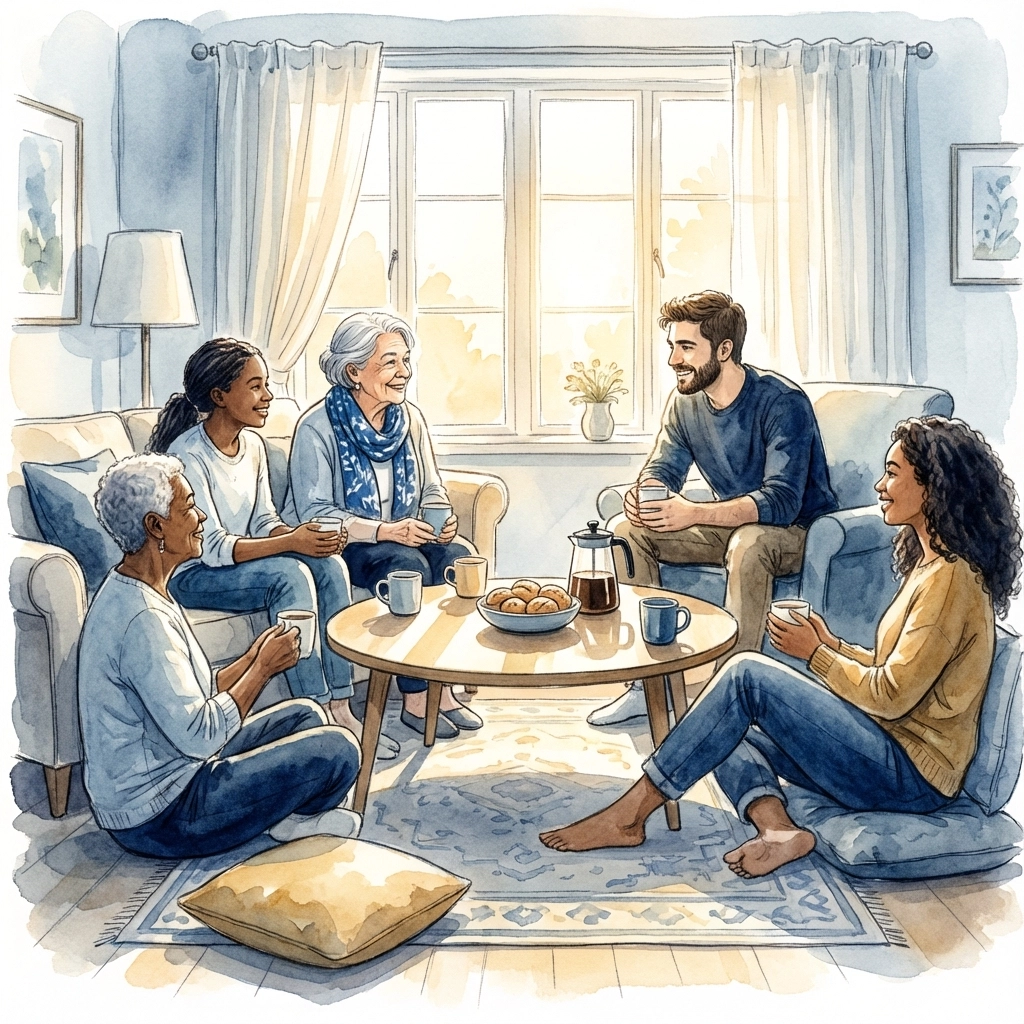
This consistency becomes the training ground for learning how to love well. When you're committed to working through disagreements, supporting each other through tough seasons, and celebrating together during good times, you're not just building friendships: you're practicing the kind of enduring love that reflects God's heart.
Small Groups: Where Community Really Happens
While Sunday worship brings the whole church family together, real community often flourishes in smaller, more intimate settings. Small groups provide the perfect environment for people to connect on a deeper level, share scripture meaningfully, and experience the kind of authentic fellowship that's hard to achieve in larger gatherings.
The beauty of small groups is that they create space for everyone to participate. In a group of eight to twelve people, there's room for the quiet person to share their thoughts, the struggling person to ask for prayer, and the experienced believer to offer wisdom and encouragement. It's where Sunday's sermon gets processed, where questions get asked, and where faith becomes personal and practical.
Don't wait for the perfect small group to appear: sometimes the best communities start with just two or three people committed to meeting regularly. Whether it's a Bible study, a book club, a service project group, or simply friends who commit to checking in with each other weekly, small beginnings often lead to transformational community.
Taking Personal Initiative
Want to know the fastest way to experience community? Stop waiting for it to happen to you and start creating it for others. Some of the most connected people in churches aren't the naturally outgoing ones: they're the ones who've learned to take simple, intentional steps to build relationships.
Open your home. There's something magical about sharing a meal in someone's living room that just doesn't happen in church hallways. It doesn't have to be fancy: pizza and paper plates work just fine. The goal is creating a relaxed environment where people can really talk and get to know each other.
Be a connector. Pay attention to the people around you. When you notice someone new, introduce them to others. When you see two people who share common interests, make the connection. Sometimes the greatest gift you can give someone is helping them find their tribe within the larger church family.
Listen well. Ask thoughtful questions and genuinely listen to the answers. Put away your phone, make eye contact, and show people that their stories matter. Some of the deepest friendships start with one person who really cares enough to ask "How are you doing?" and actually wait for a real answer.
Initiate prayer. When someone shares a struggle or concern, don't just say "I'll pray for you" (though that's good too). Ask if you can pray with them right then and there. There's something powerful about praying together that instantly deepens connection and shows genuine care.
Building Community Structure
While individual initiative is crucial, sustainable community also benefits from intentional structure. This might mean starting a regular Bible study group, organizing monthly service projects, or creating opportunities for fun activities that help people connect in relaxed settings.
The key is variety. Some people connect best over deep theological discussions, others through serving together, and still others through shared hobbies or interests. A healthy church community provides multiple entry points for relationship-building.
Consider rotating hosting duties for gatherings, so the burden doesn't fall on one person. Plan activities that include different age groups and life stages. Create opportunities for both vulnerability and fun: maybe a serious prayer meeting one week and a game night the next.
Engaging Authentically
True community requires moving beyond surface-level interactions to authentic engagement. This means being genuinely interested in others' growth and well-being, not just using relationships to meet your own needs.
Authentic community is rooted in shared devotion to God's Word. When a group commits to studying scripture together, applying biblical truth to real-life situations, and encouraging each other's spiritual growth, relationships deepen naturally. The Bible becomes the common ground that unites different personalities and backgrounds.

It also means being present with others consistently: not just during church services, but in homes, coffee shops, and everyday life. Hospitality becomes a way of life, not just something you do occasionally when you feel like it.
Making It Happen
If your church doesn't currently feel like family, don't lose hope. Every strong community started with someone who was willing to take the first step. Maybe that someone is you.
Start small. Invite one or two people to meet regularly for coffee, a meal, or to discuss a passage of scripture. Pray for God to bring like-minded people into your life who share your desire for deeper community. Be patient: real relationships take time to develop.
Look for natural connection points. Do you have kids the same age as other families? Are you all navigating similar life stages? Do you share common interests or passions? These can become the foundation for relationships that grow into spiritual family.
Remember that building community is ultimately about serving others, not just getting your own needs met. When you focus on creating the kind of environment where others can thrive and feel loved, you'll often find that your own need for belonging gets met in the process.
The truth is, God designed us for community. We're not meant to walk through life: or faith: alone. When church truly feels like family, it becomes a glimpse of heaven on earth, where people are known, loved, and supported through every season of life.
So take that first step. Open your home, start that conversation, send that text, or organize that gathering. Your church family is waiting: it just might need someone like you to help bring it together.
Ready to build deeper connections in your faith community? Start by visiting our church community resources and discover practical ways to grow in Christian fellowship and leadership.
Comments