Finding a Place to Belong: Understanding the Journey of the ‘Exvangelical’ Shift
- Layne McDonald
- Mar 15
- 5 min read

The Landscape of Change: Defining the Exvangelical Movement
In recent years, a significant demographic shift has surfaced within American Christianity. Known widely as the "Exvangelical" movement, it describes a growing population of individuals who have chosen to distance themselves from evangelicalism. This transition is not a monolithic departure from faith; rather, it is a nuanced movement where participants often remain within the Christian tradition but seek different expressions of it.
Data from the Pew Research Center and insights reported by PBS News suggest that the religious landscape is becoming increasingly fluid. The term "Exvangelical" gained significant cultural momentum around 2016, becoming a catch-all for those deconstructing their upbringing or previous church experiences. While some individuals move toward a secular worldview, a substantial number are migrating toward "mainline" Protestant denominations: such as the Episcopal, Presbyterian (PCUSA), or Lutheran (ELCA) churches: which are often perceived as offering different liturgical or social environments.
This shift is characterized by "deconstruction," a process where believers examine the foundations of their faith, often stripping away cultural or political layers to find what they consider the core of the Gospel. For many, this journey is not about losing God, but about finding a version of faith that feels more authentic to their current reality.
The Drivers: Liturgy, Inclusivity, and Political Disillusionment
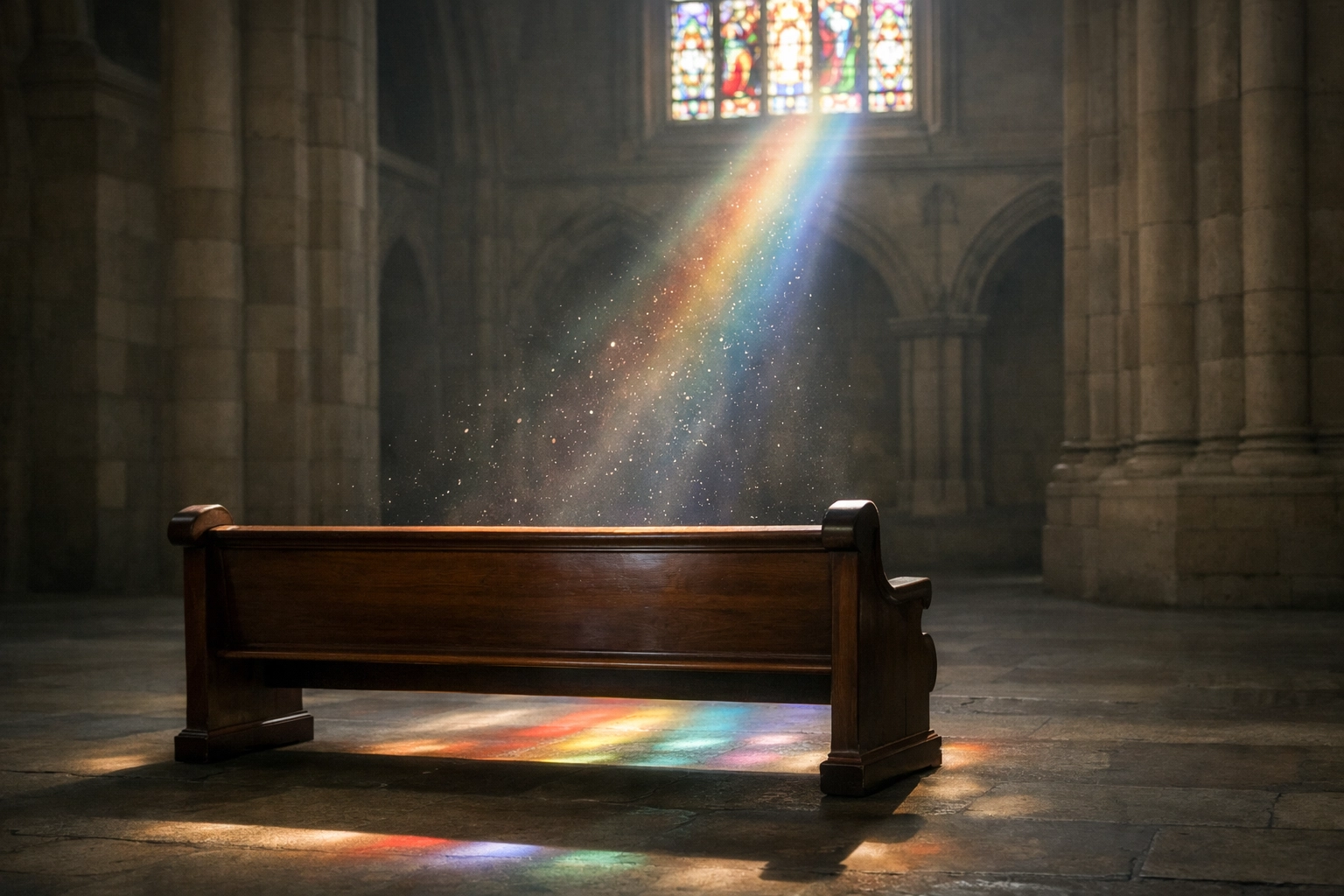
Reporting from Christian Century and other religious news agencies identifies several primary drivers behind this migration. First among these is a renewed interest in historical liturgy. Many individuals leaving evangelical circles cite a desire for "roots": ancient practices, traditional hymns, and the rhythmic cycle of the liturgical calendar. In an increasingly digital and fast-paced world, the quiet solemnity of a high-church service offers a sense of stability that modern, concert-style worship sometimes lacks for certain seekers.
Second, social and political factors play a dominant role. The evangelical label, in many regions, has become inextricably linked with specific political ideologies. For those whose personal convictions on social justice, environmental care, or political engagement do not align with the prevailing evangelical consensus, the label can feel like a burden. This "political disillusionment" often prompts a search for a spiritual home where faith is decoupled from partisan identity.
Finally, the movement is driven by a search for inclusivity and a safe space to process "religious trauma." Research suggests that many exvangelicals have experienced spiritual abuse or environments where doubt was discouraged. These individuals often seek communities that prioritize grace over legalism and offer a "judgment-free" zone for theological questioning.

A Pentecostal Perspective: The Unchanging Christ in a Changing Culture
As we look at these shifts through the lens of our Assemblies of God (AG) heritage, we approach the conversation with a commitment to the unity of the Body of Christ. The Pentecostal tradition has always been one of movement: the movement of the Holy Spirit. We believe that the Spirit is active in the lives of all people, leading them toward truth, healing, and a deeper relationship with Jesus.
In the midst of deconstruction and denominational shifting, we must anchor ourselves in the character of God. The Scripture in Hebrews 13:8 reminds us: "Jesus Christ is the same yesterday and today and forever." While church structures, cultural labels, and political climates fluctuate, the person of Jesus remains the constant North Star. For the person feeling lost in transition, this is a vital truth. Your "where" might be changing, but your "Who" never does.
Our Pentecostal values emphasize the "Baptism in the Holy Spirit," which we believe is an empowering experience meant to bring clarity and strength. In seasons of doubt, the Holy Spirit acts as the Comforter and the Guide. We view the Exvangelical shift not as a threat to the Church, but as a call for the Church to return to the core of the Gospel: salvation, divine healing, and the hope of the Second Coming. If people are leaving modern evangelicalism in search of "something more," perhaps they are actually searching for the raw, unadulterated power of the Spirit that transcends human labels.

Finding Peace in the Transition: A Path Forward
The journey of deconstruction is often painful and lonely. It involves grieving the loss of community, the dismantling of long-held certainties, and the fear of the unknown. However, we believe that God is a restorer. Psalm 100:5 declares, "For the Lord is good and his love endures forever; his faithfulness continues through all generations." This faithfulness is not limited to a specific denomination or a specific style of worship.
If you find yourself in a season of transition: perhaps no longer comfortable with the label you once wore, but not yet sure where you land: there are practical steps to maintain your peace. First, prioritize your personal relationship with the Word of God over the commentary of the world. Second, seek a community that values your questions. Unity does not require uniformity; the Body of Christ is made of many parts.
We must also be a "unity-bringing" people. Instead of meeting those in transition with contempt or fear, we should meet them with the same grace we ourselves have received. The goal is not to win an argument about which denomination is "right," but to ensure that every person has a place to belong where they can encounter the life-transforming power of Jesus.

A Response of Grace and Mercy
The "Exvangelical" shift is a mirror held up to the modern Church. It asks us if we are prioritizing our traditions over our people, and our politics over our Shepherd. For those currently walking this path, remember that your value is not found in your church attendance or your theological label. Your value is found in the fact that you are a child of God, sought after by a Savior who leaves the ninety-nine to find the one.
Let us move forward with a heart of mercy. If someone's journey leads them away from our specific pews and into another part of the Vineyard, we trust that the Lord who began a good work in them will be faithful to complete it. Our task is to keep the doors of our hearts open, our prayers fervent, and our focus fixed on the mission of reaching a broken world with the news of a God who heals and redeems.

An Invitation to Connection
If you’re in a season of transition, remember that Jesus is the same yesterday, today, and forever. You don't have to have all the answers today. Faith is a journey, and even the most difficult seasons of questioning can lead to a more profound, more resilient relationship with the Father.
We invite you to stay engaged with the stories that matter and to find a community that values truth without cruelty. You can explore more of our coverage on faith, culture, and the changing landscape of our world by visiting our News and Politics category hub.
Need prayers? Text us day or night at 1-901-213-7341. Whether you are searching for a new home or simply need someone to stand in the gap with you, we are here to listen and to pray.
Source: PBS News, Christian Century, Pew Research Center.

$50
Product Title
Product Details goes here with the simple product description and more information can be seen by clicking the see more button. Product Details goes here with the simple product description and more information can be seen by clicking the see more button

$50
Product Title
Product Details goes here with the simple product description and more information can be seen by clicking the see more button. Product Details goes here with the simple product description and more information can be seen by clicking the see more button.
$50
Product Title
Product Details goes here with the simple product description and more information can be seen by clicking the see more button. Product Details goes here with the simple product description and more information can be seen by clicking the see more button.
Comments