Gazing Upward: Artemis II Prepares for a New Journey to the Heavens
- Layne McDonald
- Mar 20
- 6 min read

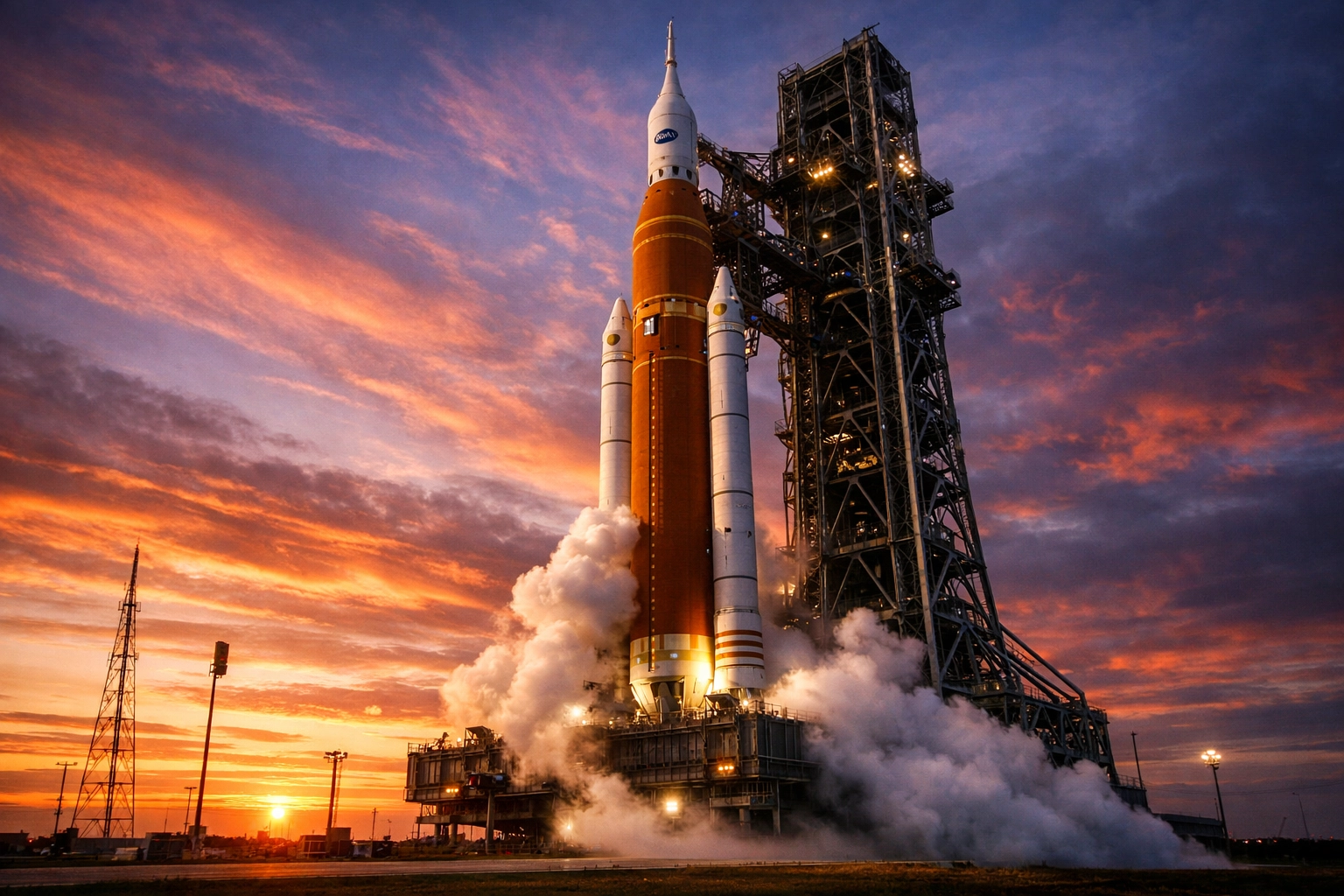
There is something about a rocket sitting on a launch pad that stops us in our tracks. It represents years of human labor, billions of dollars in investment, and the collective courage of a nation. Today, as we look toward the horizon at the Kennedy Space Center, that familiar silhouette is back. NASA’s Artemis II rocket is making its final trek to the pad for its historic mission scheduled for April.
At The McReport, we believe in looking at the world with eyes wide open: acknowledging the facts of our progress while never losing sight of the One who created the stars in the first place. Whether you are a space enthusiast or someone who rarely looks up from your phone, this mission matters. It is a moment of transition for humanity and a reminder of the vastness that lies just beyond our atmosphere.
The Facts: Moving Toward the Moon
NASA has confirmed that the Space Launch System (SLS) rocket and the Orion spacecraft have completed their necessary repairs and are returning to the launch pad. After months of troubleshooting technical issues: specifically related to the spacecraft’s heat shield and internal electronics: engineers have given the "green light" for the next phase of the mission.
The Artemis II mission is currently scheduled to launch no earlier than April 1, 2026. This is not just another test flight; it is the first time in over 50 years that human beings will travel to the vicinity of the Moon. While the Artemis I mission in 2022 successfully sent an uncrewed capsule around the lunar surface, Artemis II carries the most precious cargo possible: four human lives.
The crew consists of Commander Reid Wiseman, Pilot Victor Glover, and Mission Specialists Christina Koch and Jeremy Hansen. Each brings a wealth of experience, but they also represent several historic milestones. This crew includes the first woman, the first person of color, and the first Canadian to venture beyond low Earth orbit.
The mission itself is a 10-day journey. The SLS rocket will propel the Orion capsule into a high Earth orbit before performing a "Trans-Lunar Injection" to head toward the Moon. The crew will travel approximately 6,400 miles beyond the far side of the Moon. At that distance, they will be farther from Earth than any human has traveled since the Apollo 13 mission in 1970.
Technical objectives for this mission are rigorous. NASA is testing the Orion’s life-support and environmental systems to ensure humans can survive deep-space radiation and the vacuum of space for extended periods. They will also practice manual piloting and proximity operations to prepare for future dockings. Perhaps the most harrowing moment will be the return: the capsule must survive a high-speed reentry into Earth’s atmosphere at approximately 25,000 miles per hour, creating temperatures that test the limits of modern materials science.
Beyond the hardware, the crew will also conduct scientific research. One project, known as AVATAR (A Virtual Astronaut Tissue Analog Response), uses organ-on-chip technology to study how radiation and microgravity affect human health at a cellular level. These findings are essential if NASA is to meet its goal of landing humans on the lunar south pole during the Artemis III mission, currently planned for 2028.
The Balanced Viewpoints: Risk vs. Discovery
Whenever we discuss space exploration, two distinct viewpoints often emerge. It is important to hold both in balance as we watch the countdown clock.
On one hand, there is the reality of risk and stewardship. Critics often point to the immense cost of these missions: billions of taxpayer dollars: and wonder if those resources would be better spent solving problems on Earth. There is also the physical risk to the astronauts. Space is an unforgiving environment. A single mechanical failure or an unexpected solar flare can turn a mission of discovery into a tragedy. From this perspective, the drive to reach the Moon can seem like an expensive distraction from the tangible needs of our neighbors.
On the other hand, there is the innate human drive to understand the universe. Since the beginning of time, mankind has looked at the stars and wondered. Exploration often leads to technological breakthroughs that improve life on Earth: from medical imaging to water purification systems. More than that, exploration provides a sense of unity and purpose. It reminds us that we are part of something much larger than our daily grievances and political divisions. From this viewpoint, the risk is a necessary price for the growth of human knowledge and the fulfillment of our role as observers of the cosmos.

The Biblical Lens: The Heavens Declare
As we process these facts and viewpoints through our faith as believers, specifically through the lens of the Assemblies of God tradition, we find a deeper resonance. We believe that God is the Creator of all things, and that human curiosity is a gift He placed within us.
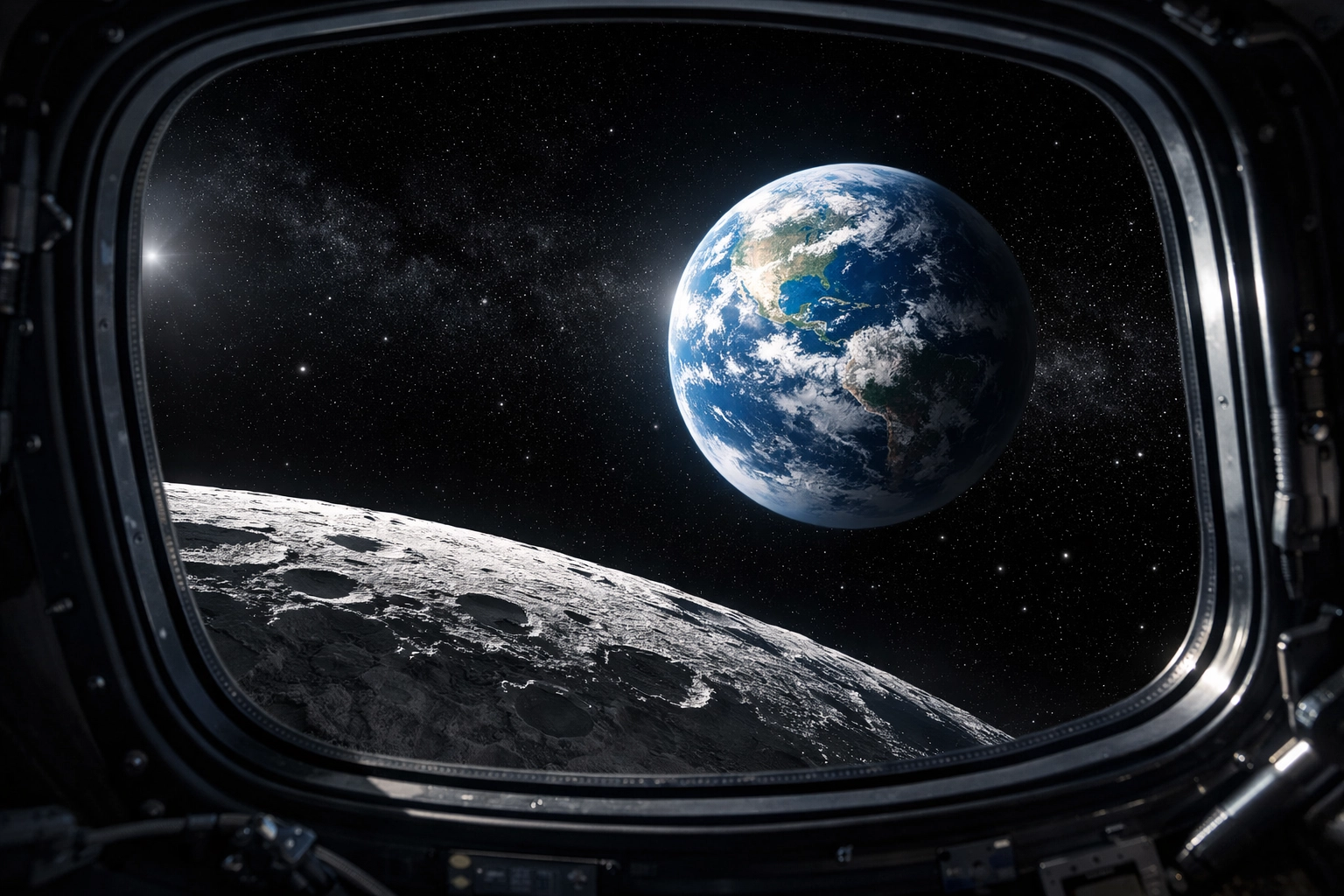
Psalm 19:1 tells us clearly: "The heavens declare the glory of God; the skies proclaim the work of his hands." When we see the high-resolution images of the lunar surface or the "blue marble" of Earth from a distance, we aren't just seeing physics in action. We are seeing the craftsmanship of the Almighty. The more we learn about the precise laws that govern the universe, the more we see the thumbprint of a Designer who is both powerful and orderly.
We also find a humbling perspective in the book of Job. In Job 38:31-33, God questions Job, saying: "Can you bind the chains of the Pleiades? Can you loosen Orion’s belt? Can you bring forth the constellations in their seasons or lead out the Bear with its cubs? Do you know the laws of the heavens? Can you set up God’s dominion over the earth?"
These verses remind us that while we are capable of building incredible machines like the SLS rocket, we are still operating within the laws that God established. We are not "conquering" space; we are merely visiting a small corner of our Father’s house. Our ability to navigate by the stars and calculate orbital mechanics is only possible because God is a God of order and consistency.
Finally, we look at Psalm 8:3-4, which provides the perfect balance of wonder and humility: "When I consider your heavens, the work of your fingers, the moon and the stars, which you have set in place, what is mankind that you are mindful of them, human beings that you care for them?"
As the Artemis II crew looks out their window at the vastness of the void, they will likely feel very small. Yet, the core of our faith tells us that the same God who set the galaxies in motion is the same God who knows the number of hairs on our heads. He is mindful of us. Our journey into space doesn't make us greater; it makes His grace seem even more amazing.
The Response: A Calm Next Step
As the rocket waits on the pad and the world prepares for the April launch, what is our role? At The McReport, we always aim to move from information to a practical, peaceful response.
First, let us pray for the safety of the astronauts. Reid, Victor, Christina, and Jeremy are husbands, wives, parents, and friends. They are stepping into a place of great danger for the sake of discovery. We pray for the protection of the Orion spacecraft, the integrity of the heat shield, and the precision of the recovery teams in the Pacific Ocean.
Second, let us pray for the wisdom of the scientists and engineers. Thousands of people have worked on this project. We pray that God would give them clarity of mind to catch any potential issues before they arise and the wisdom to make the right calls under pressure.
Finally, let us use this mission as an opportunity to recalibrate our own hearts. In a world that often feels chaotic and small, let the "heavens declaring God's glory" remind you that there is a bigger story unfolding. The God who sustains the planets in their orbits is more than capable of sustaining you in your daily walk.
Invite
We hope this update brings a sense of peace and wonder to your day. As we watch the Artemis II mission unfold, we invite you to stay connected with a community that seeks truth and hope in every headline.
If you want to keep up with more stories like this: grounded in facts and filtered through a biblical perspective: we invite you to explore our News and Politics category on our website. You can find more deep dives and daily briefings here: https://www.laynemcdonald.com/blog/categories/news-and-politics.
Need prayers? Text us day or night at 1-901-213-7341. We are here to stand with you, whether you’re looking at the Moon or just trying to get through the day.
Source: AP, NASA, Space.com

$50
Product Title
Product Details goes here with the simple product description and more information can be seen by clicking the see more button. Product Details goes here with the simple product description and more information can be seen by clicking the see more button

$50
Product Title
Product Details goes here with the simple product description and more information can be seen by clicking the see more button. Product Details goes here with the simple product description and more information can be seen by clicking the see more button.
$50
Product Title
Product Details goes here with the simple product description and more information can be seen by clicking the see more button. Product Details goes here with the simple product description and more information can be seen by clicking the see more button.
Comments