How to Start Your Day Informed Without the Morning Anxiety: 5 AM News That Centers You
- Dr. Layne McDonald
- Feb 17
- 6 min read

Why Your Morning News Habit Might Be Stealing Your Peace
You wake up. Before your feet hit the floor, your hand reaches for your phone. Notifications flood in, breaking news alerts, conflict updates, crisis headlines. Your heart rate spikes. Your shoulders tense. You haven't even had coffee yet, and you're already carrying the weight of the world.
Sound familiar?
Research shows that consuming news immediately upon waking increases stress hormone production and disrupts the calm mental state your body needs to start the day well. The 24/7 news cycle isn't just informing us, it's dysregulating our nervous systems before we've had a chance to center ourselves.
But here's the good news: you don't have to choose between staying informed and protecting your peace. You just need a different approach.
The secret? Take 30-60 minutes for grounding practices before you consume news. Hydrate. Move your body. Pray. Let your cortisol levels settle. Then, when you're centered and ready, engage with the news from a place of strength rather than reactivity.
This morning brief is designed to be that centered entry point, five stories that matter, told without the anxiety spiral, grounded in Scripture, and focused on what actually helps: truth, context, and hope.

1. The Gaza Reconstruction Debate: Pledges, Peacekeeping, and Power Questions
"If possible, so far as it depends on you, live peaceably with all." (Romans 12:18)
What's happening: Multiple international parties are proposing frameworks for Gaza's post-war rebuilding, including multi-billion-dollar pledges and discussion of an international oversight structure (sometimes described as a "peace board"). Some proposals mention possible involvement of international troops, including references to Indonesia, for stabilization or peacekeeping purposes.
Why it matters: Reconstruction isn't just about concrete and steel. It's about power, security, borders, and trust. Who governs? Who secures? How is aid administered transparently? How are civilians protected while preventing weapons diversion? These are the hard questions every past reconstruction effort has collided with.
Where things stand: These ideas are in the proposal phase, not settled agreements. Key stakeholders are weighing complex tradeoffs between security guarantees and sovereignty concerns, speed of rebuilding versus safeguards against corruption, and international oversight versus local self-governance.
The tension: Supporters argue that credible reconstruction needs accountability and anti-corruption controls. Critics worry that international "boards" become bureaucratic or politically captured, and that any foreign troop presence can feel like occupation, fueling resentment rather than stability.
Biblical clarity: Scripture calls us to be peacemakers without pretending evil isn't real. Peace is courageous, truthful repair, not denial. A reconstruction plan that protects civilians, rejects vengeance, and insists on honesty gets closer to God's heart than solutions built on propaganda or exploitation.
Your response: Pray for civilians caught in the middle, for leaders to choose restraint over retaliation, and for workable pathways that protect human dignity.
2. Pope Leo XIV's Lenten Challenge: "Disarm Your Language"
"Let no corrupting talk come out of your mouths, but only such as is good for building up." (Ephesians 4:29)
What's happening: Pope Leo XIV released a Lenten message urging people to "disarm" their words, reducing verbal aggression, contempt, and dehumanizing speech. The focus is pastoral: repentance, humility, and a return to speech that heals rather than harms.
Why it matters: In a culture that has normalized cruelty, the Pope's theme connects spiritual formation to daily communication habits. What we say shapes what we love, what we fear, and how we treat our neighbor.
The tension: Some see this as a needed call to personal holiness and charity. Others worry it could pressure people into silence on moral issues. The concern: calls for gentler speech can be misused to label truth-telling as "harmful."
Biblical clarity: Jesus is "full of grace and truth" (John 1:14). That pairing matters. Biblical speech standards aren't "be nice at all costs", they're: no malice, no slander, no contempt. Truth delivered with love, for the goal of restoration (Ephesians 4:15).
Your response: Try a Lenten practice this week. Before you speak or post, ask: Is this true? Is it necessary? Is it loving? Will it build up?

3. The Munich Security Message: A Call for Western Unity and Clarity
"If any of you lacks wisdom, let him ask God… and it will be given." (James 1:5)
What's happening: At the Munich Security Conference, U.S. Senator Marco Rubio delivered remarks emphasizing Western civilizational confidence, allied unity, and concern about internal fragmentation and external threats. The speech is being interpreted as both a cultural argument (identity, values) and a strategic one (security, alliances, deterrence).
Why it matters: Western nations are navigating simultaneous pressures, war in Europe, cyber threats, energy concerns, migration debates, domestic polarization. The question beneath the speech: What exactly is "the West" defending? Shared democratic norms? Judeo-Christian heritage? National sovereignty? A rules-based international order?
The tension: Those who resonate say deterrence requires coherent identity and moral confidence, that cultural confusion weakens public resolve. Those who push back say "civilization" language can blur into exclusion or nostalgia that ignores past wrongs, and that security policy needs practical coordination more than philosophical framing.
Biblical clarity: Christians can appreciate calls for wisdom, restraint, and unity without baptizing any political bloc as "the Kingdom." Our deepest identity is in Christ (Philippians 3:20). That frees us to seek the good of our neighbors, pursue justice, and refuse scapegoating, while still taking real threats seriously.
Your response: Pray for leaders to pursue wise defense without pride, and strong alliances without contempt for outsiders. Ask God for discernment beyond slogans.
4. Faith Leaders Push for Diplomacy as Iran Tensions Rise
"Blessed are the peacemakers, for they shall be called sons of God." (Matthew 5:9)
What's happening: A coalition of faith leaders has organized publicly to urge de-escalation amid rising tensions involving Iran. Their stated goal: encourage a diplomatic "buffer", more dialogue, fewer provocations, protection of civilian life.
Why it matters: Regional tensions involving Iran, Israel, U.S. interests, and proxy groups remain elevated. In periods of escalation, faith leaders sometimes step in to advocate for ceasefire pathways, humanitarian access, and diplomatic off-ramps.
Where things stand: This appears to be advocacy aimed at influencing public tone and policy choices, rather than formal negotiation. The challenge: diplomacy can be slow, and hardliners on all sides often interpret restraint as weakness.
The tension: Supporters say every step away from war reduces civilian catastrophe risk, and moral voices can lower the temperature. Critics say some regimes exploit diplomacy to stall while advancing strategic goals, and that "buffer" language can sound naïve without credible deterrence.
Biblical clarity: Peacemaking is active, not passive. It includes truth, accountability, and protection of the vulnerable. Scripture warns against trusting in mere human power (Psalm 20:7), that doesn't mean ignoring security realities; it means refusing fear-driven reactions and refusing to dehumanize enemies.
Your response: Pray for diplomats to find an off-ramp that saves lives, and for faith leaders to speak with courage, humility, and clarity.
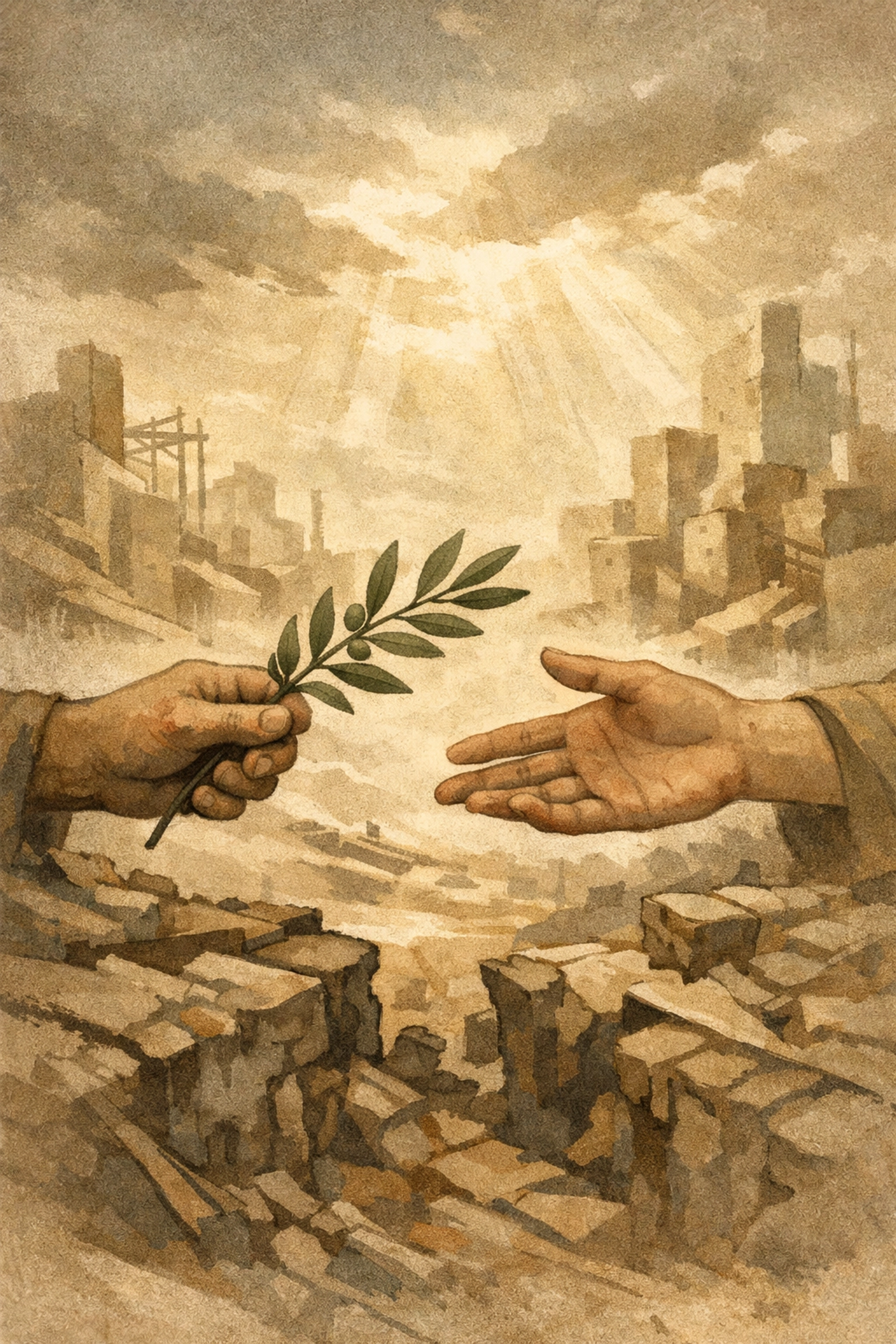
5. The Monks' Walk for Peace Ends at Washington National Cathedral
"So then let us pursue what makes for peace and for mutual upbuilding." (Romans 14:19)
What's happening: A group of monks concluded a public walk for peace at Washington National Cathedral. The event was framed as a spiritual witness, prayer, presence, and a call to nonviolence and reconciliation.
Why it matters: Public faith actions like pilgrimages are embodied prayer, physical reminders that despair doesn't get the final word. The broader impact depends on what follows: continued prayer, practical service, and whether the message is received as genuine rather than performative.
The tension: Supporters say symbolic acts soften hearts and spark real service. Skeptics say they may not change policies or reduce violence, and worry high-profile religious events can be co-opted by media narratives.
Biblical clarity: God honors sincere pursuit of peace, especially when it leads to tangible love of neighbor (Isaiah 58:6–10). The Church's witness is strongest when prayer and action stay together: compassion without spectacle, conviction without contempt.
Your response: Let this be a prompt. Reach out to someone you've been distant from. Pray for your community leaders. Serve one practical need this week.
Your Centered Morning Routine: News That Doesn't Steal Your Peace
Here's how to make this work practically:
Before you check news (30-60 minutes):
Hydrate with water, not screens
Pray or practice five minutes of stillness
Move your body, a short walk, stretching, anything that regulates your nervous system
Eat something with protein and fiber to stabilize blood sugar
Then engage with news intentionally:
Read your morning brief from a centered position
Notice when anxiety spikes, pause, breathe, pray
Ask: What's my actual sphere of influence here? What can I do today?
Choose one practical response (pray, give, serve, call a representative)
Throughout the day:
Limit news checks to 2-3 scheduled times
Turn off breaking news notifications
End your day with gratitude, not doomscrolling
The goal isn't ignorance. It's informed peace. You can stay connected to what matters without letting anxiety dictate your emotional state.
The Invitation
You don't have to carry the weight of the world on your own shoulders. Christ already did that. Your job is faithfulness in your corner, kindness in your interactions, and trust that God is still sovereign when the news cycle makes it feel like everything is falling apart.
Start tomorrow morning different. Give yourself those 30 minutes of grounded peace before you engage. Let Scripture steady you. Then come back here for news that centers you instead of destabilizing you.
Need prayers? Text us day or night at 1-901-213-7341.
Sources: Based on public reporting and coverage from major international outlets regarding Gaza reconstruction proposals, Pope Leo XIV's Lenten message, Munich Security Conference proceedings, faith leader coalition statements on Iran-related tensions, and event coverage of the peace walk conclusion at Washington National Cathedral.

$50
Product Title
Product Details goes here with the simple product description and more information can be seen by clicking the see more button. Product Details goes here with the simple product description and more information can be seen by clicking the see more button

$50
Product Title
Product Details goes here with the simple product description and more information can be seen by clicking the see more button. Product Details goes here with the simple product description and more information can be seen by clicking the see more button.
$50
Product Title
Product Details goes here with the simple product description and more information can be seen by clicking the see more button. Product Details goes here with the simple product description and more information can be seen by clicking the see more button.
Comments