How to Strengthen Your Church Community Through Authentic Connection
- Layne McDonald
- 7 days ago
- 5 min read

Leadership
By: The Team
Strengthening your church community through authentic connection requires an intentional shift from viewing the congregation as an audience to seeing them as a family united by a shared mission. Authentic connection is built when leaders create safe spaces for vulnerability, prioritize relational health over program success, and empower every member to contribute their unique gifts to the body of Christ. By moving beyond the four walls of the sanctuary and into the rhythms of daily life, leaders can foster a culture where everyone feels seen, known, and valued. When we stop focusing solely on filling seats and start focusing on fueling souls, the community naturally deepens, reflecting the love of Jesus in a way that truly transforms lives.
In the modern era, many churches have fallen into the trap of "spectator Christianity." We spend hours polishing the lighting, the sound, and the sermon, only for members to walk out the door the moment the final "Amen" is spoken. While excellence in worship is important, it isn’t a substitute for real, messy, human connection. If we want to repair church culture and build a resilient staff and congregation, we have to look at how we are facilitating relationships during the other 167 hours of the week.
The Shift from Programs to People
For decades, the metric of success for church leadership was often attendance and the number of programs offered. If the calendar was full, the church was "healthy." However, a busy calendar can often be a mask for a lonely congregation. To strengthen a community, leadership must prioritize people over programs. This means evaluating every activity by its relational ROI: Does this event help people know one another better, or does it simply keep them busy?
Authentic connection happens best in smaller circles. While the large corporate gathering is essential for vision and worship, the small group is where life happens. This is where the "one anothers" of Scripture: loving one another, praying for one another, and bearing one another's burdens: become a reality. As leaders, we need to champion these small environments as the primary engine for spiritual growth and community health.

Creating Relational Hubs Outside the Sanctuary
One of the most effective ways to foster connection is to meet people where they already are. We often expect the community to come to us, but Jesus went to them. "Fresh expressions" of faith involve creating informal spaces for discussion and fellowship in neutral territory. Whether it’s a group meeting at a local coffee shop, a "Theology on Tap" style discussion at a neighborhood grill, or a fitness group that starts with a prayer, these informal settings lower the barrier to entry and encourage greater self-revelation.
In these relaxed environments, the hierarchy of "leader" and "follower" often fades, allowing for more genuine dialogue. People feel more comfortable sharing their doubts, their struggles, and their victories when they aren't sitting in a pew. For church staff and pastors, participating in these informal hubs is a powerful way to demonstrate that you are a part of the community, not just a voice from a platform.
The Power of Shared Responsibility
A community is strengthened when its members have a "stake in the game." One of the fastest ways to kill engagement is to let a small group of staff or "super-volunteers" do everything. When leadership is shared, and responsibility is delegated, it sends a clear message: "You are needed here."
Shared responsibility builds trust. When you ask a member of the congregation to lead a project or offer their professional expertise to a church need, you are validating their identity as a vital part of the Body. This isn't just about lightening the load for the pastor; it’s about creating a culture of ownership. When people help build something, they are far more likely to protect and nourish it. This shift from "the church’s work" to "our work" is a cornerstone of authentic community repair.
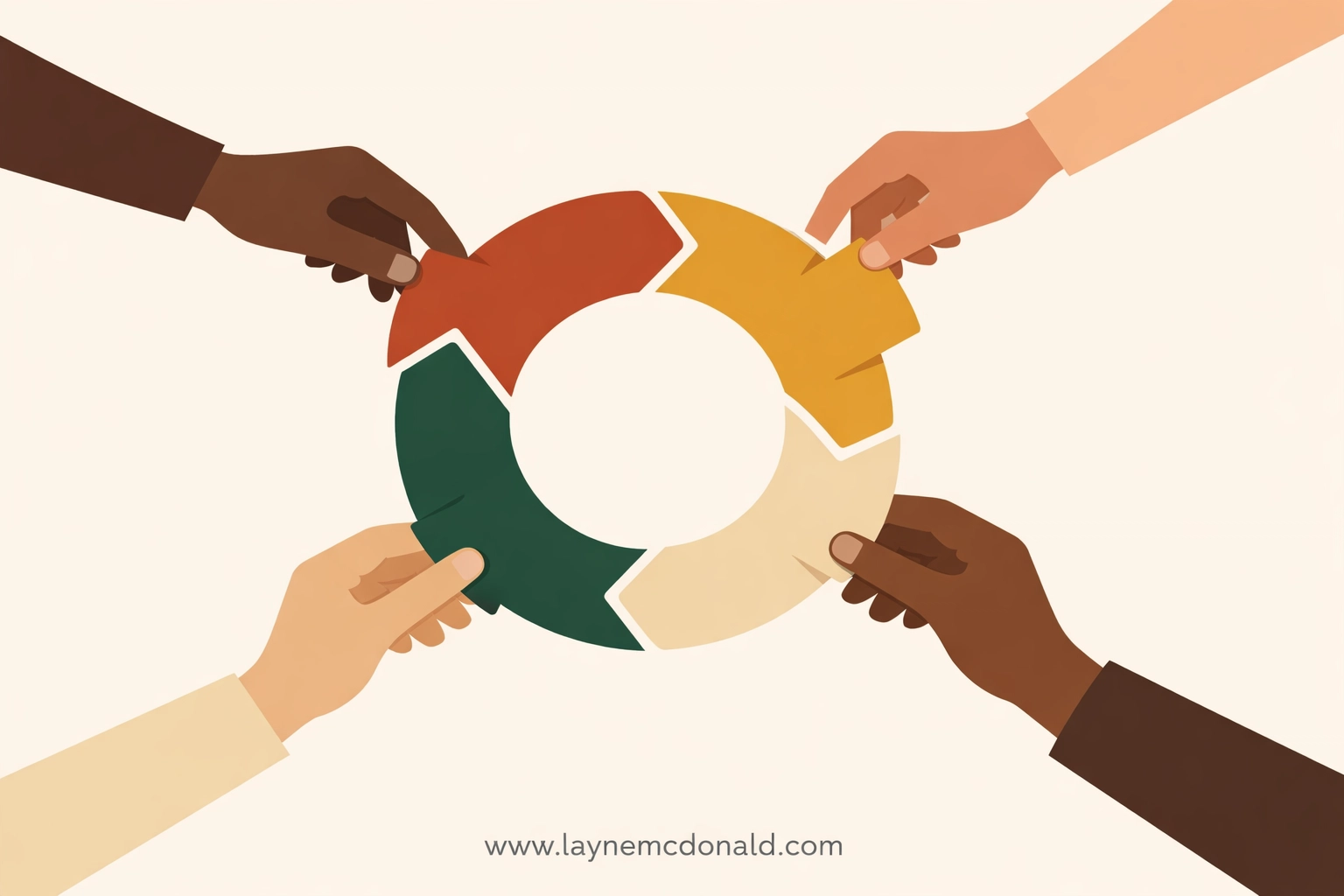
Intentional Onboarding and Mentorship
We have all seen the "newcomer's lunch" that leads nowhere. To build a strong community, we need to rethink how we welcome and integrate new people. A handshake and a bulletin aren't enough. Authentic connection requires a bridge. Assigning a "buddy" or a mentor to a new individual or family provides them with an immediate point of contact: someone who knows their name and can introduce them to others.
Integration should be active, not passive. Instead of telling newcomers to "sit back and relax," we should find ways to involve them in service early on. Whether it’s helping with the greeting team or participating in a community cleanup, serving alongside others is the fastest way to forge bonds. It moves the relationship from "I'm a guest" to "I'm a contributor."
Serving Together Toward a Common Goal
There is a unique bond that forms when people work together toward a cause larger than themselves. Mission trips, local food drives, and neighborhood renovation projects aren't just outreach; they are community-building exercises. When a group of people sweats together, solves problems together, and sees the impact of their service together, the walls between them come down.
In these moments, the focus shifts outward. This external focus actually heals internal rifts. It’s hard to stay caught up in petty church politics when you are focused on feeding the hungry or supporting a family in crisis. Service projects provide a shared history and a common language of sacrifice and love, which are the building blocks of any strong community.

Leading with Vulnerability
The culture of a church is almost always a reflection of its leadership. If the pastor and staff present an image of perfection, the congregation will feel the need to mask their own struggles. This leads to a surface-level community where everyone is "fine," but no one is actually being healed. Strengthening a community requires leaders who are willing to be appropriately vulnerable.
When leaders share their own journeys: including the setbacks and the seasons of doubt: it gives the rest of the community permission to be honest. This transparency creates a "safe zone" for authentic connection. It reminds everyone that the church is a hospital for the broken, not a museum for the self-righteous. This level of honesty is the only way to achieve the deep, life-changing fellowship that the New Testament describes.
Takeaway / Next Step
Strengthening your church community isn't about adding more to the schedule; it's about adding more heart to what you already do. Start by identifying one "program" that could be transitioned into a "relational space." This week, reach out to someone who has been on the fringes of your community and ask for their input on a project. Move your leadership meetings from the office to a local park or coffee shop. By choosing proximity over performance, you set the stage for the Holy Spirit to knit your community together in a way that truly reflects the love of Christ.
If you're looking for more ways to integrate your faith with your leadership and build a culture that lasts, reach out to me on the site. I would love to walk this journey with you and help you discover the prolific impact of leading like Jesus.
visiting helps raise funds for families who lost children at no cost.
For more resources on leadership and faith-integrated growth, visit us at https://www.laynemcdonald.com and https://www.boundlessonlinechurch.org.
Need prayers? Text us day or night at 1-901-213-7341.

$50
Product Title
Product Details goes here with the simple product description and more information can be seen by clicking the see more button. Product Details goes here with the simple product description and more information can be seen by clicking the see more button

$50
Product Title
Product Details goes here with the simple product description and more information can be seen by clicking the see more button. Product Details goes here with the simple product description and more information can be seen by clicking the see more button.
$50
Product Title
Product Details goes here with the simple product description and more information can be seen by clicking the see more button. Product Details goes here with the simple product description and more information can be seen by clicking the see more button.
Comments