
Stop Wasting Time on Programs – Try These 7 Proven Ways to Strengthen Church Community Right Now
- Dr. Layne McDonald
- Feb 14
- 4 min read

Updated: May 4
Category: Leadership
Let's be honest, how many church programs have you launched with high hopes, only to watch them fizzle out within months? You're not alone. Churches across the country pour resources into elaborate programs, fancy apps, and carefully crafted initiatives, yet people still slip out the back door feeling disconnected.
Here's the uncomfortable truth: programs don't build community. People do.
If you're exhausted from launching one initiative after another with little to show for it, it's time to shift your approach. The following seven strategies have been proven to strengthen church community, not through more complexity, but through genuine connection.
1. Build Small Groups That Actually Go Deep
Small groups are non-negotiable for retention and authentic community. But here's where most churches miss it: they create small groups that function like mini church services rather than places where real life happens.
Effective small groups keep it simple, 10 to 12 people max, and focus on three core elements: prayer, serving, and Bible study. That's it. No need for elaborate curriculum or complex structures.

The magic happens when small group leaders are trained to respond to practical needs. When someone in the group has a baby, the group organizes meal delivery. When a member loses their job, the group rallies with encouragement and practical support. This is community building through genuine care, not programs.
Even if your small groups form around interests (young professionals, parents, hobby groups), they still need spiritual anchors. Without prayer and Scripture, you're just running social clubs.
2. Make Your Church Feel Smaller by Creating Connection Points
Sunday morning isn't enough. Period.
To develop authentic relationships, you need to intentionally create places for people to connect outside the main gathering. This doesn't mean adding more programs, it means creating natural spaces for relationships to form.
Think volunteer teams, serving opportunities, informal Bible studies, social events, and interest-based gatherings. The goal is simple: give people multiple chances to bond with others who share similar life stages and experiences.
When churches rely solely on Sunday services for community, they're asking a once-weekly event to carry weight it was never designed to bear. Scatter connection opportunities throughout the week, and watch what happens.
3. Implement Mentorship and Buddy Systems (They Actually Work)
New members need more than a welcome brochure and a handshake. They need someone who cares whether they come back.
Assign mentors or "buddies" to newcomers, especially in the critical first 90 days. This isn't complicated. A mentor simply commits to checking in, sitting together during services, inviting them to events, and answering questions.
Mentorship is spiritually mature people intentionally investing time to guide others in their faith journey. It's one-on-one discipleship that makes people feel seen and valued.
Get creative with this. Pair new families with established families. Connect young adults with older believers who've walked similar paths. Involve newcomers in ministry teams early, not as workers you need, but as valued members of the community.
4. Show Up, Stay Present, and Mean It
Here's a harsh reality check: pastors who are the last to arrive and first to leave rarely build community.
Leadership presence matters more than you think. When church leaders interact with people, show genuine interest, remember names, and ask follow-up questions, it sets the tone for the entire congregation.
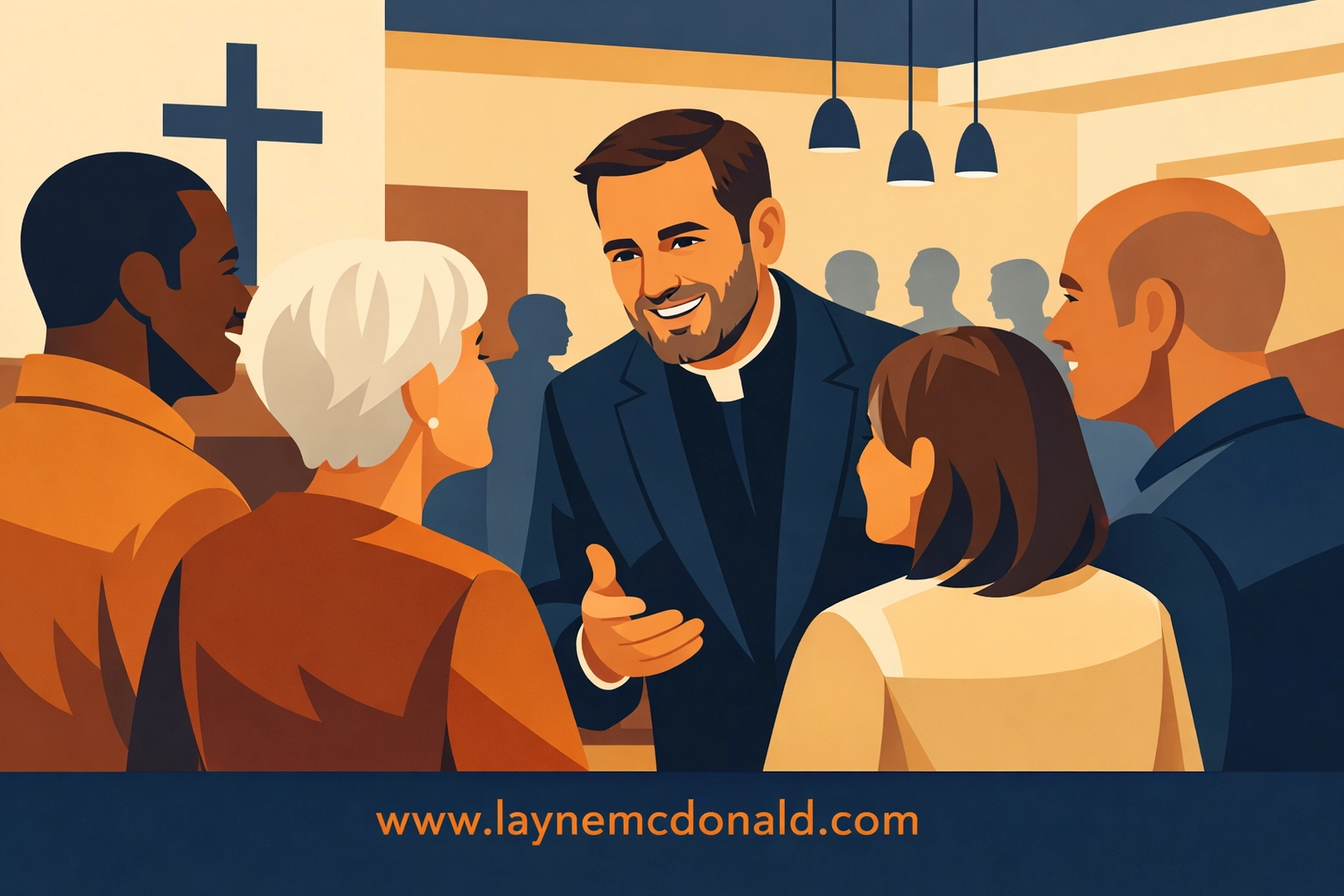
This isn't about being everywhere all the time (that's burnout waiting to happen). It's about being fully present when you are there. Put the phone away. Make eye contact. Have real conversations that go beyond surface-level small talk.
Preach regularly on the importance of caring for one another. Cast vision for what it looks like to reach out to newcomers, share meals, and go the extra mile. Your congregation will follow your lead, both in what you say and what you model.
5. Choose Labor-Intensive Authenticity Over Quick Fixes
We live in a world obsessed with efficiency. But here's what kills community: the constant search for the quickest, easiest solution.
Building authentic community is labor-intensive. It requires personal investment, time, and energy. When faced with a choice between a convenient solution and a meaningful one, always choose meaningful.
This means saying no to shortcuts that feel good in the moment but undermine connection long-term. Don't rely solely on digital communication when face-to-face conversation is needed. Don't outsource pastoral care to automated systems. Don't prioritize attendance numbers over depth of relationships.
Yes, it's slower. Yes, it's messier. But people can tell the difference between genuine care and religious efficiency.
6. Focus Community Service on Addressing Real Needs
Community events work when they're tied to actual needs: not just feel-good activities that disappear without impact.
Host events that invite people to connect: community fairs, concerts, family activities. But don't stop there. Establish practical outreach that creates ongoing connection points.

Consider starting a food co-op where community members pool resources. This isn't just charity: it's creating a social gathering point that builds relationships while addressing genuine financial pressures. When people work together to meet real needs, community forms naturally.
Look at your local area. What do people actually struggle with? Single parents who need childcare? Seniors who need help with technology? Young adults drowning in student debt? Build your outreach around solutions, and you'll build community in the process.
7. Set Clear Values Through Consistent Teaching
If you don't regularly teach that community is worth the effort, your congregation won't prioritize it.
Community doesn't happen by accident. It requires intentional commitment from everyone: not just leadership. Use your platform to cast vision, celebrate examples, and normalize the hard work of staying connected.
Preach on biblical community. Share stories of people who invested in relationships and saw transformation. Be transparent about your own struggles to stay connected when life gets busy.
When people understand that belonging is essential: not optional: they'll invest differently. When they feel genuine community, they become invested in the church and its people for the long haul.
The Bottom Line
If people don't find genuine community, they won't stay. It's that simple.
You can have the best preaching, the latest worship technology, and the most impressive building. But if individuals don't feel known, valued, and connected, none of it matters.
Stop measuring success by the number of programs you run. Start measuring by the depth of relationships being formed. Focus on people over programming, and watch your church culture transform.
Ready to dive deeper into building healthy church culture? Visit laynemcdonald.com for more leadership resources and practical guidance. And if you're looking for a community committed to authentic discipleship, check out Boundless Online Church.
Need prayers? Text us day or night at 1-901-213-7341.
Comments