Morning News Without the Panic: 7 Things Every Christian Should Know Before Scrolling Today
- Dr. Layne McDonald
- Feb 18
- 6 min read

Before you open your social feed this Wednesday morning, take a breath. Today's news is full of both challenge and hope, and all of it matters to your faith. Here are seven things happening right now that every Christian should know, filtered through the lens of Scripture and grace.
1. Ash Wednesday Marks the Start of Lent
Today is Ash Wednesday, the beginning of the 40-day Lenten season leading to Easter. Churches around the world are holding services where ashes are marked on foreheads as a tangible reminder of mortality, repentance, and our need for God's grace. The traditional words, "From dust you came, and to dust you will return", echo Genesis 3:19.

Pope Francis issued a specific challenge to the faithful this year: observe a fast from "harsh words and rash judgement, refraining from slander and speaking ill of those who are not present." It's a timely call in an era of comment sections and hot takes.
The Lens: Lent isn't about performance or religious duty, it's an invitation to reset our hearts. Jesus spent 40 days in the wilderness before His public ministry began (Matthew 4:1-11), and Lent offers us a parallel rhythm: a season to strip away distractions, examine our spiritual lives, and lean into God's presence.
The Response: Consider what you might fast from this Lenten season, not just food, but habits that drain your peace or distort your view of others. Maybe it's scrolling Twitter before bed. Maybe it's gossip or comparison. And consider what you might add: prayer walks, Scripture memory, or serving someone quietly without posting about it.
Lent is a gift. It's 40 days to realign your life with the cross.
2. Interruptions Might Be Divine Appointments
A devotional reflection making the rounds today encourages Christians to reframe disruptions, unexpected texts asking for help, a crying child in the middle of your quiet time, a friend showing up unannounced, as opportunities to follow God's voice rather than obstacles to your faith.
The Lens: Jesus was constantly interrupted. A woman with an issue of blood touched His cloak mid-journey (Mark 5:25-34). A desperate father interrupted His teaching (Mark 5:22-23). Children were brought to Him when the disciples thought He was too busy (Mark 10:13-16). Every time, Jesus stopped. He saw the person. He engaged with love.
The Response: What if today's interruptions aren't stealing from your spiritual life, they are your spiritual life? What if the call from your mom, the coworker who needs five minutes, or the flat tire that wrecks your schedule is God's way of saying, "Love this person right now"?
James 1:19 says, "Be quick to listen, slow to speak, and slow to become angry." That's hard to do when you're in a hurry. But interruptions slow us down. They force us to choose: will we see people as problems or as image-bearers?
3. Faith Leaders Challenge Immigration Policy in Court
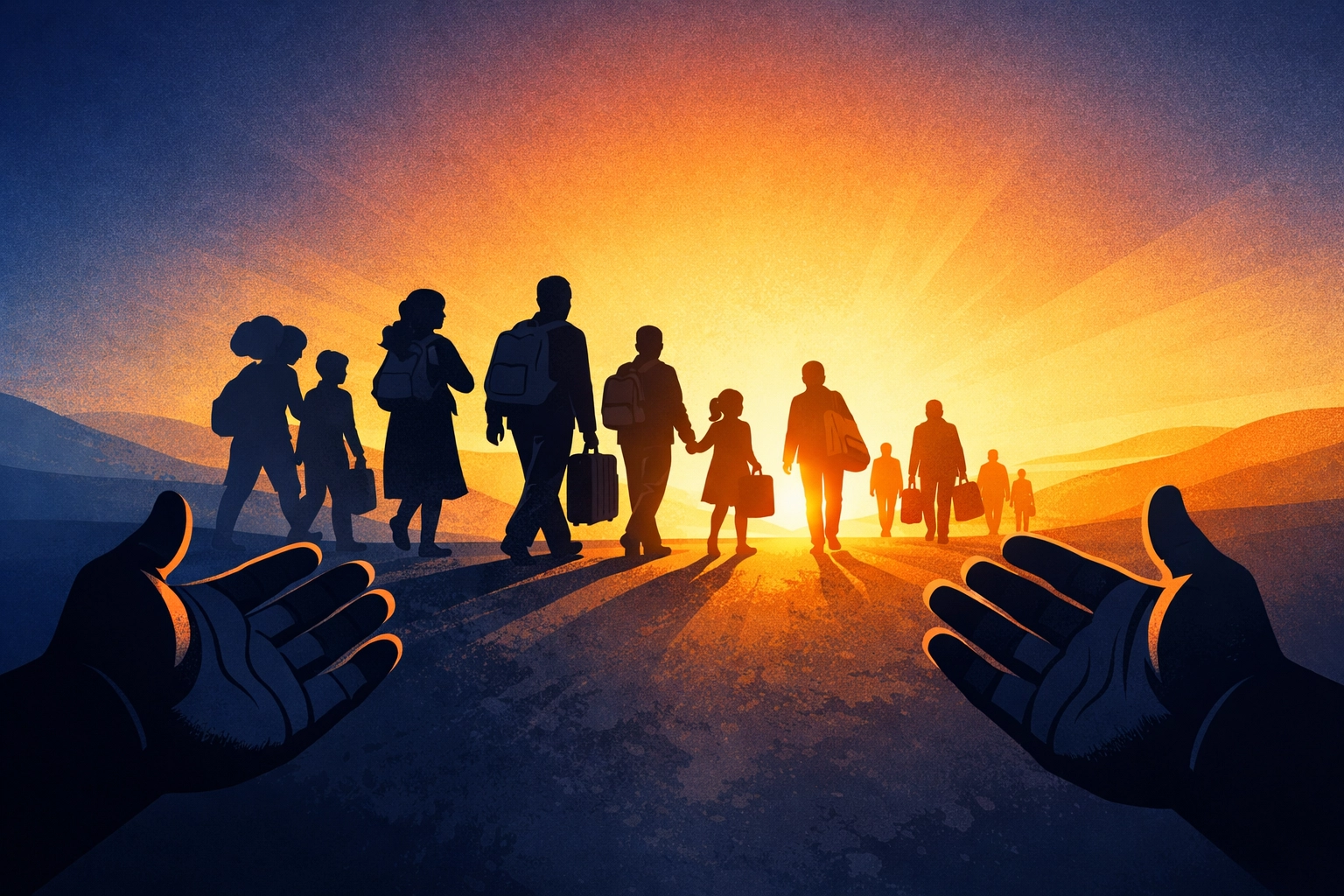
More than 30 U.S. faith leaders have filed a legal brief opposing the current administration's treatment of asylum-seekers. Their argument is theological: asylum, they say, is "a core religious and moral tenet," rooted in biblical commands to welcome the stranger.

The Lens: Scripture is unambiguous about care for immigrants and refugees. Leviticus 19:34 commands, "The foreigner residing among you must be treated as your native-born. Love them as yourself, for you were foreigners in Egypt." Hebrews 13:2 adds, "Do not forget to show hospitality to strangers, for by so doing some people have shown hospitality to angels without knowing it."
At the same time, Christians hold diverse views on how nations should structure immigration law and enforce borders. The debate isn't whether compassion matters, it's how to balance compassion with order, safety, and the rule of law.
The Response: This issue requires both truth and grace. We can affirm the biblical call to love the stranger without pretending policy questions are simple. We can disagree on legislation without demonizing those who see it differently.
Ask yourself: Am I engaging this issue with the same empathy I'd want if I were fleeing violence and seeking safety? And am I listening to Christians on both sides who love Jesus and are trying to honor Him in their reasoning?
4. A Christian Social Worker's Discrimination Case Moves Forward
An employment tribunal in the U.K. found legal errors in an earlier judgment concerning Felix Ngole, a Christian social worker whose job offer was rescinded after he expressed biblical views on marriage and sexuality. The case continues as courts grapple with the intersection of religious conviction and professional standards.
The Lens: This is one of many cases worldwide testing whether Christians can hold traditional biblical beliefs and still work in certain fields. The tension is real: Can you affirm what Scripture says about sex and marriage and also serve people with compassion, regardless of their lifestyle? Can you hold a conviction without discriminating?
The answer, biblically, is yes. Jesus ate with sinners (Luke 15:2), loved people deeply (John 13:1), and never compromised truth (John 8:11). He called sin what it is: and then extended grace, dignity, and a path toward God.
The Response: If you're a Christian in a field where your beliefs are under scrutiny, you're not alone. You can be kind without being silent. You can serve everyone well while still holding a biblical worldview. And you can trust that God honors faithfulness, even when the cost is real.
Pray for wisdom, courage, and a spirit that reflects Christ: firm in truth, overflowing in love.
5. The BBC Emphasizes the Role of Religion in Public Broadcasting
The BBC has publicly emphasized the "huge importance" of reflecting questions of morality, meaning, and belief across its programming. It's a notable acknowledgment in an increasingly secular media landscape that faith still matters to millions of people.
The Lens: For decades, Western media has largely sidelined religious perspectives, treating faith as a private hobby rather than a worldview that shapes how people see everything. This statement from the BBC signals a recognition that ignoring religion means ignoring reality for a huge portion of the audience.
The Response: Christians should welcome fair, thoughtful representation of faith in media: even when we don't control the narrative. We don't need media to agree with us; we need media to take us seriously. And when they do, it opens doors for gospel conversations in the public square.
Support journalists and creators who handle faith with respect. Share their work. Let them know it matters.
6. Christian Revival Continues in Iran Despite Oppression
Reports continue to emerge of significant Christian growth in Iran, even amid government crackdowns, arrests, and persecution. House churches are multiplying, and conversions are happening quietly across the country.
The Lens: This is the pattern of Acts all over again. "When they heard this, they were furious and gnashed their teeth at him... But Stephen, full of the Holy Spirit, looked up to heaven and saw the glory of God" (Acts 7:54-55). Persecution has never stopped the gospel. In fact, it often accelerates it.
Jesus told His disciples, "In this world you will have trouble. But take heart! I have overcome the world" (John 16:33). Iranian believers are living proof of that promise.
The Response: Pray for the underground church in Iran. Pray for boldness, protection, and explosive growth. And ask yourself: If following Jesus cost you your safety, your job, or your freedom, would you still follow Him?
Their faithfulness challenges our complacency.
7. Lent Calls Us Back to Prayer, Fasting, and Almsgiving
Religious leaders worldwide are emphasizing the three classical Lenten practices: prayer, fasting, and almsgiving (giving to those in need). These aren't trendy spiritual hacks: they're ancient disciplines that reorient the heart toward God.
The Lens: Jesus assumes His followers will practice all three. He doesn't say "if you pray" or "if you fast": He says "when you pray... when you fast... when you give" (Matthew 6:2, 5, 16). These aren't optional add-ons for super-Christians. They're baseline discipleship.
Prayer connects us to God. Fasting creates space for His voice. Almsgiving breaks the grip of materialism and trains us to see needs around us.
The Response: Pick one. Start small. Pray for five minutes every morning. Skip lunch once a week and give the money you save to someone in need. Fast from Netflix and read a gospel instead.
Lent is 40 days. That's enough time to build a habit that outlasts the season.
The Invitation
You don't have to panic about today's news. You don't have to rage-scroll or despair. You can stay informed, stay grounded in Scripture, and stay full of hope: because the God who holds tomorrow is the same God who held yesterday.
Need prayers? Text us day or night at 1-901-213-7341.
Follow at LayneMcDonald.com for calm updates as today's stories develop.
Sources: The Guardian, Associated Press, BBC, Christian Post

$50
Product Title
Product Details goes here with the simple product description and more information can be seen by clicking the see more button. Product Details goes here with the simple product description and more information can be seen by clicking the see more button

$50
Product Title
Product Details goes here with the simple product description and more information can be seen by clicking the see more button. Product Details goes here with the simple product description and more information can be seen by clicking the see more button.
$50
Product Title
Product Details goes here with the simple product description and more information can be seen by clicking the see more button. Product Details goes here with the simple product description and more information can be seen by clicking the see more button.
Comments