
Only seven new petrol-powered cars sold in Norway in January
- Dr. Layne McDonald
- Feb 6
- 6 min read

"The earth is the Lord's and the fullness thereof, the world and those who dwell therein." (Psalm 24:1)
What happened
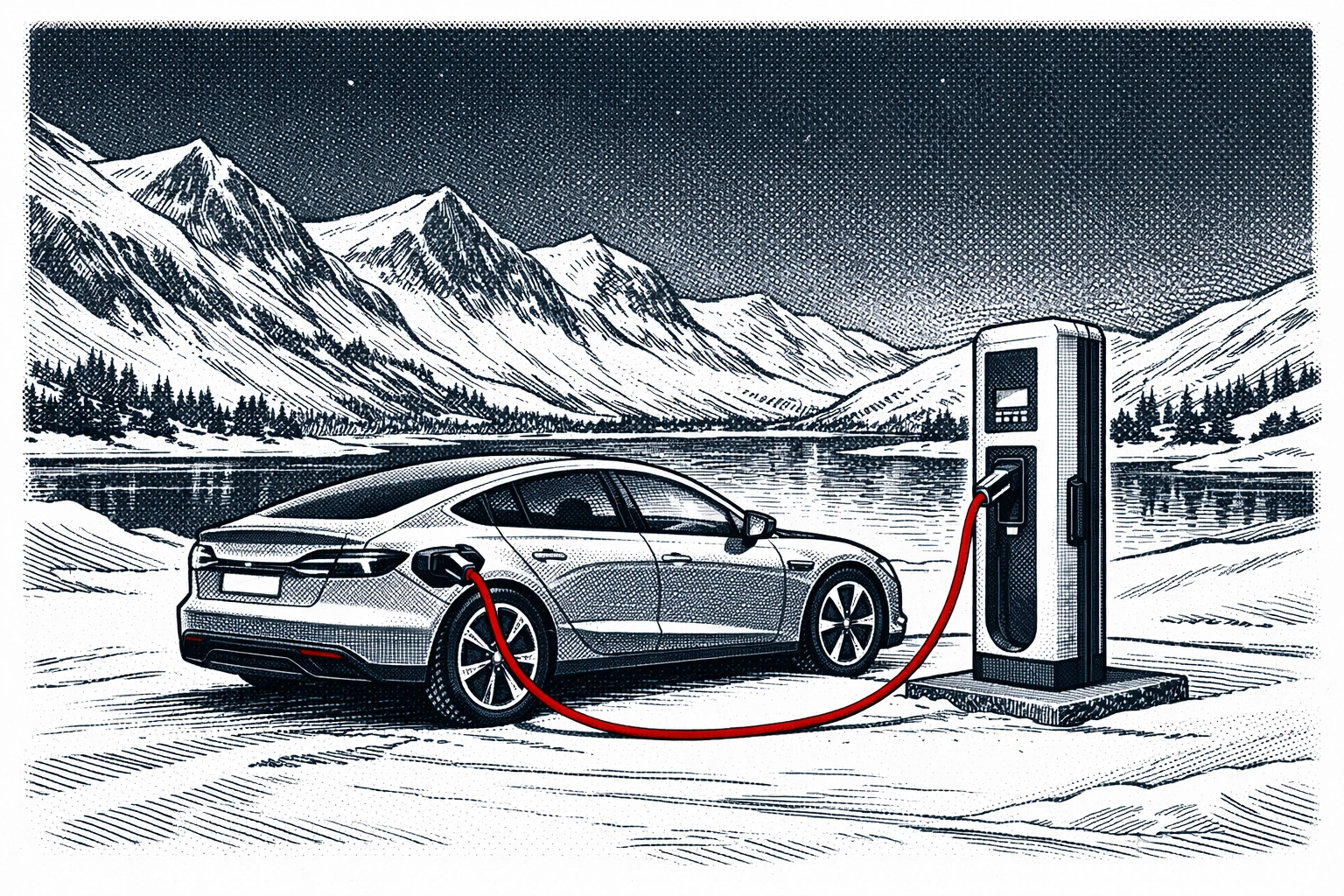
Norway's vehicle registration data for January 2026 showed seven new petrol-only cars sold during the month, according to figures reported by The Guardian and confirmed by Norway's road traffic authority.
The data also showed 29 hybrid vehicles and 98 diesel cars registered in January, compared with more than 2,000 battery electric vehicles (BEVs).
Overall new vehicle registrations in Norway dropped 76.7 percent compared to January 2025, falling from approximately 8,700 vehicles to roughly 2,000 vehicles.
Industry analysts attributed the sharp drop in total registrations to a tax policy change that took effect January 1, 2026. Many dealers and buyers completed purchases in late December 2025 to avoid the new VAT rates, creating an artificial surge in December and a corresponding collapse in January across all vehicle types.
Battery electric vehicles accounted for 94 percent of January's new registrations and represented 95.9 percent of all new car sales in Norway during 2025.
Petrol-only vehicles made up less than one percent of the January market.
Why it matters
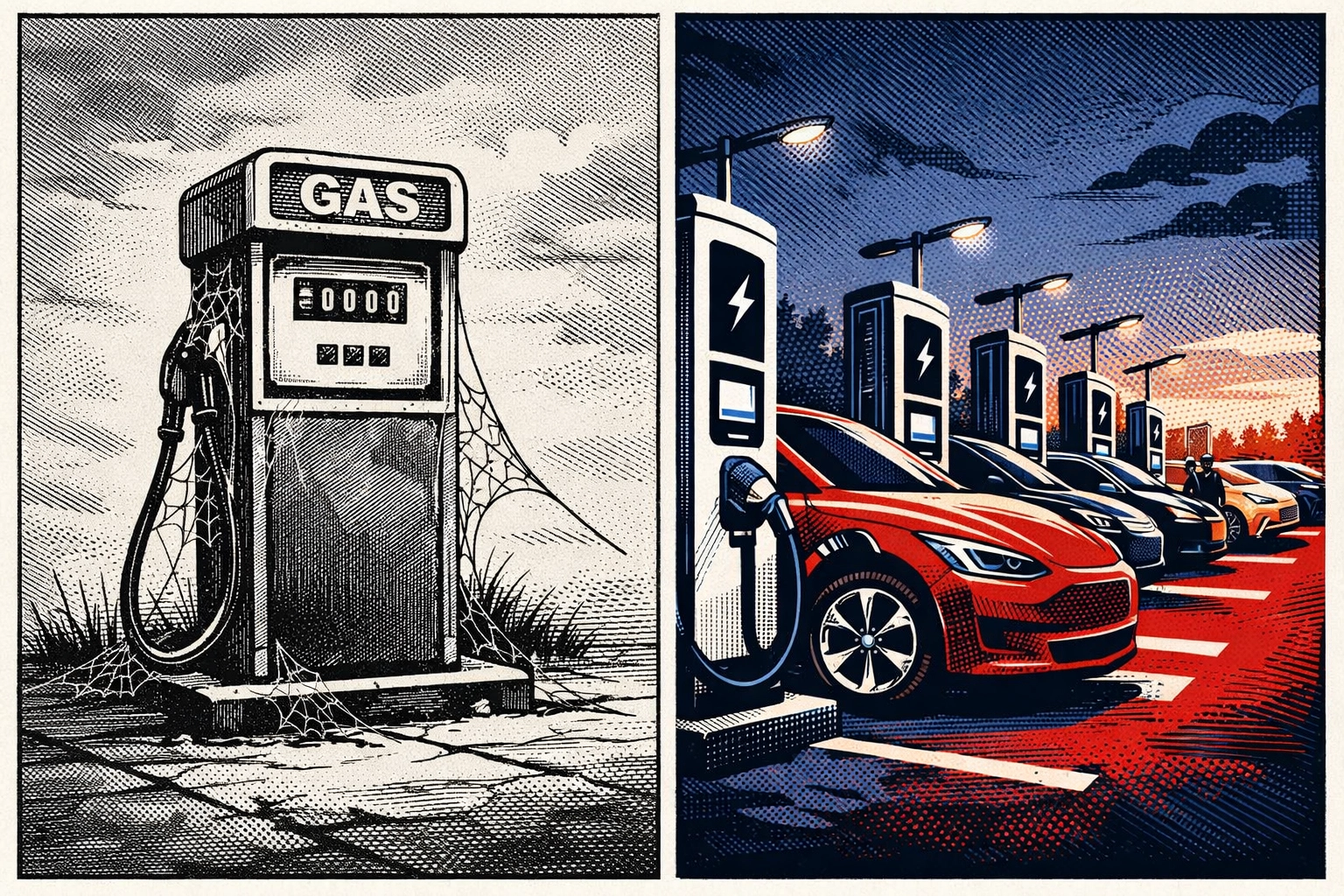
Norway's January data represents the lowest petrol car registration figure ever recorded in the country and marks a continuation of the world's most dramatic national shift toward electric vehicle adoption.
The seven-petrol-car figure is not simply a statistical anomaly caused by the tax timing issue: it reflects a decade-long policy trajectory that has fundamentally reshaped consumer behavior, dealer inventory strategies, and infrastructure investment priorities.
While the January slump affected all powertrains due to the December rush, the structural collapse of petrol market share has been building for years through a combination of tax incentives, charging infrastructure expansion, and cultural momentum.
Norway's experience serves as a live laboratory for other nations watching the pace, costs, and trade-offs of large-scale transportation electrification.
The data raises questions about whether similar adoption curves are replicable in countries with different geography, income levels, energy grids, and political structures: and whether rapid transitions create unintended economic or social consequences for workers, rural communities, or lower-income households.
What different sides are saying
Climate and policy advocates point to Norway as proof that ambitious targets can work when supported by consistent incentives, infrastructure investment, and political will. They argue the transition demonstrates that consumer preferences shift quickly once EVs reach price parity and charging becomes convenient, and they see Norway's experience as a model for accelerating global decarbonization efforts.
Industry and automaker perspectives vary. Some manufacturers have embraced the transition and invested heavily in EV lineups tailored to the Norwegian market, viewing it as a profitable early-adopter base. Others express concern about the sustainability of subsidy-dependent markets and whether the Norway model is economically replicable without oil wealth funding the transition.
Affordability and equity concerns focus on whether the pace of change leaves behind rural residents, older drivers, apartment dwellers without home charging, and buyers who depend on the used car market. Critics note that while new EV sales dominate, the broader vehicle fleet still includes many older combustion cars, and question whether lower-income households can participate in the transition at the same pace.
Energy and infrastructure analysts highlight Norway's unique advantages: abundant hydroelectric power, a small population, compact geography, and oil revenue funding public investments. They caution that other nations face different constraints around grid capacity, renewable energy availability, and the fiscal ability to subsidize EV purchases and charging networks.
Biblical lens: Stewardship, wisdom, and what we owe the future
"The prudent sees danger and hides himself, but the simple go on and suffer for it." (Proverbs 22:3)
Scripture consistently calls God's people to stewardship: not ownership, but faithful management of what belongs to God. The earth, the air, the resources we extract and burn: they are not ours to plunder thoughtlessly, but entrusted to us as Image-bearers tasked with tending and keeping creation (Genesis 2:15).
Norway's electric vehicle transition can be understood through this lens of wise stewardship. The shift did not happen by accident or market forces alone: it happened because leaders made intentional, long-term decisions about the kind of future they wanted to build and the costs they were willing to bear today to get there.
That's a fundamentally biblical instinct: sacrifice now, invest for the next generation, think beyond quarterly earnings or election cycles.
"A good man leaves an inheritance to his children's children." (Proverbs 13:22)
But wisdom also requires honesty about trade-offs. Norway's transition was made possible by oil wealth: revenues from fossil fuel extraction funding the infrastructure and subsidies that enabled the move away from fossil fuels. That irony should give us pause, not to dismiss the effort, but to recognize the complexity of real-world change.

There are no simple heroes or villains here. There are people trying to solve hard problems with incomplete information, competing priorities, and finite resources.
"For which of you, desiring to build a tower, does not first sit down and count the cost, whether he has enough to complete it?" (Luke 14:28)
The Christian lens here is not "EVs good, gas bad" or "Norway right, everyone else wrong." It's deeper than that.
It's asking: What are we stewarding? For whom? At what cost? And are we counting all the costs: environmental, economic, social, and spiritual?
It's recognizing that caring for creation and caring for people are not competing values: they are intertwined. A world choked by pollution harms the poor first. A transition that ignores the displaced worker or the rural community also fails the biblical standard.
"Open your mouth, judge righteously, defend the rights of the poor and needy." (Proverbs 31:9)
Christian response: Practical steps, calm hearts, faithful presence
If you're reading this and feeling overwhelmed by the scale of the issue: you're not alone. Climate, energy, transportation policy: these are massive systems that feel beyond individual control.
But the biblical response is never paralysis or despair. It's faithfulness in the small things and trust that God is sovereign over the large ones.
"Teach us to number our days that we may get a heart of wisdom." (Psalm 90:12)
Here's what you can do today:
If you're making a vehicle decision, focus on what's practical and honest: total cost of ownership, your actual driving patterns, charging access where you live, reliability data, and whether the vehicle meets your family's needs. Don't buy based on guilt or virtue signaling. Buy based on wisdom.
If you're not in the market, let this be a reminder that big changes happen gradually: then suddenly. Stay informed, but don't let the news cycle steal your peace. Systems change slowly until they don't, and your job is to stay rooted, clear-headed, and ready to adapt without fear.
If you're a leader or decision-maker: in business, local government, or community organizations: think generationally. Ask what you're building that will outlast your tenure. Make decisions that balance today's pressures with tomorrow's responsibilities.
If you care about creation care but feel stuck, start small and local: reduce waste, support sustainable practices where you can, vote and advocate thoughtfully, and refuse to let this issue become a culture-war weapon that divides the Body of Christ.
"So then, as we have opportunity, let us do good to everyone, and especially to those who are of the household of faith." (Galatians 6:10)
Most importantly: guard your heart against anxiety and tribalism. This issue does not define your worth, your faithfulness, or your standing before God. Jesus does.
You are not savior of the planet. Jesus is Lord of the planet. Your calling is to be faithful with what He's put in your hands: no more, no less.
Prayer
Father, You made the earth and everything in it. You hold the seas in the hollow of Your hand, and You breathed life into every living thing. Teach us to be faithful stewards: wise, humble, and generous.
Help us to see clearly: to care for creation without worshiping it, to pursue justice without self-righteousness, to make hard decisions without losing our peace.
Give leaders wisdom to think beyond the next election. Give innovators integrity to build for the common good. Give workers dignity and hope in seasons of change. Give all of us courage to act faithfully in the sphere You've given us, trusting that You are working all things together for good.
Keep us from fear. Keep us from paralysis. Keep us from tribal rage. Root us in Your love, and send us out as peacemakers, truth-tellers, and servants of the One who makes all things new.
In Jesus' name, Amen.

Where to go from here
Change is hard. Systems are broken. The future feels uncertain.
If you're feeling stuck: angry, exhausted, or struggling to forgive: you're not alone.
If you want help finding your center and peace, you can reach me at www.laynemcdonald.com.
Source: The Guardian
Comments