
Restoration in Rio: Cleaning Guanabara Bay
- Dr. Layne McDonald
- Feb 8
- 6 min read

Updated: May 5
The Facts
A major environmental restoration project is gaining momentum in Rio de Janeiro's Guanabara Bay, a promise ten years in the making. The Green Guanabara Bay Project has planted 30,500 mangrove seedlings across 12.2 hectares in the Guapi-Mirim Environmental Protection Area. The initiative is executed by the NGO Guardians of the Sea in partnership with the Urban Sea Institute.
Additional restoration efforts include a separate mangrove project covering 65 hectares led by Niterói city hall. The Fishing for Litter program has recovered 500 tonnes of waste from islands, shores, and mangroves since 2020. The program engages artisanal fishers as waste collectors, providing supplemental income while addressing marine litter. This initiative led to the formation of COOPROMAR, Brazil's first Marine Waste Collectors' Cooperative.
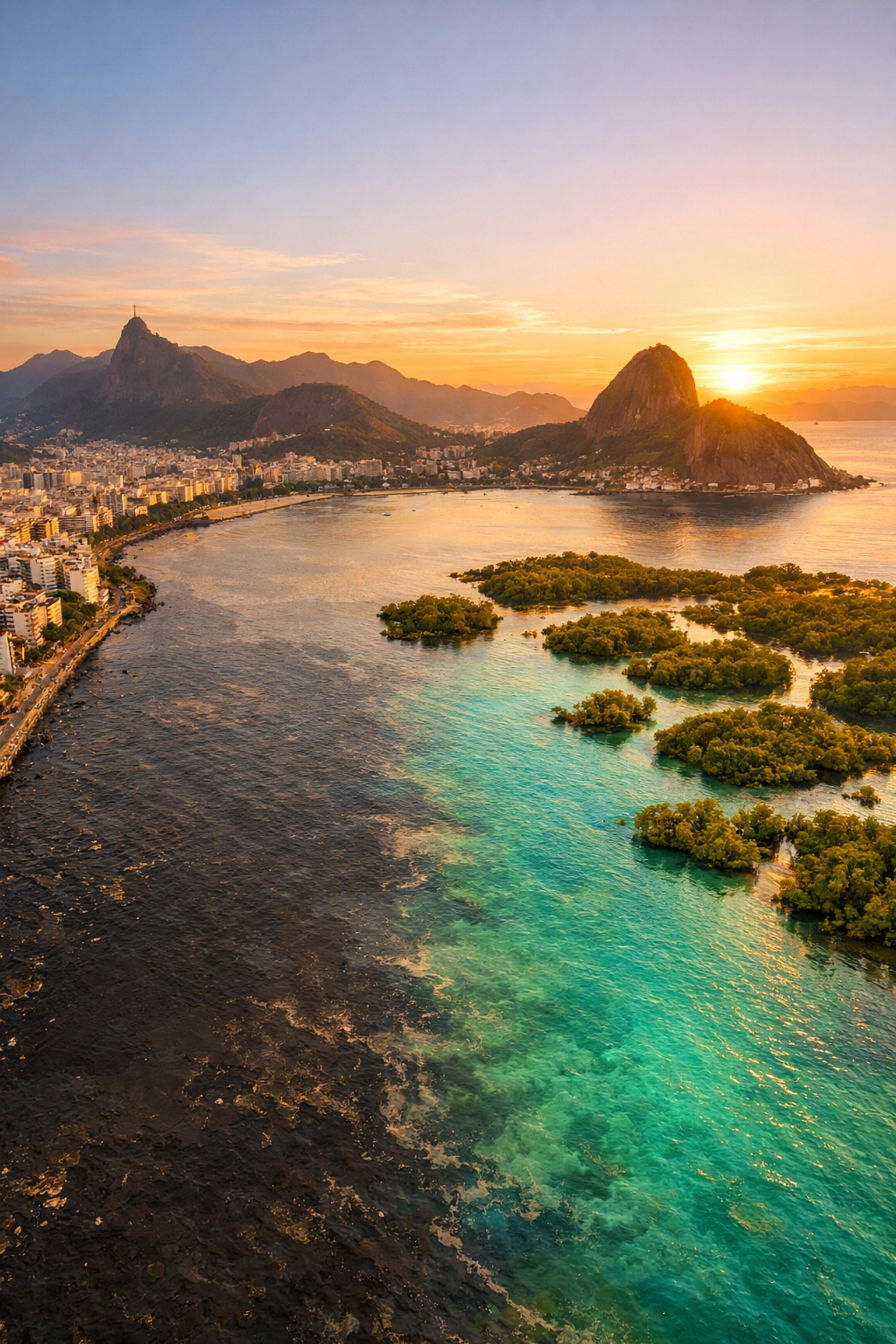
The Reforest Rio Program has restored 3,600 hectares across 94 neighborhoods since 1986, focusing on hillside areas vulnerable to flooding and landslides. Water supply investments include US$500 million reserved until 2028 to enhance sewage systems and wastewater treatment infrastructure.
How it Happened
Guanabara Bay has struggled with severe pollution for decades, a problem that intensified public scrutiny during the 2016 Olympics when Rio de Janeiro promised dramatic environmental improvements. Those promises largely went unfulfilled in the years immediately following the Games, leaving the bay as one of South America's most polluted bodies of water.
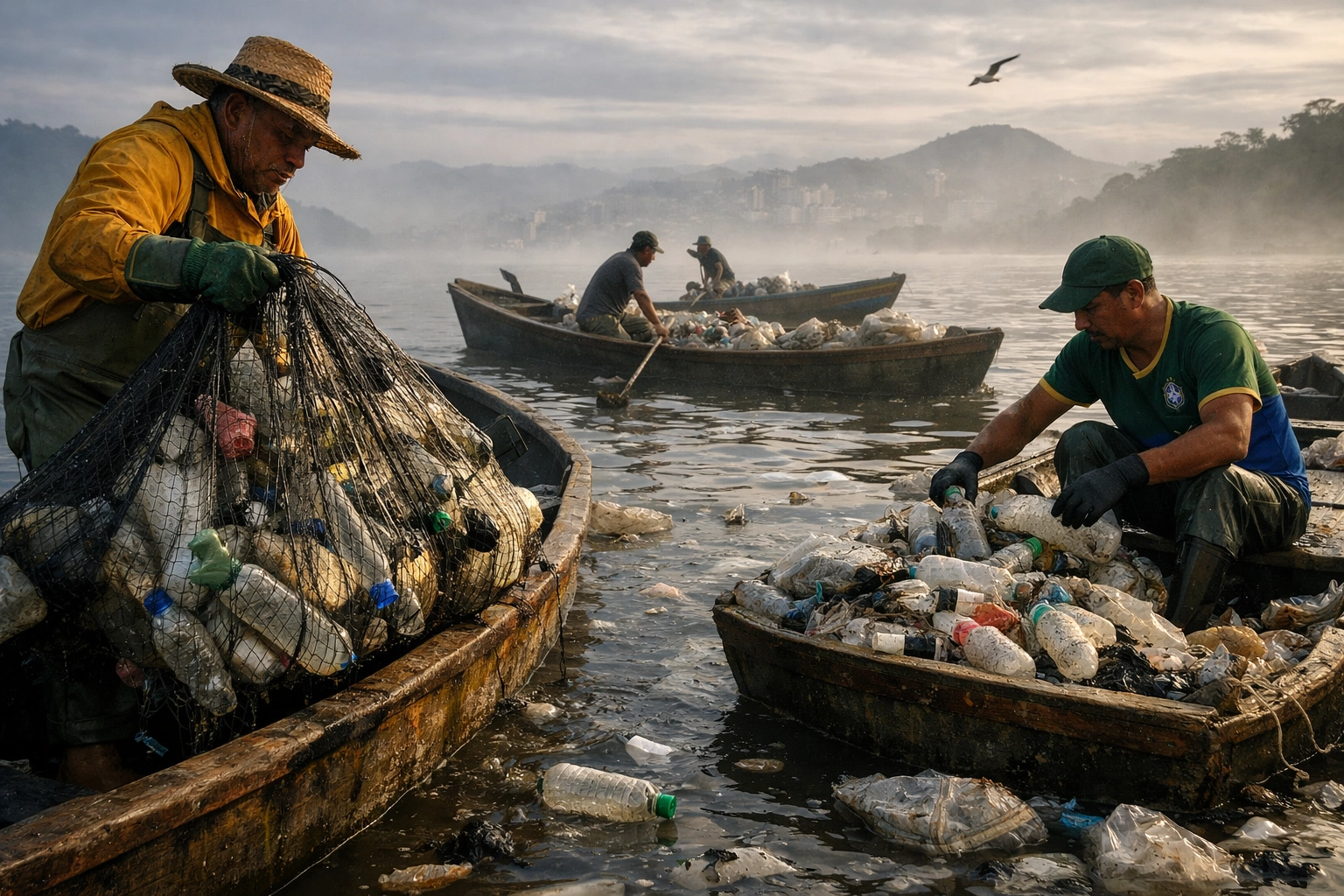
The watershed covers approximately 4,000 square kilometers and receives runoff from densely populated urban areas, industrial zones, and informal settlements where sewage treatment infrastructure has historically been inadequate. Decades of untreated sewage discharge, industrial waste, and solid waste dumping transformed parts of the bay into what local environmentalists described as a "toxic graveyard."
The combination of rapid urbanization without corresponding environmental infrastructure, weak enforcement of environmental regulations, and the economic challenges facing Brazilian municipalities created a perfect storm of ecological neglect. Rivers feeding into the bay carried trash, sewage, and chemical pollutants directly into coastal waters, devastating marine life and the livelihoods of traditional fishing communities.
The turning point came when local communities, fishers, and environmental organizations began demanding action and partnering with municipal governments to implement grassroots restoration efforts. Rather than waiting for federal solutions, these community-led initiatives started small: one mangrove seedling, one bag of collected waste at a time.
Where We Are Now
Current restoration efforts represent a multi-pronged approach combining habitat restoration, waste removal, and infrastructure improvements. The mangrove replanting projects focus on areas where these natural water filters once thrived. Mangroves act as nurseries for fish, protect coastlines from erosion, and filter pollutants from water: making them essential to any meaningful bay restoration.
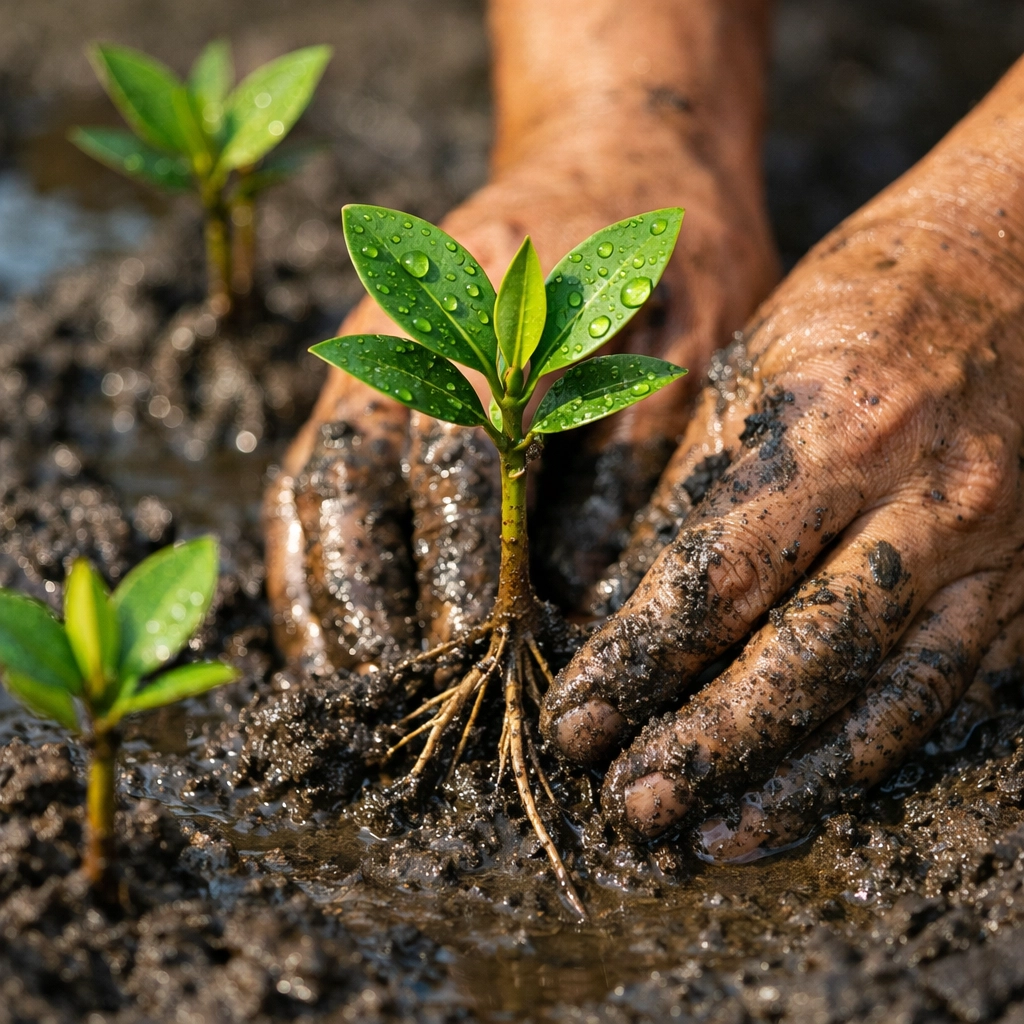
Local fishermen are now central players in the cleanup. Through the Fishing for Litter program, artisanal fishers collect marine debris while working their traditional fishing routes. This model provides economic incentives for environmental stewardship while building local ownership of restoration outcomes. The formation of COOPROMAR institutionalizes this approach, creating a sustainable structure for ongoing cleanup efforts.
The Reforest Rio Program addresses the watershed dimension of bay pollution by stabilizing hillsides and reducing erosion that carries sediment and pollutants into waterways. Forest restoration in upper watershed areas complements the coastal mangrove work, creating a comprehensive ecosystem approach.
Water quality monitoring systems track restoration progress across rivers, bay waters, and beaches. Early indicators show improvement in specific zones where mangrove restoration has been most intensive, though comprehensive bay-wide recovery will require years of sustained effort.
The Conversation
Environmental advocates and participating communities view these efforts as a genuine turning point. They point to measurable improvements in localized areas where mangroves have been replanted and waste removal has been most aggressive. The community-led model demonstrates that restoration is possible even when federal resources are limited. Some see Rio's approach as a potential blueprint for other polluted coastal areas in developing nations: proof that combining traditional knowledge, local participation, and targeted NGO support can drive meaningful change.
Optimists emphasize the psychological shift occurring in communities around the bay. Fishers who once saw themselves as victims of pollution now see themselves as agents of restoration. Young people participating in environmental education programs connected to these projects are developing ecological awareness that could shape policy and behavior for decades.
Realists and critics remind stakeholders that Guanabara Bay's pollution accumulated over more than 50 years and won't be reversed by any single initiative or short-term campaign. They note that the 12.2 hectares of restored mangroves, while encouraging, represent a fraction of the habitat loss the bay has suffered. Infrastructure investments in sewage treatment, while welcome, still leave significant portions of the watershed without adequate waste management.
Some environmental scientists caution against overstating progress before long-term water quality data confirms sustained improvement. They emphasize that continued urban growth around the bay could outpace restoration efforts if governance structures don't evolve to enforce environmental standards more effectively.
The conversation also includes economic dimensions. Fishing communities need the bay restored to survive, but they also need income during the restoration process. Balancing immediate economic needs with long-term ecological recovery creates ongoing tension in project design and implementation.
The Biblical Center
I'm Dr. Layne McDonald. When I read about life returning to what locals called a "toxic graveyard," something in my spirit leaps. Our God is a Restorer. That's not religious language: it's His character, His nature, the heartbeat of the gospel story.
In Revelation 21:5, God declares, "I am making everything new!" Not "I might fix a few things" or "I'll patch up what's broken." He says He is actively, presently making everything new. The Greek word there: kainos: doesn't just mean brand new in time; it means new in quality, fresh in nature, unprecedented in its wholeness.
Whether it's a polluted bay or a broken heart, God's specialty is taking what was ruined and making it beautiful again. He doesn't look at our messes: environmental, relational, spiritual: and turn away in disgust. He moves toward the brokenness with restoration on His mind.
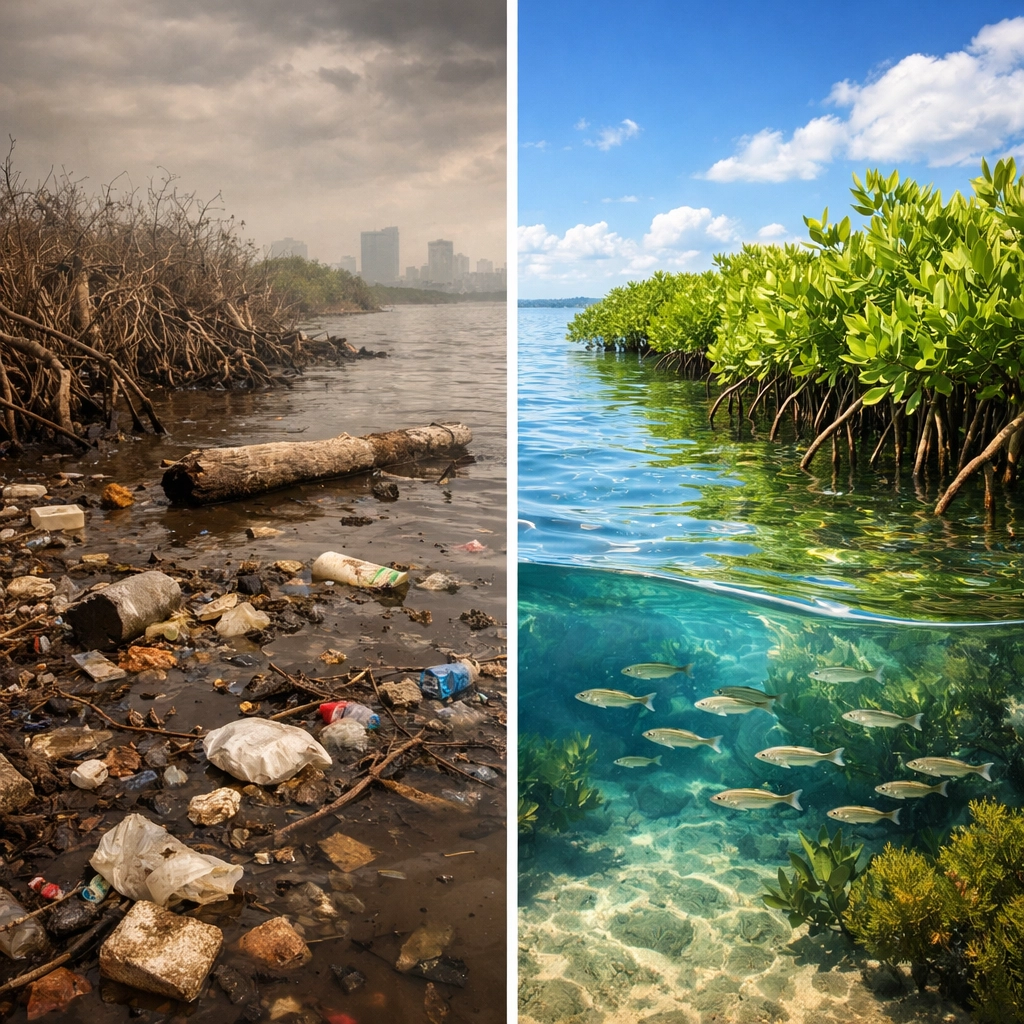
We see this throughout Scripture. God took a barren couple and made them parents of nations. He took a murderer on the run and made him a liberator. He took scattered exiles and made them a restored people. He took a splintered, wounded humanity and reconciled us to Himself through His Son. Restoration is the plot of the Bible.
Genesis 1 establishes that we are made in God's image and given stewardship over creation. Genesis 2 puts the first humans in a garden "to work it and keep it." The Hebrew word shamar: keep: means to guard, to protect, to preserve. From the beginning, caring for the earth was worship, not an afterthought. When we tend the world God made, we reflect His character as Creator and Restorer.
Sin broke our relationship with God, each other, and creation itself. Romans 8 tells us that creation groans, waiting for restoration. Polluted bays, degraded forests, poisoned rivers: these aren't just policy failures. They're symptoms of humanity's fractured relationship with the world we were called to steward.
But restoration is always possible with God. Always. I see those fishers in Rio collecting trash from waters they once only took from, and I see the image of God at work. I see communities replanting mangroves, restoring what was destroyed, and I see echoes of the New Creation God is bringing.
This isn't about political environmentalism or partisan agendas. This is about Christians remembering we serve the God who makes all things new, and we're called to participate in that work. Every act of care for creation is an act of worship when done in His name and for His glory.
Finding Peace
Look at your own "backyard." I mean that both literally and metaphorically. Is there a place in your life or community that feels neglected? A relationship that's polluted? A corner of your neighborhood that's become a dumping ground? A part of your own heart that's been toxic for too long?
Take one small step to clean it up or bring life back to it. One conversation to restore a relationship. One bag of trash collected from a local park. One honest prayer asking God to restore something broken in your soul. Start small, like those first mangrove seedlings in Rio.
Care for the world God gave us as a way to reflect His love. Join or support a local creation care initiative through your church or community. Teach your kids that stewarding creation is part of following Jesus. Make choices: in what you buy, how you dispose of waste, how you use resources: that honor the Creator.
But here's the deeper invitation: Let God restore you. Whatever feels dead or polluted in your life right now, God specializes in bringing resurrection and renewal. Bring your brokenness to the Restorer. He's making all things new: including you.
If you're looking for coaching or mentoring as you navigate restoration in your own life, leadership, or calling, I'd be honored to walk alongside you. Visit www.laynemcdonald.com to explore how we can partner in your growth.
The fishers of Guanabara Bay are proving that restoration is possible when communities commit to the long, faithful work of renewal. The same is true in our lives. God is faithful. He finishes what He starts. And He's making everything new.
Sonny-Ready Caption Block:
From toxic to thriving? 🌿 Rio's Guanabara Bay is finally being restored. Dr. Layne McDonald looks at the beauty of redemption: both in nature and in our own hearts. Read the full story: www.laynemcdonald.com #RioDeJaneiro #Restoration #StewardsOfCreation #TheMcReport
Source: The Guardian (Guanabara Bay restoration coverage)
Comments